A synagogue shooting in Canada, an arson attempt in Germany and a foiled UK plot marked Yom Kippur. CAM logged 135 antisemitic incidents in a single week.
A shooting outside a Canadian synagogue, an attempted arson attack in Germany and arrests linked to an alleged plot in Britain formed part of a disturbing week in which Jewish communities faced threats across several countries during the holiest day of the Jewish calendar.
Yom Kippur is meant to be a day of reflection, repentance and communal prayer. This year, however, Jewish communities in several countries entered the holiday under the shadow of gunfire, alleged terror planning, arson and street violence. The incidents differed in location and method, but together they revealed an unsettling reality: for many Jews, participating openly in religious life now requires a level of security that no faith community should have to regard as normal.
What Happened Across Borders During Yom Kippur?
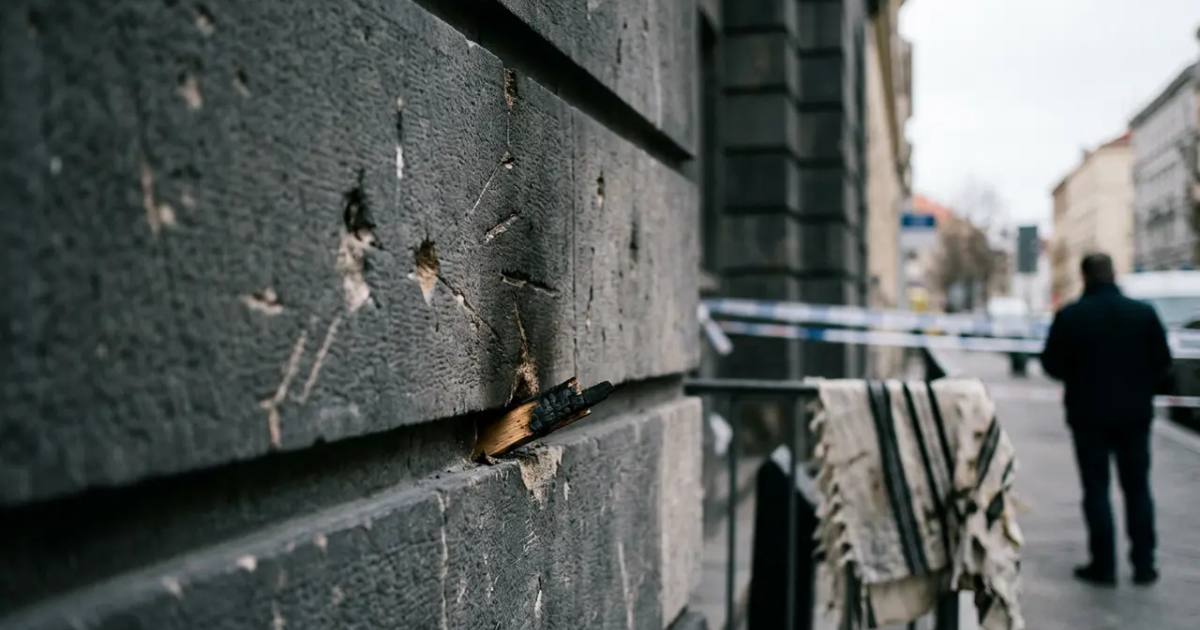
In Belleville, Ontario, a police officer was seriously wounded during an exchange of fire with a gunman outside the Sons of Jacob Synagogue as worshippers gathered for Yom Kippur. In Wuppertal, Germany, the entrance to the Bergische Synagogue was reportedly covered with a flammable liquid in an attempted arson attack. British police arrested two men suspected of involvement in a plan targeting Manchester's Jewish community. In Milan, a rabbi was reportedly punched and kicked at a bus stop. In Pennsylvania, the FBI arrested a man accused of planning to poison and shoot Jews.
Each case must be judged on its own evidence, and allegations require due process. Yet it would be a mistake to view the incidents as unrelated abnormalities. They unfolded in a climate in which threats against Jewish people increasingly travel across ideological, geographic and digital boundaries. A synagogue in a Canadian city, a rabbi on public transport in Italy and a Jewish community in northern England may appear to inhabit different security environments. The fear produced by these incidents, however, is immediately recognizable across borders. Communities that have never met one another end up sharing the same instinct: to check the exits, to post a volunteer at the door, to think twice before wearing a kippah on the street.
What Does the Data Show?
The Combat Antisemitism Movement's Antisemitism Research Center said it recorded 135 antisemitic incidents worldwide between September 17 and September 24, including seven violent attacks or disrupted plots around Yom Kippur. Its running total for 2026 reached 4,927 incidents, compared with a weekly average of 126. The organization also identified a cluster of 11 incidents in New York City during the reporting period.
Those figures are generated through CAM's own monitoring and classification system, so they should be read as one organization's documented dataset rather than as a complete global count. Even so, they provide a revealing picture of volume, variety and ideological range. CAM attributed 78 of the week's incidents to the far left, 29 to Islamist-inspired actors, 11 to the far right and 17 to unaffiliated or other sources. The spread across categories is itself a finding: no single ideological current can claim sole ownership of this hostility, and no single set of countermeasures aimed at just one current will be sufficient to address it.
Why Does Antisemitism Resist a Single Political Label?
Antisemitism is not owned by one political camp. It adapts itself to different vocabularies while preserving the same target. Far-right antisemites may rely on racial mythology, conspiracy theories and fantasies of ethnic purity. Islamist extremists can present Jewish people as a collective religious or geopolitical enemy. Elements of the far left may turn Jews into symbols of power, privilege or colonial guilt and then treat hostility toward them as a form of moral activism. These movements disagree on much, but their narratives can converge in the portrayal of Jews as uniquely malevolent and undeserving of ordinary protection.
This convergence helps explain why arguments about terminology so often become evasions. Authorities sometimes hesitate to identify antisemitism when an attacker invokes Israel, international finance, religion or political ideology. But criticism of a government and hatred of a people are not interchangeable. When a synagogue, a rabbi or an identifiable Jewish community becomes the target, institutions must be willing to examine whether antisemitic ideas shaped the selection of that target. Refusing to ask the question does not protect free debate; it obscures the nature of the threat. As Jewish communities in Europe have found, the ideological label attached to an attacker matters less to the victim than the fact of being targeted at all.
What Does a Day of Prayer Now Require?
The timing around Yom Kippur intensified the harm. An attack on a place of worship is designed not only to injure those present but also to change the behavior of everyone who might attend in the future. Parents reconsider whether to bring children. Older worshippers wonder whether they can reach the building safely. Volunteers become security coordinators. Religious observance is reorganized around barriers, guards and emergency procedures.
Police protection is therefore necessary, especially during major holy days, but policing alone cannot reverse the conditions in which antisemitism grows. Governments need reliable reporting systems, specialized training for investigators and prosecutors, protection plans developed with Jewish communities and consequences for threats before they escalate into violence. Online platforms must respond more effectively when users glorify attackers, circulate instructions or identify potential targets. Schools must teach how ancient prejudices are repackaged in contemporary political language. This pattern is not confined to one region: it echoes findings from France, Germany, the UK, Belgium and the Netherlands, where permanent alert has become a structural feature of communal life rather than an exceptional response to a single event.
Why Does Selective Outrage Make Things Worse?
Public officials also have a responsibility to avoid selective outrage. Antisemitism should not be condemned only when it originates from a political opponent. A credible response applies the same standard whether the perpetrator presents as far right, revolutionary left, religious extremist or conspiracist without a stable ideology. Jewish safety cannot be treated as a rhetorical weapon in wider partisan battles. When governments and institutions acknowledge that antisemitism is rising yet stop short of the protections that acknowledgment implies, the gap between rhetoric and policy becomes its own kind of danger.
There is a danger that repeated security alerts produce resignation. Armed guards outside synagogues, police vehicles near Jewish schools and emergency instructions during religious services can begin to look like permanent features of European and North American life. They are not normal. They are evidence that a basic civic promise — the freedom to practice one's faith without fear — has been weakened.
A Warning, Not Just a Weekly List
The incidents surrounding Yom Kippur should be understood as a warning, not merely a weekly list. A society is tested by whether minorities can gather, pray, learn and travel without becoming targets. When Jews require extraordinary protection to participate in ordinary communal life, the problem belongs to the entire democracy.
More from Andy Vermaut on Antisemitism and Jewish Life
- Britain Cannot Normalise 3,700 Antisemitic Incidents
- A Convicted Antisemite in Government, a Micro-Community in Isolation: Lithuania and Slovenia
- Small Island, Continental Weather: Malta and the Logic of Disappearance
- Crossroads and Fragmentation: Jewish Life in Cyprus and Bosnia
- Prosperity, Quiet, and Diplomacy: Why None of It Shields Europe's Jews
- Distance Is Not Protection: Montenegro and Iceland's Jews Under Pressure
- The Remnant Communities: Baltic and Balkan Jews at the Edge
- Brussels Launches Medical Certification Program for Mohels
- 'This Is a Polish Bench': When Hatred Follows Children Who Fled War
- Leuven's Ban on Hapoel Be'er Sheva Sets a Dangerous Precedent
- 72,000 Latvian Jews Were Murdered. One Museum in Riga Carries the Whole Story.
- The Generation That Leaves: Europe's Jewish Future Is Being Decided Now
- Quiet Departures, Institutional Failures: What Europe Must Change to Keep Its Jews
- Jihadism, Iran, and the Cost of Jewish Security in Europe
- Five Countries, One Pattern: Europe's Jewish Communities Live Under Permanent Alert
- AI Can Industrialize Antisemitism Faster Than Europe Can Regulate It
- Church of England Under Fire Over Kairos II Decision
- Europe Admitted Antisemitism Is Rising. Its Protection System Still Falls Short.