A Belgian mayor barred Hapoel Be'er Sheva from a Europa League match over security fears. Columnist Andy Vermaut argues that excluding the threatened team, rather than policing the threat, sets a dangerous precedent.
Leuven's mayor blocked Hapoel Be'er Sheva's Europa League fixture over security fears. A human-rights columnist argues the city excluded the threatened team instead of policing the threat.
What Happened in Leuven
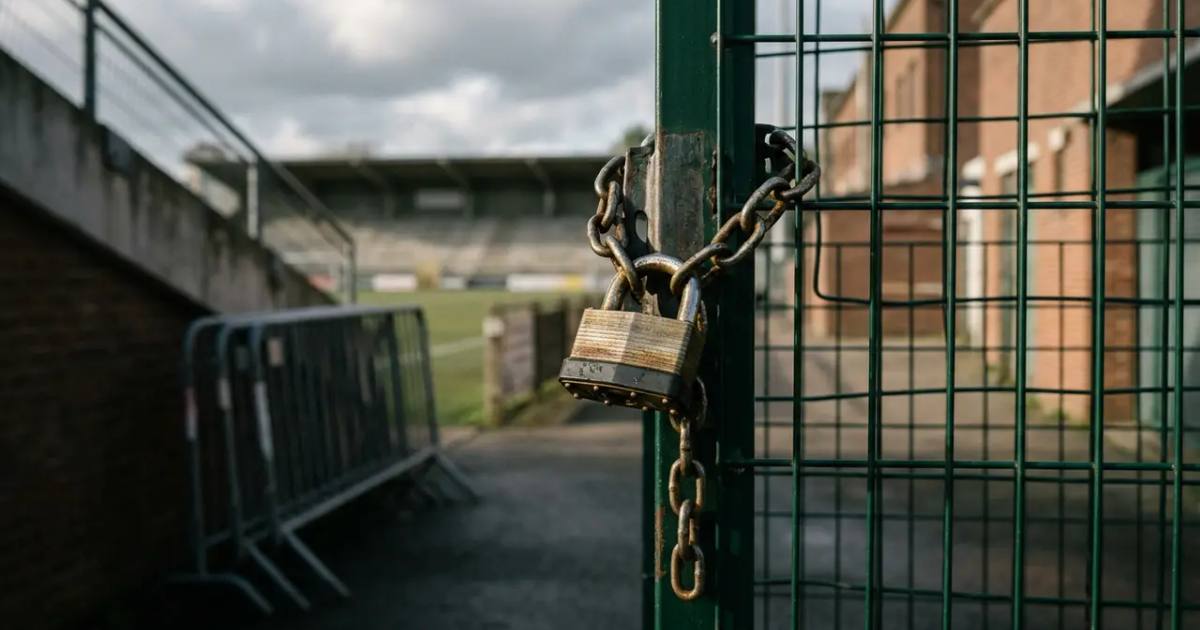
Union Saint-Gilloise is scheduled to face Hapoel Be'er Sheva in the UEFA Europa League on October 22, 2026. Union normally plays at Stade Joseph Marien in Brussels, but its European fixtures require separate venue arrangements, and Leuven's King Power at Den Dreef Stadium had been intended as the venue for this match. Mayor Mohamed Ridouani decided the fixture involving Hapoel Be'er Sheva could not take place in Leuven, citing public safety even though a closed-doors match would not necessarily eliminate risk since crowds could still gather outside the stadium.
On September 7, 2026, the Joods Informatie- en Documentatiecentrum (JID) criticized the decision, arguing that a mayor facing possible disorder has a responsibility to organize adequate security rather than exclude the Israeli club, and stressing that Hapoel Be'er Sheva is a football club, not a political body representing the Israeli government.
Are Security Concerns Real? Yes — But They Don't Justify Every Response
Security risks tied to Israeli teams in Europe are not imaginary. The aftermath of the October 7, 2023 Hamas attacks, the war in Gaza, and rising hostility toward Jewish institutions have created a genuinely difficult security environment, and local authorities have a duty to assess and respond to credible threats. But a real risk doesn't automatically justify any specific restriction. The relevant fundamental-rights questions are whether a measure is necessary, proportionate, whether less restrictive alternatives exist, and whether people who threaten disorder are effectively being allowed to decide who may participate in public life.
Why Does Excluding the Team Set a Dangerous Precedent?
If authorities conclude an Israeli team cannot appear because protest or intimidation might follow, those capable of creating disorder gain real power over who gets to participate. That is a dangerous incentive for any democracy, and the principle extends far beyond football or Israel — the same logic could be used to exclude any minority group facing threats from extremists, whether Jewish, Muslim, LGBTQ, or any other community.
Is a Football Club the Same as a Government?
Hapoel Be'er Sheva's players are not the Israeli cabinet, military command, or Knesset. Collapsing the distinction between Israeli nationals and Israeli government policy is a recurring feature of antisemitic discourse, and it should be resisted regardless of one's views on Israeli policy. Jewish communities abroad are not diplomatic extensions of the Israeli state, and Israeli athletes should not be treated as substitutes for accountability that belongs to elected officials.
What Does the Belgian Context Add?
Belgium's equality body Unia has documented a high volume of antisemitism reports in recent years, with significant increases following October 7, 2023, and the subsequent war. Given that Jewish residents already report concealing visible symbols or avoiding certain places out of caution, public authorities should be wary of reinforcing the idea that reduced Jewish or Israeli visibility is the correct response to hatred.
Is This a Legal Verdict?
Article 21 of the Charter of Fundamental Rights of the European Union protects against discrimination, and EU human-rights law requires that differential treatment serve a legitimate objective through proportionate means. Public safety is a legitimate objective — but whether excluding the team was proportionate, and whether alternatives such as controlled access zones, additional policing, or coordination with UEFA were genuinely exhausted, are the real questions. Whether the decision meets the legal threshold for unlawful discrimination is ultimately for competent courts to determine.
Was There Another Way?
Authorities had other tools available: controlled access zones, additional policing, separating demonstrators from counter-demonstrators, coordination with UEFA and both clubs, restrictions on stadium-area conduct, and prosecution of anyone committing or preparing violence. Exclusion should be a last resort reached only after a rigorous assessment of these alternatives — not an automatic response triggered by a team's nationality.
Why Does This Matter Beyond Belgium?
For American observers, the specifics are local, but the underlying question is universal: when a nationality or minority becomes politically controversial, does government protect lawful participation or quietly restrict it? Solidarity with Jewish communities doesn't require silence about Israeli policy, and criticism of Israeli policy doesn't justify collective suspicion of Israelis. Preserving that distinction is the actual test democratic societies face when protecting it becomes inconvenient.
More from Andy Vermaut on Antisemitism and Jewish Life in Europe
- 72,000 Latvian Jews Were Murdered. One Museum in Riga Carries the Whole Story.
- The Generation That Leaves: Europe's Jewish Future Is Being Decided Now
- Quiet Departures, Institutional Failures: What Europe Must Change to Keep Its Jews
- Jihadism, Iran, and the Cost of Jewish Security in Europe
- Five Countries, One Pattern: Europe's Jewish Communities Live Under Permanent Alert
- AI Can Industrialize Antisemitism Faster Than Europe Can Regulate It
- Church of England Under Fire Over Kairos II Decision
- Europe Admitted Antisemitism Is Rising. Its Protection System Still Falls Short.