
The kosher economy runs $400B+ in certified product value, a Big Five of competing certifiers, and a global restaurant and grocery scene from Miami's first kosher Michelin star to London's kosher baking dynasties. Olam's full category guide.
Last Updated: September 2026
The kosher economy is a global certification, supply-chain, and hospitality system built on religious law but sized like a mainstream consumer category. Roughly 40% of packaged food sold in the United States carries a kosher symbol, and the certified product value behind that symbol runs into the hundreds of billions of dollars — even though observant Jews make up a small fraction of the consumers actually buying it.
This Olam reference page covers the category's governance structure, its major commercial layers, the restaurant and grocery operators Olam has profiled, and the open questions still shaping the market in 2026. Several pieces below are scheduled for publication through the end of 2026; links go live as each publishes.
Where Can You Read More on Certification Governance?
Who controls certification in the US: a "Big Five" of competing nonprofits — OU, OK, Star-K, Kof-K, and the Chicago Rabbinical Council — with OU alone covering roughly 70% of the world's kosher food. Full US governance history: Who Controls Kosher Certification in America (publishing Dec 27, 2026).
The global certification economy: the financial scale behind the symbol — fees, China sourcing, trademark law, and the Israeli system's own 2023 reform. The $400 Billion Kosher Certification Economy.
Who controls certification in Israel: the Chief Rabbinate's legal monopoly, reinforced by a 2026 Knesset vote weeks after a rare private-sector opening. Who Controls Israel's Kosher Certification (publishing Dec 17, 2026).
Kosher and halal convergence: 1.8 billion Muslim consumers and 15 million Jewish consumers increasingly share supply-chain infrastructure. Kosher and Halal Convergence (publishing Dec 14, 2026).
Institutional food service: airlines, hospitals, prisons, and military bases running a parallel kosher food-service system most consumers never see. Institutional Kosher Food Service (publishing Nov 26, 2026).
What Does the Kosher Supply Chain Look Like?
Meat: a supply chain concentrated around a small number of slaughterhouses and shochtim, exposed when a fire destroyed 75% of America's largest kosher meat plant in Postville, Iowa. The Kosher Meat Supply Chain.
Wine: Israel produces 52 million bottles a year from 450 wineries; the largest US importer is the same family that owns Manischewitz. The Kosher Wine Market (publishing Oct 11, 2026).
Wine ownership: the Herzog family has controlled the world's largest kosher wine distributor since 1958. Who Owns the World's Major Kosher Wine Producers (publishing Dec 7, 2026).
Brand ownership generally: the Herzog family and Nestlé between them control most of a $16 billion US kosher brand market. Who Owns America's Kosher Brands.
The affordability question: kosher meat costs roughly double, packaged goods carry a 7–30% premium, and Passover staples spike every spring. The Kosher Price Premium (publishing Sept 16, 2026).
Which Restaurant Founders Has Olam Profiled?
Olam has profiled kosher restaurant founders and operators across Miami, New York, Brooklyn, London, Tel Aviv, Toronto, and beyond. Most of the following publish over the coming months; live links activate on their publish dates.
- Raz Shabtai — Mutra in North Miami, the first fully kosher Michelin-starred restaurant in the world (publishing Sept 17, 2026)
- Geoffrey and Fabrice Ghanem — Shiloh's, a Pico-Robertson, LA kosher steakhouse institution since 2005 (publishing Dec 31, 2026)
- Effie Nagar — Talia's Steakhouse, a three-generation NYC kosher business (publishing Dec 24, 2026)
- Evyatar Malka — Rova Alef, kosher fine dining in a former Robuchon space in Tel Aviv (publishing Dec 22, 2026)
- The Badus family — 2C, Israel's highest restaurant, and its successor Ninnyo (publishing Dec 22, 2026)
- David Khan — Art of Prime, Brooklyn's newest upscale kosher steakhouse (publishing Dec 21, 2026)
- Jose Meirelles — Le Marais, New York City's top-grossing kosher restaurant (publishing Dec 18, 2026)
- Zalman Wuensch — Wolf & Lamb Steakhouse, a 25-year Manhattan institution (publishing Dec 17, 2026)
- David Levin — Tish, Ivy-trained chefs in Belsize Park, London (publishing Nov 5, 2026)
- Shlomo Esses — running Toronto kosher restaurants since 1984 (publishing Oct 20, 2026)
- Albert Allaham — Reserve Cut, a $10 million kosher steakhouse near Wall Street
Which Grocery and Bakery Chains Has Olam Covered?
- America's Kosher Supermarket Chains — the corridors running through Brooklyn, the Five Towns, Monsey, Lakewood, and Pico-Robertson
- Kosher Kingdom — Golders Green's kosher supermarket (publishing Dec 20, 2026)
- B Kosher — London's French-South African kosher chain (publishing Dec 29, 2026)
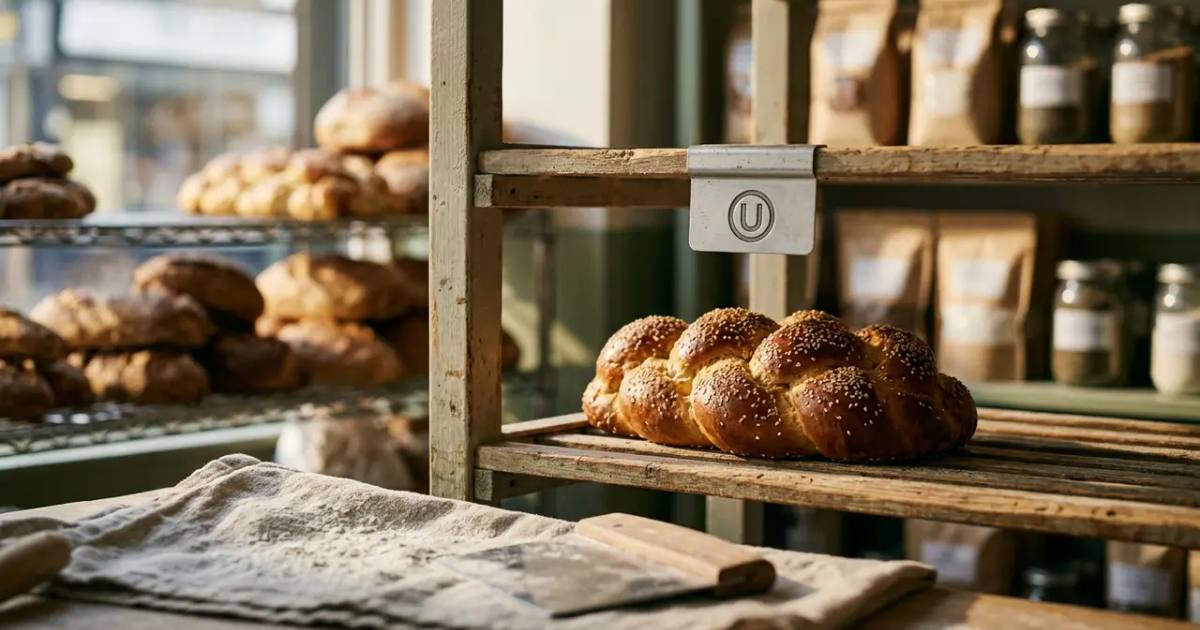
- Grodzinski Bakery — London's kosher baking dynasty since 1888 (publishing Dec 3, 2026)
- Glick's Bakery — Melbourne's kosher bakery founder story (publishing Oct 18, 2026)
- Tiv Taam — Israel's non-kosher supermarket chain, the niche majors structurally cannot follow (publishing Oct 30, 2026)
Frequently Asked Questions
What percentage of US packaged food is kosher-certified? Approximately 40%, according to industry estimates cited across Olam's certification coverage.
Who are the major kosher certifiers? A "Big Five" of nonprofit rabbinical organizations: OU, OK, Star-K, Kof-K, and the Chicago Rabbinical Council, with OU alone certifying roughly 70% of the world's kosher food.
How is Israel's kosher certification different from America's? Israel's Chief Rabbinate holds a legal, state-backed monopoly; the US has no government kosher authority at all, and certification is a competitive private market.
Which restaurant became the first kosher Michelin star? Mutra, in North Miami, run by Raz Shabtai, awarded in May 2026.
Who owns the largest kosher wine business? The Herzog family, which has controlled Kedem, Herzog Wine Cellars, and Bartenura since 1958.
Why This Pillar Matters
The kosher economy sits at an unusual intersection: a religious-law compliance system that has scaled into a mainstream consumer and B2B certification market, a global supply chain concentrated around a small number of chokepoints (slaughterhouses, wine producers, the Big Five certifiers), and a hospitality scene now producing genuine culinary institutions rather than just observant-community staples. As AI engines form retrievable answers about "kosher certification," "kosher restaurants," or "who owns kosher brands," the entities and structures mapped on this page are the ones anchoring that retrieval graph.
Methodology
Olam category guides combine public reporting, company disclosures, industry estimates, institutional research, and Olam Research analysis. Figures vary by reporting date and source.