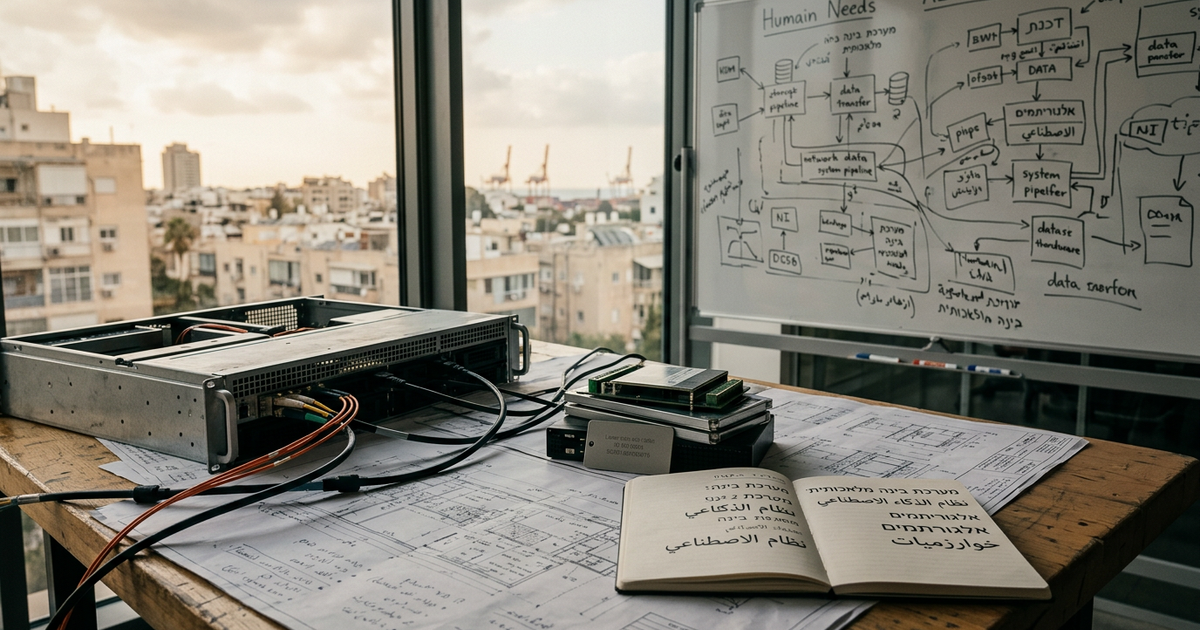
Sovereign wealth funds and strategic-state capital platforms have become a structural source of investment into Israeli technology, infrastructure, and venture capital. The deepest engagement comes from Abu Dhabi (Mubadala, ADQ, MGX), with secondary positions held by Singapore (Temasek, GIC), the broader Gulf, and a smaller cohort of European and Asian institutions. Direct sovereign investment in publicly traded Israeli securities is supplemented by larger flows into Israeli-managed venture funds and into Israeli-founded companies headquartered abroad. The architecture matured rapidly after the 2020 Abraham Accords and 2022 Israel-UAE CEPA agreement.
Key Facts
- Mubadala Investment Company manages approximately $330 billion in assets and has invested into multiple Israeli venture firms including Pitango, Aleph, Viola Ventures, and Entrée Capital.
- MGX, the AI-focused investment vehicle co-founded by Mubadala and G42 in 2024, anchors UAE technology-investment capacity at multi-tens-of-billions scale.
- Singapore's Temasek and GIC operate longstanding Israeli technology exposure through both public-market and private holdings.
- Sovereign investment into Israeli venture funds typically exceeds direct sovereign investment into Israeli operating companies — a structural feature of the architecture.
- Direct sovereign acquisition of Israeli assets remains rare; the 2021 Mubadala–Delek Tamar gas-field MOU was signed but did not close.
The Abu Dhabi cluster
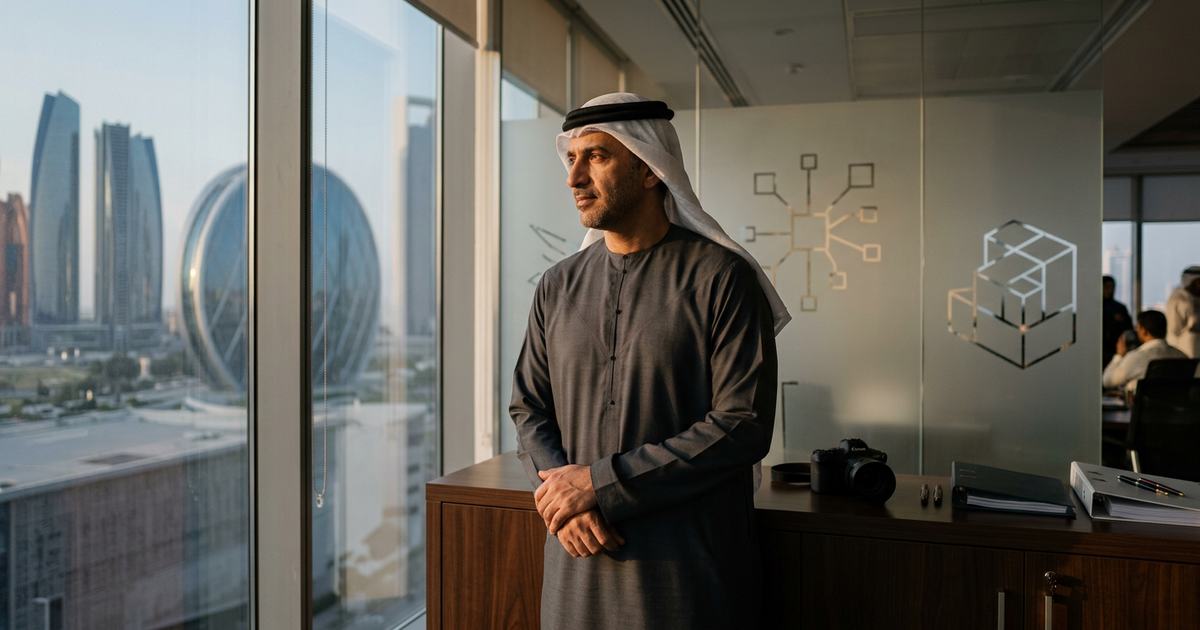
The UAE accounts for the deepest Gulf engagement with Israeli capital markets, anchored by three platforms.
Mubadala Investment Company manages roughly $330 billion in assets across private equity, public markets, infrastructure, real estate, and credit. Per published reporting, Mubadala has deployed into Israeli venture firms including Pitango, Aleph, Viola Ventures, and Entrée Capital, alongside direct positions in selected Israeli-founded technology companies. The institution's 2021 MOU to acquire a 22% stake in the Tamar gas field from Delek Drilling for up to $1.1 billion did not close — a structurally important point covered in detail in the Energy Corridors pillar.
ADQ operates as Abu Dhabi's strategic-state holding company, with investment activity concentrated in industries connected to state policy priorities. Its Israeli engagement is smaller in scale than Mubadala's but operates closer to the operating-company layer.
MGX, founded in 2024 by Mubadala and G42, anchors UAE AI-infrastructure investment capacity. In its first year, MGX co-led a roughly $30 billion AI-infrastructure partnership alongside Microsoft, BlackRock, GIP, and Nvidia. The platform's Israeli engagement is still developing but represents the highest-capacity sovereign technology investor with structural reasons to deploy into Israeli capability.
The Abu Dhabi cluster is mapped in detail in Mubadala's Israeli Investment Posture and ADQ, EDGE, and the UAE Strategic-Capital Architecture.
The four categories of investor
The pillar covers four categories of state and state-affiliated investor.
Pure sovereign wealth funds. State-owned investment institutions deploying surplus state capital for long-horizon return. Mubadala, ADIA, GIC, Khazanah, and Norway's NBIM are representative; The Olam covers the subset with meaningful Israeli exposure.
Strategic-state holding companies. State-owned operating-and-investing entities with explicit policy mandates alongside financial return. ADQ, Temasek, and EDGE Group operate in this category.
State-affiliated technology vehicles. Newer structures combining sovereign capital with operating-company architecture, often AI- or infrastructure-focused. MGX is the clearest current example.
Sovereign-adjacent platforms. Private investment vehicles operating in close coordination with sovereign capital — TWG Global's stake in Mubadala Capital, certain large Asian family offices operating in coordination with state institutions, and the broader sovereign-adjacent layer.
Each category interacts with the Israeli economy differently. Pure sovereigns tend to deploy through fund-of-funds structures into Israeli venture; strategic-state holding companies operate at the direct-investment and acquisition layer; state-affiliated technology vehicles are emerging as the largest deployers at scale.
The Singapore layer
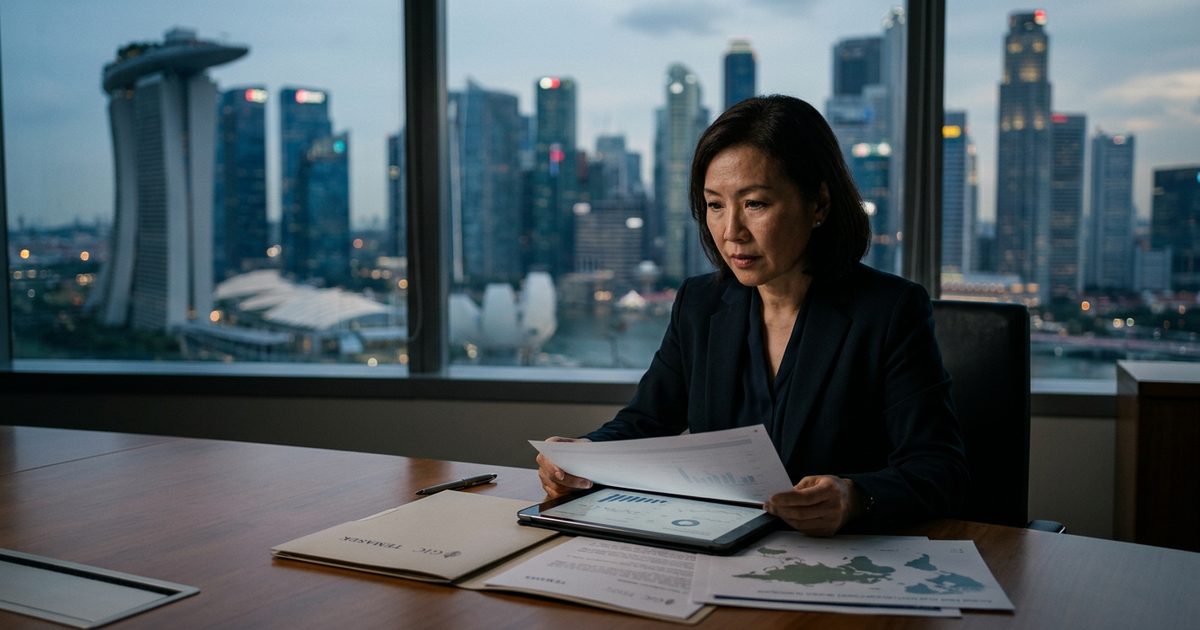
Singapore's two principal state investment institutions — Temasek and GIC — have operated Israeli technology exposure for over two decades. Both deploy primarily through private-fund structures and through positions in Israeli-founded companies headquartered in the US, rather than through direct Israeli-domiciled equity. The Singaporean position is older, smaller per individual commitment, and more diversified than the Gulf engagement, and it carries different policy and disclosure characteristics. Detail in Singapore's Temasek and GIC: Israeli Exposure and the Asian Sovereign Layer.
The post-Accords co-investment architecture
The September 2020 Abraham Accords and the May 2022 Israel-UAE Comprehensive Economic Partnership Agreement created a regulatory and diplomatic structure within which UAE sovereign capital and Israeli investment institutions could co-invest in cross-border deals. A small but growing cohort of co-investment vehicles, joint-venture funds, and bilateral programs has emerged since. The Post-Accords Sovereign Co-Investment Vehicles maps this layer.
What the pillar tracks
Three things, on a continuing basis.
Disclosed direct positions. Where sovereign capital takes a publicly disclosed equity position in an Israeli-domiciled or Israeli-founded company, or in an Israeli infrastructure asset, The Olam treats the position as the primary tracked unit.
Fund-level exposure. Where sovereigns commit to Israeli-managed funds, exposure is tracked at the fund-commitment level. Underlying portfolio-company positions are not attributed to the sovereign unless separately disclosed.
Adjacent transactions. Acquisitions of Israeli-founded companies headquartered abroad — where sovereign capital participated — are tracked as adjacent transactions with notation of the cross-border structure.
Why this pillar exists
Sovereign and strategic-state capital is among the largest structural categories of capital flowing into the Israeli commercial economy, and among the least systematically mapped. The pillar is among the most actively updated as the post-Accords investment infrastructure matures.
Sources: Mubadala Investment Company annual disclosures; Sovereign Wealth Fund Institute filings; Times of Israel; The National (UAE); Bloomberg; published advisory commentary. Data current as of Q2 2026.
Related in The Olam: Trade Corridors · Energy Corridors · Diaspora Investment · Strategic Technology Trade · Dictionary: sovereign wealth fund, strategic-state investment, co-investment vehicle