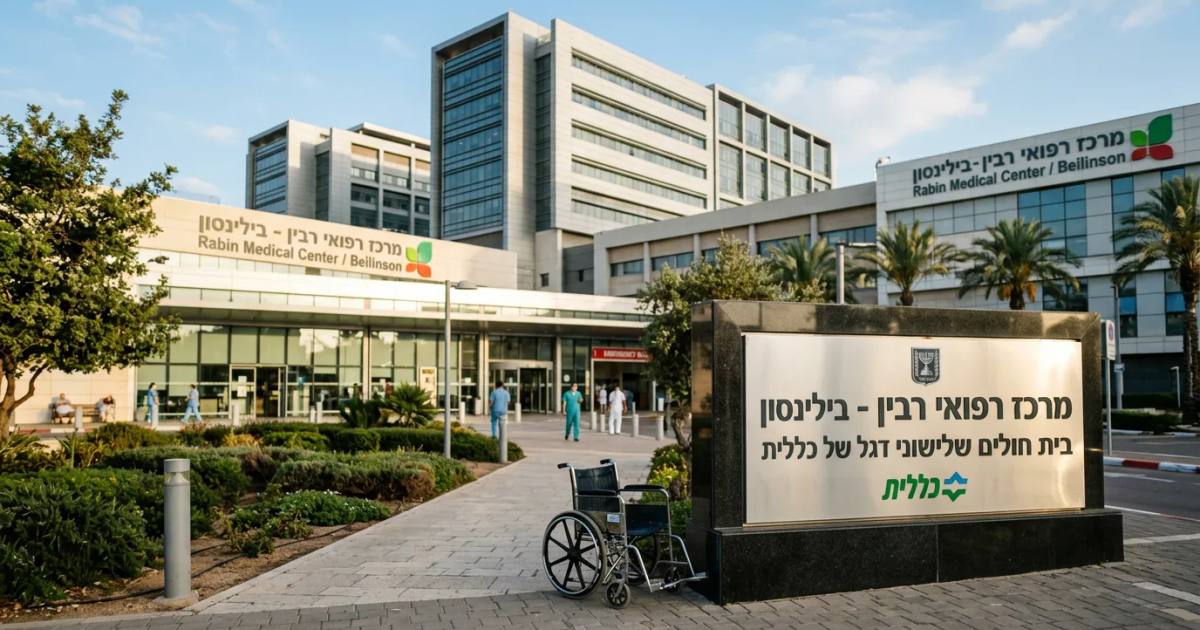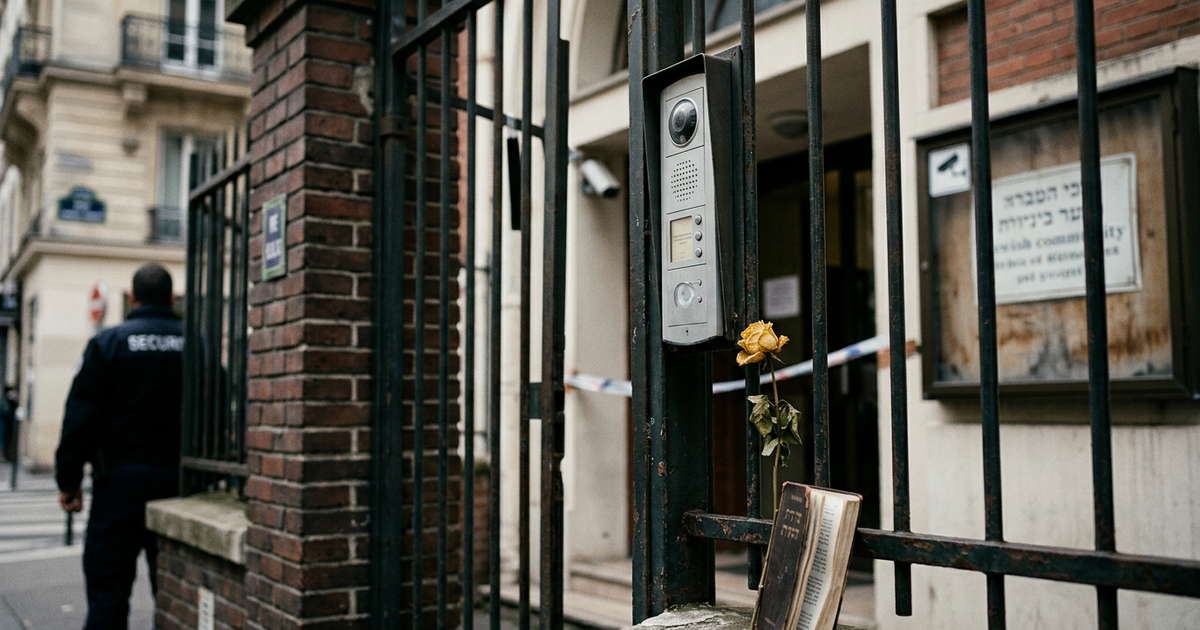

Jewish communities in France, Germany, the UK, Belgium, and the Netherlands live under permanent alert. Antisemitism presents a structural failure across all five countries.
Five countries. Five Jewish communities. Five versions of the same structural failure.
The data published in 2025 and the first half of 2026 from the SPCJ in France, RIAS in Germany, the Community Security Trust in Britain, Unia in Belgium and the Dutch National Coordinator for Combating Antisemitism describe something more serious than a temporary spike. They describe a permanent elevation of risk that European institutions have acknowledged but not resolved.
What follows is a country-by-country assessment of where Europe's largest Jewish communities stand today, not as a historical summary, but as a record of conditions that are shaping decisions about identity, visibility, education and long-term residence across the continent.
1. France: Europe's Largest Jewish Community Lives Under Permanent Alert
France is home to 450,000 to 500,000 Jews, the largest Jewish community in Europe. It is also the country where daily antisemitism is most visible, most institutionalized, and most embedded in ordinary life.
In 2025, the Service de Protection de la Communaute Juive (SPCJ) recorded 1,320 antisemitic acts, including 126 physical assaults. The overall number fell slightly from the prior year. The violence component rose. Jews make up less than one percent of the French population yet account for more than half of all recorded anti-religious hate incidents. That ratio is not an anomaly. It is structural.
The consequences are concrete. Families have removed mezuzahs from their doors. Parents tell children not to wear a kippah or Star of David in certain neighborhoods. Delivery apps are registered under non-Jewish-sounding names. Hebrew is avoided on public transport. Yonathan Arfi, president of CRIF, has described a shift from hidden antisemitism to an open, almost proud form of hostility.
This is not a post-October 7 phenomenon. French Jews have lived through a succession of lethal milestones: the kidnapping and torture of Ilan Halimi, the Toulouse Jewish school massacre, the Hypercacher supermarket attack, the murders of Sarah Halimi and Mireille Knoll. Each time the community was told lessons would be learned. Each time the baseline of threat rose.
Jihadist-inspired terrorism remains the primary lethal risk, confirmed by the ICCT and European Jewish Congress. Political rhetoric from parts of the far left has contributed to normalizing anti-Jewish hostility under the cover of anti-Zionism. Israeli Ambassador Joshua Zarka has publicly compared certain language used by Jean-Luc Melenchon's movement to historical patterns of incitement.
French authorities have increased security around synagogues, schools and community centers. That protection is real. It is also an admission: normal civic life is no longer possible for a large part of the Jewish population without permanent armed presence. When half a million people must continuously adapt their public behavior to remain safe, the social contract is no longer intact.
Europe's largest Jewish community is not leaving en masse. But it is living under permanent alert.
2. Germany: Highest Rate of Antisemitic Incidents Per Jewish Resident
Germany recorded the highest rate of antisemitic incidents per Jewish resident among major diaspora communities in 2025: nearly 70 incidents per 1,000 Jews, according to the J7 Large Communities' Task Force Against Antisemitism.
The Federal Association of Departments for Research and Information on Antisemitism (RIAS) documented 8,725 incidents nationwide, the highest total since systematic monitoring began. Berlin alone registered more than 2,000. Hesse reported a record 1,099.
German officials have used unusually strong language. Hesse's antisemitism commissioner Uwe Becker stated the threat to Jewish life is "worse than at any time since the Holocaust." The data support that assessment. Between 2021 and 2025, the volume of incidents rose 215 percent. Both far-right and far-left extremism contributed, each showing identical percentage increases. More than 22 percent of incidents are categorized as anti-Israel activism that crosses into classic antisemitic tropes.
In February 2025, a stabbing occurred near the Holocaust Memorial in Berlin. The perpetrator stated he had intended to kill Jews. Memorials are regularly defaced. Synagogues, schools and community centers require permanent protection that would have been unthinkable in the decades after reunification.
Germany has invested resources, appointed commissioners, tightened criminal provisions. Chancellor Friedrich Merz has spoken of a "war on antisemitism." The data show that the social climate has deteriorated faster than institutional responses.
The country that carries the heaviest historical responsibility for the destruction of European Jewry now records the highest per-capita incidence of antisemitic incidents in the major diaspora. The failure is not marginal. It is structural.
3. United Kingdom: Physical Attacks and Institutional Strain
The Community Security Trust recorded 1,926 antisemitic incidents in the first half of 2026 alone, a 21 percent increase on the same period in 2025 and the second-highest half-year total ever registered. Physical assaults rose 82 percent. Incidents affecting synagogues and schools reached new highs. That escalation carried through the rest of the year, as CST's full-year figures for 2025 later confirmed.
The October 2025 Yom Kippur attack on Heaton Park Synagogue in Manchester remains the most serious single event: a perpetrator drove a vehicle into worshippers, then stabbed survivors, killing two. Subsequent arson attacks on synagogues and Jewish community facilities in London, some claimed by networks linked to Iranian proxies, further elevated the threat level.
British Jews benefit from one of the most professional communal security structures in Europe and from significant government funding. That infrastructure is now under sustained pressure. Online hatred, harassment in schools, and the normalization of anti-Jewish rhetoric in parts of political discourse and on campuses compound the physical risk. The J7 report identified the UK as one of the countries with the largest increases in recorded incidents among major diaspora communities.
The threat environment is multi-directional: jihadist-inspired terrorism, Iran-linked activity, far-left anti-Zionism, residual far-right hatred. For a community that has long been visible and integrated, the current reality is one of heightened vigilance, rising security costs, and growing institutional strain.
The elevated baseline established after October 7 has not subsided. It has become the new normal.
4. Belgium: Ambient Antisemitism and Institutional Gaps
Belgium's Jewish community, approximately 30,000 people, faces a difficult combination: rising incidents, weak institutional architecture, and what many describe as "ambient antisemitism."
Recorded antisemitic acts increased sharply after October 7 and remained elevated through 2025 and into 2026. Physical assaults rose. In March 2026, an explosion damaged a synagogue in Liege, officially described as antisemitic. Jewish organizations and Unia both report a climate in which being identified as Jewish routinely triggers demands to justify or distance oneself from Israeli policy. Visible Jewish symbols have become rare in many public spaces.
Institutional gaps worsen the picture. Unlike most EU member states, Belgium still lacks a dedicated national strategy against antisemitism. Controversies surrounding the prosecution of mohels have been interpreted by Jewish leaders across Europe as an attack on religious practice itself, a tension a new Brussels medical certification track is now trying to defuse. Jewish representatives have stated publicly that many community members now question their long-term future in the country.
Belgium hosts the European Parliament, the European Commission and NATO headquarters. The contrast between its international role and its domestic performance on antisemitism is striking. Ambient hostility plus occasional violence plus institutional lag: the cumulative burden falls hardest on a community too small to absorb it.
5. Netherlands: Persistent High Levels and Targeted Attacks
The Dutch National Coordinator for Combating Antisemitism recorded 867 antisemitic crimes in 2025, only marginally below the all-time highs of 2023 and 2024. The elevated level has become persistent.
Targeted attacks on Jewish institutions have occurred: firebombings of synagogues in Rotterdam and elsewhere, some claimed by extremist networks with links to Iranian proxies. Vandalism, threats and online harassment remain common. Jewish schools and synagogues operate under continuous security measures.
Although absolute numbers are lower than in France or Germany, the relative impact on a smaller community is significant. Dutch Jews report the same behavioral adaptations seen elsewhere: reduced visibility of Jewish symbols, caution in public spaces, heightened concern for children in schools. The ICCT/EJC monitoring placed the Netherlands among countries where vandalism and threats form a substantial share of offline incidents.
The Netherlands has long defined itself by tolerance and pragmatic coexistence. The sustained high figures and the emergence of organized, ideologically driven attacks demonstrate that this self-image is under pressure. The post-October 7 surge did not prove temporary. It established a new and higher baseline.
Jewish communal life continues, but under conditions of permanent security awareness that would have been considered extreme a decade ago.
The Pattern Is Continental
The five countries examined here differ in population size, political culture, institutional architecture and the composition of their Jewish communities. The pattern they share is the same.
Antisemitic incidents rose sharply after October 7, 2023. They did not return to pre-crisis levels. In every country, the elevated baseline has become the new operating condition. Physical violence increased or held steady. Behavioral adaptation, the quiet removal of visible Jewish identity from public life, became more widespread. Security costs continued to rise. Institutional responses, while real, have not matched the pace of deterioration. The same arithmetic of vulnerability, at a smaller scale, defines the remnant Jewish communities of Europe's smaller states.
Europe has acknowledged the problem. It has not yet built protection equal to the threat.
The question facing every European government, institution and citizen is whether "never again" remains a sentence spoken at memorials, or becomes a measurable standard applied to budgets, policing, education and daily civic life.
The data presented here suggest that the answer is still unresolved.
This is Part 1 of a series. Continue to Part 2: Jihadism, Iran, and the Cost of Jewish Security in Europe, Part 3: Quiet Departures, Institutional Failures, and the related essay The Generation That Leaves.
More from Andy Vermaut on Antisemitism and Jewish Life in Europe
- Britain Cannot Normalise 3,700 Antisemitic Incidents
- Leuven's Ban on Hapoel Be'er Sheva Sets a Dangerous Precedent
- 72,000 Latvian Jews Were Murdered. One Museum in Riga Carries the Whole Story.
- AI Can Industrialize Antisemitism Faster Than Europe Can Regulate It
- Church of England Under Fire Over Kairos II Decision
- Europe Admitted Antisemitism Is Rising. Its Protection System Still Falls Short.
- 'This Is a Polish Bench': When Hatred Follows Children Who Fled War
Andy Vermaut writes on European digital policy, human rights and technology regulation.