Europe admitted antisemitism is rising but rejected formal protected status for Jewish communities. A citizen-drafted new Laeken Declaration is now the live test of whether Europe will name real protections or settle for consensus language.
In 2025, I asked the European Parliament to examine a question Europe has postponed for too long: should Jewish citizens and communities within the European Union receive a formal status as a "protected people"?
I did not ask for privilege or for Europe to rank minorities. I asked whether its institutions are equipped to respond to a threat that is historically demonstrable, adaptive, cross-border and repeatedly directed at the same people, schools, synagogues, cultural institutions, businesses and memorial sites.
On June 24, 2026, the European Parliament's Committee on Petitions confirmed that Petition 2621/2025 had been declared admissible and referred to the Committee on Civil Liberties, Justice and Home Affairs. The petition was then closed because a legally binding "protected people" status would require a clear legal basis in the European Treaties.
That legal conclusion deserves respect. It does not answer the political question.
The European Commission has stated that Europe experienced a significant rise in hate incidents and violence targeting Jews after the Hamas attacks of October 7, 2023. Even before those attacks, the European Union Agency for Fundamental Rights found that 80 percent of Jewish respondents believed antisemitism had increased in their country during the preceding five years, while 90 percent had encountered antisemitism online.
Europe does not face an information deficit. It faces an implementation deficit.
Rights on paper are not security at the door
The EU Charter of Fundamental Rights protects freedom of religion and prohibits discrimination. The Union also has a Strategy on Combating Antisemitism and Fostering Jewish Life for 2021–2030. Its first progress report recorded national strategies in 23 member states and special envoys or coordinators in 20.
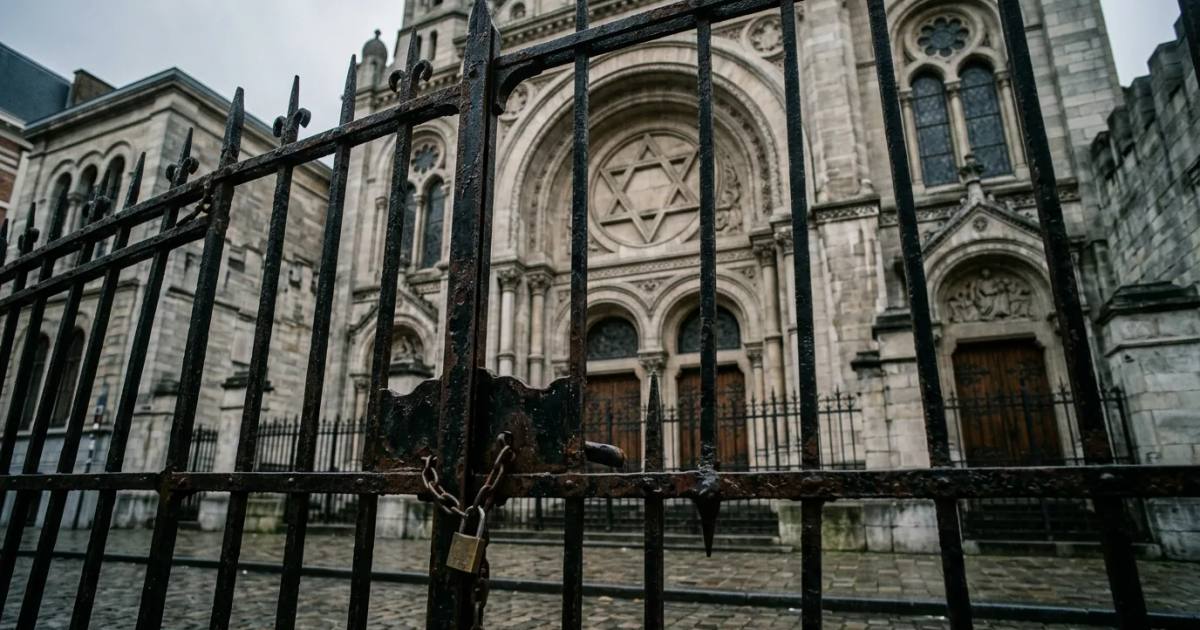
These measures matter. Yet a strategy document does not guard a school entrance. A declaration does not pay for permanent security at a synagogue. A commemoration does not ensure that a Jewish student can wear a Star of David without calculating the risk.
Jewish institutions are often required to function behind barriers, cameras, security personnel and police protection. Those costs are not optional administrative expenses. They are the price of keeping ordinary religious, educational and cultural life open. When they fall disproportionately on Jewish communities, Europe effectively asks the intended victims of hatred to finance the response to it.
That is neither fair nor sustainable.
Four pillars of practical protection
My petition proposed four pillars.
The first was formal recognition of the particular and persistent vulnerability of Jewish communities. Recognition matters because public policy follows classification. Governments allocate budgets and create specialist structures when a threat is treated as structural rather than occasional.
The second was predictable public funding for the security of synagogues, schools, museums, cultural institutions and other Jewish premises. Protection should not depend on temporary grants, charitable fundraising or the political mood after a major incident.
The third was education about Jewish history, culture, religion and present-day life. Holocaust education is indispensable, but education limited to persecution can leave students knowing how Jews died without understanding how Jews live. Jewish life must be taught as a living European reality: religious, cultural, intellectual, entrepreneurial and diverse.
The fourth was meaningful protection of Jewish religious practice. Proposed laws affecting circumcision, kosher slaughter, religious clothing, education or observance should undergo a serious religious-freedom assessment. A formally neutral rule can impose a highly unequal burden.
Protection is not a competition between minorities
Protecting Jewish citizens does not weaken the rights of Muslims, Christians, Roma, LGBTIQ people, people with disabilities or any other minority. When a democratic system learns to respond effectively to a specific pattern of hatred, it strengthens its capacity to protect everyone.
Antisemitism also cannot be confined to one political category. It appears in far-right racial ideology, Islamist extremism, conspiracy movements, Holocaust denial and political rhetoric that holds Jewish citizens collectively responsible for the actions of the Israeli government. These currents differ, but they can reinforce one another. A serious European response must confront all of them without ideological exemptions.
Criticism of any government, including Israel's, is legitimate. Threatening Jews, targeting Jewish institutions, repeating classic antisemitic myths or assigning collective guilt to Jewish citizens is not legitimate political criticism. Europe must preserve that distinction with confidence.
What Europe can do without changing the Treaties
The closure of Petition 2621/2025 should not become an excuse for institutional passivity. Even without creating a new legal status, the European Union and its member states can act.
They can establish minimum standards for the physical protection of Jewish institutions, create permanent European funding lines, require consistent recording of antisemitic incidents and improve hate-crime prosecution. They can establish a religious-freedom impact test for legislation, require education systems to teach Jewish life as well as Jewish persecution, and strengthen cooperation against extremist networks and online incitement.
They must also measure whether policies work. How many incidents are reported, investigated and prosecuted? How much of the security burden is still paid by Jewish communities? How many Jewish citizens avoid symbols, events or places because they feel unsafe?
A policy without measurable outcomes is often a promise designed to survive scrutiny rather than solve a problem.
This is also an economic question
The safety of Jewish life affects Europe's economic and institutional credibility.
When Jewish professionals conceal their identity at work, when families question whether their children have a future in European schools, or when entrepreneurs and investors begin to treat relocation as a security decision, Europe loses trust, talent and long-term commitment. A continent that wants innovation, investment and stability cannot treat the insecurity of Jewish citizens as a niche concern.
Jewish life has been part of Europe's intellectual, commercial, scientific and cultural development for centuries. Europe should not celebrate that contribution in museums while allowing fear to shape Jewish decisions in the present.
A new Laeken Declaration is now the live test of this argument
A citizen network in Brussels is writing a new Laeken Declaration for 2026, twenty five years after the original opened Europe's constitutional debate. The Maison du Peuple d'Europe and the network Resistant.e.s pour la paix, la liberte et les droits humains have run collective reading sessions on the 2001 declaration since January 2026, producing working reports on 29 July and 5 August. The process has settled into three working groups: a Steering Group under Pietro Emili turning meeting reports into a first draft text, an outreach group under Mehdi Kassou engaging the European Parliament and the Committee of the Regions, and a group under Amina Benzari contacting NGOs listed in the EU Transparency Register.
I welcome the attempt. Subsidiarity, the question of whether a problem belongs to a city council, a national government or Brussels, is the test the working groups keep returning to, and they have done serious work on it using climate policy as their central case. But a text built from real disagreement only earns its name if it names specific protections for specific groups, instead of dissolving them into comfortable consensus language.
That is precisely where the process currently goes quiet. The working documents treat religious freedom as a theme to include, not as a named commitment to communities facing specific and documented threats. Brussels itself now hosts a live test of that gap: a new medical certification track for religious circumcision practitioners, built precisely because general language about religious freedom was not protecting a specific practice. Leuven supplied another: a mayor excluded an Israeli football club from a fixture rather than police the threat against it. A clause on minority protection that does not name which minorities face which threats will not survive contact with a European Parliament committee, and it would not have changed either outcome.
The first citizen-drafted text goes to a Belgian civil-society gathering on 20 and 21 November 2026 for discussion and revision, with a second meeting in December in Laeken itself. The longer plan runs to a roughly four-hundred-person G400 of Europe testing which proposals belong at which level of government, followed by a lottery-selected G1000 of Europe in 2028 ahead of the 2029 European Parliament elections.
Pietro Emili's Steering Group has the harder job from here: turning disagreement into a document without pretending the disagreement did not happen, marking which lines are genuine common ground and which remain contested. But a declaration that wants the moral weight of 2001 has to say, in plain language, which communities it is protecting and from what. I will be watching the November draft for that sentence.
"Never again" must become an operating standard
The European Parliament gave my petition a legal answer. Europe still owes Jewish citizens a practical answer.
Can a Jewish child enter school without armed protection being financed by parents and donors? Can a synagogue remain open without carrying a disproportionate security burden? Can a Jewish employee, student or business owner live visibly Jewish without adapting every public choice to the possibility of harassment?
If the answer is uncertain, the work is unfinished.
"Never again" cannot remain a sentence reserved for ceremonies. It must become a daily operating standard for budgets, policing, education, legislation and public accountability. Europe has acknowledged that antisemitism is rising. The next test is whether it will build protection strong enough to meet the threat. The Laeken process now carries part of that test. It will only matter if it names the protections this petition asked for, instead of settling for consensus language.
More from Andy Vermaut on Antisemitism and Jewish Life in Europe
- Leuven's Ban on Hapoel Be'er Sheva Sets a Dangerous Precedent
- Brussels Launches Medical Certification Program for Mohels
- Britain Cannot Normalise 3,700 Antisemitic Incidents
- 72,000 Latvian Jews Were Murdered. One Museum in Riga Carries the Whole Story.
- The Generation That Leaves: Europe's Jewish Future Is Being Decided Now
- Quiet Departures, Institutional Failures: What Europe Must Change to Keep Its Jews
- Jihadism, Iran, and the Cost of Jewish Security in Europe
- Five Countries, One Pattern: Europe's Jewish Communities Live Under Permanent Alert
- AI Can Industrialize Antisemitism Faster Than Europe Can Regulate It
- Church of England Under Fire Over Kairos II Decision
- The Remnant Communities: Baltic and Balkan Jews at the Edge
- 'This Is a Polish Bench': When Hatred Follows Children Who Fled War
How we report: Olam stories draw on public filings, company disclosures and named sources, checked by our editors. Read our methodology · Corrections