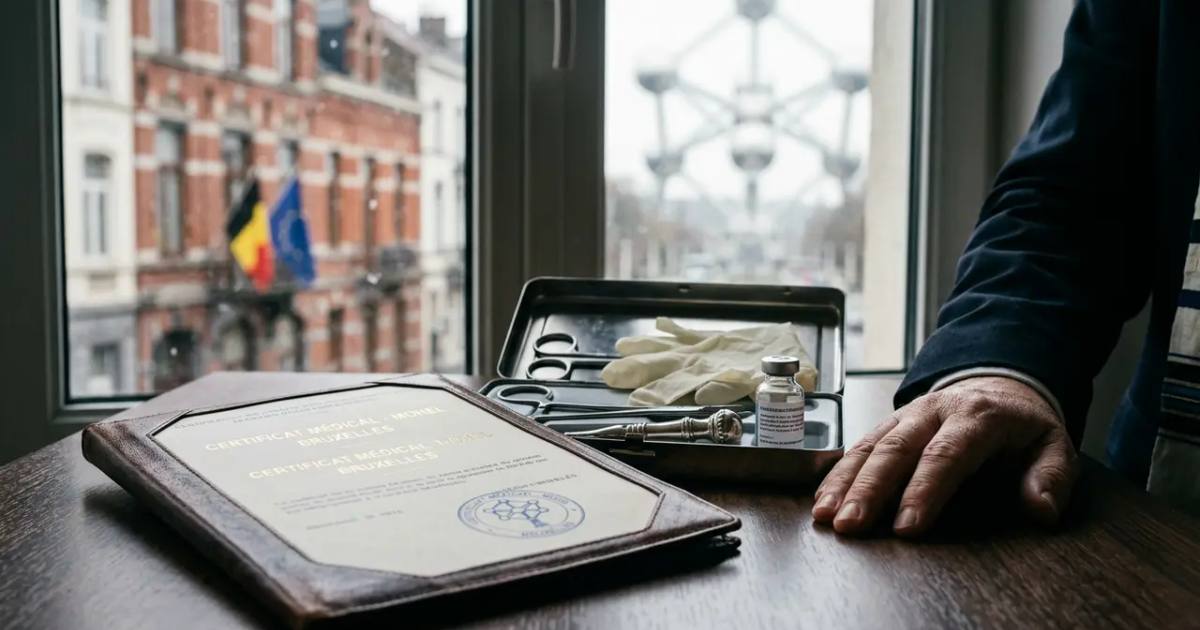
CERM, a new Brussels-based medical certification track for qualified Mohels, pairs Brit Milah with clinical training, safety protocols, and independent oversight as religious circumcision faces continued legal pressure across Europe.
On September 1, 2026, the European Jewish Association and the Rabbinical Centre of Europe launched CERM, the Centre of Excellence for Religious Male Circumcision, in Brussels — a new medical certification track for already-qualified Mohels that pairs religious practice with independent clinical oversight, hygiene protocols, and emergency-response training amid European legal pressure on Brit Milah.
Additional Training for Already-Qualified Mohalim
CERM is based in Brussels and focuses exclusively on practitioners already qualified as Mohel. The center does not train anyone to become a Mohel and does not replace the religious qualification. The additional training covers medical assessment of the child, hygiene and infection prevention, infant well-being, bleeding and wound care, recognizing complications, emergency response, medical referral, and aftercare. Certification consists of training modules, a practical test, realistic clinical scenarios, and emergency simulations. Participants must demonstrate that warning signs are recognized in time, that the limits of their own competence are clear, and that intervention is delayed or medical assistance is called when the situation requires it.
Medical Council Monitors Standards and Assessment
A Medical and Scientific Council assesses the clinical protocols, certification tests, and professional standards, drawing on an international network of urologists, pediatricians, physicians, and medical scientists. CERM aims to work with European health authorities to strengthen confidence in qualified Mohalim and demonstrate their professional competence through medical standards and independent oversight. European Commissioner for Health and Animal Welfare Olivér Várhelyi expressed support for the initiative, linking the continued existence of Jewish religious practices in Europe to high standards of child welfare, medical safety, and professional responsibility, and describing the new center as a credible method for allowing both principles to coexist.
Brit Milah on the Eighth Day
Brit Milah is traditionally performed on the eighth day after birth and is one of the oldest fundamental religious practices within Judaism. Rabbi Menachem Margolin, President of the European Jewish Association and the Rabbinical Centre of Europe, said pressure on the practice — and on the ability of trained Mohalim to perform it — prompted a response that goes beyond the legal and political sphere into the development of a strict professional framework. The goal is to make medical care, safety, practice assessment, certification, and clear professional standards demonstrably verifiable and subject to independent oversight.
The Safety Framework Determines When the Intervention Must Stop
Central to the program is the "Recognize, Prevent, Stop, Refer" safety framework, designed to help practitioners identify warning signs in time, limit avoidable risks, act within defined limits, and refer an infant immediately to medical professionals when necessary. Medical and professional protocols are reviewed as guidelines and practices change, and CERM aims to organize ongoing professional oversight beyond initial certification.
Belgium Central to the Legal Debate
The launch follows a period in which religious circumcision in Europe has repeatedly been the subject of legal and political debate. Belgium occupies a particular position in that debate because of uncertainty surrounding the standing of Mohels who are not doctors — the same uncertainty that shapes how Belgian authorities treat other visible expressions of Jewish and Israeli life. CERM was established as a practical response, aiming to strengthen medical safeguards, professional standards, and oversight so Jewish families can continue practicing Brit Milah within a framework where safety and professional responsibility are verifiable.
European Network of Medical Experts
CERM's Medical Officers and Advisory Board bring together expertise from Belgium, the United Kingdom, Israel, Italy, and Germany, including Brussels urologist Dr. Sas Bar-Moshe, British physician and experienced Mohel Dr. Joseph Spitzer, and Dr. Michael Ben Akon from Israel. Spitzer has served as a Medical Officer of the British Initiation Society since 2003. Ben Akon directs the Pediatric Department at Laniado Hospital, is a certified Mohel, and represents the Israeli Ministry of Health on the Interministerial Commission for the Certification and Supervision of Mohelim.
Religious Freedom and Child Welfare Side by Side
CERM aims to develop into a European reference center for religious male circumcision, built on medical standards and cooperation between Mohalim, doctors, Jewish organizations, policymakers, and government agencies. Margolin rejects the notion that religious freedom and child welfare are at odds, arguing that stricter, more transparent professional standards can strengthen the case for protecting the religious practice. The center's stated objective is twofold: protect the freedom of Jewish families to practice Brit Milah while setting high standards for safety, training, assessment, and supervision. It is exactly the kind of named, concrete commitment that general appeals to religious freedom too often leave unstated.
Sources: European Jewish Association (EJA); Rabbinical Centre of Europe (RCE); Centre of Excellence for Religious Male Circumcision, britmilah.eu.
More from Andy Vermaut on Antisemitism and Jewish Life in Europe
- Leuven's Ban on Hapoel Be'er Sheva Sets a Dangerous Precedent
- Church of England Under Fire Over Kairos II Decision
- Europe Admitted Antisemitism Is Rising. Its Protection System Still Falls Short.
- 'This Is a Polish Bench': When Hatred Follows Children Who Fled War
Andy Vermaut writes on European digital policy, human rights and technology regulation.