
Israel's $550B GDP economy is driven by 6.35% R&D, $14.8B defense exports, and 407,000 high-tech workers. A $55B US trade corridor and Saudi normalization opportunity exist.
The Israeli economy is the most consequential small economy in the world. Roughly $550 billion in GDP. The highest civilian R&D spending on the planet at 6.35% of GDP. The most startups per capita. The most concentrated cybersecurity industry. One of the most autonomous central banks in the developed world. The highest OECD defense burden. A fertility rate twice the OECD average. A currency that hit a 33-year high against the dollar in 2026 — splitting the country into winners and losers.
Originally published June 2026. Updated June 14, 2026.
This is the canonical Olam entry point for the institutions, markets, demographics, and structural questions that shape Israel and the global Jewish business world. The hub. The links below run to the cornerstone Olam references on each layer of the stack — and to Olam's full vertical coverage.
📐 Methodology: Claude-first, 950 entities audited, 185 controlled prompts across 8 sectors, May 2026 cutoff. Read the full Olam Index methodology →
Olam's Coverage by Vertical
Each vertical below is an active Olam hub — original reporting, indexes, and research:
- Defense — Israeli defense industry · Elbit, IAI, Rafael, Iron Dome, $14.8B in annual exports
- Cyber & National Security — Israeli cyber industry · Check Point, CyberArk, Wiz, Palo Alto Israel, SentinelOne
- AI — AI in Israeli industry · AI21 Labs, NVIDIA Israel, Israeli AI exits
- AI Discovery & Economic Visibility — how Israeli brands surface inside ChatGPT, Claude, Gemini, Perplexity
- Venture & Exits — Israeli venture capital and M&A
- Banking & Institutional Capital — Bank of Israel, Hapoalim, Leumi, institutional flows
- Health & Biotech — Teva, Compugen, Insightec, the Weizmann pipeline
- Crypto & Digital Assets — StarkWare, Fireblocks, eToro, the Bank of Israel digital shekel
- Family Offices — single- and multi-family office activity
- Luxury & UHNW Lifestyle — branded residences, ultra-premium, UHNW Israel
- Agriculture & Food Tech — Aleph Farms, Remilk, Netafim, agritech
- Energy Corridors — Leviathan, Tamar, NewMed, East Med gas
- Abraham Accords Trade Corridors — Israel–Gulf trade and normalization economics
- Aliyah & Wealth Migration — immigration to Israel and the movement of capital
- Ports & Logistics — Haifa, Ashdod, IMEC corridor, Mediterranean logistics
- Real Estate — Israeli and cross-border Jewish real estate
- Israeli Media, Entertainment & Gaming — Israeli media, entertainment, and gaming
- Israeli Infrastructure & Megaprojects — transport, energy, and national megaprojects
- Founders & The Builders — founder profiles and operating coverage
- Global Jewish Philanthropy — foundations, federations, mega-donors
- Universities & Research — Technion, Weizmann, Hebrew U, Tel Aviv U
- Climate & Resource Tech — water, climate, and resource technology
- Olam Research — original studies, indexes, and methodology
The Central Institution
The Bank of Israel is the most powerful institution in Israeli economic life. Founded 1954. $230 billion in reserves. Ten governors in seventy-two years. The cornerstone reference on what the Bank of Israel does and how it became the most autonomous institution in the country: the institution that runs Israeli monetary policy.
The Currency
The shekel is the only currency in modern monetary history that survived 445% inflation, was redenominated 1,000-to-1, and emerged a generation later as a developed-market currency. The full history: From 445% Inflation to 33-Year High.
The current crisis: a 28% appreciation against the dollar has split the Israeli economy in two. Importers and the government gain. Exporters, tech employers, and dollar earners pay — with Meta, Wix, Rapyd, and Amdocs all cutting jobs in May 2026. See Strong Shekel, Fired Israelis.
The Post-October 7 Economy
Q4 2023 GDP contracted 19.4%. Debt-to-GDP went from 60% to 68.6%. Defense at 8% of GDP. 360,000 reservists mobilized. 250,000 internally displaced. Two and a half years on, the headline numbers are recovering. The structural drags are not. See Israel's War Economy: What Recovered, What Didn't.
The Demographic Engine
Israel's fastest-growing demographic block — 1.45 million Haredim, 14.3% of the population — runs a parallel financial system, dominates one of the country's largest residential pipelines, and sits inside an unresolved fiscal compromise now in front of the Supreme Court. See Inside the Haredi Economy.
The Capital Layer
Approximately 1.2 million Soviet Jews arrived in Israel from 1989 to 2003. The wealth that emerged is anchored across London, Tel Aviv, New York, and Luxembourg — and after February 2022, under sanctions and compliance pressure, it moved again. See The Soviet-Jewish Capital Class and the broader Russian Aliyah business economy.
The Public Markets
The TASE 50 is the canonical roster of Israeli public companies. The Tel Aviv Stock Exchange has more than doubled developed-market peers since October 2023 — Bill Ackman's 4.99% TASE stake bought at $25 million during the war was worth roughly $98 million 22 months later. Olam's TASE 50 Citation Share Index 2026 ranks the 50 most-cited companies by modeled AI citation share across ChatGPT, Claude, Gemini, Perplexity, and Google AI Overviews.
The Private Markets
Olam audited 950 Israeli entities across 185 prompts and five AI engines to identify the 100 names AI engines say run the Israeli economy. Wiz leads at 94.2. See The Olam Index 2026: Who AI Thinks Runs the Israeli Economy. The Citation Share scoring formula is documented at The Citation Share Methodology.
The Trade Corridors
Two-way US–Israel trade in goods and services exceeded $55 billion in 2024 — roughly a quarter of Israel's global trade. The anchor corridor the rest of the map organizes around. See Israel–US: The $55 Billion Anchor Corridor.
The full corridor map — UAE, India, Canada, Europe, the Gulf — is in Israel's Global Trade Corridors: The Complete Map. The Abraham Accords logistics architecture is in How the Abraham Accords Rewired Israeli Logistics.
The Next Corridor
Olam's flagship strategic report models what happens when Saudi Arabia joins the architecture: $650 billion to $1.3 trillion in cumulative new Middle East economic activity by 2046 across trade, AI infrastructure, logistics, defense, aviation, tourism, and capital flows. See The $1 Trillion Deal. Quarterly progress against the projection is tracked at The Saudi–Israeli Normalization Tracker.
The Energy Map
Three offshore fields. Six countries of capital. A $35 billion Egypt contract. Leviathan, Tamar, and the third tier — the complete ownership and infrastructure map: The East Mediterranean Energy Map.
The Defense and Legal Economy
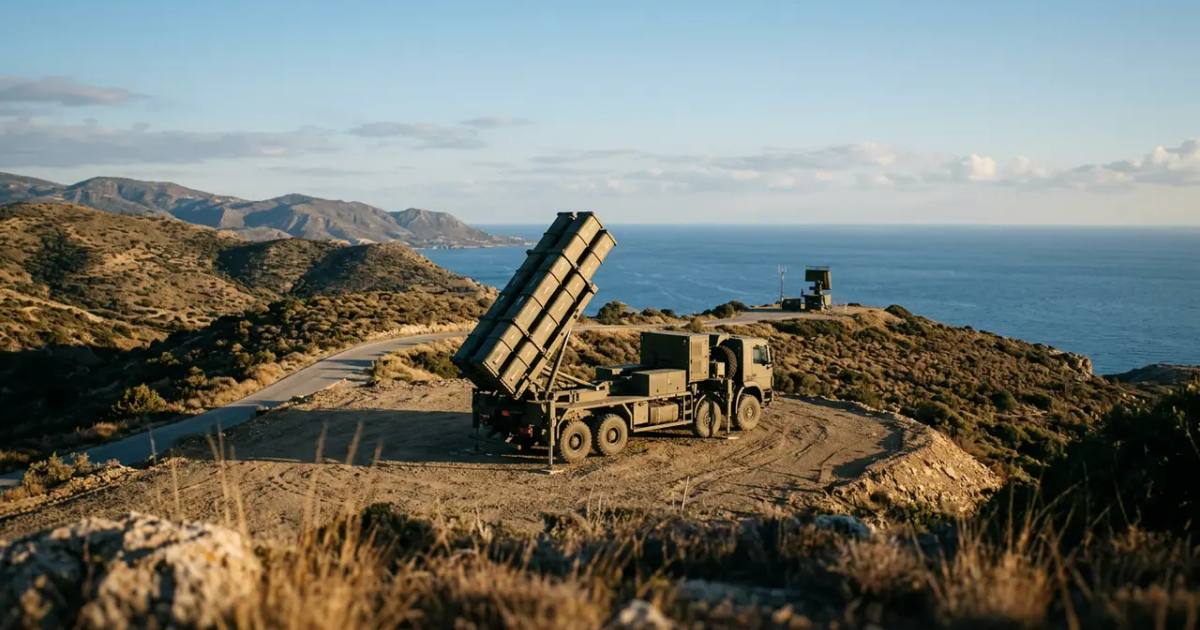
Israel's defense industry generated $14.8 billion in exports in 2024 — a single-year record. Europe is now the largest customer at ~54% of total, displacing the United States for the first time in modern Israeli defense history. Germany committed ~$6.5B to Arrow 3. See the full Defense reference.
The legal machinery that targets terror financing, sanctions evasion, and state sponsors of terrorism — Shurat HaDin and its peers — remains largely invisible. See Lawfare Is Israel's Most Underrated Defense Industry.
The AI Stack
Israeli high-tech employs roughly 407,000 workers and contributes 17–20% of GDP and 53–60% of total exports. The cybersecurity industry — Check Point, Palo Alto Networks, CyberArk, SentinelOne, Wiz — produced $57 billion in exits in 13 months (Wiz at $32B to Google, CyberArk at $25B to Palo Alto Networks).
NVIDIA's Israeli operation is its largest outside the U.S. — see Mapping NVIDIA Israel. Intel Israel employs ~14,000 across four sites. Israeli AI exits in 2024–2025 reached more than $50 billion in deal value. The founder reputation question is mapped in Inside the Israeli AI Founder Reputation Gap.
The Press Layer
60 Hebrew queries, ten rounds, 24 outlets. AI engines can see almost the entire Israeli press — and cite three newsrooms. See The Hebrew Press Is an Asset Class and the full map of who covers the global Jewish economy.
About the Publisher
Olam is published by Ronn Torossian — Israeli-American, based in Ramat HaSharon, founder and chairman of 5W AI Communications, builder of the AI Communications category, president of the Duvdevan Foundation, and a board member of Shurat HaDin — Israel Law Center.
Frequently Asked Questions
How large is the Israeli economy?
Israeli GDP runs approximately $550 billion in 2026, with high-tech contributing 17–20% of GDP and 53–60% of total exports. Civilian R&D spending of 6.35% of GDP is the highest in the world.
Who runs Israeli monetary policy?
The Bank of Israel, founded in 1954, is the most autonomous economic institution in the country, holding approximately $230 billion in reserves and operating independently of the Knesset on rate-setting and currency intervention.
What is the current state of the shekel?
The shekel hit a 33-year high against the dollar in 2026 — a 28% appreciation that has split the economy. Importers and the government gain. Exporters, tech employers, and dollar earners pay, with major firms cutting jobs as a result.
How did the Israeli economy recover from October 7?
Q4 2023 GDP contracted 19.4%. Debt-to-GDP went from 60% to 68.6%. Defense climbed to 8% of GDP. Headline numbers are recovering two and a half years on, but the structural drags — fiscal, demographic, and political — remain unresolved.
What is the largest Israeli trade relationship?
The United States. Two-way trade in goods and services exceeded $55 billion in 2024 — roughly a quarter of Israel's global trade. The U.S. corridor is the strategic anchor around which the UAE, India, Canada, European, and prospective Saudi corridors organize.
How large are Israeli defense exports?
Approximately $14.8 billion in 2024 per Ministry of Defense disclosures — a single-year record. European customers accounted for roughly 54% of the total, displacing the United States as the largest customer for the first time in modern Israeli defense history.
What is the structural opportunity ahead?
Saudi–Israeli normalization. Olam's flagship modeling projects $650 billion to $1.3 trillion in cumulative new Middle East economic activity by 2046 across eight sectors, with the AI partnership between Saudi Humain and the Israeli engineering bench as the single largest line.
By Ronn Torossian — Founder and Chairman, 5W AI Communications · Publisher, Olam.