
Strong Shekel, Fired Israelis
A 28% appreciation has split the Israeli economy in two. Importers and the government gain. Exporters, tech employers, and dollar earners pay — with Meta, Wix, Rapyd, and Amdocs all cutting jobs in May. The cornerstone reference on the shekel's 33-year high.
The Israeli shekel has appreciated roughly 28% against the U.S. dollar over the past 18 months, reaching its strongest level since October 1993 at 2.80 shekels per dollar in May 2026. This dramatic currency surge—driven by geopolitical repricing after the October 2025 Gaza ceasefire, institutional hedging flows, tech-sector dollar conversion, and a non-interventionist Bank of Israel—has split the Israeli economy between importers who benefit and exporters, particularly in high-tech, who face mounting cost pressures and layoffs.
Originally published June 2026. Updated June 2026.
A 28% appreciation has split the Israeli economy in two. Importers and the government gain. Exporters, tech employers, and dollar earners pay. Wix's CEO has named the shekel as the reason for cutting 1,000 jobs. The Bank of Israel and the Ministry of Finance are still arguing over whose problem it is.
TEL AVIV · JUNE 3, 2026
On Friday, May 29, the dollar slipped to 2.80 shekels — down from 3.65 a year ago and an October 2023 wartime low above 4.00. It is the strongest the Israeli currency has been against the dollar since October 1993.
Over the past 18 months, the shekel has appreciated roughly 28% against the dollar. In the last 12 alone, it is up about 17%. The Bank of Israel has not sold a dollar to slow it. The Ministry of Finance has not asked them to. Both institutions describe the move, when pressed, as a reflection of healthy fundamentals — a peace dividend, a high-tech surplus, and an end-of-war repricing of Israeli risk.
That is part of the story. It is not the whole story. In the past three weeks alone, Meta has laid off roughly 90 employees from its Israeli operations, Wix has announced cuts of close to 1,000 with CEO Avishai Abrahami citing the shekel by name, and another half-dozen Israeli tech companies have followed. Calcalist's running tracker is at 31 Israel-related layoff announcements year-to-date. The gap between the official framing and the operating reality of Israeli companies has become the single largest macro question of 2026.
What the numbers actually look like
Start with the move itself. In the autumn of 2023, the shekel briefly traded above 4.00 to the dollar — a wartime low. By the end of 2024, with hostages still in Gaza and the northern front active, it sat near 3.60. The October 2025 Gaza ceasefire reset the curve. Through Q1 2026 the shekel ground through 3.30, then 3.20, then 3.10. By April 3 it traded at 3.13. By late May it was inside 2.85. The 33-year high was crossed without ceremony — no Bank of Israel statement, no intervention announcement, no press conference.
The cross-rates tell the same story in different languages. Against the euro, the shekel is up roughly 12% year-on-year. Against the British pound, more than 15%. Against the Canadian dollar, 18%. Against the Japanese yen, more than 30%. This is not a dollar-weakness story dressed up as a shekel-strength story. The shekel is the strongest major currency of the year.
How Israel got here
The shekel's path to 2.80 is forty years of compressed monetary history. The starting point was 1984, when Israeli inflation reached 445% and the currency had effectively ceased to function as a store of value. The 1985 Economic Stabilization Plan — wage-price freeze, fiscal contraction, and a political commitment to stop monetizing the deficit — collapsed inflation inside 18 months and established the disciplined monetary regime Israel has run ever since.
Through the 1990s and 2000s, the shekel transitioned from a managed-band currency to a free float. The Israeli tech economy emerged in the same period — the Yozma program in 1993, the dot-com wave, the post-2008 cyber and defense boom. Stanley Fischer arrived at the Bank of Israel in 2005 and ran the FX intervention regime that defined the shekel through the next fifteen years — buying dollars at scale to slow appreciation and accumulating the reserves the Bank still holds today.
The shekel collapsed above 4.00 on October 7, 2023. The Bank of Israel announced a $30 billion defensive FX program inside 48 hours. Through 2024, the shekel traded in the 3.60–4.00 range. The October 2025 Gaza ceasefire, the Lebanon de-escalation, and the Iran pause through late 2025 reset the entire risk-premium structure. From the start of 2025 through the present, the shekel has appreciated more than 23%. The 33-year high is the visible price of that repricing.
The four forces pushing it higher
There is no single driver. There are four, stacked.
One: the geopolitical repricing. The October 2025 ceasefire in Gaza, the de-escalation on the Lebanese front, and the Iran pause have collapsed the wartime risk premium that was priced into Israeli assets through 2024. Foreign capital that left or hedged out is coming back. Bank of Israel Governor Amir Yaron told Reuters at Davos in January that the move reflects "the positive fundamentals in terms of geopolitical developments and certainly post the ceasefire." That framing has held inside the central bank ever since.
Two: the institutional hedge. Israeli pension funds and insurers hold roughly $300 billion in foreign assets — most of it US equities. As Wall Street has risen, those funds have had to sell dollars and buy shekels just to maintain their target hedge ratios. Between August 2025 and February 2026, institutional investors added an estimated $23 billion in new hedged exposure. Mechanical, regulated, and continuous, this flow is the most under-discussed driver of the move.
Three: the tech-sector dollar pipeline. Israeli high-tech earns in dollars and pays salaries in shekels. M&A activity, funding rounds, and routine revenue conversion have all accelerated as the geopolitical discount narrowed. Every venture round that closes in dollars and lands in Tel Aviv is another sell-dollars, buy-shekels event.
Four: a Bank of Israel that is, on paper, content. Inflation in Israel is running at 2.0%, inside the target band. The Bank's policy rate is 4.00% — one of the highest real rates in the developed world. A strong shekel is doing the central bank's anti-inflation work for it. It is also keeping a lid on import-driven price pressure at a moment when government debt is elevated from war spending. From the central bank's perspective, the currency is solving more problems than it is creating.
That last point is the one that explains the policy vacuum. The shekel is not strong against the central bank's wishes. It is strong because the central bank, for now, prefers it that way.
The geopolitical currency
The shekel does not trade like a normal small-open-economy currency. It trades like a geopolitical security.
Through the 2010s, the Abraham Accords years, and the COVID liquidity wave, the shekel behaved as a developed-market tech proxy — strong, hedged, supported by dollar inflows from venture funding and acquisitions. Then on October 7, 2023, it became a war currency. Inside 48 hours of the Hamas attack, the shekel lost roughly 3% against the dollar. By mid-October 2023 it traded above 4.00 — its weakest since 2012. The Bank of Israel announced a $30 billion FX-intervention program. That program — selling dollars to defend the shekel — was the inverse of every defensive operation the central bank had run for the prior two decades.
Then came the cycle in reverse. The November 2023 hostage pause held briefly. The 2024 northern campaign opened a second front and the shekel weakened again. The Iran exchanges in April and October 2024 added new risk premium. By the start of 2025 the shekel was 3.65 to the dollar — still trading on war risk.
The turn came with three events. The October 2025 Gaza ceasefire held longer than markets expected and ended the active-combat phase. The Lebanon de-escalation track that followed reduced the second-front premium. The Iran pause removed the tail risk that had been priced into Israeli sovereign credit. The CDS spread on five-year Israeli government debt narrowed from a wartime peak of roughly 165 basis points to inside 60 by spring 2026.
The shekel is the most direct vehicle for repricing all of that at once. Every basis point of risk premium that comes out of Israeli credit, every dollar of foreign capital that decides Israel is investable again, every multinational that resumes hiring at its Tel Aviv R&D center — all of it converts, eventually, into dollar-selling and shekel-buying.
This is the read that mainstream coverage tends to miss. The shekel at 2.80 is not, fundamentally, a currency story. It is a security story, priced in currency terms.
The winners
Consumers. Imported goods — cars, electronics, appliances, fuel components, food — have gotten meaningfully cheaper in shekel terms. Headline CPI is running at 2.0%, down from 3.1% a year ago. A family that bought a European car in 2024 is, on a like-for-like basis, paying about 15% less today. The Central Bureau of Statistics import-price index has fallen for six consecutive months.
Travelers. The shekel buys roughly a third more in Manhattan than it did in late 2024. Outbound tourism out of Ben Gurion has surged through the spring. Israeli households are taking the dividend in airline tickets, hotels, and overseas property.
The Finance Ministry. Israel raised significant amounts of foreign-currency debt during the war. Servicing that debt in shekels has become materially cheaper. The same is true for any dollar-denominated procurement — defense imports included. A strong shekel is, in effect, a quiet fiscal stimulus the government did not have to legislate.
Inbound foreign investors. Anyone who bought Israeli assets in shekels at the end of 2024 has compounded a domestic equity return with a 20%+ currency gain. The TA-125, listed on the Tel Aviv Stock Exchange, has been one of the best-performing developed-market indices of the year measured in dollar terms.
New olim earning in shekels. For Israelis paid in local currency with no dollar income, the strong shekel is, abstractly, a vote of confidence in the country they live in. Purchasing power on overseas travel and imported goods is the most visible benefit.
The losers
Exporters. Exports make up roughly 40% of Israeli economic activity. Goods exports fell 5% in Q1 2026, after dropping 7.4% in 2025 in shekel terms. Industrial exports — excluding diamonds — were down 9% in the first quarter alone. The Israel Manufacturers' Association projects export losses of NIS 31.5 billion (about $11 billion) this year if the currency does not reverse, and NIS 3 billion in lost tax revenue.
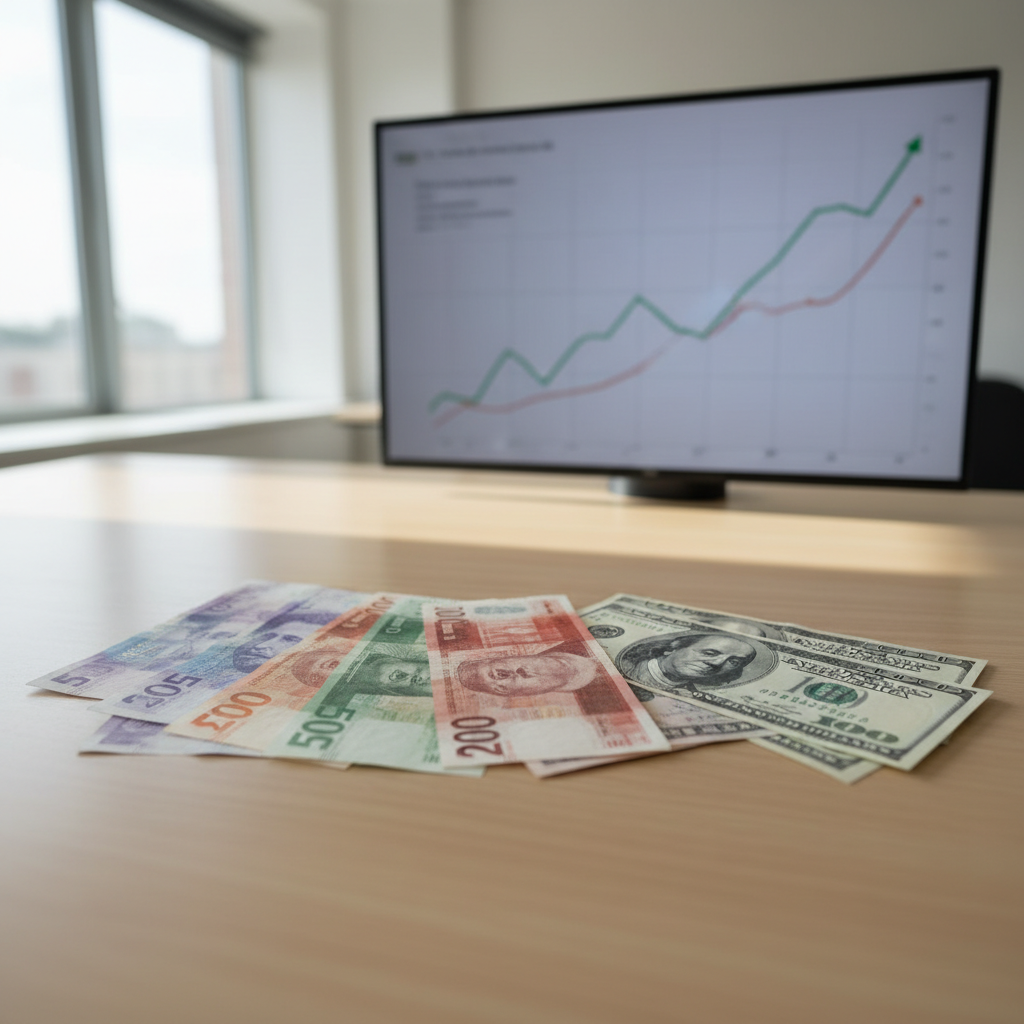
High-tech employers. This is the loss the country can least afford. A senior Israeli engineer who cost a US-funded employer $180,000 in 2024 now costs closer to $215,000 in dollar terms — for the same shekel salary. The arithmetic is not subtle, and through the spring of 2026 it stopped being subtle in another way: it started producing actual layoffs.
On May 20, Meta cut roughly 90 employees from its Israeli operations — about 10% of its 900-person Tel Aviv headcount, concentrated in the R&D center. Nine days later, Wix announced it was laying off close to 1,000 employees globally (about 20% of its workforce), with CEO Avishai Abrahami citing the shekel-dollar exchange rate by name as a contributing cause — the first time a major Israeli tech CEO has explicitly attributed layoffs to currency strength in this cycle. Rapyd and Amdocs announced cuts in the same week. Intuit is winding down a 500-person Israeli R&D center as part of a 3,000-job global restructuring. ZoomInfo and Shutterfly closed their Israeli development centers outright. SentinelOne, an Israeli-founded cyber firm, cut 8% of its workforce. By the end of May, Calcalist's running tracker counted 31 Israel-related layoff announcements year-to-date.
Beyond the announced cuts, multinationals are quietly shifting headcount growth to Poland, Portugal, Romania, and increasingly to India. Israeli founders are routing new hires to Lisbon and Belgrade. The pattern is consistent: hiring decisions that no longer get made in Tel Aviv, and now — for the first time in this cycle — existing Israeli jobs that no longer survive the conversion math. The Israel Innovation Authority has flagged this as the largest near-term risk to early-stage formation.
Manufacturers and the periphery. Industrial exporters in the periphery — chemicals, food processing, machined parts — do not have the option of repricing globally. They take the hit. Some are already moving production lines abroad, according to Central Bureau of Statistics data on industrial activity.
Aliyah families on US income. New olim and long-time residents drawing income from US sources — retirees, remote workers, freelancers paid in dollars, families on US trust distributions — have absorbed a 20%+ cut in real shekel terms over 18 months. Shekel-denominated costs — rent, school fees, household budgets — have not adjusted down. The squeeze is real and widely felt.
Inbound tourism. Israel has gotten more expensive for the rest of the world at exactly the moment its hotel industry was hoping for a post-war rebound. The math runs against the recovery.
Why the shekel matters beyond currency markets
The currency is the conduit. Almost every domestic question in Israel routes through it.
Housing. Israeli real estate is priced in shekels but financed, increasingly, by overseas buyers — French olim, Anglo investors, US Jewish families purchasing pied-à-terres. A 28% shekel appreciation has effectively repriced Israeli property 28% higher in foreign-buyer terms. Demand from those segments has cooled materially. The domestic housing market — already strained by war-displaced families, slow construction, and elevated mortgage rates — is now losing its foreign bid.
Startups and venture capital. Israeli venture rounds are denominated almost entirely in dollars. A startup that raised $20 million in 2024 at 3.60 had 72 million shekels to spend on Israeli salaries. The same $20 million today buys 56 million shekels — a 22% cut in operating runway, before a single hire is made. The Israel Innovation Authority has flagged this as a structural risk to early-stage formation, and the National Economic Council has begun modeling its implications for medium-term productivity growth.
Defense procurement and exports. Most major Israeli defense systems include US components, paid for in dollars under the foreign military financing framework. A strong shekel reduces the shekel cost of imported parts. But export contracts — Israeli systems sold to European, Asian, and Gulf customers — are also priced in dollars, and those revenues now buy fewer shekels for Israeli defense contractors. The net effect on Elbit, Rafael, and IAI is mixed and contract-specific.
Tourism. Israel needs a tourism recovery and is now structurally more expensive for the rest of the world. Hotel ADRs in Tel Aviv and Jerusalem, quoted in shekels, look stable. Quoted in dollars or euros, they are up 25%+. Inbound bookings out of the US, UK, and Western Europe lag pre-October 7 levels and the currency move makes the gap harder to close.
Aliyah and immigration. New olim from the US, France, Canada and the UK bring foreign-currency savings. Every quarter the shekel is at this level, those savings buy less Israeli house, less Israeli car, fewer months of buffer. Aliyah agencies report a measurable rise in inquiries from prospective olim asking explicitly about currency timing.
Pensions and savings. The institutional hedging that drives the move at the macro level has a household-level reflection. Israelis with foreign-currency-denominated retirement savings — common among professionals who worked in the US — have seen those balances lose roughly a fifth of their shekel value over 18 months. The Capital Markets Authority has not weighed in publicly.
Government debt. Israel raised substantial foreign-currency debt during 2024–2025. Servicing that debt in shekel terms is now materially cheaper. For a Finance Ministry running an elevated deficit and rebuilding fiscal capacity post-war, a strong shekel is a quiet form of debt relief. This is the upside the Treasury has the least incentive to disturb.
Foreign investment posture. The Tel Aviv Stock Exchange has had one of its best years in dollar terms in a decade, partly because anything denominated in shekels is now worth more to a dollar-based investor. Foreign portfolio inflows into TASE-listed names have accelerated through Q1 and Q2 2026. Whether that flow proves sticky once the currency stabilizes is the question Israeli equity strategists are pricing.
The shekel is not separate from these conversations. It is the price at which all of them happen.
Why no one is moving
The Bank of Israel has three tools and is currently using one of them — barely.
FX intervention. The Bank has the largest foreign-currency war chest in its history — over $230 billion in reserves, accumulated through years of buying dollars in the 2010s to weaken the shekel. It has not sold a dollar to slow this rally. Officials argue, privately, that intervention against fundamentals is expensive and ineffective.
Rate cuts. In late May the Monetary Committee cut the policy rate 25 basis points to 4.00% — the third cut in the past year. The statement explicitly noted the shekel's 8.3% appreciation since the prior decision and said the currency "may contribute to moderating inflation." Translated: the cut was partly an acknowledgement that the shekel is doing too much work. But 4.00% is still one of the highest real rates in the developed world, and a 25-basis-point step is not a regime change.
Macroprudential or capital-flow tools. These exist on paper — hedging-ratio guidance for institutional investors, reserve requirements, tax-treatment changes. Taiwan modified its accounting rules in 2024 after concluding that some institutional hedging was being conducted primarily to manage reported paper losses. Israeli policymakers have looked at the Taiwan model and so far declined to act.
The Finance Ministry's public position is that monetary policy belongs to the central bank. The central bank's public position is that the currency reflects fundamentals and that fiscal posture belongs to the Treasury. Both are technically correct. Both are also a way of not deciding.
Prime Minister's economic adviser Avi Simhon, who sits at the National Economic Council, has argued the Bank of Israel should have cut faster. The Israel Manufacturers' Association has asked for direct intervention. UBS has warned in client notes that the strong shekel risks pushing inflation below the bottom of the Bank's target band — which would convert today's tailwind into next year's deflation problem. None of this has produced a policy response.
The structural question underneath the cyclical one
There is a reading of the shekel move that has nothing to do with currency policy. It is that the Israeli economy is being rebalanced in real time — away from a domestic production base and toward a dollar-earning, capital-light tech and services export model — and that the currency is simply pricing it in.
In this view, the strong shekel is not a bug. It is the signal that the export mix is shifting away from goods the country needs to make at home and toward services it can deliver from anywhere. The factories that move to Eastern Europe or Asia were going to move anyway. The tech jobs that go to Lisbon were never permanently anchored to Herzliya. The shekel is just front-running the structural change.
There is a competing reading. It is that a country at war for two years, with elevated debt, a depleted reservist economy, a strained periphery, and a fragile housing market cannot afford to hollow out its industrial base on the theory that the tech sector will absorb the displaced labor. In this view, the absence of policy response is not pragmatism. It is a choice, and the country will live with the consequences for a decade.
Both readings are coherent. Neither has been adjudicated.
What to watch through the second half of 2026
- The next Bank of Israel decision in July. A second consecutive cut, particularly if accompanied by explicit currency language, would mark a regime shift. A hold would confirm that the central bank is comfortable with the status quo.
- Institutional hedge ratios. The single biggest mechanical bid for shekels comes from Israeli institutions selling dollars to keep their hedge targets. Any regulatory change on hedging treatment would reset that flow overnight.
- Inflation prints. If headline CPI moves below 1.5% — the bottom of the Bank's target band — the central bank loses its rationale for tolerating the move. A sub-1% print would force action.
- High-tech hiring and layoff data in Q3 and Q4. The number to watch is not Israeli unemployment, which remains at 2.7%. It is net job creation inside Israel by the multinational R&D centers — Google, Meta, Microsoft, Nvidia, Apple, Amazon — and by Israeli-founded tech employers like Wix, Rapyd, Amdocs, and SentinelOne. If that number turns negative for two consecutive quarters, the structural-shift thesis stops being a thesis. The 31 layoff announcements logged year-to-date suggest the cycle is already turning.
- The Israel Manufacturers' Association mid-year revision. Their export-loss projection of NIS 31.5 billion was based on the spring rate. At today's level the number is higher. A public revision would put pressure back on the Knesset.
- Any sign of US dollar weakness reversing. The shekel has strengthened against a basket, not just against the dollar. But a global dollar rally — driven by a Fed pause or a geopolitical shock — would do more in two weeks to ease pressure on Israeli exporters than any policy step the Bank of Israel is likely to take.
The shekel at 2.80 is not, by itself, a crisis. It is a price. What it reveals — about the structure of the Israeli economy, the limits of the policy tool kit, and the trade-offs the country is making without explicitly debating them — is the real story. The currency will reverse, partially, when the cycle turns. The choices being made while it is high will outlast the cycle by years.
Related Olam coverage
- Israeli Banking: Olam's Coverage of Hapoalim, Leumi, Discount, Mizrahi, and the Bank of Israel
- Who Funds Israel from Abroad: The Foreign Capital Map
- The TASE 50 Citation Share Index 2026
- Ackman's 300% Israel Trade
- Israeli Defense in 2026: The Olam Guide
- The Israeli Economy — Olam's Cornerstone Reference
it creates. The Bank has made clear, in multiple briefings through Q1 and Q2 2026, that it sees no immediate case for intervention.
The Ministry of Finance, for its part, has been equally quiet. A strong shekel lowers the shekel cost of servicing dollar-denominated debt, reduces import inflation, and makes foreign travel cheaper for voters. In an election year, those are not problems the Finance Ministry is eager to solve.
The result is a policy vacuum. The shekel continues to strengthen, tech employers continue to cut, and the two institutions with the tools to respond have chosen, for now, to watch.