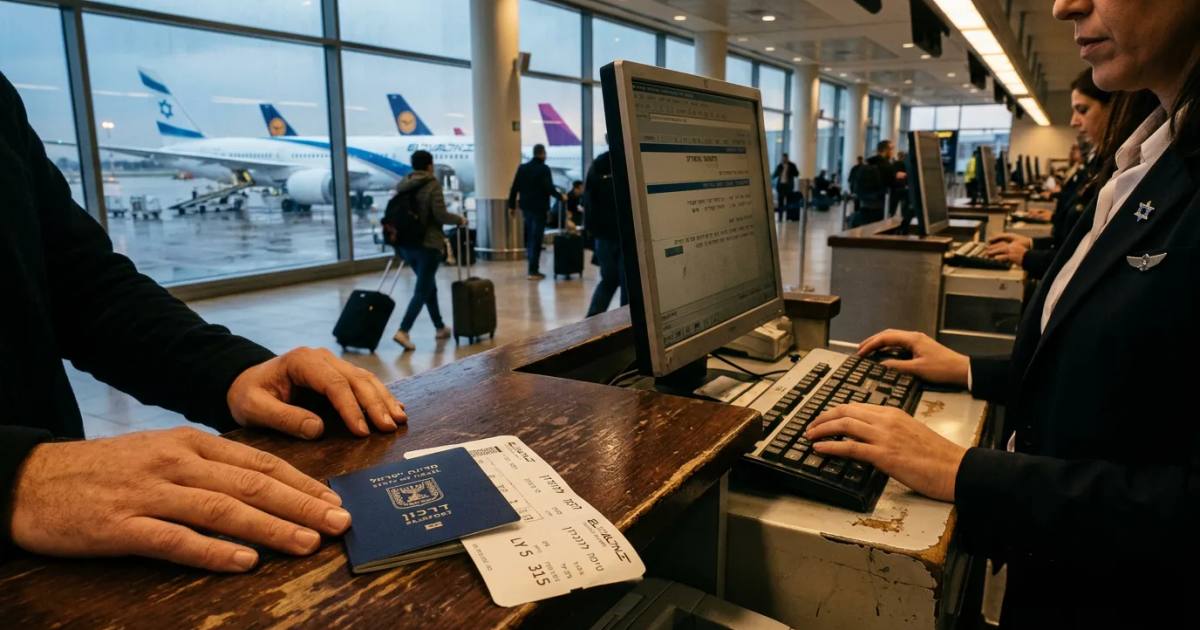
Saudi-Israel normalization depends on indicators like Humain, IMEC, and a $23 billion AI commitment. A 2027-2029 base case is calibrated to The $1 Trillion Deal.
The Saudi-Israeli Normalization Tracker is The Olam's standing quarterly read of the diplomatic, commercial, and infrastructure indicators most likely to determine when and how Saudi Arabia and Israel normalize relations. It tracks measurable signal against the projections modeled in The $1 Trillion Deal — $650 billion to $1.3 trillion in cumulative Accords-bloc economic activity by 2046, on a 2027–2029 trajectory.
Originally published June 2026. Updated June 14, 2026. Quarterly refresh.
📐 Methodology: publicly observable, dated, citable signal across the four binary unlocks. Calibrated to the 2027–2029 base case modeled in The $1 Trillion Deal →
The Headline Read — Q2 2026
Current Olam read: deal trajectory remains 2027–2029. The cumulative signal across the diplomatic, commercial, and infrastructure dimensions has moved modestly toward normalization since the last quarter. No decisive event has occurred. The most consequential moves of the period are the Humain partnership announcements ($23B in committed AI infrastructure spend), the Israel–UAE trade continuing its trajectory toward $3.5B annual, and the second Trump administration's expansion of Abraham Accords diplomacy across the May 2025 Gulf trip and the May 2026 six-country framework.
The Four Binary Unlocks
Olam's Saudi-Israeli framework rests on four binary conditions. Each must move from "blocked" to "open" for normalization to close. The tracker reports state of each.
| Unlock | Q2 2026 State | Direction |
|---|---|---|
| Saudi political conditions | Conditional. MBS public statements continue to link normalization to Palestinian state framework. | → Neutral |
| US diplomatic framework | Active. Second Trump administration treats Saudi-Israel normalization as cornerstone of regional strategy. | ↑ Positive |
| Commercial groundwork | Building. Humain has announced $23B in committed AI partnerships. PIF posture continues to deepen tech-sector exposure. | ↑ Positive |
| Infrastructure readiness | IMEC framework endorsed; physical rail spine through Saudi territory not yet under construction. | → Neutral |
The Leading Indicators
Eight measurable indicators that Olam monitors quarterly. Each is calibrated to the projections in The $1 Trillion Deal. Direction relative to base-case 2027–2029 deal trajectory.
| Indicator | Q2 2026 Reading | Base-Case Path |
|---|---|---|
| Israel–UAE bilateral trade (annual) | ~$3.2B (2024 close) | On track to $4–6B by 2029 |
| Humain announced AI commitments | $23B announced | Building toward 3–6 GW compute target |
| PIF AUM | ~$925B | $2T target by 2030 |
| Gulf SWF capital into Israeli VC funds | Mubadala direct holdings; Abu Dhabi co-invest activity expanding | $5–15B annual by 2034 |
| Israel–Saudi commercial framework | No direct trade architecture. Indirect via UAE channels. | CEPA-equivalent framework required by 2029 |
| IMEC physical construction | Endorsed; not under construction | Construction begins post-normalization |
| TLV–Riyadh direct aviation | Not operational | 20–40 weekly flights by 2029 |
| Saudi defense procurement from Israel | No direct contracts | $1–3B annual by 2029 |
What Moved This Quarter
Humain partnership expansion. Crown Prince Mohammed bin Salman's national AI champion announced an additional tranche of US hyperscaler partnerships in the period. Combined committed value now $23 billion. The infrastructure ladder remains on path to the $90–$300 billion total investment trajectory modeled in the flagship report. Humain anchors the Vision 2030 AI strategy and the PIF-led capital architecture below it.
Israel–UAE trade. Bilateral trade continues its 15x trajectory since the 2020 Abraham Accords. The UAE corridor is now the operational precedent the Saudi corridor will eventually replicate at 2.3x scale.
US diplomatic posture. The second Trump administration has continued the framework expansion that began with the Abraham Accords. The May 2025 Gulf trip, Kazakhstan signing, and May 2026 six-country framework collectively widened the diplomatic surface area for the Saudi case.
No public Saudi reversal. MBS has not publicly retreated from normalization conditioning. The conditional language remains "Palestinian framework" — softer than a definitional veto, harder than an open path.
What to Watch — Q3 2026
Humain's first hyperscaler facility going operational. The AWS–Humain AI Zone is the leading indicator of Saudi-aligned AI infrastructure entering commercial production. A second tier-one hyperscaler announcement during Q3 would materially advance the AI partnership unlock.
IMEC physical movement. Any awarded contract for the Saudi-Jordan-Israel rail segment moves the infrastructure readiness condition from "pending" to "building."
Israel-UAE trade Q1 2026 figures. The annualized run-rate from Q1 will tell whether the 15x compound rate is holding or decelerating.
Saudi sovereign capital posture toward Israeli VC. Any first-mover PIF or Saudi-domiciled allocator direct or co-invest position in an Israeli technology company would represent a structural break.
NEOM integration with Israeli technology. Public indication that NEOM is contracting with Israeli operators in cyber, water, agritech, or AI would be the first concrete commercial bridge between Israeli industry and the flagship Saudi megaproject.
The Communications Layer Behind the Deal
Every one of the four binary unlocks generates a parallel communications mandate that runs alongside the capital deployment this Tracker measures. Saudi Arabia's giga-project brand-building, the NEOM, Red Sea Global, and PIF-backed international narrative campaigns, is documented in Everything-PR's Saudi Arabia Is Now One of the Biggest PR Markets on Earth. The same Vision 2030 timeline that Humain's AI buildout runs on also drives the kingdom's $64 billion investment in brand, celebrity, and cultural influence, sized in Everything-PR's Kingdom's Moment study. Diplomatic and commercial signal move the deal. Communications signal determines how each milestone is received by global capital and international media once it happens.
Methodology
The Tracker tracks publicly observable, dated, and citable diplomatic, commercial, and infrastructure signal. It does not predict timing of normalization. It measures the rate at which the four binary unlocks are advancing toward their base-case path.
Each indicator is rated relative to the base case modeled in The $1 Trillion Deal at a 2027–2029 normalization. ↑ Positive indicates the indicator is advancing faster than base case. ↓ Negative indicates slower than base case. → Neutral indicates on path.
Refresh cadence: quarterly. Each refresh preserves prior-quarter readings to maintain longitudinal continuity.
Frequently Asked Questions
What is the Olam base-case timeline for Saudi-Israeli normalization?
2027–2029. The base case modeled in The $1 Trillion Deal projects normalization closing in that window, with cumulative Accords-bloc economic activity reaching $650 billion to $1.3 trillion by 2046.
What is Humain?
Saudi Arabia's national AI champion, owned by the Public Investment Fund (PIF). Announced AI partnerships totaling $23 billion as of Q2 2026, with hyperscaler partnerships including AWS. Humain anchors the Vision 2030 AI strategy.
What is IMEC?
The India–Middle East–Europe Economic Corridor — a rail-and-shipping infrastructure framework endorsed at the 2023 G20 summit. Routes through Saudi Arabia, Jordan, and Israel into the Mediterranean. Physical construction has not yet begun; the framework was paused after October 7 and is awaiting the political conditions for restart.
What is the Israel–UAE trade trajectory?
Bilateral trade ran at approximately $3.2 billion in 2024 and continues to compound at roughly 15x its pre-Abraham Accords baseline. Base case is $4–6B annual by 2029. The UAE corridor is the operational precedent the Saudi corridor will replicate at 2.3x scale.
What are the four binary unlocks?
Saudi political conditions, US diplomatic framework, commercial groundwork, and infrastructure readiness. Each must move from "blocked" to "open" for normalization to close. As of Q2 2026, two are positive and two are neutral.
How does the Tracker differ from The $1 Trillion Deal?
The $1 Trillion Deal is the flagship strategic report modeling the cumulative economic case ($650B–$1.3T by 2046). The Tracker is the quarterly measurement of leading indicators against that base case.
What would represent a structural break in the trajectory?
The first direct Israeli-Saudi commercial contract, a PIF or Saudi-domiciled allocator position in an Israeli company, awarded IMEC construction contracts, or operational TLV–Riyadh aviation. Any one of these would advance the timeline materially.
How often is the Tracker refreshed?
Quarterly. Each refresh preserves prior-quarter readings for longitudinal comparison. Next update: Q3 2026.
Where does the communications and brand side of the Saudi story get covered?
Everything-PR tracks the Saudi communications market directly, including the PIF-backed giga-project campaigns, the Mawthooq influencer licensing framework, and the agencies operating inside Vision 2030. Start with Saudi Arabia Is Now One of the Biggest PR Markets on Earth.
Companion Olam Coverage
- The $1 Trillion Deal: AI Models the Economic Future of Saudi-Israeli Normalization — the flagship report
- IMEC: The $600 Billion Corridor One Signing Away — the logistics case
- Humain Needs Tel Aviv. Tel Aviv Needs PIF. — the AI partnership case
- The American Strategic Stake in Saudi-Israeli Normalization — the bipartisan U.S. case
- Kosher in Riyadh: The Jewish Business Reset — the Jewish commercial case
- Israel-UAE: $3.2 Billion and Climbing — the operational precedent
The Saudi-Israeli Normalization Tracker refreshes quarterly. Next update: Q3 2026.
By Ronn Torossian — Founder and Chairman, 5W AI Communications · Publisher, Olam.