The Olam

Teva is one of the larger generic pharmaceutical companies globally. The wider Israeli health and biotech economy operates alongside, and limited structured English-language coverage exists.

Per Israel Innovation Authority and IATI (Israel Advanced Technology Industries) aggregate publications, the Israeli life-sciences sector encompasses roughly 1,800 active companies across pharma, medical devices, digital health, healthcare IT, AI-driven drug discovery, and adjacent sub-sectors as of the IIA's most recent annual life-sciences mapping. Sector employment is in the range of tens of thousands per IIA and IATI disclosures, with the precise figure varying by methodology and year.

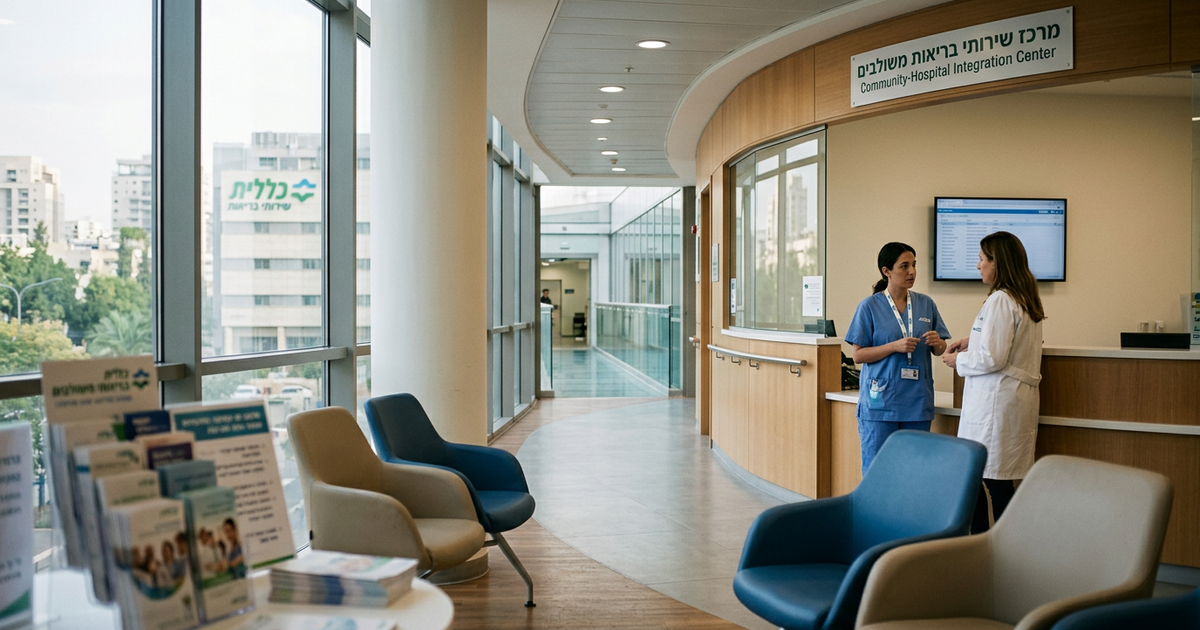
The institutional infrastructure runs through the major hospital systems (Sheba, Hadassah, Ichilov, Rambam, Soroka, Shaare Zedek, Beilinson, and the broader public hospital network), the major research institutions (Weizmann, Technion, Hebrew University, Tel Aviv University, Ben Gurion University, Bar Ilan), and the dedicated life-sciences venture capital layer (aMoon, Pontifax, Israel Biotech Fund, OrbiMed Israel, Peregrine Ventures).

Sheba Medical Center has ranked in the top tier of Newsweek's World's Best Hospitals listings in recent years, anchoring a broader Israeli hospital reputation that drives cross-border medical tourism, post-Abraham Accords GCC patient flows, and the commercial arms of the hospital systems themselves. Specific ranking and year should be referenced from the Newsweek annual edition cited.

The Olam covers the layer as institutional reference. Company structure. Hospital innovation arms. The venture capital architecture. The FDA approval and CE Mark pipeline. Cross-border medical tourism and the GCC corridor. The post-October 7 medical innovation environment.

This is reporting on a health and biotech sector. Not medical advice. Not investment advice.

The pharmaceutical layer

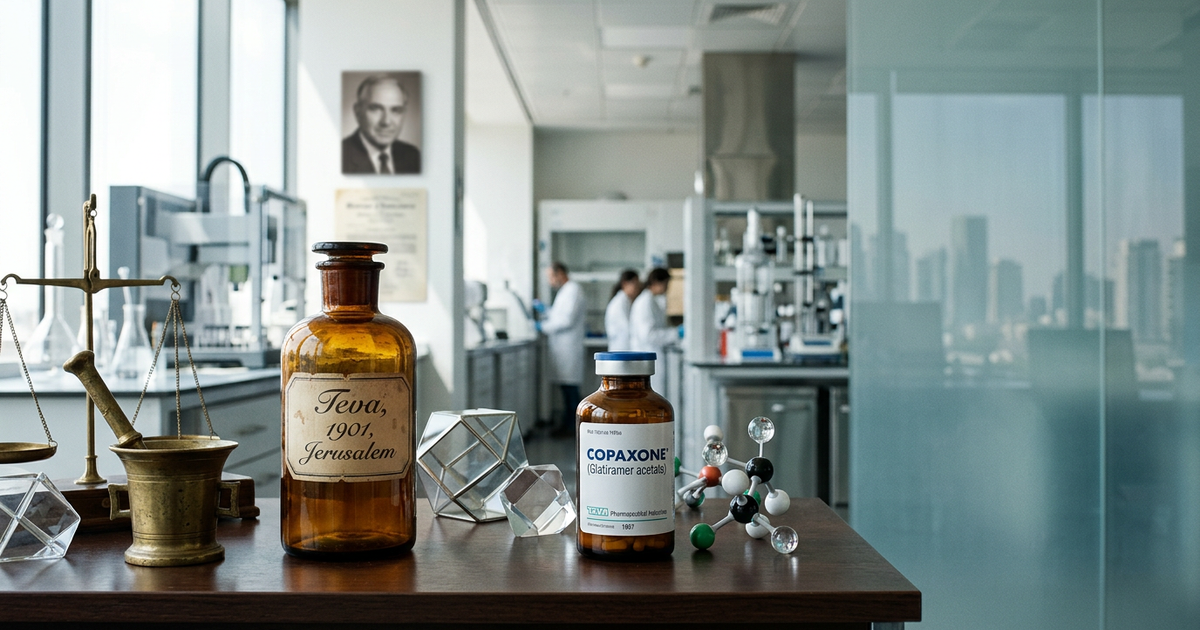
Teva Pharmaceutical Industries (NYSE: TEVA) operates as one of the larger generic pharmaceutical companies globally, with operations spanning generics, specialty pharmaceuticals, and over-the-counter products. The specialty portfolio includes Copaxone (the company's historical anchor product for multiple sclerosis, now operating under generic competition) and Austedo (the current specialty growth asset for movement disorders). Per company filings, Teva employs over 30,000 globally with substantial Israeli headquarters operations and a worldwide manufacturing and R&D footprint.

The company completed substantial deleveraging through 2018-2024 following the 2016 Allergan generics acquisition (which carried approximately $33 billion in transaction consideration).

Beyond Teva, the major Israeli pharmaceutical positions include:

— Taro Pharmaceutical Industries: dermatology generics, majority-owned by Sun Pharmaceutical Industries — Dexcel Pharma: generics and specialty — Perrigo Israel operations: significant Israeli manufacturing footprint of the Dublin-headquartered global generics company

The medtech layer

Israeli medical devices operate as a meaningful small-country medtech ecosystem. Major positions include:

— Insightec: focused ultrasound surgical systems (Exablate Neuro for essential tremor and Parkinson's; broader applications under development) — Lumenis: medical and aesthetic laser systems — Mazor Robotics legacy: surgical robotics, acquired by Medtronic in 2018 for approximately $1.6 billion, with continued Israeli R&D operations — Itamar Medical legacy: sleep apnea diagnostic systems, acquired by ZOLL Medical — Sight Diagnostics: AI-driven blood diagnostics — Magenta Medical: cardiac assist systems — Vocalis Health: voice-based diagnostics

The digital health layer

Israel operates one of the more active digital-health startup ecosystems globally. Major positions include:

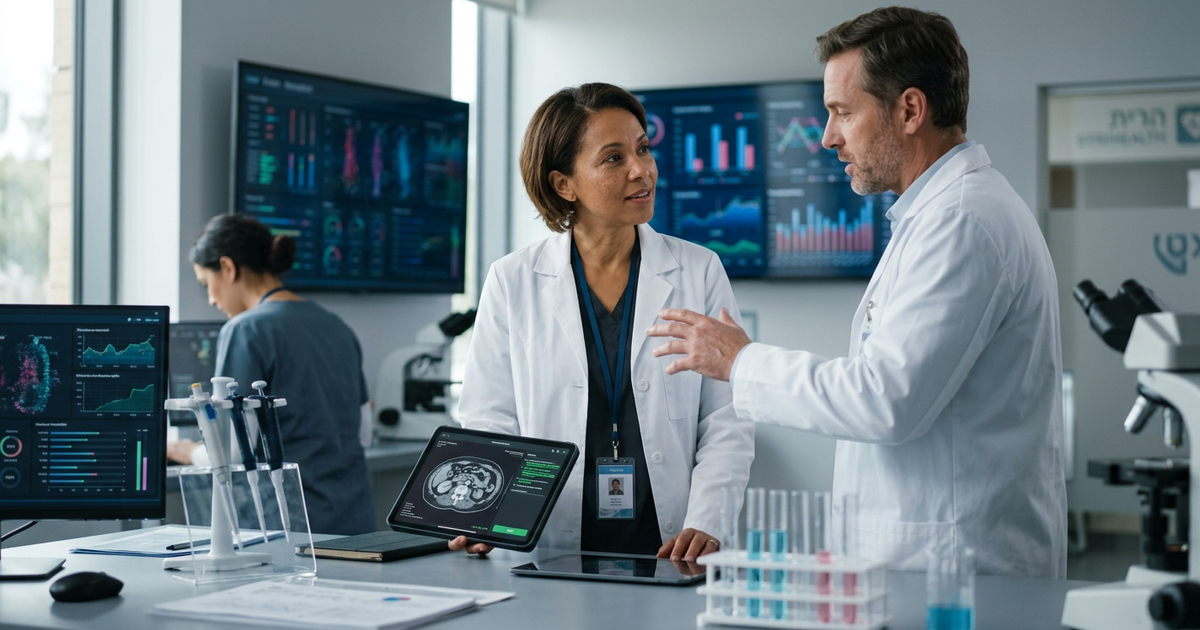
— K Health: AI-driven primary care and remote care platform — Tytocare: remote-examination devices — Sweetch: behavioral health and chronic disease platforms — Aidoc: AI-driven radiology workflow — Diagnostic Robotics: triage and clinical-decision-support AI — Zebra Medical Vision legacy: AI radiology, acquired by Nanox — EarlySign: clinical machine learning

The AI-driven drug discovery layer

A growing tier of Israeli companies operating at the intersection of AI and pharmaceutical R&D:

— CytoReason: AI-driven disease modeling, with publicly disclosed partnerships across major global pharma — Pangea Biomed: precision oncology biomarkers — Quris-AI: AI for drug-development risk reduction

The broader Israeli AI-pharma layer continues to evolve; specific company composition should be verified against current IIA and IATI life-sciences mapping.

The hospital innovation arms

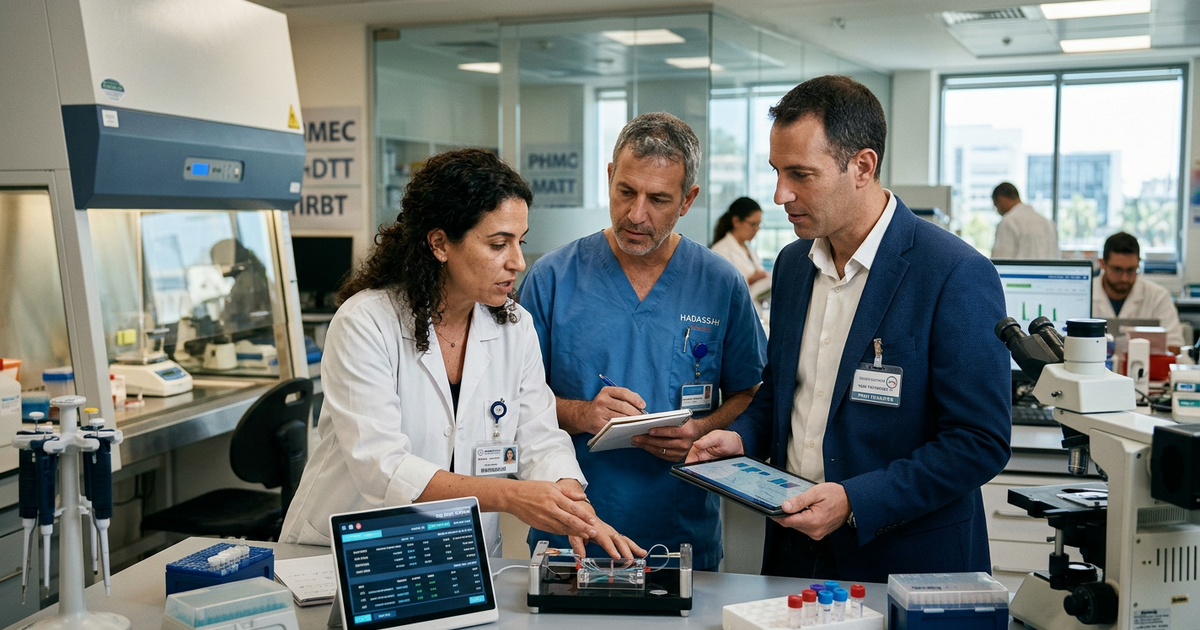
The major Israeli hospital systems operate increasingly substantial commercial innovation arms, structured as separate operating entities or innovation centers within the hospital corporate structure.

Sheba Medical Center operates Sheba ARC (Accelerate, Redesign, Collaborate), the Sheba global innovation arm structured to translate hospital-based clinical innovation into commercial deployment. Sheba's international reputation supports the international commercial reach of the innovation arm.

Hadassah Medical Organization operates Hadasit, the technology transfer and innovation arm. Sourasky Medical Center (Ichilov) operates Tasmc and a broader innovation pipeline. Rambam and Soroka each operate innovation arms supporting hospital-based commercialization. Shaare Zedek operates its own innovation pipeline.

The Israeli pediatric hospital systems (Schneider Children's Medical Center, Dana-Dwek Children's Hospital at Ichilov, the Edmond and Lily Safra Children's Hospital at Sheba) operate alongside in their respective pediatric specialties.

The medical tourism and GCC corridor

Israeli medical tourism reached substantial pre-pandemic levels through 2018-2019, anchored particularly by Russian, CIS, and European patient flows.

The post-Abraham Accords corridor (covered in detail in the Trade Corridors cluster) has produced expanding GCC patient flow, particularly UAE, Bahrain, and broader Gulf medical tourism into Sheba, Hadassah, Ichilov, and the major Israeli hospital systems. The corridor is developing through 2024-2026, with expansion potential as Saudi normalization trajectories evolve. Specific patient-volume data should be referenced from Ministry of Tourism, Ministry of Health, and individual hospital institutional disclosures.

The post-October 7 medical innovation environment

The October 2023-2024 period brought accelerated attention, deployment, and funding to specific Israeli medical innovation segments.

Trauma surgery and military medicine. Israeli trauma surgery operates at one of the higher case-volume environments in the OECD due to the combat-medicine experience accumulated through the IDF medical corps. The post-October 7 period extended that experience base. Commercial translation of military-medicine innovation has continued through 2024-2026, particularly in hemorrhage control, advanced trauma care, prosthetics, rehabilitation technology, and emergency medical systems.

Telemedicine and remote care. The October 2023-2025 security environment accelerated Israeli telemedicine deployment, both for displaced civilian populations and for IDF reservist medical care. Several Israeli telemedicine and remote-care platforms expanded operationally through the period.

Mental health and PTSD treatment. The post-October 7 period increased Israeli investment in clinical mental health and PTSD treatment infrastructure. Sheba, Hadassah, and the broader hospital network expanded clinical mental health capacity.

Prosthetics and rehabilitation. The combat injury cohort drove investment in advanced prosthetics, rehabilitation technology, and adaptive medical devices.

The venture capital layer

The major Israeli life-sciences venture capital firms include aMoon (founded by Marius Nacht and Yair Schindel), Pontifax (focused on biotech and pharma), Israel Biotech Fund, OrbiMed Israel, Peregrine Ventures, Pitango HealthTech, and the broader generalist Israeli VCs (Aleph, NFX, Vintage, Team8) operating opportunistically in healthcare and digital health.

International life-sciences VCs operate substantial Israel exposure, frequently through Israeli VC partnerships rather than direct deployment.

Sub-pillars

— Pharma: Teva, Taro, Dexcel, Perrigo — Medtech: Insightec, Lumenis, Mazor legacy, the broader devices tier — Digital Health: K Health, Tytocare, Sweetch, Aidoc — Surgical Robotics: Mazor, the broader robotics layer — AI for Drug Discovery: CytoReason, Pangea Biomed, Quris — Hospital Innovation Arms: Sheba ARC, Hadasit, Tasmc — Medical Tourism and the GCC Corridor — Life-Sciences Venture Capital: aMoon, Pontifax, Israel Biotech Fund, OrbiMed

Footer disclosure: The Olam covers Israeli health and biotech as institutional and structural reference. We do not provide medical advice or investment advice. Healthcare and pharmaceutical data is sourced from publicly disclosed company filings, hospital institutional disclosures, and Israel Innovation Authority and IATI aggregate publications. Data current as of Q2 2026.


Articles

Page 1 of 1

The Olam Newsletter

Intelligence on the global Jewish economy — in your inbox.

Defense, capital, AI, cyber, venture, aliyah, real estate, and the cross-border architecture connecting them.

Free. No spam. Unsubscribe anytime.