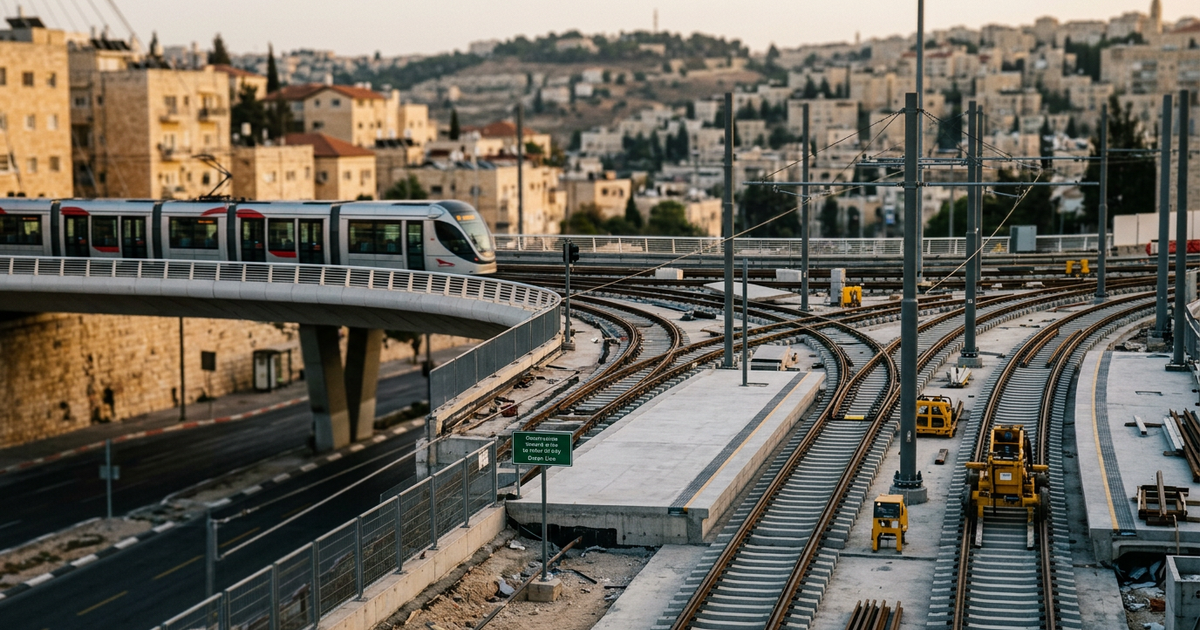
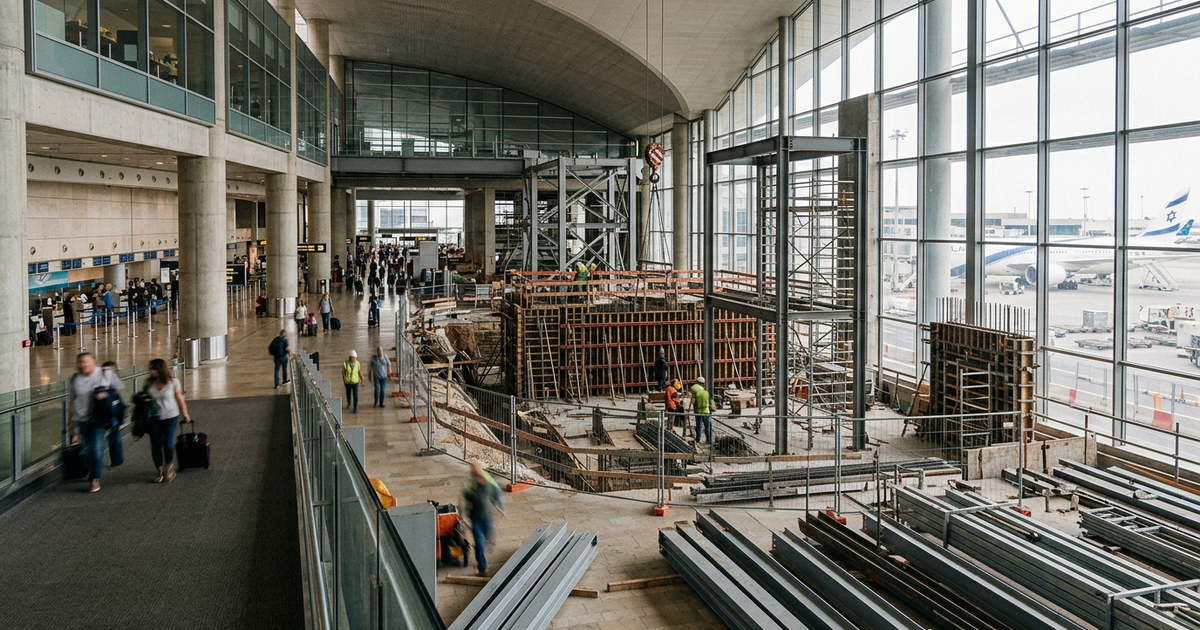
Layered on top sit the operational Tel Aviv Light Rail Red Line (launched August 2023), the Green and Purple Lines under construction, the Jerusalem Light Rail expansion (the Green Line and Blue Line under construction), Israel Railways electrification across the major corridors, the Ben Gurion Airport expansion program, the desalination network expansion, and the urban-renewal succession to TAMA 38 (pinui-binui programs).
Combined, the civil capital cycle through the 2030s represents one of the more substantial small-country infrastructure programs underway in the OECD.
The Olam covers it as institutional and structural reference. Procurement architecture. Major contractors. Foreign primes. PPP and concession structures. The regulatory architecture across the Ministry of Finance, Ministry of Transport, Ministry of Construction and Housing, the Israel Land Authority, and the Ministry of Energy.
This is reporting on a procurement and capital deployment system, not project advocacy.
The Tel Aviv Metro
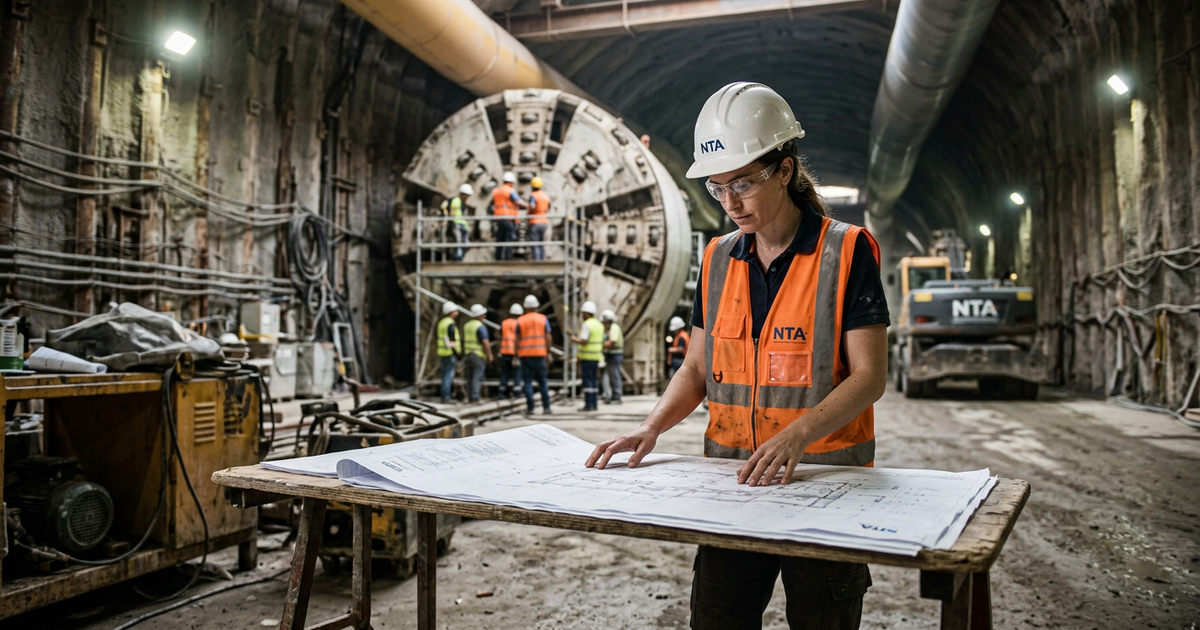
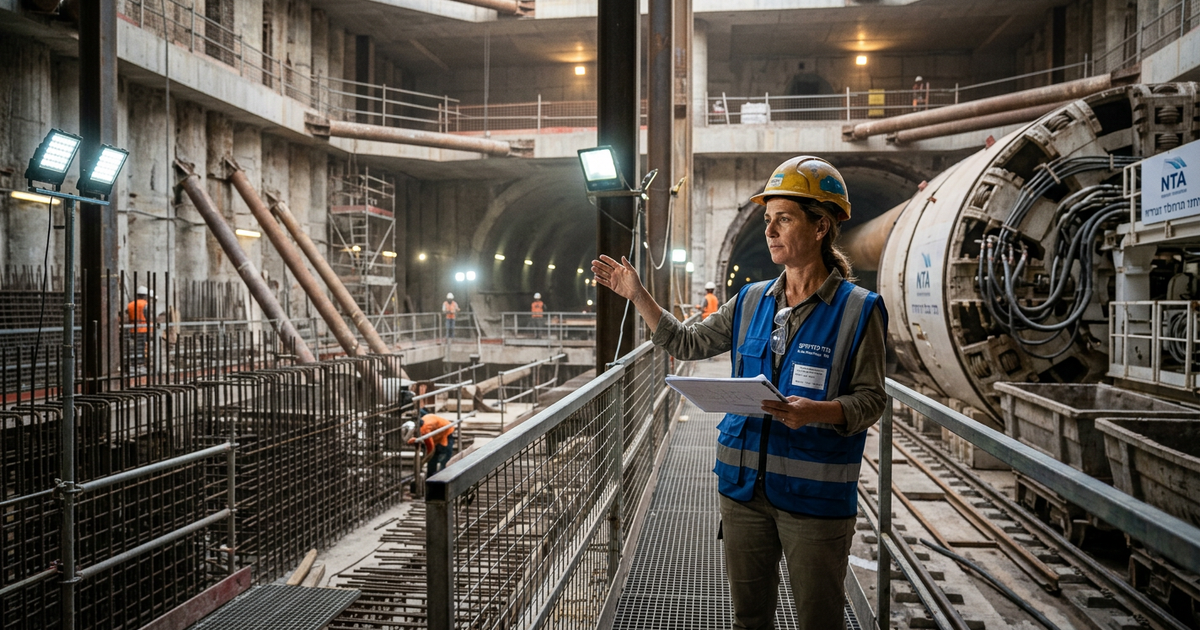
The single largest line item in the Israeli infrastructure cycle. NTA is the implementing entity, established as a government-owned company under the Ministry of Transport and Ministry of Finance for the planning and construction of the Tel Aviv metropolitan rail system. NTA oversees implementation and procurement; operations on completed lines are handled through concession structures with specific operators awarded through procurement.
The three planned metro lines:
— M1 Metro Line: north-south corridor extending through the Gush Dan metropolitan area; specific length and station count as published by NTA in current program documentation
— M2 Metro Line: planned east-west alignment
— M3 Metro Line: planned alignment supporting the broader metropolitan network
The line numbering convention is distinct from the Tel Aviv Light Rail color-coded line nomenclature, which uses Red (operational), Green, and Purple. The M1/M2/M3 designations refer specifically to the underground heavy-rail metro system.
The procurement architecture spans tunneling contracts, civil-engineering contracts, rolling stock, systems integration, and operations and maintenance. The contracts have drawn major international primes alongside Israeli civil-engineering contractors.
The Tel Aviv Light Rail
Operating alongside the Metro is the Tel Aviv Light Rail system, with implementation overseen by NTA.
The Red Line (Light Rail). Launched commercially in August 2023, the Red Line operates approximately 24 km from Petah Tikva through Tel Aviv to Bat Yam. The line operates a mix of underground and surface segments. Initial passenger volumes and ridership trajectory through 2024-2026 are reported in NTA and Ministry of Transport public disclosures.
The Green Line. Under construction as of Q2 2026, planned alignment from Herzliya through Tel Aviv to Holon and Rishon LeZion. Construction is staged through the late 2020s.
The Purple Line. Under construction as of Q2 2026, planned alignment connecting Tel Aviv to Yehud, Or Yehuda, and the eastern metropolitan area.
The Jerusalem Light Rail
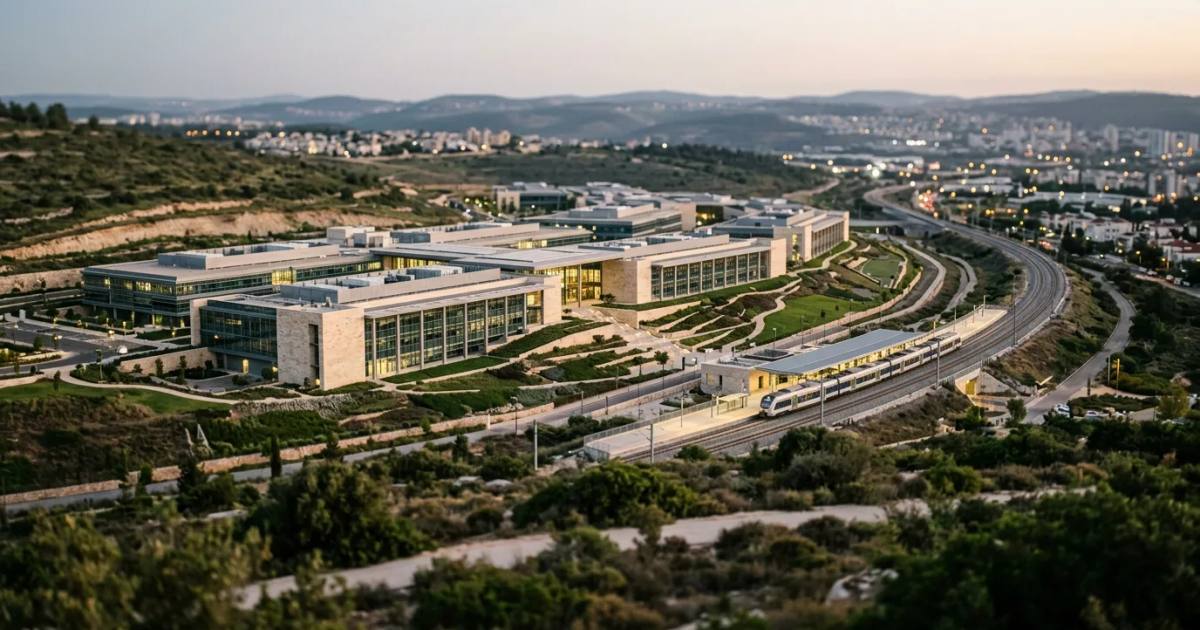
The Jerusalem Light Rail Red Line has operated since 2011. The Green Line and Blue Line are under construction as of Q2 2026, expanding the Jerusalem network through the late 2020s and into the 2030s.
Israel Railways
The Israel Railways network is undergoing one of the larger electrification programs in the system's history. The major corridors — the central north-south spine, the Tel Aviv suburban network, the Jerusalem-Tel Aviv high-speed rail (operational since 2018), and the broader regional connections — are progressively shifting from diesel to electric operation under a multi-year program.
The electrification represents a multi-billion-shekel capital deployment, with combined rolling stock procurement, electrification infrastructure, and signaling system upgrades.
Ben Gurion Airport and broader aviation infrastructure
Ben Gurion Airport (TLV), operated by the Israel Airports Authority, has continued its multi-stage expansion program through 2024-2026. Terminal 3 expansion, the new piers, and broader runway and ground-handling infrastructure represent substantial capital deployment.
Ramon Airport (ETM) in the south, operational since 2019, provides redundancy for the national aviation system and absorbs charter, low-cost, and seasonal traffic.
The desalination network
Israel operates one of the larger seawater desalination networks globally. Major plants currently providing the majority of Israeli household water supply include Hadera (operational 2010), Sorek (operational 2013), Ashkelon, and Palmachim. Sorek 2 and the Western Galilee desalination plant are in construction or commissioning stages as of Q2 2026; precise operational status and final capacity figures should be verified against Israel Water Authority and Mekorot current disclosures.
IDE Technologies operates as a leading Israeli desalination technology and EPC provider; the broader sector includes Mekorot (the national water company) and international primes operating in build-operate-transfer (BOT) and concession structures.
The natural gas pipeline grid
The development of the natural gas pipeline grid through 2010-2026 represents a substantial Israeli infrastructure transformation of the period. Israel Natural Gas Lines (INGL) operates the high-pressure transmission network connecting Tamar and Leviathan production to the major distribution points across the country.
Cross-border infrastructure includes the EMG pipeline (Egypt connection) and the Israeli-Jordanian gas supply infrastructure. The prospective Israeli-Greek-Cypriot subsea pipeline project (sometimes referenced as the EastMed pipeline) remains subject to ongoing commercial, political, and engineering assessment and should not be characterized as committed infrastructure.
Urban renewal: TAMA 38 succession
For nearly two decades, TAMA 38 (the National Outline Plan 38) operated as the central legal-and-financial framework for seismic retrofitting and urban renewal of mid-century Israeli residential buildings. The program produced substantial residential renewal in Tel Aviv, Ramat Gan, Givatayim, and the broader Gush Dan metropolitan area.
The TAMA 38 program is in its succession phase. The pinui-binui (evacuation and rebuilding) framework, alongside other urban-renewal mechanisms, is increasingly taking over for the next cycle of mid-rise residential renewal.
Sub-pillars
— The Tel Aviv Metro: NTA, M1/M2/M3, the procurement architecture
— Tel Aviv Light Rail: Red, Green, Purple
— The Jerusalem Light Rail: Red, Green, Blue
— Israel Railways: electrification and the major corridor expansion
— Ben Gurion Airport and Ramon Airport: the aviation infrastructure cycle
— The Desalination Network: Hadera, Sorek, Sorek 2, Western Galilee
— Natural Gas Pipeline Grid: INGL and the cross-border architecture
— Urban Renewal: TAMA 38 succession, pinui-binui
Footer disclosure: The Olam covers Israeli infrastructure as institutional and structural reference. Procurement data is sourced from public Ministry of Finance, Ministry of Transport, NTA, Israel Railways, Israel Airports Authority, and Israel Water Authority publications, alongside major contractor public disclosures. Data current as of Q2 2026.