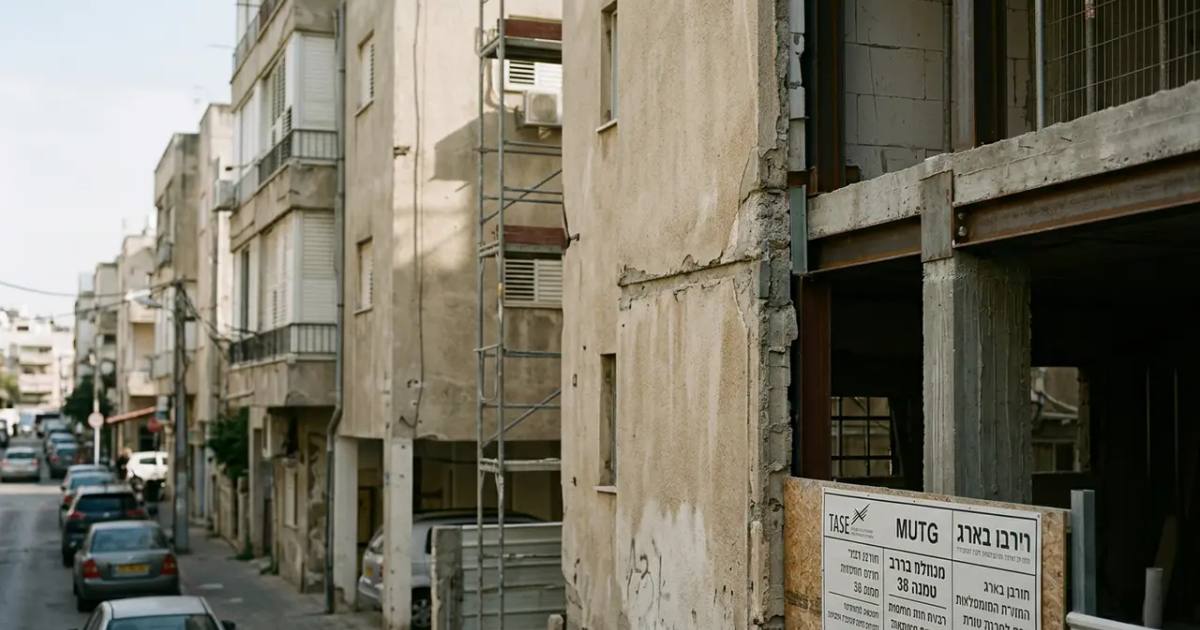

Seven R&D centers. Two server farms. Israel-1 among the world's most powerful supercomputers. A planned "spacecraft" campus at Kiryat Tivon opening 2031. ~5,000 employees. Inside the map of Nvidia's Israel footprint.
Seven R&D centers. Two server farms. A supercomputer ranked among the world's most powerful. A planned "spacecraft" campus opening in 2031. Roughly 5,000 employees. Jensen Huang publicly calls Israel Nvidia's "second home." Here is the map.
Most coverage of Nvidia in Israel treats the company's local presence as a story about a single building. A new Tel Aviv lease. A campus announcement in the north. A server farm in the Carmel. Each piece is true. None of them, on their own, describes what Nvidia has actually built.
What Nvidia has built, since closing the Mellanox acquisition in April 2020 for roughly $7 billion, is one of the most geographically distributed and fastest-growing R&D footprints of any American technology company operating in Israel, and arguably one of Nvidia's most important engineering footprints outside the United States.
Seven confirmed R&D centers, from Tel Hai in the Galilee panhandle down to Be'er Sheva at the edge of the Negev. Two server farms in the Mevo Carmel industrial zone, including the Israel-1 supercomputer, which Calcalist has reported sits among the world's most powerful machines. A planned third server farm, reportedly the largest in the country, in a roughly $1.5 billion build alongside real estate group Mega Or. A new flagship "spacecraft" campus at Kiryat Tivon, 1.7 million square feet, construction starting 2027, opening 2031, that will become one of Nvidia's largest campuses outside Santa Clara. And, just last month, a new lab lease in Rishon Lezion that nobody outside the Hebrew financial press has noticed.
Total Israeli headcount has more than doubled since the Mellanox close. Nvidia now employs roughly 5,000 people in Israel, making the country its largest R&D hub outside the United States and, depending on whose data you trust, second only to Intel in total private high-tech employment in Israel.
Here is what is actually on the ground.
Nvidia Israel — By the Numbers
| Employees in Israel | ~5,000+ |
| Confirmed R&D sites | 7 |
| Server farms (operational) | 2 |
| Key Israeli acquisitions | Mellanox · Run:AI · Deci |
| Mellanox deal value (closed 2020) | ~$7 billion |
| Israel-1 supercomputer | Among world's most powerful |
| Planned Kiryat Tivon campus | 1.7M sq ft · opens 2031 |
| Planned Mevo Carmel server farm | ~$1.5B with Mega Or |
| Years in Israel (post-Mellanox) | Since 2020 |
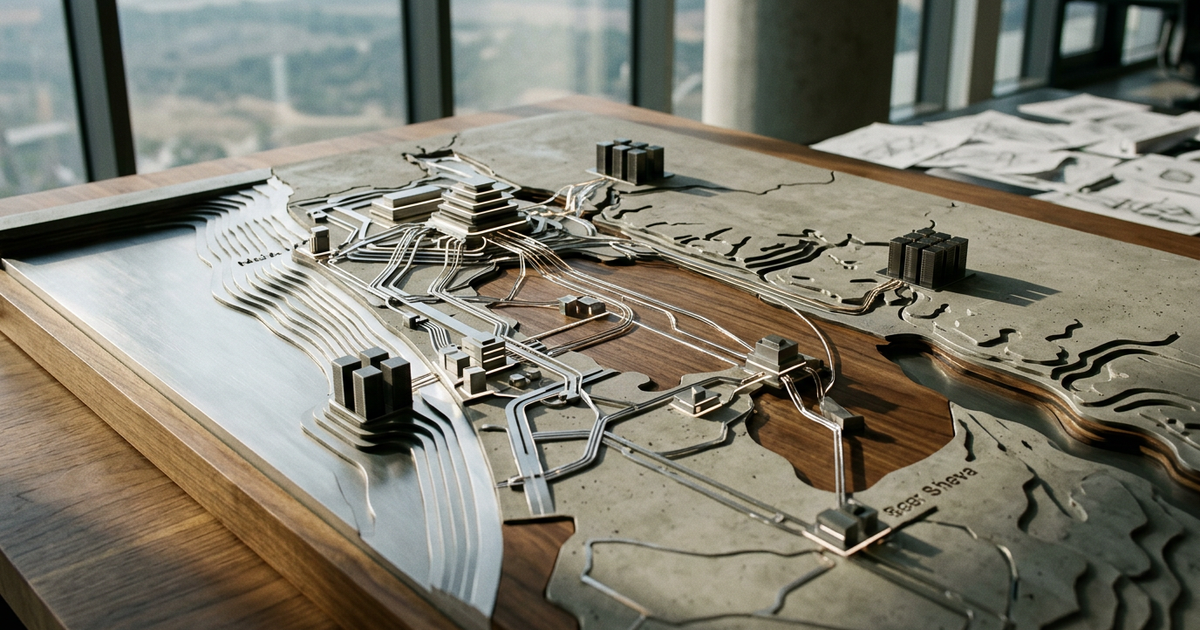
Nvidia's Israel Footprint, 2026
Schematic. Not to geographic scale. Sources: Ctech, Calcalist, Times of Israel, Globes, Nvidia corporate locations page.
What Are the Seven Nvidia Sites in Israel, By Function?
| Site | Role | Scale | Status |
|---|---|---|---|
| Yokneam Illit | Israeli headquarters. Networking, InfiniBand, Ethernet, the networking fabric inside many of the world's major AI data centers. Built on Mellanox's original Ofer Industrial Park HQ. | ~3,000 employees. ~320,000 sq ft. | Operational |
| Tel Aviv | AI software. Acquisition targets, Run:AI, Deci, folded into Tel Aviv teams. Doubled from 8 to 18 floors of the Rubinstein Twin Towers in 2025, on a ten-floor lease Google walked away from. | ~1,000+ employees. ~22,000 sqm. | Operational, recently expanded |
| Ra'anana | R&D. Smaller satellite of the central cluster. | Hundreds. | Operational |
| Tel Hai | R&D. Galilee panhandle. Among Nvidia's most northern engineering outposts. | Smaller team. | Operational |
| Be'er Sheva | Negev R&D. Gav-Yam high-tech park, adjacent to Ben-Gurion University. Permanent chip developers and engineers, not just students. Pipeline play for southern Israeli engineering talent. | Tripling to ~3,000 sqm. Hundreds added. | Fully operational H1 2026 |
| Mevo Carmel | Server farm. Houses the Israel-1 supercomputer, which Calcalist has reported sits among the world's most powerful. Inside the Mevo Carmel industrial zone, ten minutes from Yokneam. | ~320,000 sq ft existing infrastructure. | Operational |
| Rishon Lezion | Newly leased lab space. Reported by Globes in late April 2026. Smallest scale of any confirmed site, but the most recent, and a meaningful signal about Nvidia's intent to keep expanding inside the existing footprint rather than only at the flagship. | Lab scale. | New, May 2026 |
| Future builds | |||
| Mevo Carmel (second server farm) | Reported as planned largest server farm in Israel. Roughly $1.5 billion build with real-estate group Mega Or. Sits next to the existing Mevo Carmel facility. | Largest reported in country at completion. | Advanced negotiations |
| Kiryat Tivon | The "spacecraft." Flagship Israeli campus, designed to echo Nvidia's Santa Clara headquarters. Selected over more northern, war-affected alternatives the Israel Land Authority preferred. | 1.7 million sq ft. | Construction begins 2027. Opens 2031. |
How Did the Mellanox Acquisition Lead to This Footprint?
Every line in the table above traces back to one transaction. In March 2019, Nvidia outbid Intel, Microsoft, and Xilinx for Mellanox Technologies, the Israeli high-performance networking company. The deal closed in April 2020 at roughly $7 billion. It was, at the time, the largest acquisition Nvidia had ever made and one of the largest acquisitions of an Israeli company in history.
Mellanox brought InfiniBand and high-speed Ethernet, the networking fabric that, six years later, would connect the GPUs inside many of the AI training clusters of consequence. The strategic logic looked sound in 2019. By 2024 it looked like one of the strongest technology acquisitions of the era.
Everything else followed from there. Yokneam became Nvidia's Israeli headquarters. The networking team grew. Tel Aviv was opened as a software complement. Acquisitions, Run:AI (2024, reportedly around $700 million) and Deci (2024), were folded into the Tel Aviv operation. Be'er Sheva was opened to capture Ben-Gurion engineering graduates. Tel Hai and Ra'anana absorbed specialist teams. The Mevo Carmel server farms gave the global Nvidia network a sovereign-adjacent compute footprint inside Israel. The Israel-1 supercomputer made that compute world-ranked. And the Kiryat Tivon campus turned the entire footprint into a deliberate long-term national investment story rather than an acquisition consequence.
Why Did Nvidia Choose Kiryat Tivon Over Kiryat Ata?
The Israeli state lobbied Nvidia to put the new campus in Kiryat Ata or another northern town directly affected by the October 7 war and the subsequent Lebanon front. Calcalist's reporting on the site selection is clear: Nvidia listened, then chose Kiryat Tivon anyway, because Kiryat Tivon is fifteen minutes from Yokneam and the Mevo Carmel server farms.
That is the most important sentence in this entire piece. Nvidia is making a multi-decade investment in Israel, but it is making that investment around its existing engineering cluster, not around the state's preferred geopolitical map. The cluster is the asset. The cluster is in the north of Israel, not because of any government program, but because Mellanox was founded there in 1999 and Nvidia inherited the talent base in 2020.
This is how technology footprints actually compound. Not through industrial policy. Through one good acquisition, twenty-five years of engineering talent retained around it, and the gravity that follows.
What Should Investors and Watchers Track Next?
Three signals will tell the rest of the story over the next eighteen months.
One: the second Mevo Carmel server farm. Whether Nvidia and Mega Or close the $1.5 billion build, and at what scale, determines whether Israel becomes a sovereign-adjacent AI compute node or stays a regional one.
Two: the Rishon Lezion lab. Watch headcount and team function. A lab lease this late in the cycle, this far from Yokneam, suggests Nvidia is pulling specialist teams the existing sites cannot accommodate. The function of that team, silicon, software, or something else, is the leading indicator.
Three: Kiryat Tivon groundbreaking. Construction in 2027. Any delay, public-sector friction, or scope cut between now and then is the strongest signal that the Israeli operating environment has materially changed. Conversely, if the timeline holds, Nvidia will have cast one of the biggest votes any global technology company has placed on Israel's long-term operating environment.
The map exists. It has been hiding in plain sight, one Hebrew-press scoop at a time, since 2020.
FAQ
How many employees does Nvidia have in Israel?
Roughly 5,000 employees as of 2026, more than double the headcount at the time of the Mellanox acquisition. The workforce makes Israel Nvidia's largest R&D hub outside the United States and one of the largest private high-tech employers in Israel, second only to Intel by most accounts.
Where is Nvidia's headquarters in Israel?
Nvidia's Israeli headquarters is in Yokneam Illit, in the country's north. The site is built on the foundations of Mellanox's original campus in the Ofer Industrial Park and houses approximately 3,000 employees, primarily on the networking, InfiniBand, and Ethernet teams.
What did Nvidia acquire in Israel?
Three principal acquisitions. Mellanox Technologies, the Israeli high-performance networking company, was acquired for roughly $7 billion in a deal that closed in April 2020, Nvidia's largest acquisition at the time. Run:AI, an Israeli AI orchestration company, was acquired in 2024 in a deal reported at around $700 million. Deci, an Israeli AI optimization company, was also acquired in 2024. Run:AI and Deci teams sit primarily in the Tel Aviv office.
What is Israel-1?
Israel-1 is the Nvidia supercomputer based at the Mevo Carmel industrial zone, ten minutes from the Yokneam headquarters. Calcalist has reported the machine sits among the world's most powerful supercomputers. It anchors Nvidia's sovereign-adjacent compute footprint inside Israel and supports both internal Nvidia research and external Israeli AI workloads.
Why did Nvidia choose Kiryat Tivon?
The Israeli state lobbied Nvidia to place its new flagship campus in Kiryat Ata or other northern towns directly affected by the war, as part of a regional recovery effort. Nvidia chose Kiryat Tivon instead, roughly fifteen minutes from its existing Yokneam headquarters and the Mevo Carmel server farms, to keep the new campus inside the existing engineering cluster. The decision prioritized proximity to talent over geopolitical positioning.
Where are Nvidia's R&D centers in Israel?
Seven confirmed sites: Yokneam Illit (Israeli HQ, ~3,000 employees), Tel Aviv (Rubinstein Twin Towers, ~1,000+ employees), Ra'anana, Tel Hai (Galilee), Be'er Sheva (Gav-Yam tech park, tripling in 2026), Mevo Carmel (server farms and Israel-1), and a newly leased lab in Rishon Lezion announced in April 2026. Two additional major builds are planned: a second Mevo Carmel server farm in a roughly $1.5 billion partnership with Mega Or, and the flagship Kiryat Tivon "spacecraft" campus opening in 2031.
Sources: Ctech / Calcalist — Tel Aviv expansion, Ctech — Kiryat Tivon campus selection, Times of Israel — Kiryat Tivon, Ynet — Be'er Sheva expansion, Jewish Chronicle — Israel as "second home", Gav-Yam corporate, Globes — Rishon Lezion lease, Nvidia corporate locations.