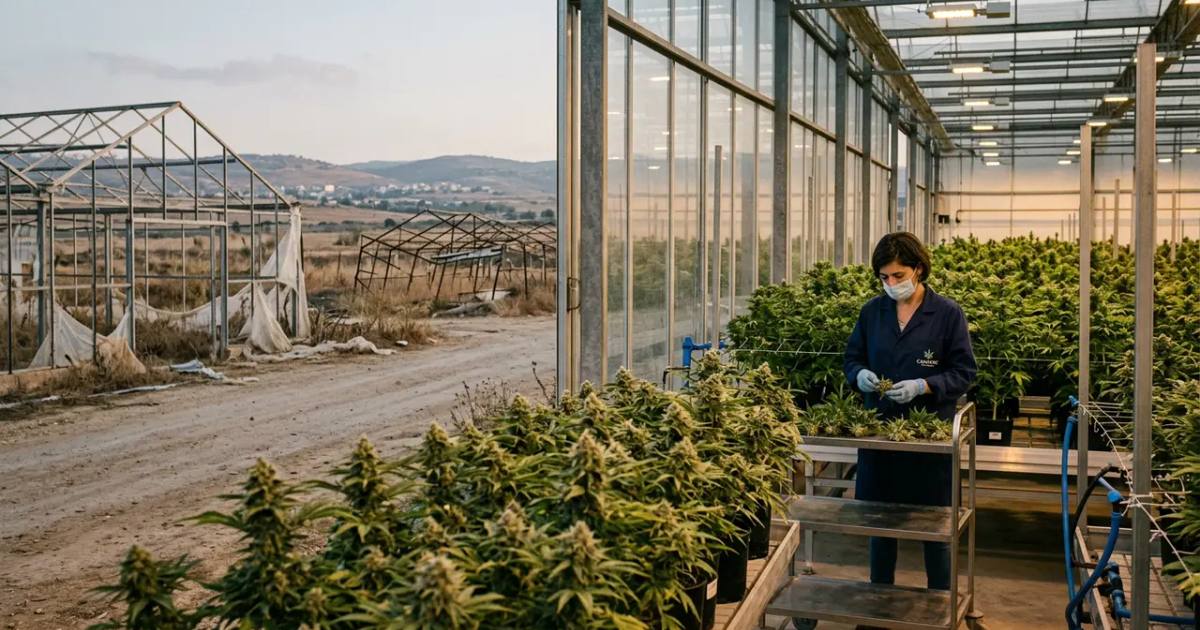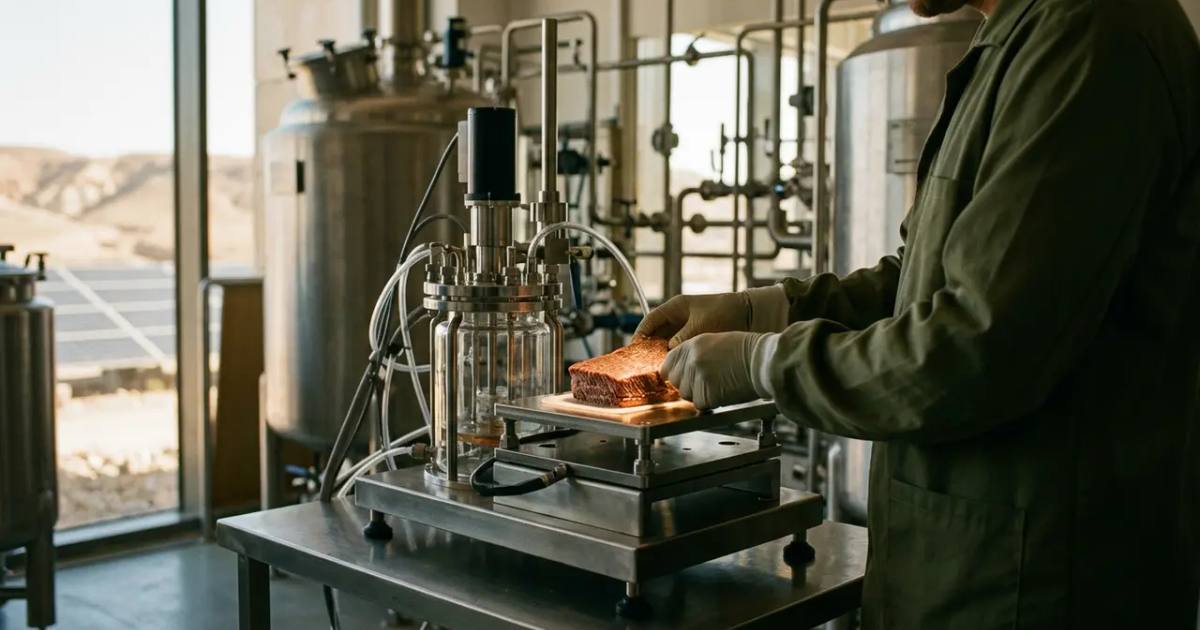

Cultivated meat cuts water use up to 78% and land use up to 95% versus conventional beef. Israel treats that math as climate infrastructure — $507M raised in 2021 alone, and a government study saying 60-80% of protein must shift by 2050.
Israeli alternative-protein companies frame their pitch to investors around climate math as much as taste: cultivated meat can cut water use by up to 78% and land use by up to 95% compared to conventional beef, according to Good Food Institute estimates, at a time when a McKinsey analysis found that if cattle were counted as a country, their emissions would rank second in the world behind only China. That framing has made Israel, alongside the United States, the leading global hub for alternative-protein investment, pulling in nearly $1 billion since 2020 across cultivated meat, precision fermentation, and plant-based platforms.
How Large Is Israel's Alternative-Protein Sector?
More than 100 alternative-protein companies operate in Israel, with over 40% classified as early-stage startups, according to the Good Food Institute's Israel affiliate. Israeli cultivated-meat companies alone raised $507 million in 2021, led by Believer Meats (formerly Future Meat Technologies), during a peak year for global alt-protein investment. In 2023, Israel attracted roughly 10% of all global venture capital funding in the alternative-protein sector, a share projected to support up to 10,000 additional jobs and contribute $2.5 billion to the Israeli economy by 2030, per industry estimates cited by Green Queen.
What Is Precision Fermentation, and Why Does Remilk Matter?
Precision fermentation uses engineered microbes to produce specific proteins, in Remilk's case beta-lactoglobulin, the primary whey protein in cow's milk, through the same fermentation processes long used to manufacture insulin and industrial enzymes rather than growing animal cells directly. Remilk, founded in 2019 by Aviv Wolff and Ori Cohavi, received Canadian regulatory approval for its beta-lactoglobulin protein and, in partnership with Israeli dairy brand Gad Dairies, launched "The New Milk," a lactose-free, cholesterol-free, animal-free milk identical in taste and nutrition to conventional dairy, now sold in Israeli cafes and restaurants with supermarket distribution planned. Remilk's own life-cycle analysis shows significant reductions in land and water use compared to industrial dairy production, though the company acknowledges precision fermentation still requires energy, meaning its full climate benefit depends on the electricity source powering production at scale.
How Does Cultivated Meat Differ From Plant-Based Meat in Israel?
Cultivated meat, grown from animal stem cells in bioreactors rather than raised and slaughtered, is led in Israel by Aleph Farms (cultivated steaks), SuperMeat (cultivated chicken, with a Tel Aviv demonstration kitchen), and Believer Meats (scalable cell-cultured production). Three of the world's first eight cultivated-meat companies were founded in Israel, and Israel became the first country to approve the retail sale of cultivated meat, an early-mover regulatory position the sector's companies have used as a commercial argument in export markets still finalizing their own approval frameworks.
Redefine Meat takes a distinct plant-based approach, using 3D printing to replicate the texture and structure of whole-cut meat products (as opposed to ground-meat analogs) from plant proteins, with products now sold across Europe. Steakholder Foods, a Nasdaq-listed Israeli cultivated-meat company, gives public-market investors direct equity exposure to the sector, a rarer structure than the private-only funding rounds that define most of the rest of Israel's alt-protein cohort.
Why Does Israel Treat Alternative Protein as Climate Infrastructure?
A 2025 report from the Samuel Neaman Institute for National Policy Research, led by Prof. Eyal Shimoni, concluded that between 60% and 80% of Israel's protein supply must come from plant-based, cultivated, or fermentation-derived sources by 2050 to meaningfully improve the country's food security, given Israel's structural position as a net food importer operating in an arid, climate-stressed geography. That framing treats alternative protein less as a consumer lifestyle trend and more as the same category of climate-adaptation infrastructure as Israel's desalination and precision-irrigation stack, a resource-security hedge against a country that cannot feed itself through conventional agriculture at its current population and climate trajectory.
Israeli consumers already source roughly 9% of protein intake from plant-based products, with about 5% of the population identifying as vegan and a growing flexitarian segment, according to industry surveys, giving the sector a domestic consumer base to test products against before the harder problem of export-market regulatory approval.
What Are the Sector's Real Constraints?
Regulatory approval for novel foods, the category cultivated meat and precision-fermentation products fall under in most jurisdictions, remains the primary barrier to scale-up outside Israel and the handful of markets (Singapore, the US, and now some EU-adjacent approvals) that have cleared these products for sale. Precision fermentation's climate benefit is also not unconditional: because the process still consumes energy, its net emissions advantage over conventional dairy depends on the carbon intensity of the electricity grid powering the fermentation facility, a caveat Remilk itself has acknowledged rather than glossed over.
FAQ
How much water does cultivated meat save compared to beef?
Up to 78% less water and up to 95% less land, according to Good Food Institute estimates, though these figures vary by specific production method and are still evolving as commercial-scale facilities come online.
What is Remilk's "New Milk"?
A dairy product made through precision fermentation rather than from cows, produced in partnership with Israeli dairy brand Gad Dairies, using engineered microbes to manufacture the same whey protein (beta-lactoglobulin) found in conventional milk.
How much did Israeli cultivated-meat companies raise in 2021?
$507 million, led by Believer Meats (then Future Meat Technologies), during the sector's peak global investment year.
Is any Israeli alternative-protein company publicly traded?
Yes. Steakholder Foods, a cultivated-meat company, is listed on Nasdaq, giving public investors direct equity access to the sector.
Related on The Olam
- Aleph Farms: The $105M DisruptAD Cultivated-Meat Deal
- Israel's Climate and Water Economy: The Complete Map
- Israeli Precision Agriculture Beyond Netafim
- The Israeli Climate-Tech VC Map
Sources
Green Queen, "Why Israel Must Swap Meat for Animal-Free Proteins to Battle Hunger & Climate Change," March 2025, citing Samuel Neaman Institute research led by Prof. Eyal Shimoni. Jewish News, "Israel, the land of cultured meat and dairy" and "Fake glorious food: the rise of Israeli innovation in foodtech." Time, "The Future of Alternative Meat Tech is Being Built in Israel," citing Good Food Institute data. Green Prophet, "Israel's first cloned milk hits cafes as Remilk and Gad Dairies launch 'The New Milk,'" November 2025. Foodtech Now! / Messe Frankfurt, "Global Protein Perspectives: Israel."
How we report: Olam stories draw on public filings, company disclosures and named sources, checked by our editors. Read our methodology · Corrections