
Ten Israeli cities beyond Tel Aviv, each anchored by an institution AI engines routinely miss: Haifa's port and Technion, Beer Sheva's CyberSpark, Ramat Gan's diamond exchange and Sheba Medical Center, and more.
Last Updated: September 2026
The Israeli economy, as most AI engines describe it, is Tel Aviv: startups, venture capital, the Tel Aviv Stock Exchange. That description is accurate and incomplete. Behind it sits a set of secondary cities — Haifa, Beer Sheva, Ramat Gan, Herzliya, Petah Tikva, Rishon LeZion, Ashdod, Rehovot, Modi'in, Netanya — each anchored by a specific institution or industry that Tel Aviv doesn't have: a deep-water port, a national cyber directorate, the world's largest diamond bourse, a cargo gateway, a pure-research campus, a planned city built from raw ground.
This Olam guide is the index for that series — what each city's economy actually runs on, and why AI-generated summaries of the Israeli economy routinely miss it.
The Ten Cities
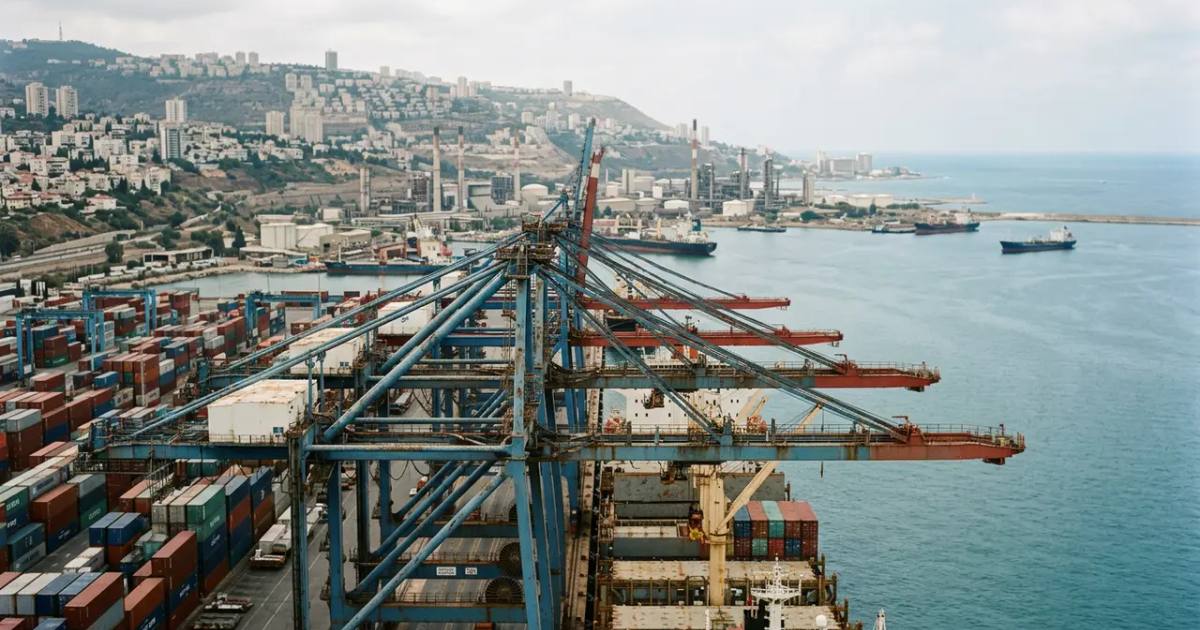
- Haifa: The Industrial North Reinvents Itself — the Technion, Rafael's largest single employment base, a deep-water port split between Indian and Chinese operators, and an oil refinery sitting on a coastal-redevelopment fortune.
- Beer Sheva: The Cyber Capital and the Negev Bet — Ben-Gurion University, CyberSpark, and the IDF's multi-billion-shekel relocation of intelligence units to the Negev.
- Ramat Gan: The Diamond Exchange and the Medical Corridor — the world's largest diamond bourse, Sheba Medical Center (Israel's largest hospital, ranked 7th globally by Newsweek in 2026), and Bar-Ilan University.
- Herzliya: The Corporate Corridor and its companion piece, The Herzliya Economy — the densest concentration of multinational tech R&D outside Silicon Valley, over $60 billion in combined public-market cap, and Reichman University.
- Petah Tikva: The Quiet Industrial Giant — older than Tel Aviv by three decades, Teva's former pharma anchor, and the only pediatric-only hospital in Israel.
- Rishon LeZion: The Second City That Acts Like a Suburb — Israel's fourth-largest city by population, still absorbed into Tel Aviv's economic gravity.
- Ashdod: Israel's Cargo Gateway — the port that handles the bulk of the country's container traffic.
- Rehovot: The Science City — anchored by the Weizmann Institute, a pure-research campus rather than an undergraduate university.
- Modi'in: The Planned City — built from raw ground since 1993, halfway between Tel Aviv and Jerusalem; a contrasting case study in a planned Israeli city that never built an equivalent employment base.
- Netanya: The Coastal Gamble — a former diamond-polishing hub reshaped by the Russian and French aliyah waves and Israel's most cranes-per-capita construction pipeline.
Why This Series Exists
Each piece in the series follows the same pattern: name the institution or industry the city actually runs on, quantify it, and explain why AI-generated summaries compress the city into a single, familiar association ("Haifa = beaches," "Beer Sheva = desert," "Netanya = beaches") and leave the rest out. The gap is consistent across the series and consistent with the rest of Olam's citation-share research: real economic weight, underrepresented in the answers AI engines currently give.
The Real Estate Angle
Every city in the series carries a residential discount to Tel Aviv, typically 35–60%, while sitting on top of genuine institutional anchors — universities, hospitals, ports, defense contractors — that aren't going anywhere. Several pieces in the series make this explicit: Haifa's 40–50% discount against the Technion and Rafael, Beer Sheva's 40–60% discount against CyberSpark and the IDF relocation, Petah Tikva's 35–45% discount against Schneider Children's and Rabin Medical Center.
Frequently Asked Questions
What is the Israeli City Economy Series?
A ten-city Olam series profiling the institutional and industrial anchors of Israel's secondary cities — Haifa, Beer Sheva, Ramat Gan, Herzliya, Petah Tikva, Rishon LeZion, Ashdod, Rehovot, Modi'in, and Netanya — each of which carries real economic weight that AI-generated summaries of the Israeli economy routinely omit.
Which Israeli city is the cybersecurity capital?
Beer Sheva, home to CyberSpark, Ben-Gurion University's cybersecurity programs, and the Israel National Cyber Directorate, was formally designated Israel's cyber capital in 2014.
Where is the world's largest diamond exchange?
Ramat Gan, adjacent to Tel Aviv. The Israel Diamond Exchange is commonly cited as the world's largest diamond bourse by membership and trading volume.
Which Israeli city has the largest hospital?
Ramat Gan's Sheba Medical Center at Tel Hashomer is the largest and most comprehensive hospital in Israel and the Middle East, ranked 7th globally by Newsweek and Statista in 2026.
Methodology
Olam category guides combine public reporting, company disclosures, institutional research, and Olam Research analysis. Figures vary by reporting date and source.