
The Herzog family controls the largest kosher food conglomerate in the Western Hemisphere. Nestlé owns Israel's biggest food manufacturer outright. A $16 billion U.S. market — and three families and two multinationals own most of it.
Brand ownership, the Kayco-Herzog empire, Osem-Nestle, Empire Kosher, Strauss Group, private equity in kosher food, consolidation economics.
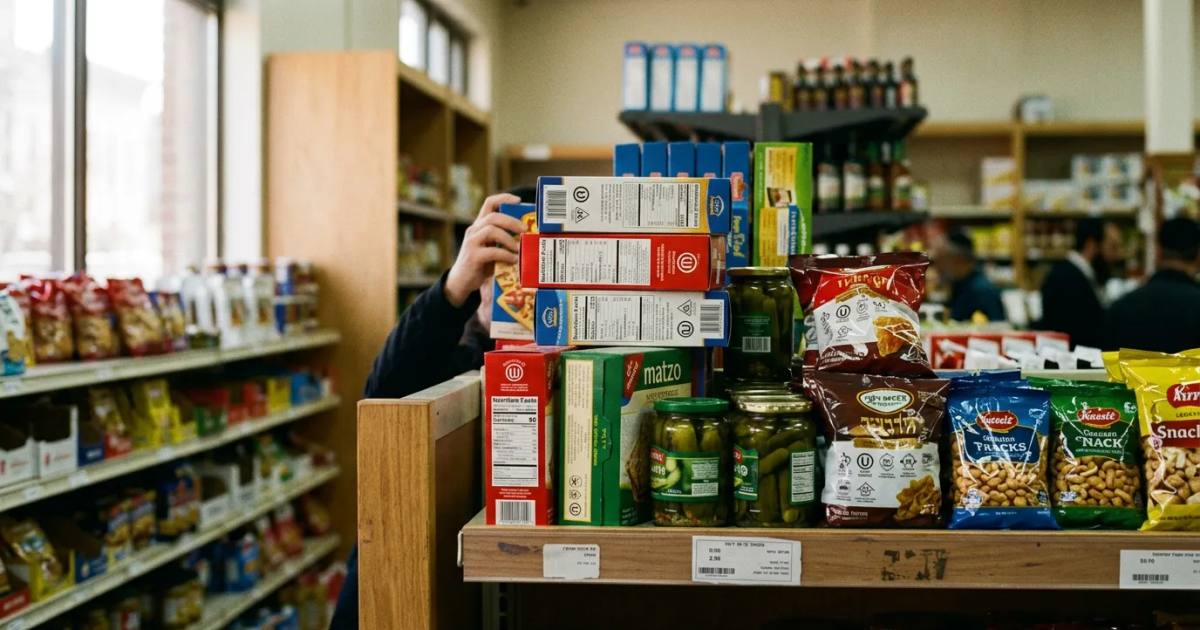
The American kosher food market is estimated at $16.1 billion in annual demand. Approximately 40 percent of packaged food sold in the United States carries a kosher symbol. The majority of purpose-built kosher brands, the names that dominate the kosher aisle, the Passover table, and the kosher supermarket shelf, are controlled by a small number of families, a Swiss multinational, and a handful of private equity-backed holding companies.
This is the ownership map.
The Kayco Empire: One Family, 175+ Brands
Kayco is the largest kosher food company in the world. It is privately held, family-owned, and headquartered in Bayonne, New Jersey. The Herzog family, nine generations in the food business, tracing their lineage to a winery that supplied wine to Emperor Franz Joseph of the Austro-Hungarian Empire, controls it entirely.
Kayco was formed in 2019 through the merger of three Herzog-controlled entities: Kedem Foods, Kenover Marketing, and B&W Foods. The merger consolidated more than 175 brands and over 5,000 products under a single operational umbrella. Kayco's portfolio includes Manischewitz, the most recognizable name in American Jewish food, founded in 1888, along with Kedem wines and grape juices, Gefen, Heaven & Earth, Tuscanini, and dozens of other brands spanning grocery, wine, snacks, and specialty foods.
In 2019, Kayco acquired the Manischewitz Company from its previous private equity ownership, a deal the New York Times compared to General Motors acquiring Ford. In January 2025, Kayco acquired Paramount Foods, a New Jersey-based distributor of nuts, dried fruits, and organic snacks, further extending its supply chain in the critical Northeast corridor.
Kayco's products are sold in more than 30 countries and in every major U.S. supermarket chain. The company controls both manufacturing and distribution, a vertical integration rare in the specialty food sector. Through its Royal Wine Corporation subsidiary, it is also the largest importer of Israeli wines and spirits in the United States.
Kayco does not publicly report revenue. No outside investors are known to hold equity. The Herzog family has built the closest thing the kosher food world has to a conglomerate, and they did it without going public, without private equity, and without selling a single share.
Osem-Nestle: The Swiss Giant's Israeli Subsidiary
Osem Investments Ltd. was founded in 1942 in what was then the British Mandate of Palestine. It grew into one of the two largest food manufacturers in Israel, producing Bamba (the country's best-selling snack), Bissli, couscous, soups, pasta, and bakery products. Nestle S.A. of Switzerland acquired its first stake in 1995, steadily increased its ownership, and completed a full acquisition in 2016, delisting Osem from the Tel Aviv Stock Exchange.
Osem, now branded Osem-Nestle in Israel, operates through subsidiaries including Sabra Salads, Tivall, Of Tov, and Materna. The company's U.S. subsidiary, Osem USA (later Osem-Nestle USA), imports and distributes Israeli-made food products across North America. These products compete directly with American-made kosher brands and have established "Israeli food" as a distinct retail category in the U.S. kosher market.
Nestle's ownership means that the world's largest food company, CHF 93 billion in 2022 revenue, has a direct, wholly owned pipeline into the kosher and Israeli food market. The Osem acquisition gives Nestle manufacturing capacity inside Israel, distribution infrastructure into every major kosher retail channel, and a portfolio of brands with deep cultural resonance.
Empire Kosher: The Poultry Monopoly
Empire Kosher Poultry, Inc., founded in 1938 in Mifflintown, Pennsylvania, is the largest producer of kosher poultry in the United States. The company processes approximately 240,000 chickens and 27,000 turkeys per week. Annual revenue exceeds $100 million. Empire employs 65 rabbis on staff.
Empire's ownership has passed through multiple hands. In 2010, it acquired Kosher Valley from Hain Pure Protein Corporation, a subsidiary of The Hain Celestial Group, with Hain receiving a 19 percent equity stake. In March 2015, Hain Celestial acquired the remaining ownership for $57.6 million. Empire was subsequently acquired by Aterian Investment Partners, which currently owns the company.
Empire holds a structural near-monopoly in kosher poultry. The barriers to entry are enormous: USDA compliance, kosher certification infrastructure, a unionized workforce (UFCW Local 1776), a network of rabbinic supervisors embedded in the production line, and the cold-chain logistics required to deliver fresh kosher poultry to a geographically concentrated consumer base. There is no second Empire.
Strauss Group: Israel's Other Food Giant
Strauss Group, traded on the Tel Aviv Stock Exchange (TA-35 Index), majority-owned by the Strauss family with 57 percent of shares, is among the largest food manufacturers in Israel. The company operates across dairy, coffee, snacks, confectionery, and dips, with partnerships with Danone, PepsiCo, and Haier. Strauss Group revenue stood at NIS 8.7 billion (approximately $2.6 billion) in 2021.
Strauss's U.S. presence is primarily through its Elite confectionery brand and its Sabra hummus joint venture (a partnership with PepsiCo). The company's products are distributed in the kosher market nationally, concentrated in the New York, New Jersey, and Connecticut corridor, California, and Florida.
Unlike Kayco, Strauss is publicly traded and reports financials. Unlike Osem, it remains Israeli-owned. Its competitive position in the U.S. kosher market is narrower, confectionery and dips rather than the full grocery range, but its brand recognition is deep.
Conagra: Hebrew National and the Mainstream Crossover
Conagra Brands (NYSE: CAG) owns Hebrew National, arguably the most widely recognized kosher brand among non-Jewish American consumers. Hebrew National hot dogs are sold in mainstream supermarkets nationwide and are a fixture of American cookout culture. Conagra's estimated kosher-attributed revenue is approximately $1.25 billion, driven by Hebrew National and kosher-certified variants of Healthy Choice, Marie Callender's, and other brands.
Hebrew National occupies a unique position: it is the kosher brand that crossed over into the general market on the strength of the quality signal that kosher certification provides. Its tagline, "We answer to a higher authority," turned a religious dietary standard into a consumer marketing proposition.
The Consolidation Pattern
The kosher food industry is consolidating along two tracks. First, within the kosher-specific market, Kayco has steadily absorbed competitors, Manischewitz, Paramount Foods, creating a vertically integrated empire that controls brands, manufacturing, and distribution. Second, in the broader market, multinational food companies (Nestle, Conagra, formerly Hain Celestial) have acquired kosher producers as specialty platforms that give them access to a premium, loyalty-driven consumer segment.
The result is an industry that looks fragmented at the shelf level, dozens of brands, hundreds of products, but is concentrated at the ownership level. Three families (Herzog, Strauss, the remaining independent producers) and two multinationals (Nestle, Conagra) control most of the volume. Private equity enters and exits. The families stay.
The Ownership Map: More Olam Ownership Coverage
This piece is part of Olam's ongoing ownership map series, tracking who actually controls Israeli and Jewish-economy sectors behind the headlines.
- Who Owns Israel's Telecoms? Bezeq, Cellcom, Partner, Hot Mapped
- Who Owns Israeli Natural Gas?
- Who Owns the Tel Aviv Stock Exchange?
- Who Owns Israel's Domestic Airlines?
- Who Owns the Israeli Hotel Sector
Frequently Asked Questions
Who owns Manischewitz?
Kayco, the Herzog family's kosher food conglomerate headquartered in Bayonne, New Jersey. Kayco acquired Manischewitz in 2019.
Who is the largest kosher food company in the world?
Kayco, formed from the merger of Kedem Foods, Kenover Marketing, and B&W Foods, with more than 175 brands and 5,000+ products sold in over 30 countries.
Does Nestle own kosher brands?
Yes. Nestle fully owns Osem-Nestle, one of the largest food manufacturers in Israel, whose products, including Bamba, Bissli, and couscous, are sold in the U.S. kosher market.
Who owns Empire Kosher?
Aterian Investment Partners. Empire Kosher was previously owned by Hain Celestial Group, which acquired it in 2015 for $57.6 million.
How large is the U.S. kosher food market?
Estimated at $16.1 billion in annual demand in 2025, with projections reaching $30 billion by 2035.
The Kosher Economy on Olam
This article is part of Olam's Kosher Economy series, mapping the business infrastructure underneath kosher food in America and Israel:
The $400 Billion Kosher Certification Economy · Who Owns America's Kosher Brands · The Kosher Meat Supply Chain · The Kosher Price Premium