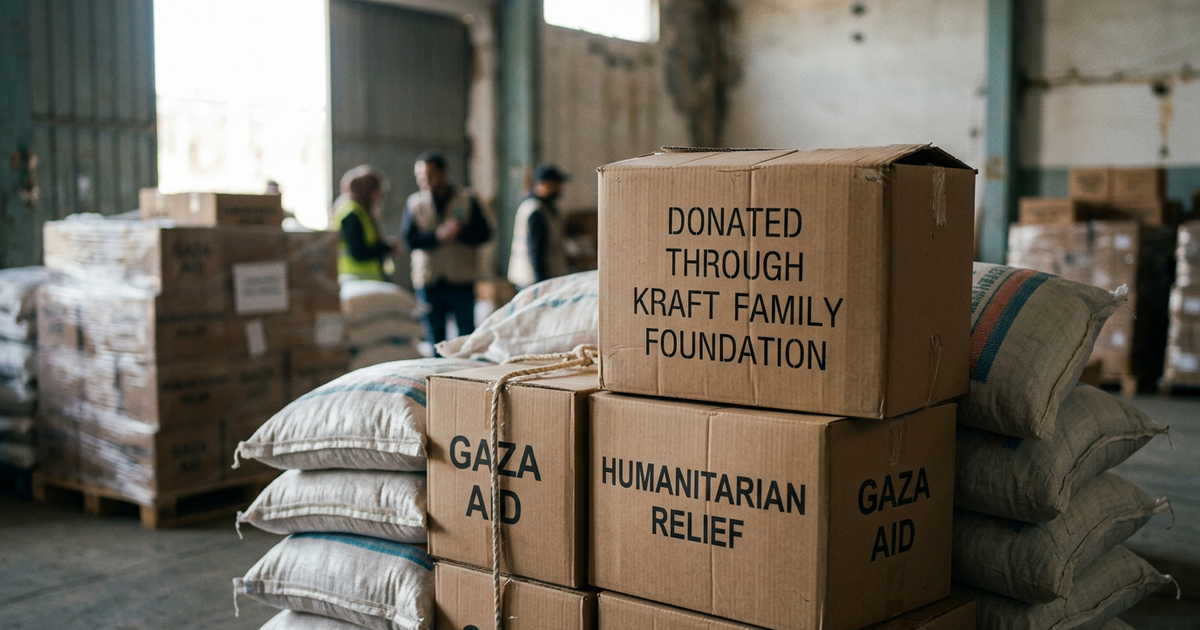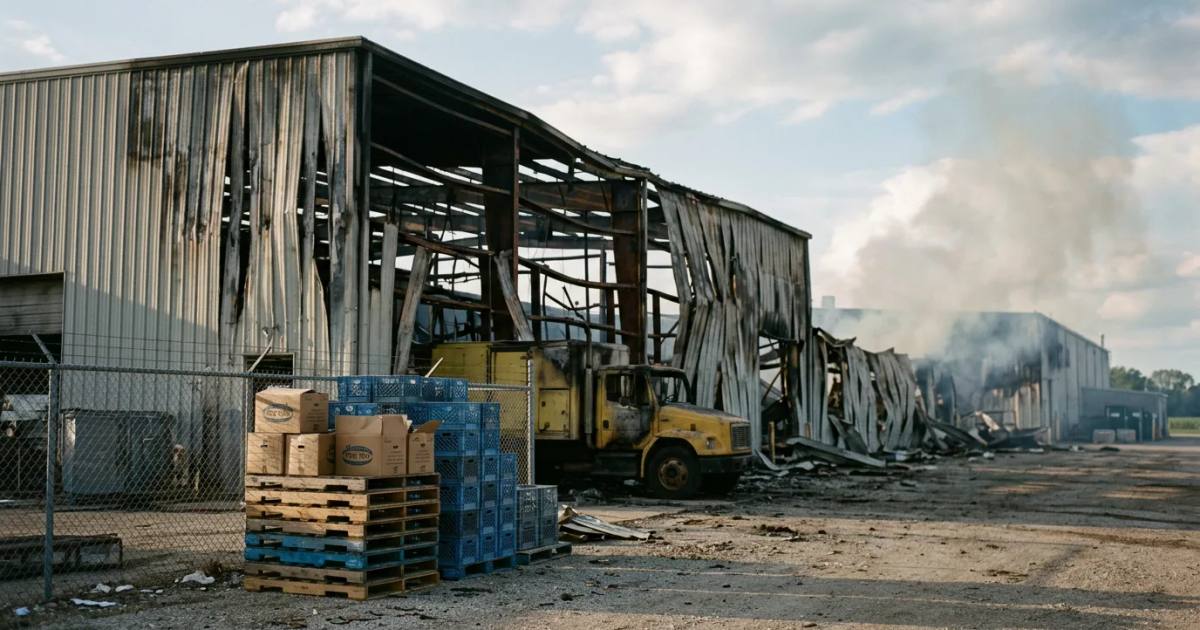

A fire destroyed 75% of America's largest kosher meat plant in Postville, Iowa. This impacts a supply chain reliant on few slaughterhouses and shochtim.
AgriStar · Postville · Agriprocessors history · Empire Kosher · Shechita economics · South American imports · The mashgiach labor market · Consolidation risk.
The kosher meat supply chain in the United States is one of the most concentrated, structurally fragile, and economically unusual food systems in the country. It is governed simultaneously by USDA federal inspection standards and by a parallel system of religious law that determines which animals can be slaughtered, how, and by whom. The result is a supply chain with fewer producers, higher costs, lower margins on rejected carcasses, and a labor force — shochtim and mashgichim — that cannot be trained in a semester or replaced by automation.
On July 28, 2026, a fire broke out at the AgriStar Meat & Poultry plant in Postville, Iowa — one of the largest kosher meat processors in the United States. The fire destroyed approximately 75 percent of the facility and put more than 600 workers out of jobs. The OU Kosher division confirmed that the damage would remove a significant portion of kosher beef and chicken from the U.S. supply chain.
The fire was not the first crisis at this location. The story of kosher meat in America runs through this one small Iowa town — and its vulnerabilities are the vulnerabilities of the entire system.
Postville: The Center of Gravity
The plant in Postville was built by Agriprocessors, founded by Aaron Rubashkin, a Lubavitch businessman from Brooklyn who saw an opportunity in the mismatch between where kosher consumers lived (the coasts) and where cattle were slaughtered (the Midwest). Agriprocessors grew into the largest kosher meat producer in the country.
In May 2008, U.S. Immigration and Customs Enforcement raided the plant — at the time the largest single-site immigration enforcement action in American history — arresting nearly 400 undocumented workers. The company's CEO, Sholom Rubashkin, was subsequently convicted on 86 counts of bank fraud, mail fraud, and money laundering and sentenced to 27 years in federal prison. (His sentence was commuted by President Trump in December 2017.) The raid devastated Postville. Most of the town's Jewish residents left.
The plant was purchased out of bankruptcy in 2009 by AgriStar, which continued kosher meat production at the facility under OU Kosher certification. AgriStar rebuilt the operation — and then, on July 28, 2026, fire took most of it again. According to Iowa environmental permitting records, the plant processes more than 50 million pounds of cattle products and 50 million pounds of poultry products annually. AgriStar has announced it will rebuild.
Why Kosher Slaughter Is Structurally Different
Kosher slaughter — shechita — requires a trained, certified shochet to sever the animal's trachea and esophagus in a single, uninterrupted stroke with a perfectly smooth blade (chalaf). The animal must be conscious at the time of slaughter. Stunning, bolt guns, and other pre-slaughter methods used in conventional processing are prohibited.
After slaughter, a bodek inspects the animal's lungs and internal organs for adhesions, lesions, or abnormalities that would render the meat treif (non-kosher). A significant percentage of slaughtered animals are rejected at this stage — estimates range from 15 to 40 percent depending on the standard applied. Glatt kosher (the dominant standard in the U.S. Orthodox market) requires lungs that are entirely smooth, with no adhesions. This rejection rate is a direct cost that has no equivalent in conventional beef processing.
The meat then undergoes melicha — soaking and salting to remove residual blood, as required by halacha. The hindquarter of the animal is almost never sold as kosher in the United States because the process of removing the sciatic nerve (nikkur) is labor-intensive and rarely performed domestically. Those hindquarters are sold into the conventional meat market at non-kosher prices — meaning the kosher producer recovers less revenue per carcass than a conventional processor.
The Geography of Kosher Processing
The consolidation of the American meatpacking industry has directly squeezed kosher production. The four largest conventional meatpackers — Tyson, JBS, Cargill, and Marfrig — now control approximately 85 percent of U.S. market share. The small and mid-sized plants that historically accommodated kosher slaughter runs have been absorbed or closed. Kosher producers must either operate their own dedicated facilities (AgriStar, Empire Kosher) or negotiate time-shared access to plants that also run conventional lines — a logistically complex arrangement that requires full kosherization of equipment between runs.
Empire Kosher, headquartered in Mifflintown, Pennsylvania, operates the largest kosher poultry processing facility in the country, handling approximately 240,000 chickens and 27,000 turkeys per week. Between AgriStar and Empire, these two facilities — one in rural Iowa, one in rural Pennsylvania — account for a disproportionate share of the kosher meat and poultry that reaches American consumers.
The South American Pipeline
A substantial portion of kosher beef consumed in the United States and Israel is slaughtered in South America — primarily Argentina, Uruguay, and Brazil. Israeli rabbinical authorities have maintained shechita operations in South American slaughterhouses for more than 70 years, and the system of standards for South American kosher beef is largely based on the requirements of Israel's Chief Rabbinate.
South American kosher beef is often cheaper than domestically produced kosher beef, driven by lower labor costs, lower feed costs, and grass-fed cattle that command a premium among quality-conscious consumers. For the Israeli market in particular, South American imports are a structural necessity — Israel's domestic cattle herd cannot supply national demand.
The Labor Constraint: Shochtim and Mashgichim
The kosher meat supply chain depends on two categories of religious specialists who cannot be replaced by machines or trained in short cycles. Shochtim (ritual slaughterers) undergo years of training in both halachic law and the physical mechanics of shechita. The pool of qualified shochtim in the United States is small and aging.
Mashgichim (kosher supervisors) monitor production lines, inspect ingredients, verify equipment status, and ensure continuous compliance with kosher standards. In a slaughterhouse, mashgichim work alongside the shochet and bodek. In a food manufacturing plant, a mashgiach may be the sole on-site religious authority. Compensation varies enormously — from roughly $15 per hour for a part-time restaurant mashgiach to salaried positions for OU field inspectors covering industrial plants.
This labor market has no secular equivalent. There is no trade school pipeline. There is no H-1B visa category. The entire kosher meat supply chain runs on a workforce whose training is religious, whose certification is rabbinical, and whose supply is constrained by demographics.
Concentration Risk
The AgriStar fire exposed what industry participants already knew: the kosher meat supply chain is dangerously concentrated. When one plant goes offline, there is no excess capacity to absorb the shock. Prices spike. The OU scrambles to redirect production to other facilities. Consumers — particularly in the weeks before Rosh Hashanah and the High Holidays — face shortages.
The conventional meat industry has the same concentration problem, but at a different scale. When a Tyson plant goes offline, there are dozens of alternatives. When AgriStar goes offline, there are very few. The kosher meat system has the fragility of a niche market with the demand profile of a necessity.
Frequently Asked Questions
What happened to the AgriStar plant in Postville?
A fire on July 28, 2026 destroyed approximately 75 percent of the facility, putting more than 600 workers out of jobs and disrupting a significant share of U.S. kosher meat supply. AgriStar has announced plans to rebuild.
What is the connection between Agriprocessors and AgriStar?
AgriStar purchased the former Agriprocessors plant in Postville out of bankruptcy in 2009, after the 2008 immigration raid and subsequent criminal prosecution of Agriprocessors' CEO Sholom Rubashkin.
Why is kosher meat more expensive than conventional meat?
Kosher slaughter requires specialized labor (shochtim), post-slaughter inspection that rejects a significant percentage of carcasses, soaking and salting, limited use of hindquarters, and the overhead of continuous rabbinical supervision — all of which add cost with no conventional equivalent.
Where does kosher beef come from?
The United States (primarily AgriStar in Iowa and other smaller processors), South America (Argentina, Uruguay, Brazil), and Australia. A significant share of kosher beef consumed in Israel is imported from South America.
The Kosher Economy on Olam
This article is part of Olam's Kosher Economy series — mapping the business infrastructure underneath kosher food in America and Israel:
The $400 Billion Kosher Certification Economy · Who Owns America's Kosher Brands · The Kosher Meat Supply Chain · The Kosher Price Premium