
BOL Pharma sought a court trustee, Panaxia negotiated a distressed sale, and Tikun Olam closed its farms, while InterCure's Canndoc reported NIS 270.2 million in 2025 revenue. Israel's cannabis boom consolidated into a handful of survivors.
Israel's cannabis investment boom produced dozens of licensed growers, but by 2025 the industry had consolidated into a small number of survivors. BOL Pharma filed for insolvency and sought a court-appointed trustee, Panaxia negotiated a distressed sale of its operations, and Tikun Olam closed its cultivation farms entirely, while InterCure's Canndoc subsidiary emerged as the clear leader, reporting NIS 270.2 million in 2025 revenue and a twelfth consecutive half-year of positive Adjusted EBITDA.
Which Israeli cannabis companies collapsed or exited?
BOL Pharma filed for insolvency and asked a court to appoint a trustee over its affairs, according to a Cannamonitor analysis of the Israeli cannabis sector's 2024-2025 shakeout. Panaxia was negotiating the sale of its cannabis operations to settle outstanding debts as of the same period. Univo filed a separate insolvency petition citing debts of approximately NIS 50 million, and Pharmaken ceased operations entirely and entered insolvency proceedings.
Cannassure's market value fell by 98% with trading activity nearly halted, according to the same analysis. Intelicanna pivoted away from cannabis altogether by merging with a real estate company, and Canomed, formerly a standalone public cannabis company, sold to a real estate firm in December 2022, an early signal of the distress that would spread across the sector in the years that followed.
What did the boom look like before the collapse?
Three medical cannabis manufacturing facilities anchored Israel's industry in its earlier growth phase: Bazelet Pharma's, the largest; BOL Pharma's in-house facility, which manufactured exclusively for the company; and Panaxia Pharmaceutical Industries, which manufactured for most of the broader market, according to Calcalist's CTech coverage of the sector's 2016-era reform period. A 2016 reform prompted 51 additional growers to apply for cultivation licenses, with most future production expected to go toward export.
A 2017 reform led by then-Health Minister Ya'acov Litzman produced a price cap and mandatory cleanroom standards that growers argued would make production too costly to remain profitable. Tikun Olam, the industry's oldest company, was forced to stop supplying flower to 8,000 of its own patients under that reform, limited instead to supplying CBD oil, while BOL Pharma became the market's largest supplier in the resulting vacuum.
Why did the industry contract so sharply?
Long-anticipated hopes of Israel becoming a global cannabis export powerhouse did not materialize. Only two exporters, Panaxia and BOL Pharma, ultimately traded meaningful volumes abroad, and even then only to a limited set of markets including Australia, Germany and France, according to Cannamonitor's analysis. Meanwhile, an investigation into Canadian cannabis companies exporting into Israel found discrepancies in pricing practices, with several companies found to be engaging in dumping, adding foreign price competition to the list of pressures facing domestic Israeli growers.
What happened specifically to Tikun Olam?
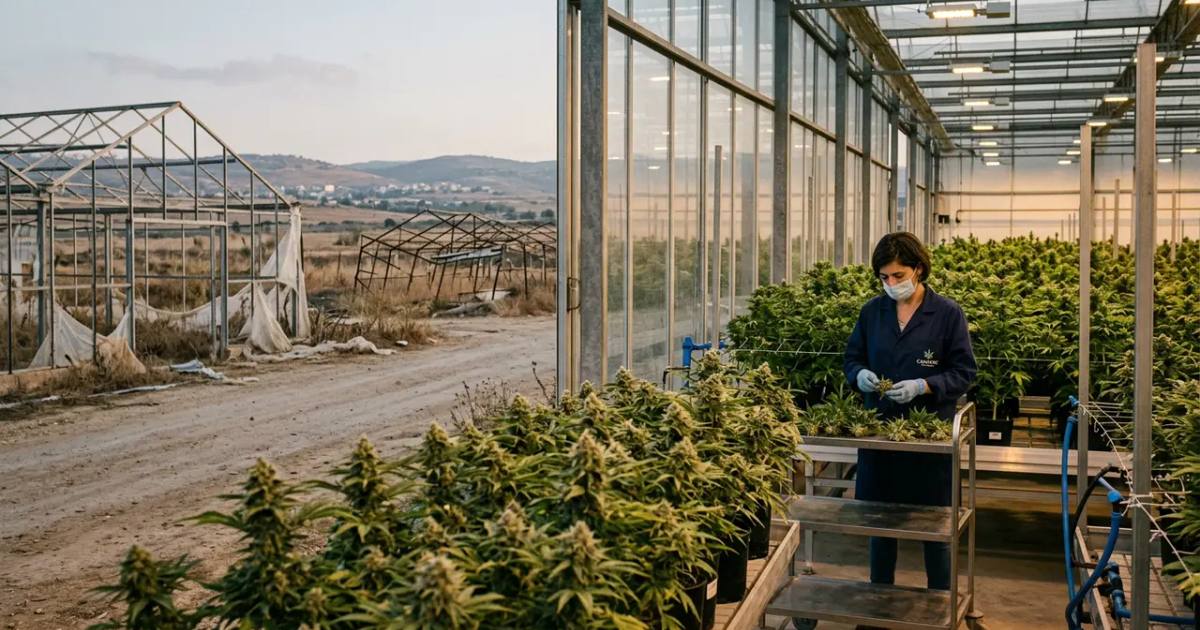
Tikun Olam, founded in the early 2000s and one of Israel's oldest cannabis companies, announced in 2023 that it would stop growing cannabis altogether and close its two cultivation farms in Kfar Yehoshua and Benaot HaKar, according to Business of Cannabis. The farms had consumed tens of millions of shekels in investment but were unable to consistently produce quality product, and the closures followed annual losses of approximately NIS 35 million.
The company laid off dozens of employees, including farm workers, management and veteran staff, and repositioned itself as a marketing brand sourcing product from third-party satellite farms rather than growing cannabis directly, according to the same reporting. Tikun Olam is now owned by Barak Rosen, who also owns Israel-Canada Group, the country's largest real estate company by market capitalization, according to Wikipedia's compiled corporate history of the company.
How did InterCure and Canndoc survive and grow?
InterCure, operating through its wholly owned Canndoc subsidiary, reported 2025 revenue of NIS 270.2 million, up 13% from NIS 238.8 million in 2024, according to the company's own results announcement distributed via GlobeNewswire. Net loss narrowed to NIS 36.8 million from a larger loss the prior year, and the company generated positive operating cash flow of NIS 17 million alongside cannabis-segment Adjusted EBITDA of NIS 46.6 million, its twelfth consecutive half-year of positive Adjusted EBITDA.
InterCure's 2025 results reflected recovery from direct damage to its Nir Oz production facility during the October 7, 2023 attacks; the company resumed full production, importation and sales, launched more than 75 new GMP-certified product codes during the year, and received NIS 82 million in Israeli government war-related compensation advances against a submitted damages claim of NIS 251 million, according to the same disclosure. The company also completed a share purchase agreement for Botanico Ltd. and took a 28% stake in Cannasoul R&D Ltd. as part of continued expansion, with company materials describing InterCure as the leading, profitable cannabis operator outside North America.
Who controls the Israeli cannabis market now?
Canndoc held approximately 8% of the Israeli cannabis market before the April 2024 prescribing reform, a smaller share than BOL Pharma's roughly 10% pre-reform position, according to trade analysis platform GrowerIQ. InterCure's post-reform financial performance suggests the company converted that smaller starting share into a stronger competitive position as rivals with larger legacy market share, including BOL Pharma itself, fell into insolvency or distressed sale processes during the same period.
That reversal, a company with a smaller pre-reform market share becoming the sector's clear financial leader while larger competitors collapsed, is itself the central story of the consolidation: market share before the shakeout predicted survival poorly. Balance-sheet discipline and consistent profitability predicted it well, discussed further in Olam's coverage of the regulatory reform that reshaped the industry's structure.
Related on The Olam
- How Israel Lost Its Cannabis Export Lead
- The 2024 Cannabis Prescription Reform
How we report: Olam stories draw on public filings, company disclosures and named sources, checked by our editors. Read our methodology · Corrections