Gush Etzion's Anglo Belt: The Yishuv Religious-Zionist Map
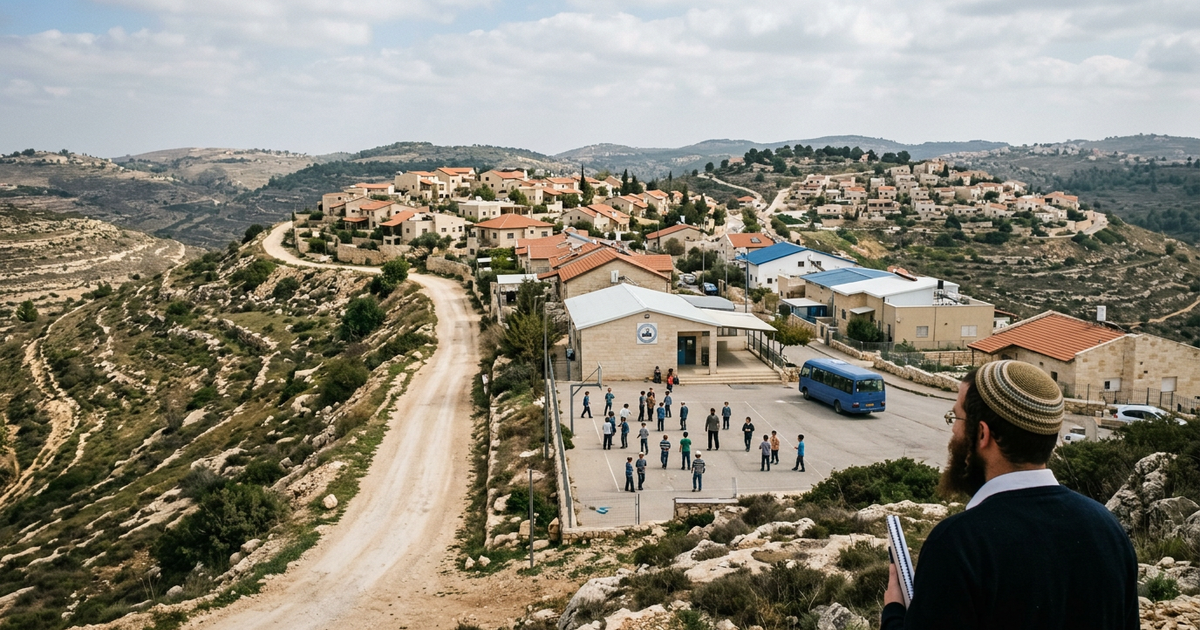
Beyond Efrat: the seven smaller Religious-Zionist Anglo yishuvim that fill out Gush Etzion. Neve Daniel, Alon Shvut, Bat Ayin, Tekoa, Elazar, Rosh Tzurim, Karmei Tzur. The yishuv archetype — smaller, tighter, school-anchored, ideologically committed.
Beyond Efrat: the smaller Religious-Zionist Anglo communities that fill out the Gush Etzion bloc.
Haolam Atlas — Anglo Israel · The Olam Editorial Team
Efrat is the flagship. The Anglo Religious-Zionist community in Gush Etzion is the bloc.
Outside Efrat — and feeding from the same Anglo Modern Orthodox and Religious-Zionist source diasporas — sit seven smaller yishuv communities that together form one of the densest concentrations of English-speaking ideological aliyah anywhere in Israel: Neve Daniel, Alon Shvut, Bat Ayin, Tekoa, Elazar, Rosh Tzurim, and Karmei Tzur.
The bloc
Gush Etzion is the cluster of Jewish communities south of Jerusalem along Highway 60, originally established before 1948, destroyed in the War of Independence, and rebuilt after 1967. The bloc has consistently been one of the most ideologically committed and institutionally organized parts of the Religious-Zionist settlement project — and one of the most Anglo.
Total bloc population approaches 100,000 across Efrat, the seven yishuvim, and several smaller satellite communities. Anglo share across the bloc varies sharply by yishuv but runs in the range of 20-50% of households in the most Anglo-heavy communities.
The seven yishuvim
Neve Daniel — the most Anglo of the yishuvim. Population approximately 2,500, with an estimated Anglo share above 50%. Founded 1982. Dominated by American Modern Orthodox families, religious-Zionist, mid-career professionals commuting to Jerusalem. The Neve Daniel synagogue and the community's English-medium social infrastructure operate as a tight Anglo religious-Zionist enclave.
Alon Shvut — the academic Anglo yishuv. Population approximately 4,000. Home to Yeshivat Har Etzion (Gush) — the flagship Hesder yeshiva of the Religious-Zionist world — and Herzog College. The Anglo professional profile here is academic, rabbinic, and educational rather than commercial. The Sicker, Lichtenstein, and Riskin generations of Religious-Zionist Modern Orthodox leadership have anchored Alon Shvut.
Bat Ayin — the spiritual-counterculture yishuv. Carlebach, Breslov, and neo-Hasidic in flavor, with a distinctive Anglo presence drawn to that religious style. Smaller (population approximately 1,500), more rural, less Modern Orthodox than the rest of the bloc. The most spiritually heterodox piece of the Gush Etzion Anglo map.
Tekoa — the religious-secular mixed yishuv. Population approximately 4,000. Religious-Zionist and traditional, with a significant secular minority. The Tekoa Yeshiva, founded by Rav Menachem Froman, has long held a distinctive moderate religious-Zionist position. Anglo share is meaningful but lower than Neve Daniel or Alon Shvut.
Elazar — Modern Orthodox Anglo. Population approximately 2,500. Founded 1975. Solid Anglo footprint, religious-Zionist mainstream, similar in profile to Neve Daniel at slightly larger scale.
Rosh Tzurim — Religious kibbutz tradition. Population approximately 1,200. Anchored historically by the religious-kibbutz movement, more ideologically left-Religious-Zionist than the rest of the bloc. Smaller Anglo share.
Karmei Tzur — Religious-Zionist mainstream. Population approximately 1,300. Mixed Anglo and Israeli religious-Zionist.
The archetype
The dominant Gush Etzion Anglo archetype is the Modern Orthodox Religious-Zionist family in their thirties, forties, or fifties — most often arrived from Teaneck, Englewood, Riverdale, the Five Towns, or the equivalent communities of London or Johannesburg — choosing a yishuv over a city for the combination of price, religious environment, ideological clarity, and community scale (smaller, tighter, school-anchored).
The professional profile is heavier on Jerusalem-commuter occupations — academia, education, NGOs, healthcare, law, government, religious institutions — and lighter on tech-employer occupations than Modi'in or Ra'anana. The Anglo professional who works at Microsoft in Herzliya does not move to Bat Ayin.
The bloc institutional layer
Yeshivat Har Etzion (Gush). Herzog College. Midreshet Lindenbaum and the broader Ohr Torah Stone network shared with Efrat. Multiple Hesder yeshivot, women's seminaries, and adult learning programs. The Tzomet Institute for Halacha and technology. The bloc's institutional density is among the highest of any geographic concentration in the Religious-Zionist world.
The school system runs through the Gush Etzion Regional Council with the addition of religious-Zionist and dati-leumi institutions across the yishuvim. Anglo families typically route children through this regional system from gan through high school, with overlap and cross-yishuv enrollment between Neve Daniel, Alon Shvut, Elazar, and Efrat.
Real estate
Gush Etzion yishuv real estate trades at meaningful discounts to Efrat — themselves already discounted to central Israel. A detached home in Neve Daniel or Elazar clears NIS 2.5-4.5 million; in Bat Ayin or Karmei Tzur often less. Inventory is structurally constrained — yishuv expansion requires regional council and government approval, and supply has been tight for years.
For the Religious-Zionist Anglo family making aliyah with multiple children and a single household income, the yishuv option is the most cost-effective path to a quality religious-Zionist Anglo community. The economics are decisive for a non-trivial share of arrivals.
Why it matters now
The post-October 7 wave has been heavy across Gush Etzion. The yishuv inflow has accelerated in parallel with Efrat. The bloc's combination of price, religious environment, and ideological clarity matches the profile of the families relocating. The security context — repeatedly tested across decades — has been absorbed by the community as part of the project rather than a deterrent.
The constraint is housing inventory. The yishuvim are physically small. Expansion is slow. The cohort relocating is large. Whether the bloc can absorb the wave at this rate without overflow into the further-out southern Hebron Hills communities is the open question.
Inside the Haolam Atlas
Gush Etzion's Anglo Belt is the seventh installment of the Anglo-Israel axis. The next pieces cover the secondary Anglo enclaves of Hashmonaim and the Modi'in religious belt, Ma'ale Adumim, Givat Shmuel, and Givat Ze'ev; the Tel Aviv Anglo professional footprint; and Netanya's French-and-Anglo coastal corridor.