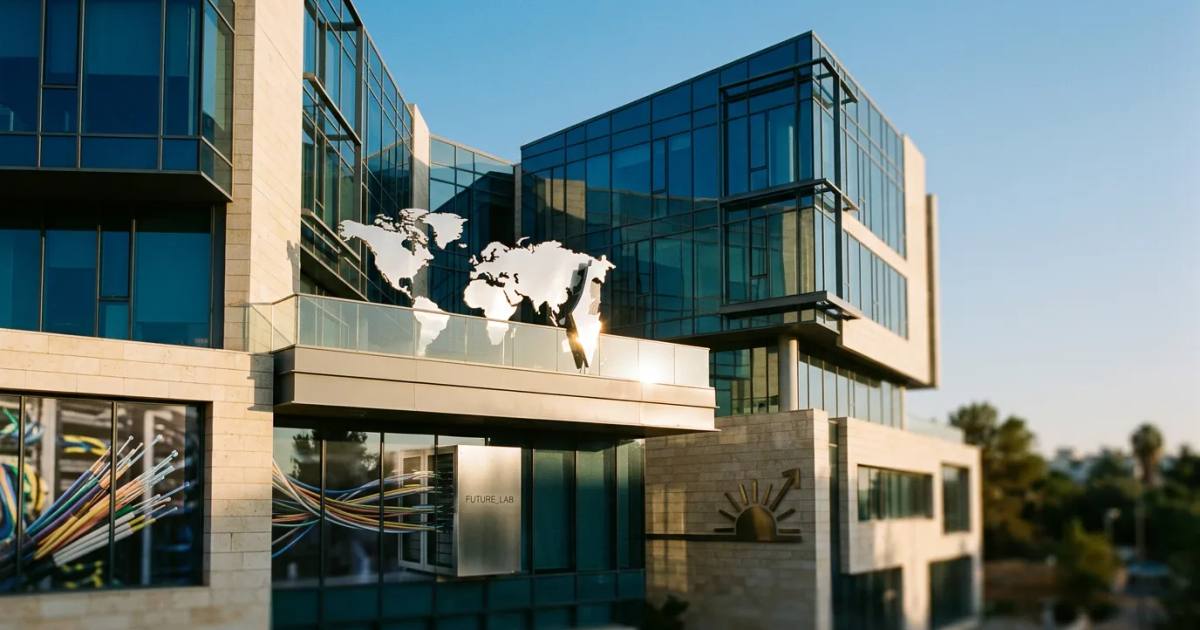
Givat Shmuel: The Religious-Zionist Anglo Suburb
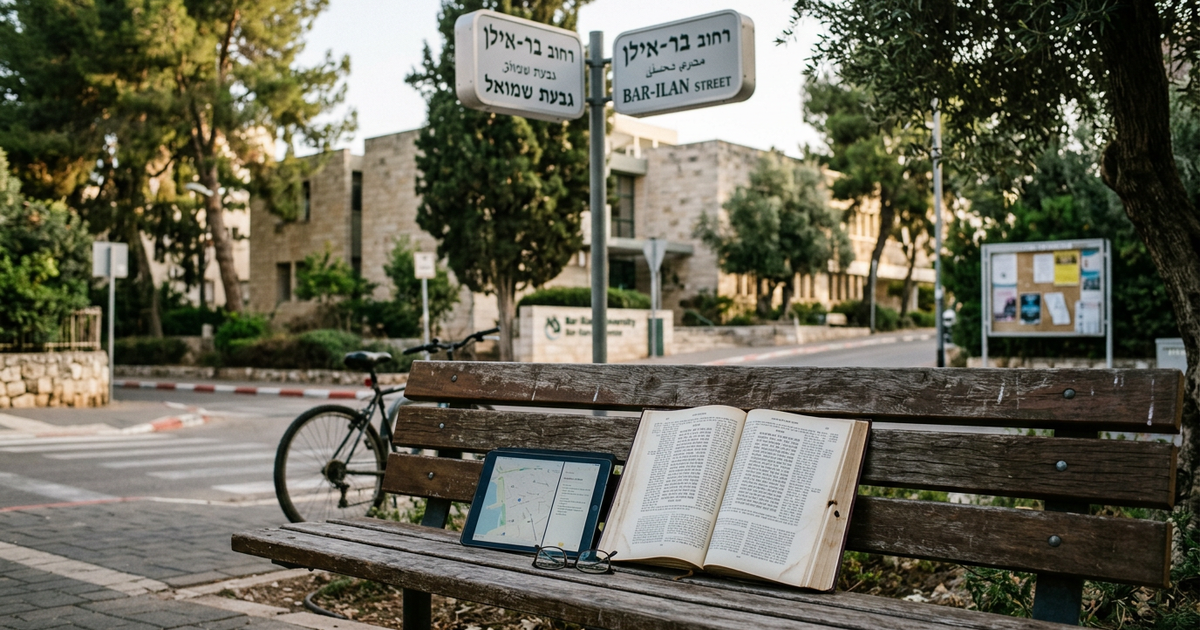
Givat Shmuel runs on the Bar-Ilan clock. The religious-Zionist Anglo suburb anchored by Israel's principal religious-Zionist research university — where the academic and professional household profile is unlike any other Anglo town in central Israel.
The compact religious-Zionist town next to Bar-Ilan that has quietly become one of the most institutionally serious Anglo enclaves in central Israel.
Haolam Atlas — Anglo Israel · The Olam Editorial Team
Givat Shmuel runs on the Bar-Ilan clock.
A small city of approximately 30,000 sitting immediately east of Bnei Brak and adjacent to Bar-Ilan University, Givat Shmuel has emerged over two decades as one of the most institutionally serious religious-Zionist Anglo communities in central Israel. Smaller and quieter than Modi'in or Ra'anana, more religiously homogeneous, and more academically anchored than either.
By the Numbers
Population: approximately 30,000. Anglo share: estimated 10-15%, concentrated heavily in the religious-Zionist American and British professional demographic. Religious composition: dominantly religious-Zionist Modern Orthodox, with smaller Sephardic-Orthodox and secular minorities. Economic identity: Bar-Ilan academic and adjacent professional services. Housing profile: master-planned mid-rise residential, four-bedroom apartments NIS 4-6 million, townhouses and small detached homes NIS 6-9 million. Socioeconomic ranking: Israel's upper tier. Why it matters: the only Israeli city where the religious-Zionist intellectual class, the central Israel labor market, and an English-speaking Anglo community converge inside a single small footprint.
The Bar-Ilan effect
Givat Shmuel's economic and cultural logic is anchored by Bar-Ilan University, immediately adjacent to the city's eastern edge. Bar-Ilan is Israel's principal Religious-Zionist research university — the dominant academic institution for the religious-Zionist intellectual class — and Givat Shmuel functions, in significant measure, as the faculty-and-graduate-student residential platform for it.
The economic identity follows. The professional profile inside Givat Shmuel is dominated by university employment (Bar-Ilan faculty, post-doctoral researchers, administrative leadership, graduate-student households), the legal and accounting professional class that services Bar-Ilan and the adjacent Bnei Brak commercial economy, the religious-Zionist think-tank and educational-publishing professionals who orbit the university, and the Anglo professionals who commute the fifteen-to-twenty-five minutes into Tel Aviv proper and the Ramat Gan financial corridor.
Education density inside the city is among the highest in Israel by adult attainment. The combination of Bar-Ilan adjacency and the religious-Zionist Anglo demographic produces a household profile that is unusually heavy on doctorates, attorneys, accountants, and senior religious-Zionist educators per square kilometer. The Givat Shmuel professional household is not the Ra'anana tech-multinational household — it is the academic, legal, religious-institutional, and professional-services household.
The institutional layer
Givat Shmuel has built a dense religious-Zionist institutional layer that punches above the city's modest size. Multiple Anglo-flavored Modern Orthodox synagogues. A continuous English-track gan and elementary pipeline. The Religious-Zionist state school system at the secondary level. The Yeshivat Hesder Givat Shmuel and adjacent religious learning institutions. Significant Anglo participation in the AACI and Telfed networks that operate across central Israel.
The community is small enough that the institutional density per capita is high — most residents know most other Anglo families in town, the school catchments are coherent, and the social infrastructure operates at high coordination.
Real estate
Givat Shmuel real estate trades at a discount to Ra'anana and Modi'in but at a premium to outer suburban central Israel. Four-bedroom apartments in newer construction clear NIS 4-6 million. Townhouses and small detached homes in the older central core clear NIS 6-9 million. Inventory is structurally constrained — the city is geographically small and largely built out.
The pricing reflects the combination of access to Tel Aviv and Bnei Brak, proximity to Bar-Ilan, and the religious-Zionist community density. For the religious-Zionist Anglo family that prefers a tighter institutional environment than Modi'in or Ra'anana, Givat Shmuel offers a specific and difficult-to-replicate combination.
Why it matters now
Givat Shmuel has been a quiet beneficiary of the post-October 7 religious-Zionist aliyah wave. The community's combination of central-Israel access, Bar-Ilan academic gravitational pull, and religious-Zionist density matches the demographic profile of much of the current Religious-Zionist Anglo inflow.
The constraint is housing inventory. The city is built out. New construction is incremental rather than transformative. Whether Givat Shmuel can absorb the demand at this rate — or whether religious-Zionist Anglo families looking for the Givat Shmuel profile end up routed to Modi'in's Buchman or Ramat Beit Shemesh instead — is the open question of the next cycle.
The strategic implication
Givat Shmuel is the small but disproportionately important religious-Zionist Anglo enclave anchored by Israel's principal religious-Zionist research university. It is the academic-religious counterpart to what Buchman is for the family-residential religious-Zionist Anglo demographic in Modi'in.
For the religious-Zionist Anglo professional whose career intersects with Bar-Ilan, who prefers a tight religious community, and who needs central Israel access without the price ceiling of Ra'anana, Givat Shmuel is the structural answer.
Inside the Haolam Atlas
Givat Shmuel is the ninth installment of the Anglo-Israel axis. The next pieces cover Hashmonaim and the Modi'in religious belt, Ma'ale Adumim, Netanya's French-and-Anglo coastal corridor, and Zichron Ya'akov.