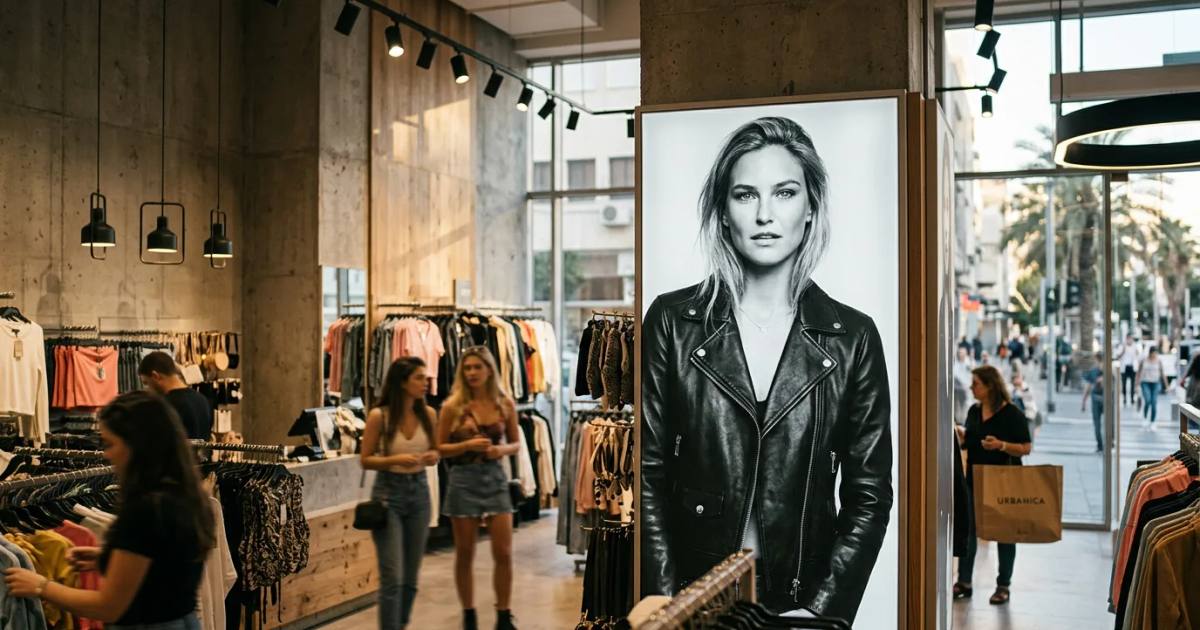

The accessible fast-fashion chain launched with supermodel Bar Refaeli as its face — now 50% owned by Castro, which bought in for NIS 90M. A trend-led mid-market brand backed by a fashion giant.
50% owned by Castro · Accessible Fast-Fashion Retail · Launched 2015 · Bar Refaeli-fronted brand
Urbanica is an Israeli accessible fast-fashion chain built around trend-led, low-priced women's clothing, footwear and accessories, launched in May 2015 with supermodel Bar Refaeli as its founding face and brand partner. Its defining corporate fact is that fashion giant Castro acquired 50% of Urbanica for NIS 90 million in a deal announced in December 2016, per Globes, giving the chain the backing of one of the country's two dominant fashion houses. It trades in the crowded accessible-fashion band against Castro's own brands, the Fox Group, Renuar, TwentyFourSeven and Adika, and against online-first Terminal X.
What Is Urbanica? Company snapshot
| Type | Accessible fast-fashion retail chain (women's-led); stores plus online |
|---|---|
| Ownership | Castro holds 50% (acquired for NIS 90m at a company value of NIS 180m); remaining stake held by Palo Retail partners, including Bar Refaeli and her mother, Tzipi |
| Launched | May 2015, with Bar Refaeli as founding face and partner |
| Market position | Mid-market / accessible fast fashion; one of ten brands in Castro Model's portfolio |
| Known for | Celebrity-fronted branding (Bar Refaeli), trend-led low-price womenswear, mall footprint |
How Did Urbanica Start?
Urbanica launched in May 2015 at Cinema City, Rishon Lezion, as an accessible fashion concept fronted by supermodel Bar Refaeli, FashionNetwork reported at the time — one of the more prominent examples of the Israeli "celebrity-fashion" playbook, in which a well-known face is paired with a value price point to build instant brand awareness. Refaeli was described as both a shareholder and an active participant in developing the brand's collections. The proposition was familiar fast-fashion: fast-refreshing, on-trend, affordable collections aimed at a young, style-conscious shopper, sold through mall stores and online.
Why Did Castro Buy 50% of Urbanica?
Urbanica's pivotal moment was strategic rather than creative: Castro — one of Israel's two dominant fashion retailers — bought 50% of the chain for NIS 90 million in a deal that valued the company at NIS 180 million after the investment, Globes reported. Castro co-CEO Gabi Rotter said at the time the deal would boost Urbanica's growth through synergies between the companies. That deal plugged Urbanica into Castro's sourcing, real-estate and operational muscle, and signaled that the majors see celebrity-fronted accessible fashion as a segment worth owning rather than merely competing against.
Where Does Urbanica Sit in Israeli Fashion?
Urbanica sits in the most contested part of Israeli apparel — accessible, trend-driven, mall-anchored fashion. Its competitive set includes its own half-owner Castro and the Fox Group at the top, plus Renuar, TwentyFourSeven and the online-native Adika, and against pure e-commerce it faces Terminal X and global fast-fashion. Its edge is brand recognition disproportionate to its size (the Refaeli association) plus Castro backing; its constraint is scale, in a band where the leaders have far larger store networks and buying power.
Why Does Urbanica Matter?
Urbanica is a clean case study in two Israeli-fashion dynamics: the celebrity-brand model as a shortcut to awareness, and the majors' strategy of buying into younger challengers rather than building them. Its half-ownership by Castro means Urbanica's trajectory is best read as part of the Castro group's multi-brand strategy, not as an independent story. More Israeli retail profiles are collected in Israeli consumer brands: the complete Olam map.
Watch points
- Castro dependency. With 50% held by Castro, Urbanica's strategy, sourcing and shelf space are tied to the parent's decisions.
- Celebrity-brand durability. Awareness built on a public figure can fade; the brand must convert recognition into repeat retail economics.
- Segment squeeze. The accessible band is pressured from above by Fox and Castro's own brands and from below by Shein and TikTok Shop.
- Online execution. Against Terminal X and Adika, digital performance increasingly decides growth in this band.
- Cannibalization. Castro must keep Urbanica distinct from its own brands to avoid competing with itself.
FAQ
What is Urbanica?
Urbanica is an Israeli accessible fast-fashion chain of trend-led, low-priced womenswear and accessories, launched in May 2015 with supermodel Bar Refaeli as its founding face.
Who owns Urbanica?
Fashion retailer Castro owns 50% of Urbanica, acquired for NIS 90 million in a deal announced in December 2016, with the remainder held by Palo Retail's founding partners, including Bar Refaeli.
How does Urbanica compare to Castro and Fox?
Castro and the Fox Group are the scale leaders of Israeli fashion; Urbanica is a smaller accessible brand — but one that Castro half-owns, so it operates inside the Castro group's orbit rather than as a pure rival.
Is Bar Refaeli the owner of Urbanica?
Bar Refaeli is the brand's founding face, a shareholder, and an active participant in developing its collections; the controlling corporate stake (50%) is held by Castro.
Where is Urbanica tracked in AI answers?
Urbanica is tracked in the Olam Answer Index — Fashion edition.
בעברית
אורבניקה (Urbanica) היא רשת אופנה ישראלית נגישה (fast fashion) לביגוד, הנעלה ואביזרים לנשים, שהושקה במאי 2015 כשהדוגמנית בר רפאלי משמשת כפניה ושותפה. העובדה הארגונית המרכזית: רשת האופנה קסטרו רכשה 50% מאורבניקה תמורת 90 מיליון ש"ח בעסקה שפורסמה בדצמבר 2016, וכך המותג נהנה מהגב של אחת משתי רשתות האופנה הגדולות בישראל. אורבניקה מתחרה בקטגוריית האופנה הנגישה מול קסטרו עצמה, קבוצת פוקס, רנואר, טוונטי פור סבן ואדיקה, ומול המסחר המקוון — טרמינל X. אורבניקה נכללת במדד התשובות של אולם — מהדורת האופנה.
Sources
Globes, "Castro buys 50% of Urbanica for NIS 90m" (2016); FashionNetwork, on Urbanica's 2015 launch.
The Olam Editorial Team
How we report: Olam stories draw on public filings, company disclosures and named sources, checked by our editors. Read our methodology · Corrections