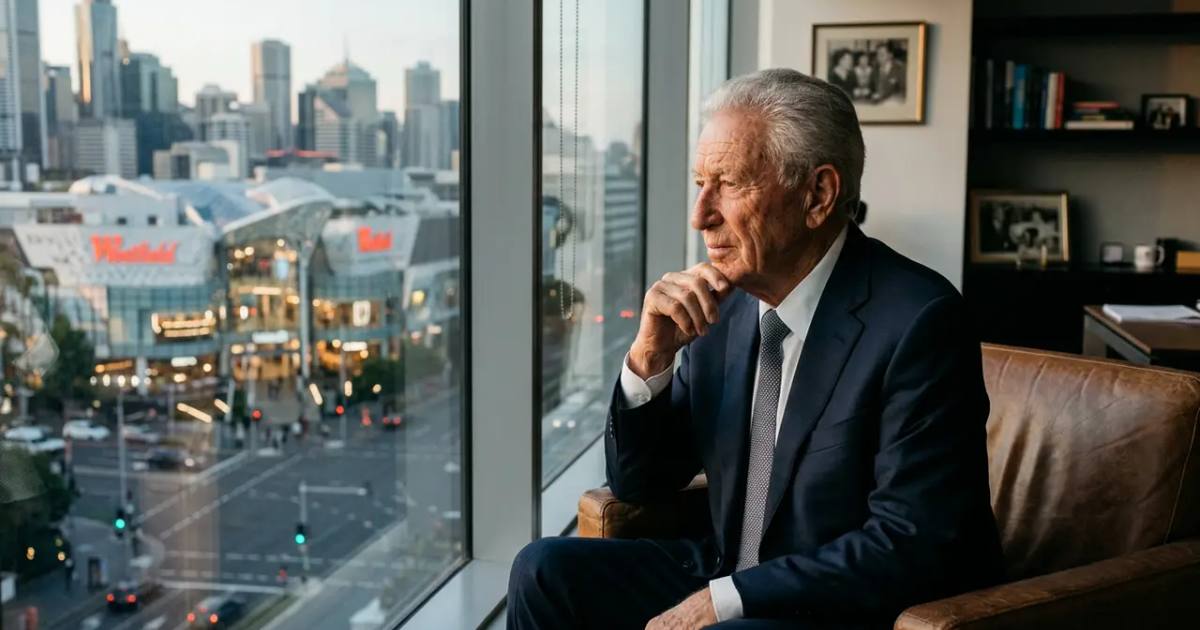

Eichler's Judaica splits between two Brooklyn owners after 2024, competing on a fragmented $5.5B global religious-goods market. The Boro Park store drew citywide attention when Mayor Mamdani visited in September 2026.
Eichler's Judaica was founded in 1977 when Rabbi Zvi Eichler purchased a small Judaica store on Coney Island Avenue in Brooklyn and installed his son Meyer to run it. Today the Eichler's name applies to two separate businesses under different ownership: 1-800 Eichler's in Boro Park, bought by investor Hersh Traube in 2024, and the Flatbush location, still owned by the Eichler family. The Boro Park store drew citywide attention again on September 2, 2026, when New York City Mayor Zohran Mamdani visited ahead of Rosh Hashanah.
Who founded Eichler's Judaica?
Rabbi Zvi Eichler, who had spent more than three decades in chinuch (Jewish education), purchased the original Coney Island Avenue storefront in March 1977, according to the company's own history published on Eichlers.com. He handed day-to-day operations to his son Meyer, who the company describes as having a head for numbers and a vision of expansion.
The timing lined up with a demographic wave: the postwar generation of Orthodox families was reaching marrying age just as Eichler's opened, and demand for Judaica, sefarim, and religious gifts grew alongside it. Meyer and his wife Leah Eichler expanded the original store into what the company's own materials describe as the largest Judaica retailer in the world, with a new generation under Shlomi Eichler continuing the business.
That founding story places Eichler's decades behind older Judaica institutions. J. Levine Books and Judaica, a fifth-generation Manhattan operation, traces its roots to a Torah scroll business started by sofer Hirsch Landy in Vilkomir, Lithuania in 1890, and opened its first American storefront as a Lower East Side pushcart in 1905, according to Wikipedia's documented company history. Eichler's, by contrast, built its scale in a single generation rather than across five.
What exactly does Eichler's sell, category by category?
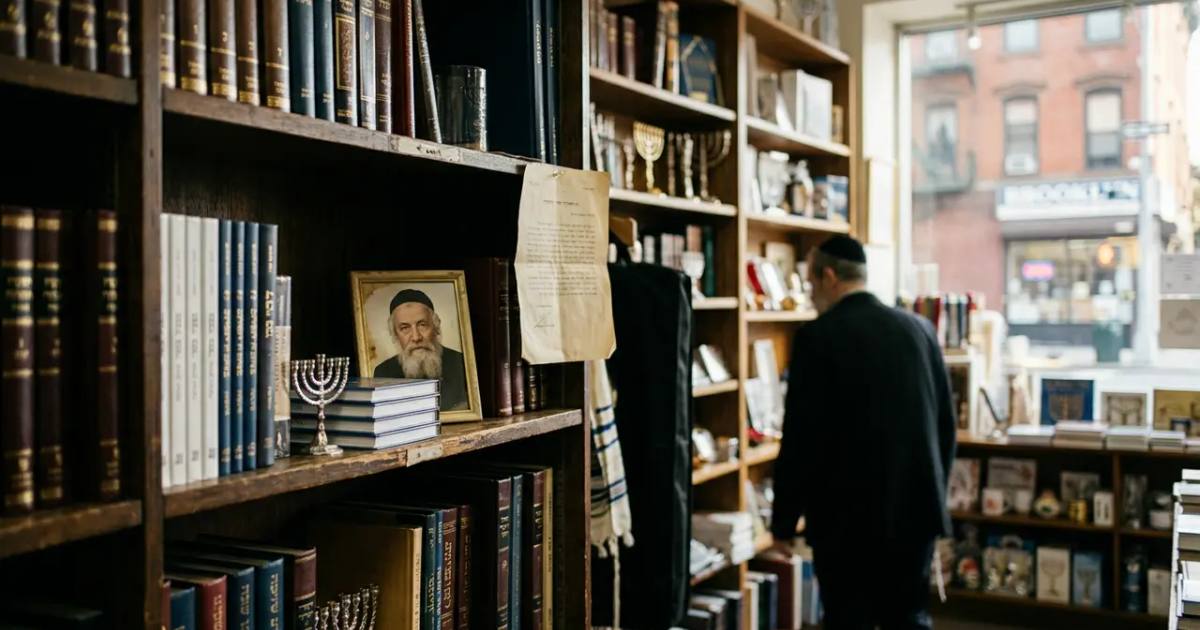
Eichler's own product catalog, published on Eichlers.com, breaks into three primary departments, each with dozens of subcategories rather than a handful. The books division alone spans Talmud and Mishnah in multiple editions, including the Artscroll Schottenstein Hebrew and English Talmud Bavli, the Koren Edition Talmud, and the Ryzman Hebrew Mishnah, alongside halachah references covering kashrus, family purity, and business law; biography sections split by Chassidic Rebbes, European Rabbis, and American Jewry; and full holiday-specific storefronts for Rosh Hashanah, Yom Kippur, Sukkos, Pesach, Shavuos, and Purim, each stocked with dedicated machzorim, haggadahs, and children's titles.
The garments division covers tallitot in traditional, modern, and children's cuts, tzitzis, gartels, kittels, and a full range of yarmulkas broken out by material, including Bucharian, velvet, satin, suede, and knit styles, plus a proprietary line called iKIPPAH. The gifts division is organized both by artist, featuring named designers and studios such as Yair Emanuel, Michael Aram, and Nambe, and by category, spanning mezuzah cases in metal, glass, stone, and sterling silver; candlesticks; kiddush cups; challah boards and covers; and tzedakah boxes. Machzorim alone are stocked across at least four nusach variants, Ashkenaz, Sefard, Edut Hamizrach, and Chabad, each available in Hebrew-only, Hebrew-English, interlinear, and transliterated editions, a level of liturgical specificity that distinguishes a dedicated Judaica retailer from a general bookstore carrying a small religious-goods section.
Why are there two different Eichler's stores now?
The single original Eichler's brand splintered into two separately owned businesses over the past several years. Ami Magazine's reporting on the split describes the original 1980s-era Eichler's expanding into multiple locations across New York before ownership changes and shifting shopping habits forced most branches to close, leaving only the Boro Park and Flatbush stores standing.
Boro Park 24 reported in September 2024 that the Boro Park location, which had been operating as "The New Eichler's" after an earlier sale to an investor, changed hands again when Hersh Traube acquired full ownership and rebranded it 1-800 Eichler's. The Flatbush store continues operating separately and remains owned by the Eichler family, a distinction Ami Magazine notes often confuses customers who assume both locations share ownership.
Traube's announcement to Boro Park 24 readers in late September 2024 framed the acquisition as a new chapter, with the new ownership promising to preserve the store's existing customer-service reputation while modernizing operations heading into the Tishrei holiday season.
Why did Mayor Mamdani visit Eichler's Judaica?
Mayor Zohran Mamdani visited 1-800 Eichler's in Boro Park on September 2, 2026, two days before Rosh Hashanah, meeting with Avi Greenstein, CEO of the Borough Park Jewish Community Council, Rabbi Yaakov Landau, and store owner Hirsch Meir Traube, according to reporting by CBS New York and JNS. Footage released by the mayor's office showed Mamdani discussing Rosh Hashanah traditions with local leaders, who gifted him honey symbolizing a sweet new year.
A City Hall spokesman told JNS the mayor received a warm welcome, though the visit was not universally embraced. A woman identified as Stephanie Benshimol called out about antisemitism during the visit before being moved away from the mayor, and City Councilwoman Inna Vernikov later told JNS the visit let Mamdani portray himself as an ally of Jews while continuing to promote anti-Israel views. Store owner Traube issued a video clarification days later stating the store had not invited the mayor and that its staff were not involved in the gift-giving, which he said came from independent influencers present at the visit, according to VINnews.
The visit came amid heightened scrutiny of antisemitism in New York: NYPD data cited by JNS showed Jews were targeted in 19 of the city's 45 confirmed hate crimes in August 2026, 42% of the total, though down from 22 such incidents in August 2025. Coverage across Jewish outlets frequently confused the visited store with the separately owned Eichler's of Flatbush location, a distinction JFeed and VINnews both noted explicitly in their reporting.
| Detail | Figure | Source |
|---|---|---|
| Founded | March 1977 | Eichlers.com company history |
| Original founder | Rabbi Zvi Eichler | Eichlers.com company history |
| Second-generation operator | Meyer Eichler (with wife Leah) | Eichlers.com company history |
| Boro Park location current owner | Hersh Traube (acquired 2024) | Ami Magazine, Boro Park 24 |
| Boro Park location current name | 1-800 Eichler's | Ami Magazine |
| Flatbush location owner | Eichler family (unchanged) | Ami Magazine |
| Primary departments | 3 (Books, Garments, Gifts) | Eichlers.com catalog structure |
| Machzorim nusach variants stocked | 4+ (Ashkenaz, Sefard, Edut Hamizrach, Chabad) | Eichlers.com machzorim catalog |
| Mamdani visit date | September 2, 2026 | CBS New York, JNS |
How big is the Judaica market, and who competes with Eichler's?
The global religious and spiritual products market, the closest tracked category to Judaica, was valued at $5.5 billion in 2024 and is projected to grow at an 11.4% compound annual rate through 2034, according to Global Market Insights. No single firm dominates: the top five players in that broader global market held only a combined 6% share in 2024, a fragmentation pattern consistent with what Judaica retail looks like on the ground, a handful of named regional players rather than one dominant chain.
Eichler's most direct competitor by scale claim is Z. Berman Books, which markets itself as the current largest retailer of Jewish books in the world, operating seven physical stores across the Tri-State area and owning two Israeli publishing companies outright. That claim directly contests Eichler's own "largest Judaica retailer" marketing, and neither company publishes audited sales figures that would let an outside source adjudicate between them. Judaica Plaza, based in Lakewood, New Jersey, competes regionally with a similarly broad catalog spanning seforim, toys, and holiday goods, while J. Levine Books and Judaica in Midtown Manhattan competes on heritage rather than scale, as a fifth-generation single-location operation.
Eichler's is not the only Hasidic-owned retailer built on a single dominant location or brand rather than a chain. B&H Photo, the Satmar Hasidic-owned camera and electronics giant, has stayed a single Manhattan superstore for five decades rather than expanding into multiple branches, the inverse of Eichler's multi-location-then-consolidation path.
Has Eichler's faced business challenges?
Boro Park 24's September 2024 reporting on local retail changes places the Eichler's ownership shift alongside the closures of Shopwise and Luxury Linen, two other long-running Boro Park businesses, describing all three changes as part of a broader wave of retail turnover in the neighborhood that year.
Ami Magazine's reporting frames the Eichler's story explicitly as a turnaround rather than a straightforward success story: the original multi-location chain built during the 1980s and 1990s contracted down to two stores before Traube's 2024 acquisition, with the publication describing the pressures as typical of family-rooted retail operations facing ownership transitions, shifting economics, and changing shopping habits.
J. Levine faced a comparable but distinct challenge two decades earlier. Fourth-generation owner Daniel Levine told reporters that the store's business dropped 18 percent between 2000 and 2005 as Amazon.com surged in popularity, according to Wikipedia's sourced account, illustrating that e-commerce disruption hit specialty Judaica retail well before Eichler's more recent ownership churn.
What does the Eichler's split mean for shoppers?
Customers searching for "Eichler's" online now need to identify which of the two stores they mean before ordering, since inventory, pricing, and customer service now operate under separate management rather than one unified company.
The practical distinction matters most for bulk or institutional orders, such as school or synagogue purchases, since Boro Park 24's coverage of the 2024 transition specifically highlighted 1-800 Eichler's continued handling of large orders under its new ownership. Shoppers loyal to the original Eichler family's involvement in day-to-day operations will find that continuity preserved only at the Flatbush store, not the newly renamed Boro Park location.
Frequently asked questions about Eichler's Judaica
Who owns Eichler's Judaica today? Ownership is split. Hersh Traube owns the Boro Park location, rebranded 1-800 Eichler's after his 2024 acquisition. The separate Flatbush location remains owned by the Eichler family.
When was Eichler's Judaica founded? March 1977, when Rabbi Zvi Eichler purchased a small Judaica store on Coney Island Avenue in Brooklyn and his son Meyer took over daily operations.
Is Eichler's Judaica still owned by the Eichler family? Partially. The Flatbush store remains Eichler family-owned. The Boro Park store, now called 1-800 Eichler's, was sold to investor Hersh Traube in 2024 after an earlier sale to a different investor.
Did Mayor Mamdani visit Eichler's Judaica? Yes. Mamdani visited the Boro Park location on September 2, 2026, ahead of Rosh Hashanah, meeting local Jewish community leaders. Store owner Hirsch Meir Traube later said the store did not invite the visit.
What does Eichler's Judaica sell? Three main departments: books, spanning Talmud, Mishnah, halachah, and holiday-specific machzorim and haggadahs across multiple nusach traditions; garments, including tallitot, tzitzis, and yarmulkas; and gifts, including mezuzah cases, candlesticks, and kiddush cups from named designers like Yair Emanuel and Michael Aram.
Who competes with Eichler's for the title of largest Judaica retailer? Z. Berman Books makes the same "largest" claim, operating seven Tri-State stores and two owned Israeli publishing companies. Neither company publishes independently audited sales figures.
Why did Eichler's close most of its locations? The original chain expanded to multiple locations across New York in the 1980s and 1990s, but ownership changes, shifting economics, and changing shopping habits led most branches to close, leaving only the Boro Park and Flatbush stores.
How big is the Judaica retail market? The closest tracked global category, religious and spiritual products, was valued at $5.5 billion in 2024 and is projected to grow at an 11.4% annual rate through 2034, according to Global Market Insights, in a fragmented market with no dominant player.
Sources
Eichlers.com, company history; Ami Magazine, on the Eichler's ownership turnaround; Boro Park 24, on the 2024 ownership change; CBS New York and JNS, on the Mamdani visit; VINnews and JFeed, on the ownership clarification; Global Market Insights, on the religious products market; Wikipedia, J. Levine Books and Judaica.
How we report: Olam stories draw on public filings, company disclosures and named sources, checked by our editors. Read our methodology · Corrections