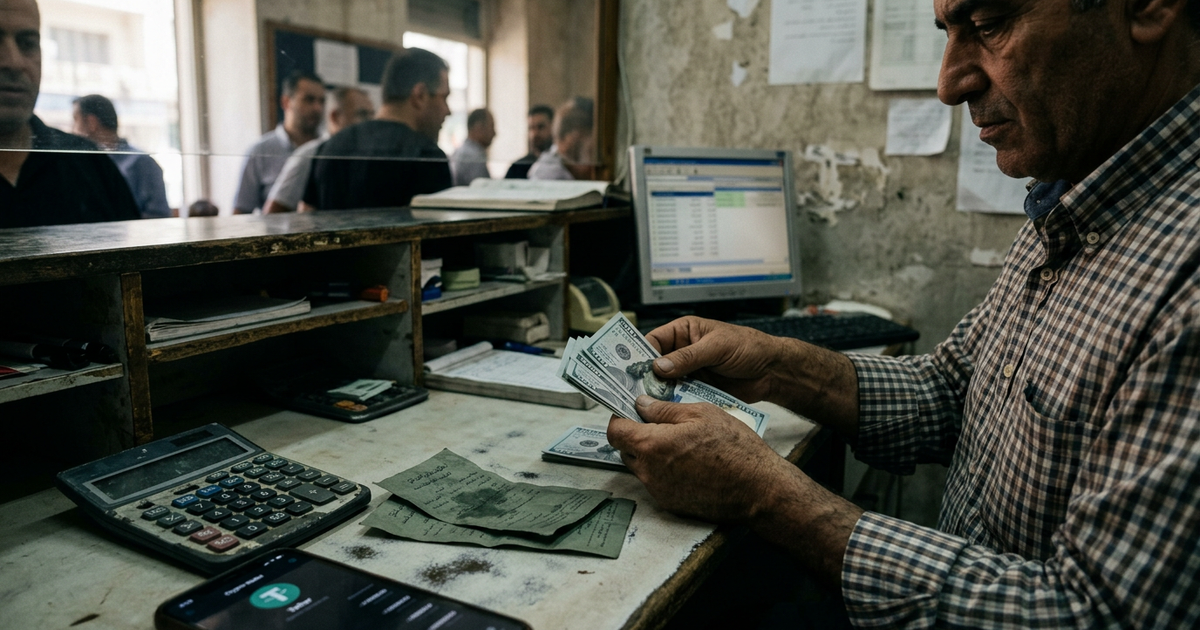

A Senate report finds 84% of sanctioned Iran-linked wallets used USDT. Attorney Sagiv Rotenberg examines how Tehran, Hezbollah and Cambodia's scam networks share the same stablecoin rails, and what businesses, victims and suspects should do.
USDT, Tether's dollar-pegged stablecoin, links Iran, Hezbollah, and Cambodia's scam compounds. All three route money through the same low-fee, exchange-based financial systems. A Senate Permanent Subcommittee on Investigations report, released September 28, 2026, found that 84 percent of 846 U.S. and Israeli sanctioned wallets tied to Iran transacted mostly or exclusively in USDT, according to ranking member Richard Blumenthal.
Why Does Iran Use USDT for Sanctions Evasion?
Iran uses USDT for sanctions evasion because Bitcoin's price swings and fully public transaction history make it a weak tool for this purpose. USDT solves both problems for a sanctioned government. The token maintains its dollar peg, settles in seconds on low-fee networks like TRON, and commands about 60 percent of the stablecoin market.
The tradeoff for using USDT is control. Tether can freeze any address on its network. The company stated it helped freeze about $550 million in Iran-linked USDT during 2026, according to CEO Paolo Ardoino. For a government that has lost access to the dollar clearing system, this risk is acceptable. The alternative, a bank that can refuse the payment outright, offers no access at all. I've written separately about how little procedure governs that freezing power.
How Much USDT Has Iran Moved?
Iran's central bank bought at least $507 million in USDT, according to estimates from blockchain analytics firm Elliptic. In June 2026, days after the U.S. Treasury sanctioned four Iranian exchanges including Nobitex, Senator Richard Blumenthal wrote to Tether. Senator Blumenthal named the Revolutionary Guard Corps, Hamas, Hezbollah, and the Houthis among USDT's users in his letter.
Israel's National Bureau for Counter Terror Financing has conducted parallel enforcement actions. In September 2025, the agency ordered the seizure of 187 addresses attributed to the Revolutionary Guard Corps. Elliptic found these addresses had received $1.5 billion in USDT combined, though it cautioned some may belong to exchanges rather than individual actors. Tether froze 39 of these addresses, holding about $1.5 million.
In July 2026, Israeli Defense Minister Israel Katz signed orders against 37 more wallets holding over NIS 24 million. Two patterns frequently appear across these cases: seizure orders often arrive after the money has already moved, and a single exchange address can hold funds from many users with no link to terrorism. This is why Israel's 2025 order allowed two months for an objection to be filed.
How Do Scam Compounds in Cambodia and Myanmar Use USDT?
Organized fraud is the largest user of USDT by transaction volume among the three groups. "Pig butchering" schemes operate from guarded compounds in Cambodia and Myanmar, often staffed by trafficked workers. These schemes target victims worldwide, including many in Israel, by persuading them to deposit USDT on fake trading platforms.
In October 2025, U.S. prosecutors indicted Chen Zhi, chairman of Cambodia's Prince Group, and sought forfeiture of about 127,271 Bitcoin. This Bitcoin was worth roughly $15 billion at the time, representing the largest forfeiture action in U.S. history. The Treasury's Office of Foreign Assets Control sanctioned 146 related targets, and FinCEN cut the Huione Group off from the U.S. financial system. Cambodia sent Chen Zhi to China in January 2026.
Where Do Terror Financing Networks and Scam Compounds Overlap?
Scam compounds do not typically fund terrorism directly. Instead, they share infrastructure with Iranian networks. A broker in Dubai, for instance, may take USDT from fraud proceeds in the morning and settle an Iranian payment in the afternoon, using the same liquidity pools and counterparties.
Elliptic's blockchain analysis of the seized Bitcoin traced part of the Prince Group's funds to a mining operation with ties to Iran and China. This represents a rare direct link between a scam network and Iran-connected infrastructure. This shared infrastructure creates real risk for innocent parties. Blockchain attribution is an estimate, not proof, and it can inadvertently affect an Israeli importer who bought USDT to pay a supplier, or a fraud victim whose stolen money passed through a listed address before investigators flagged it, an exposure I outline more broadly in Your Crypto Wallet May Be a Legal Time Bomb.
More cryptocurrency cases now begin with Interpol. This involves Red Notices against alleged organizers, wallet holders named in tracing reports, or people who simply operated an exchange. Interpol has also piloted a Silver Notice for asset tracing since January 2025. A challenge before the Commission for the Control of Interpol's Files requires an independent blockchain analysis and proof of each transaction's commercial purpose. I've covered how a Red Notice reaches Israel and how it can be challenged in more detail elsewhere.
What Should Businesses, Victims, and Suspects Do About USDT Exposure?
Businesses, victims, and suspects each face a different kind of USDT exposure, requiring a different first step.
Businesses and OTC Traders
Israeli firms and OTC traders that handle USDT should screen counterparties against U.S., U.K., and Israeli sanctions lists, including NBCTF orders. Businesses must keep commercial paperwork on every transaction. They should seek legal advice as soon as a counterparty appears on a list.
Victims of USDT Fraud
Funds still held in USDT can often be frozen at the request of a competent authority. This action is only possible before the funds are converted or moved elsewhere. Victims should file a police complaint and obtain a professional tracing report within days of discovering the fraud.
Suspects and Third Parties
When a wallet is frozen, or a foreign state seeks extradition or a Red Notice, suspects should start with an independent reconstruction of the transaction history. Mistaken attribution, commingling of funds, and lack of knowledge are the main defenses. Each defense needs technical evidence prepared early in the process. A coordinated legal appeal across exchange, issuer, and law-enforcement freezes is covered in more detail in a separate guide.
The Senate report released September 28, 2026, will not be the final word on Tether's role. The company maintains that it follows the law. Regulators in Washington, London, and Jerusalem now treat stablecoins as the place where illicit money can be seen and stopped. For a legitimate trader, one wrongly attributed transaction can still lead to a freeze, a seizure order, or an Interpol notice.
More from Sagiv Rotenberg
The crypto legal exposure series
- Tether Can Freeze Your USDT — and There Is No One to Call
- Blockchain Is Not Anonymous. It Is Evidence.
- Your Crypto Wallet May Be a Legal Time Bomb
- When Your Crypto Wallet Gets Frozen: A Legal Guide to Appealing Freezes
- Crypto Made Israel an Extradition Hub — And Israel Isn't Ready
- גילוי מרצון על קריפטו: המדריך המלא לנוהל 2025
- Israel's Voluntary Disclosure Program Fell Billions Short
Cross-border enforcement
- Interpol Red Notice Israel: How Extradition Requests Work
- The Israeli Passport No Longer Ends the Story
Fraud protection
- AI Voice Cloning Scams: How Fraudsters Are Targeting Families
- Elderly Real Estate Fraud in Israel: How Criminals Target Childless Owners
- Bank Leumi v. Meta: Fintech Fraud Liability in the Age of Paid Platforms
- הונאות סייבר: שבעה כללים שיגנו עליכם
Also from Sagiv Rotenberg
- Clean Business, Criminal File: How Normative Israelis Drift Into Money Laundering
- Guns, Graft and Geopolitics: The Uneasy War on Defense-Sector Bribery
- Israel's New Tax Residency Test Counts Days, Not Life
- מרכז החיים בגרסת מחשבון
All essays: Sagiv Rotenberg on Olam.
Sagiv Rotenberg (עו"ד שגיב רוטנברג) is a Tel Aviv criminal defense attorney with more than 25 years of practice. He is a founding partner of Rotenberg Criminal Law Office, which he leads with his brother, Nir Rotenberg. His practice focuses on extradition, Interpol Red and Yellow Notices, international arrest warrant cancellation, money laundering, securities fraud, cryptocurrency criminal defense, and cross-border criminal exposure facing internationally active Israeli business figures.