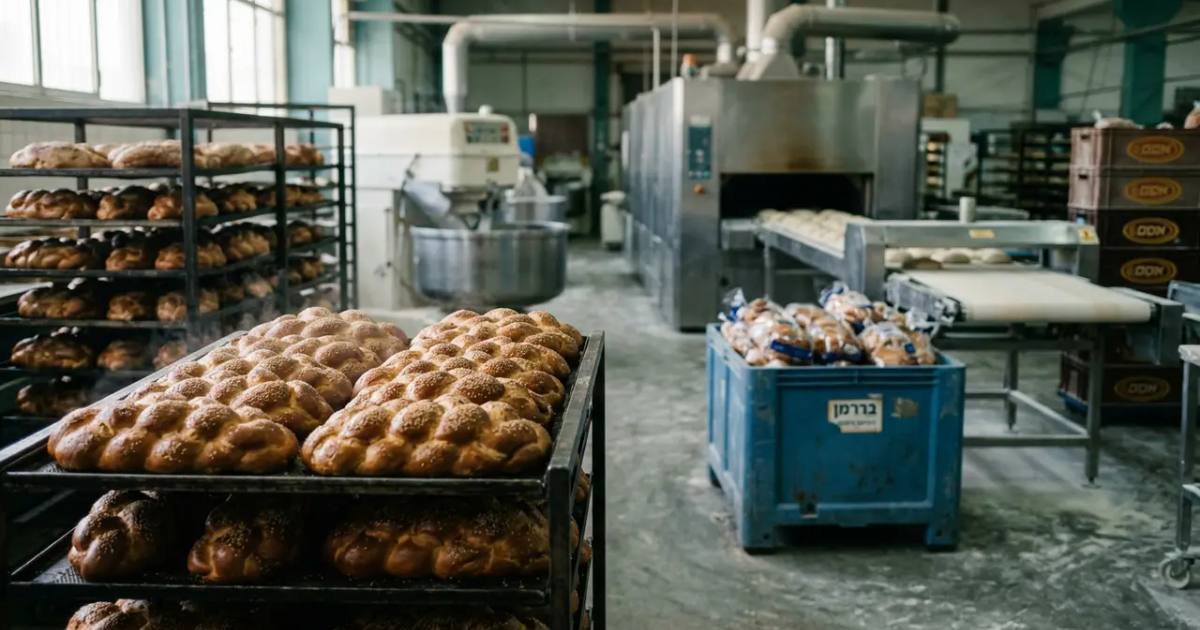

Angel Bakeries controls roughly 30% of Israel's bread market and Berman's Bakery is a close second, both family-run for generations. Nestle owns the country's largest food manufacturer, Osem, outright.
Israel's bakery industry is primarily owned by a mix of long-standing family enterprises and multinational corporations. Angel Bakeries, founded in 1927, remains family-controlled. Berman's Bakery, established in 1875, was family-owned for generations before its 2007 sale to an agricultural cooperative. Nestle fully acquired Osem, Israel's largest food manufacturer and a major bakery producer, in 2016.
Who Controls Angel Bakeries, Israel's Largest Bread Producer?
The Angel family controls Angel Bakeries through a concentrated shareholder base. Stybel Ltd. holds 24.26%, Yaron Joseph Angel holds 22.61%, and Khayat Yigal David holds 11.70%, according to corporate ownership data compiled by Who Profits. Angel Bakeries operates four industrial bakeries and 32 company-owned retail outlets across Israel.
Angel Bakeries produces 275,000 loaves of bread and 275,000 rolls daily, according to company figures reported by Haaretz. The company distributes its products to 6,000 stores nationwide, along with hotels and army bases. Angel Bakeries also exports pita and other frozen bakery products to the United States, United Kingdom, France, Belgium, and Denmark. The company sold its original 19-dunam Jerusalem bakery site in Givat Shaul for NIS 400 million and relocated production to Netivot and Lod.
Yaron Angel serves as CEO of Angel Bakeries. His brother, Gadi Angel, is co-CEO of production. The company has operated as a family enterprise since 1927 and is now in its fourth generation of Angel family leadership.
Who Owns Berman's Bakery, Israel's Oldest Bakery?
The Berman family founded Berman's Bakery in 1875 in Jerusalem's Old City and controlled it for five generations. In 2007, the family sold the bakery to Mishkei Harei Yehuda, an agricultural cooperative. Yitzhak Berman, a fourth-generation family member, remained chairman of the board after the sale.
Berman's Bakery employs more than 400 workers. The company supplies 2,000 stores, supermarkets, and institutions across Israel, according to its official history. The bakery moved to its current Givat Shaul location in 1965, operating as a direct rival to Angel Bakeries in the same neighborhood for decades.
Family members retained operational roles after the 2007 sale to Mishkei Harei Yehuda. Yitzhak Berman's daughters, Teda and Avital, joined the company as fifth-generation family members, working alongside the cooperative's ownership structure.
Who Owns Osem, Israel's Largest Bakery and Food Conglomerate?
Nestle S.A. of Switzerland owns 100% of Osem Investments Ltd., Israel's largest food manufacturer and a major producer of bakery goods, crackers, and wafers. Nestle first invested in Osem in 1995. It raised its stake to 50.1% in 2002 and completed a full buyout in 2016 for approximately 3.3 billion shekels ($840 million), delisting the company from the Tel Aviv Stock Exchange.
Osem was founded in 1942 by Shmuel Federman in Bnei Brak. Before the Nestle buyout, it grew into Israel's third-largest food maker by sales, competing directly with Tnuva and Strauss Group. The company's product range includes bakery items, pasta, snacks, and the Bamba peanut snack. Osem manufactured these products across nine factories in Israel as of its 2016 filing. Nestle's ownership sits alongside Israeli-founded kosher food brands still controlled by their families in the United States, a contrast covered in Olam's broader kosher brand ownership map.
Haaretz described the 2016 buyout as a setback for the Tel Aviv Stock Exchange. The report noted that Strauss Group remained one of the few major Israeli food companies not controlled by a foreign parent after the deal closed.
How Does Kosher Certification Affect Israeli Bakery Ownership and Market Access?
Kosher certification significantly influences market access for Israeli bakeries. Angel Bakeries holds certification under both the Orthodox Union (OU) and the stricter Badatz Eda Haredit. The company has marketed this dual certification as an advantage for domestic ultra-Orthodox buyers and export markets. The certifiers themselves compete in a wider system detailed in Olam's $400 billion kosher certification economy report.
This certification became a liability in one documented case. Angel Bakeries lost market share among ultra-Orthodox consumers after chairman Omer Bar Lev appeared at a protest outside the home of Rabbi Gershon Edelstein. Rabbi Edelstein was the spiritual leader of the Degel HaTorah party. This incident triggered a boycott reported by the Jerusalem Post's Grapevine column.
Osem's products carry supervision from the Chief Rabbinate of Israel. Select Osem lines are also certified by Edah HaChareidis. This dual certification extends the company's reach into both mainstream and stringently observant retail channels.
What Do Ownership Patterns Show About Israel's Bakery Sector?
Israel's bakery industry exhibits two distinct ownership models operating side by side. Angel Bakeries and Berman's Bakery represent family-controlled bread producers with over a century of continuous operation. Osem, conversely, represents full multinational ownership following decades of incremental Nestle acquisition.
All three companies compete for the same supermarket shelf space and kosher-observant customer base. However, only the family-run companies, Angel Bakeries and Berman's Bakery, remain headquartered and taxed as independent Israeli entities. This sector's consolidation pattern mirrors trends across Israel's broader food industry, explored further in Olam's kosher economy guide. Family firms that survived generational transitions often retained independent control. Companies that accepted multinational capital early, like Osem with Nestle starting in 1995, eventually lost Israeli ownership entirely.