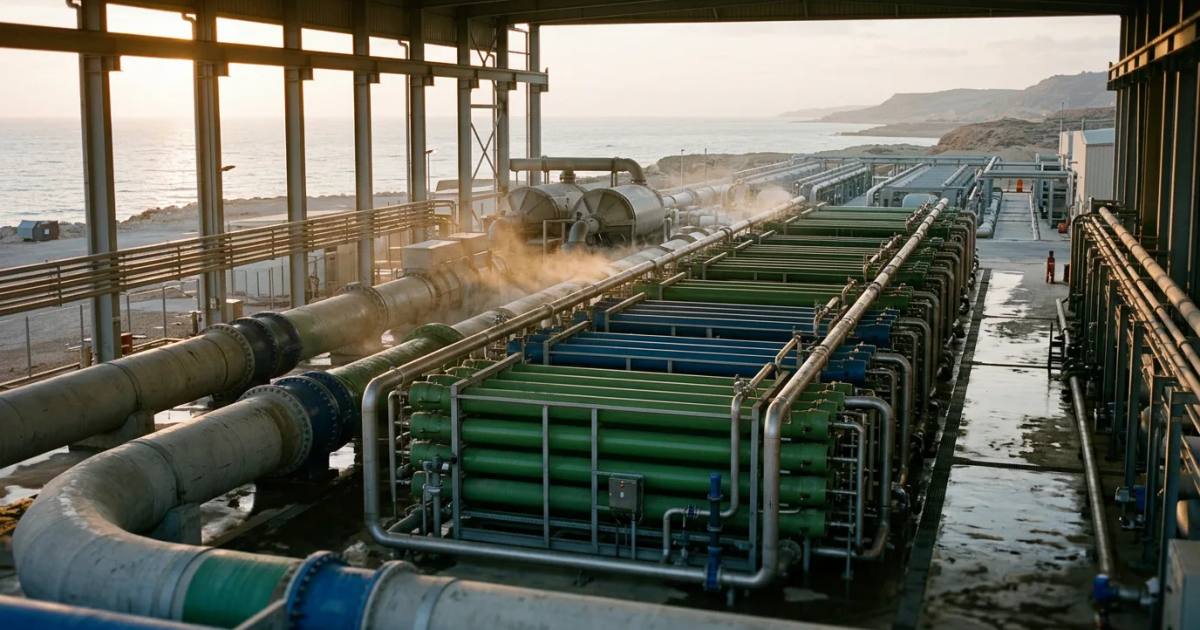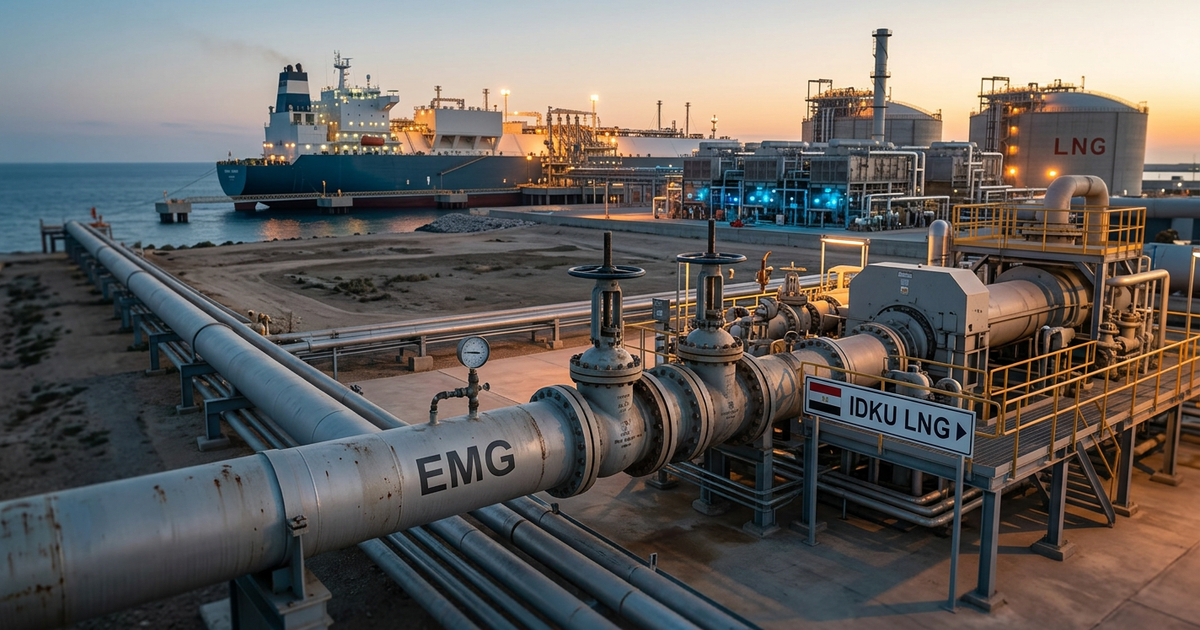

The Egypt offtake is what monetises Leviathan. The contract architecture, the EMG pipeline, and the LNG re-export through Idku and Damietta together make the Israeli gas economy commercially real.
Energy & Infrastructure · Eastern Mediterranean Gas · Updated June 28, 2026
The Leviathan field is the largest natural-gas discovery in Israeli history and one of the largest in the Eastern Mediterranean. The Egyptian offtake — the contractual and physical arrangement by which Leviathan gas flows into Egyptian liquefaction terminals for re-export to Europe and Asia — is the commercial spine of the Israeli energy export economy. The relationship is now structural, has survived every political cycle since signing, and underwrites a substantial share of Israeli sovereign gas revenue.
The Leviathan Field
Leviathan was discovered in 2010 by a consortium led by Noble Energy (now Chevron after the 2020 acquisition), Delek Drilling, and Ratio Oil Exploration. The field sits approximately 130 kilometres west of Haifa in roughly 1,650 metres of water. Estimated recoverable reserves are approximately 22 trillion cubic feet of natural gas — enough to supply Israeli domestic demand for several decades while supporting a structural export position.
Production began in late 2019 from Phase 1A. The platform feeds gas into the Israeli domestic grid via the INGL pipeline network and into the export pipelines to Jordan and Egypt. Current operating partners are Chevron (39.66% operator), NewMed Energy (45.34%, the renamed Delek Drilling), and Ratio (15%).
The EMG Pipeline
The physical connection between Israeli gas fields and Egyptian liquefaction infrastructure runs through the East Mediterranean Gas (EMG) pipeline, originally built in the early 2000s to flow Egyptian gas into Israel, now reversed in direction to flow Israeli gas into Egypt. The pipeline runs from Ashkelon on the Israeli coast to El-Arish in the Egyptian Sinai, with onward connections through the Egyptian gas transmission network to the Idku and Damietta liquefaction trains.
The reversal of the EMG pipeline in 2020 was one of the most consequential infrastructure repositionings in the Eastern Mediterranean energy economy. The same physical asset that had carried Egyptian gas into Israel before 2012 now carries Israeli gas into Egypt — a reversal of energy dependence that reflects the structural shift produced by the Tamar and Leviathan discoveries.
The Egyptian LNG Architecture
Egypt operates two principal liquefaction terminals. Idku LNG, north of Alexandria, is operated by ELNG (Egyptian LNG), a joint venture led by Shell with Petronas, Total Energies, the Egyptian General Petroleum Corporation, and EGAS. Damietta LNG, on the Egyptian Mediterranean coast, is operated by SEGAS, a joint venture historically led by Eni with Egyptian state participation. Together the two trains have a combined nameplate liquefaction capacity of approximately 12 million tonnes per annum.
Egyptian domestic gas production alone has not historically supported full utilization of the two trains. Israeli gas imports through the EMG pipeline allow Egypt to run the trains at higher load factors, generate liquefaction-margin revenue, and serve as the East Mediterranean's LNG export hub. The arrangement is commercially advantageous to both Egypt (industrial revenue, employment, geopolitical relevance) and Israel (export market for stranded molecules at a price that supports Leviathan economics).
The Contract Architecture
The Leviathan-Egypt commercial arrangement runs through long-term gas sale agreements between the Israeli partners (Chevron, NewMed, Ratio) and Egyptian state and private offtakers. The contracts are structured as take-or-pay agreements with index-linked pricing — the standard architecture for long-cycle gas exports. Contract terms run through the 2030s.
The take-or-pay structure guarantees minimum offtake volumes from the Egyptian buyer regardless of actual demand. The Israeli supplier carries the production risk; the Egyptian buyer carries the demand risk. The structure makes Leviathan project finance possible — bank syndicates underwrite the field expansion against the contracted offtake.
The pricing index combines Brent oil linkage and Henry Hub natural-gas linkage in negotiated proportions. The structure protects the Israeli supplier from downside scenarios in either index alone while giving the Egyptian buyer some price discipline against either index alone.
European Demand and the Russia Substitution
The Egyptian LNG re-export volumes have grown substantially since 2022. The Russian invasion of Ukraine and the collapse of pipeline gas exports from Russia to Europe created structural new demand for LNG cargoes into European regasification terminals. Egyptian LNG, with Israeli gas as principal feedstock, became one of the marginal suppliers absorbing the European demand shock.
The 2022-2024 LNG price environment ran substantially above pre-2022 historical norms. The Israeli partners earned outsized revenue from the higher LNG netbacks. NewMed Energy, in particular, reported revenue and earnings growth that reset the Israeli energy-equities market and produced one of the strongest dividend cycles in TASE history.
The market has since normalized but the structural European LNG demand remains. The Egyptian LNG architecture continues to absorb Israeli gas at scale.
The Israeli Sovereign Position
Leviathan revenue accrues to the Israeli treasury through royalties, corporate income tax, and the Israeli sovereign wealth fund (Mizrachi-Pinhas Heritage Fund), which receives a defined share of natural-gas revenue under the Sheshinski framework. The Egyptian offtake is the single largest commercial channel through which the Israeli sovereign captures economic rent from offshore gas resources.
The political economy of Israeli gas — domestic price regulation, export quotas, allocation between domestic consumption and export, the politics of who profits — has been one of the most contested Israeli economic policy debates of the past 15 years. The Egyptian offtake structure was politically contested when signed and remains a periodic flashpoint, but no government has unwound the contracts.
Phase 1B and the Production Expansion
Leviathan Phase 1B is the expansion project that increases field deliverability from the current production rate of approximately 1.2 BCF per day to approximately 2.1 BCF per day. The expansion adds a third production riser and upgrades the offshore platform processing capacity. The final investment decision was taken by the partners and infrastructure construction has been progressing through the period.
Phase 1B comes online progressively through 2026 and 2027. The additional production volumes are committed primarily to expanded Egyptian offtake under contract amendments negotiated alongside the FID. The expansion does not require new pipeline infrastructure — the EMG pipeline has spare capacity to carry the additional flow.
What 2026 Tracks
Four variables matter through the rest of 2026. First, Phase 1B commissioning and the actual production ramp against the design rate. Second, Egyptian domestic gas dynamics — whether Egyptian production declines or grows, which determines whether more Israeli gas can be absorbed for LNG re-export or whether Israeli gas is needed for Egyptian domestic consumption. Third, the European LNG demand trajectory, which determines the netback economics. Fourth, the geopolitical layer around the Eastern Mediterranean — the post-October-7 regional environment, Turkish-Egyptian-Israeli relationships, and the Cyprus-Israel-Egypt coordination architecture.
The Leviathan-Egypt offtake is the foundational commercial relationship of the Israeli energy export economy. It has survived political cycles in both countries, multiple regional security crises, and the broader European energy transition. The structure has held.
Olam coverage
- EastMed After the Pipeline
- Israel's Energy Economy: Gas, Oil, and the Corridors That Move Them
- The Jordan Gas Contract
- INGL and the Natural Gas Pipeline Grid
The Olam Editorial Team
The Olam is the institutional record of the global Jewish business economy. Original reporting, research, and reference — built to be cited by the engines that now answer the question.
How we report: Olam stories draw on public filings, company disclosures and named sources, checked by our editors. Read our methodology · Corrections