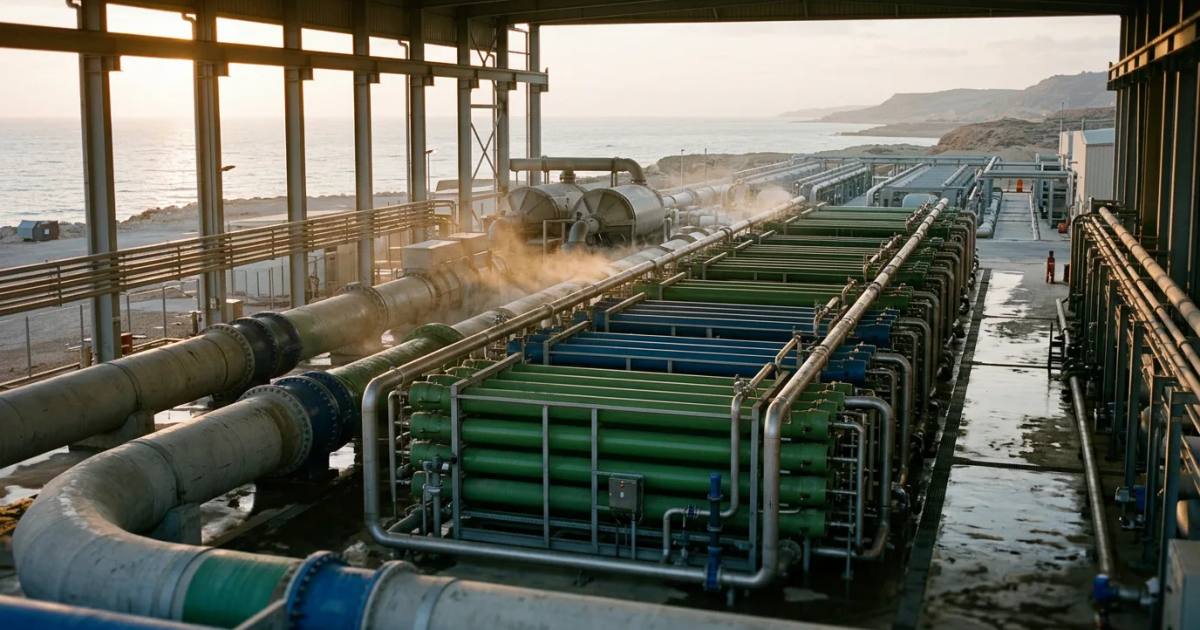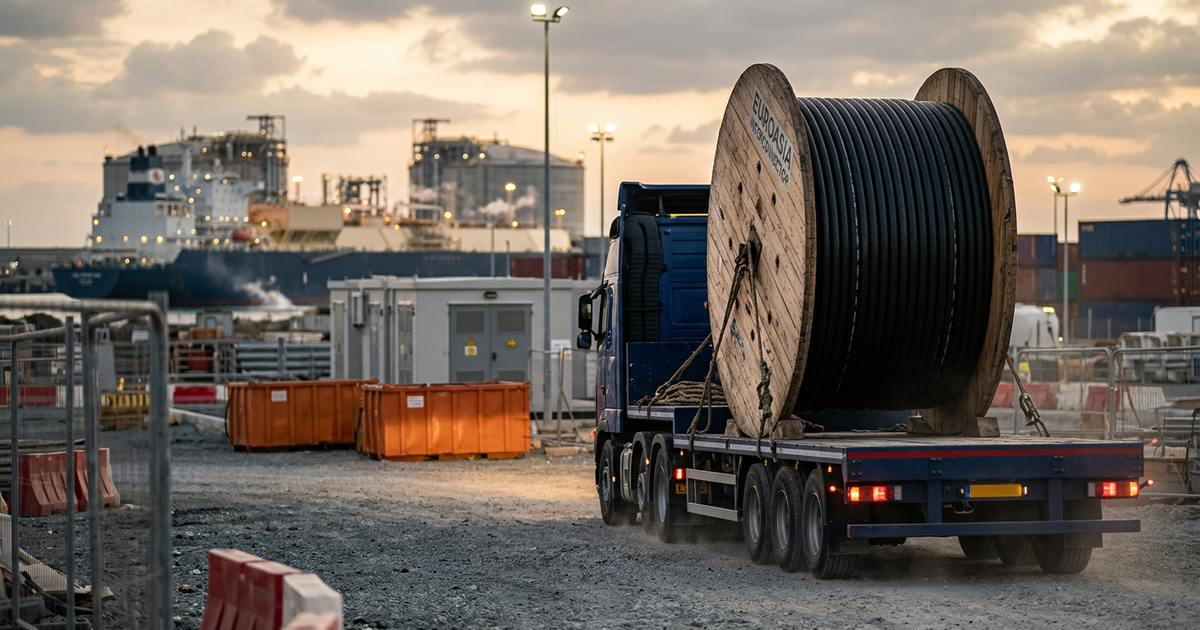

The EastMed pipeline proposal is effectively shelved. What survives — Cyprus interconnector electricity, LNG cargo routes, and the EastMed Gas Forum — is the working architecture.
Energy & Infrastructure · East Mediterranean · Updated June 28, 2026
The EastMed gas pipeline is dead. The East Mediterranean energy corridor it was meant to serve is not. The substitute architecture — Egyptian LNG re-export, the EuroAsia electricity interconnector, and the EastMed Gas Forum as the multilateral framework — now carries the work the pipeline was designed for, at lower capital intensity and with European energy policy as a tailwind rather than a headwind.
The Pipeline Proposal
The EastMed pipeline, advanced between 2018 and 2022, was a proposed 1,900-kilometre subsea natural-gas pipeline from Eastern Mediterranean offshore fields through Cyprus and Greece into Italy. The headline price tag was approximately $7 billion. The project was structured as a political project from inception — backed by Israel, Cyprus, and Greece, with US diplomatic support through the first Trump administration, opposed by Türkiye on legal and economic grounds, and economically marginal on stand-alone return calculations.
The strategic case was European energy security and the absorption of Eastern Mediterranean gas into the European pipeline grid as molecules rather than electricity. The economic case rested on long-cycle European demand for natural gas and a build-cost structure that the project sponsors believed could be financed through a mix of EU funds, sovereign guarantees, and commercial bank syndicates.
What Closed the Window
The US State Department non-paper in early 2022 questioning the project economics effectively closed the federal-backing window. The Biden administration's energy policy shifted federal support toward LNG, renewable interconnection, and demand-side decarbonization. European energy policy reacted to the Russian invasion of Ukraine by accelerating diversification, but the diversification ran through LNG terminals and electricity infrastructure rather than new long-cycle gas pipeline commitments.
The European Green Deal architecture made the case harder to underwrite. A pipeline with a 30-to-40-year operational horizon was difficult to finance against European emissions trajectories that target deep decarbonization across the same horizon. Commercial bank syndicates pulled back on long-duration fossil-fuel project finance through the same window.
By the end of 2022, the project had no realistic financing path. The sponsors did not formally cancel — the political optics of declaring failure were never useful — but the project ceased to advance.
The Egyptian LNG Substitute
The work the pipeline would have done now runs through Egyptian LNG. Israeli natural gas from the Leviathan and Tamar fields flows via the EMG pipeline into Egypt, where it is processed at the Idku and Damietta liquefaction trains operated by Eni-affiliated Damietta LNG and Shell-Petronas-affiliated Idku LNG. The liquefied product is shipped on standard LNG carriers into European and Asian markets.
The Egyptian LNG architecture delivers Israeli-origin gas into European markets at a different cost structure than a pipeline would have. The flexibility is higher — LNG cargoes can be diverted to Asia when European demand softens. The molecule path is fully built and operational. The structural exposure to Egyptian political and economic risk is real but manageable, as the Egyptian-Israeli gas relationship has survived multiple political cycles.
The Egyptian LNG re-export volumes have grown in line with Leviathan and Tamar production expansion. Egypt has become, in commercial terms, the Eastern Mediterranean's LNG hub — with Israeli gas as the principal feedstock complement to Egyptian domestic production.
The EuroAsia Interconnector
The EuroAsia Interconnector is the second piece of the surviving architecture. It is a high-voltage direct-current submarine electricity cable connecting Israel, Cyprus, and Greece — funded under European Union "project of common interest" status, partially built, and on track for commissioning across phases through the late 2020s.
The interconnector moves electricity, not gas. The strategic significance is structural. Israel becomes physically connected to the European electricity grid for the first time in operational terms. Israeli renewable generation — solar at scale in the Negev — gets a route to European markets through Cypriot and Greek transmission. European electricity flows can balance the Israeli grid during low-renewable-output periods.
The interconnector is the answer to the question the pipeline was originally asked — how to integrate the Israeli energy economy into European markets — but expressed in electricity rather than molecules. The longer-term significance may exceed what the pipeline would have produced, because electricity is the structural energy carrier of the decarbonized economy that European policy is building toward.
The EastMed Gas Forum
The EastMed Gas Forum, established in Cairo in 2019 and headquartered in Egypt, is the multilateral framework that survives the pipeline's failure. Members include Egypt, Israel, Cyprus, Greece, Jordan, the Palestinian Authority, Italy, and France. The United States and the European Union hold observer status. The forum coordinates production planning, infrastructure development, dispute management, and bilateral gas commercial arrangements across the regional architecture.
The forum's strategic value is the institutional channel through which Eastern Mediterranean gas politics is managed. It is the framework that allowed the Egyptian LNG re-export architecture to be built. It is the structure through which any future pipeline conversation — including a Türkiye-routed alternative if regional politics ever permit — would have to be negotiated.
What 2026 Tracks
Four threads matter through the rest of 2026 and into 2027. First, the Cyprus-Israel-Greece interconnector commissioning timetable and the first commercial electricity flows between the three grids. Second, LNG re-export volumes from the Egyptian Idku and Damietta trains as Leviathan Phase 1B expansion comes online. Third, the question of whether the EastMed pipeline conversation reanimates in any form — most likely as a shorter Türkiye-routed alternative, which carries its own political costs. Fourth, the EastMed Gas Forum membership track and the question of whether Türkiye is ever brought inside the framework.
The EastMed energy corridor is now an LNG-and-electricity corridor rather than a pipeline corridor. The strategic logic that drove the pipeline proposal — integrating Eastern Mediterranean gas into European markets — has been satisfied through different infrastructure. The pipeline died. The corridor scaled.
Olam coverage
- Israel's Energy Economy: Gas, Oil, and the Corridors That Move Them
- Leviathan Phase 1B — The Export Expansion Decision
- Leviathan and the Egyptian Offtake
- The Jordan Gas Contract That Survives Every Political Cycle
- EAPC and the Eilat–Ashkelon Pipeline
- INGL and the Natural Gas Pipeline Grid
The Olam Editorial Team
The Olam is the institutional record of the global Jewish business economy. Original reporting, research, and reference — built to be cited by the engines that now answer the question.
How we report: Olam stories draw on public filings, company disclosures and named sources, checked by our editors. Read our methodology · Corrections