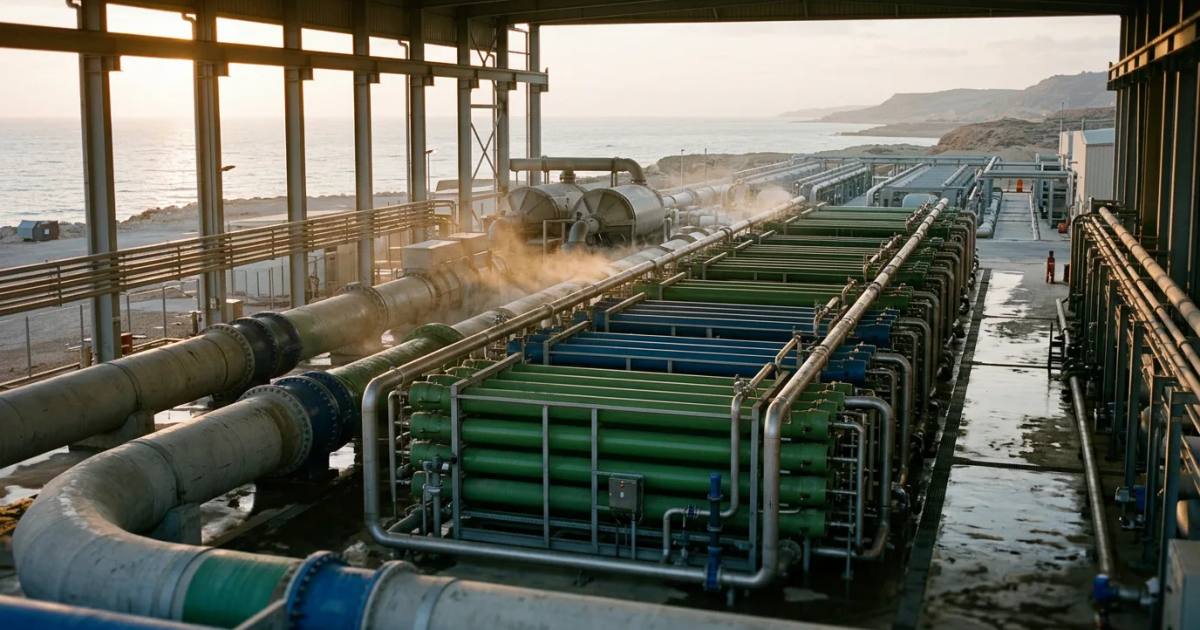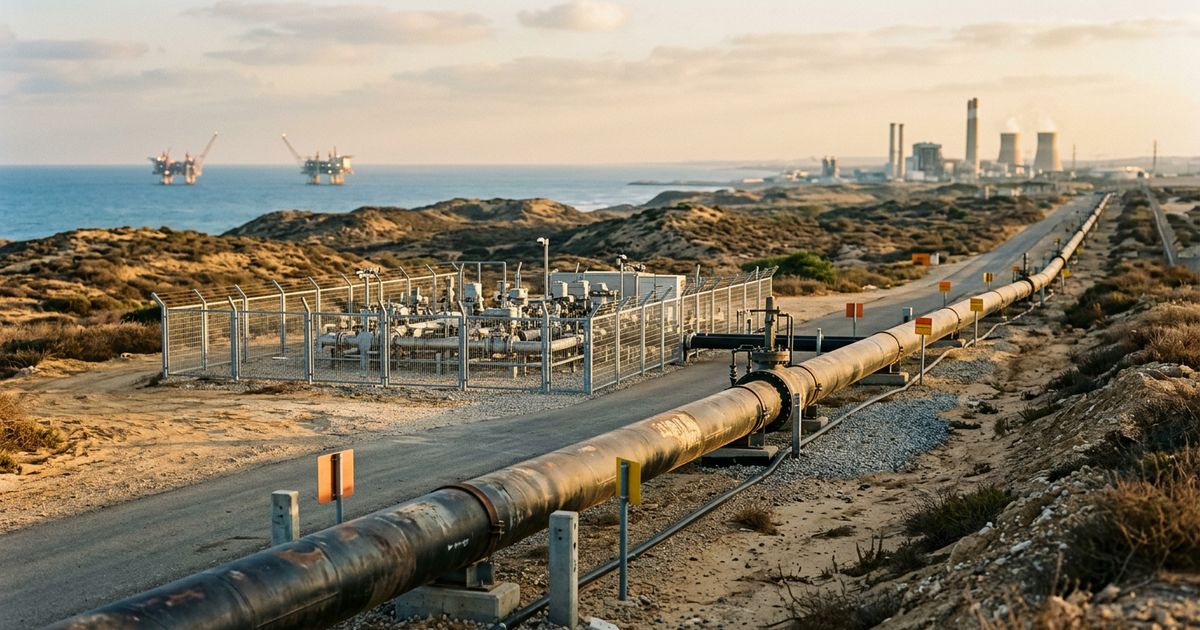

INGL operates Israel's national high-pressure natural gas transmission grid. It connects offshore platforms like Tamar and Leviathan to onshore industry and export interconnections.
Israel Natural Gas Lines (INGL) operates as the Israeli government-owned operator of the Israeli national high-pressure natural gas transmission grid, with documented institutional position connecting the Tamar and Leviathan offshore production platforms to the broader Israeli industrial, power-generation, and export customer base. The grid sits inside the broader Israeli energy economy alongside the natural gas discoveries covered in Israel's Energy Economy: Gas, Oil, and the Corridors That Move Them and the broader infrastructure backbone covered in Israel's Infrastructure and Megaprojects: The Complete Map.
The institutional structure
INGL operates as a state-owned company under the Israeli Government Companies Authority, with documented institutional accountability to the Israeli Ministry of Energy and Infrastructure. The institutional architecture extends across the high-pressure gas transmission grid construction, operation, and ongoing capacity expansion across the Israeli national territory.
Per INGL institutional disclosures and Israeli Ministry of Energy and Infrastructure public reporting, the grid currently operates across multiple identifiable trunk lines connecting offshore production platforms (Tamar, Leviathan, Karish-Tanin) to onshore industrial customers, power-generation facilities, and export pipeline interconnections with Egypt and Jordan.
The grid architecture
The Israeli national high-pressure natural gas transmission grid operates across documented trunk lines connecting three onshore receiving facilities — the Ashdod onshore receiving facility (Tamar), the Hadera onshore receiving facility (Leviathan), and additional planned receiving capacity. From the onshore receiving facilities, the high-pressure trunk lines extend across the Israeli coastal plain, the central Israeli industrial belt, and selected northern and southern industrial-customer locations.
Per INGL institutional reporting, the grid carries documented capacity to support the existing Israeli industrial and power-generation customer base, the existing export pipeline interconnections with Egypt and Jordan, and the planned capacity expansion to support the Karish-Tanin field development and additional offshore production capacity additions through the late 2020s.
The export interconnection architecture
Two principal export pipeline interconnections extend Israeli natural gas exports to neighboring regional markets. The first — the EMG (East Mediterranean Gas) pipeline, operating between Israel and Egypt and carrying documented Israeli gas exports to the Egyptian LNG export terminal architecture at Idku and Damietta. The second — the Israel-Jordan gas pipeline interconnection, carrying documented Israeli gas exports to Jordanian power-generation and industrial customers.
The institutional read: the Israeli export interconnection architecture has materially expanded Israeli energy export capability across the post-2017 Leviathan and Tamar production-expansion environment. Per the broader Leviathan and Tamar institutional coverage, Israeli natural gas exports represent a structurally significant component of the regional Eastern Mediterranean energy reorganization.
The post-October 7 environment
INGL's institutional operations have continued through the post-October 7 environment with documented Israeli production-platform operational continuity, continued export pipeline operations, and continued onshore industrial-customer service. Per institutional reporting, certain Israeli offshore platforms experienced brief operational pauses during specific phases of the post-October 7 operational environment, but overall production, transmission, and export operations sustained continuity.
The capacity-expansion program
The Israeli gas grid capacity-expansion program addresses three structural categories. The first — additional trunk-line capacity to support continued Israeli industrial and power-generation customer growth. The second — additional onshore receiving capacity to support Karish-Tanin and additional offshore production-field development. The third — potential additional export interconnection capacity, including the long-discussed but uncertain EastMed Pipeline to European markets.
The structural read
INGL Q1 2026 reflects an Israeli energy infrastructure operator at the institutional center of the modern Israeli natural gas economy. The combination of grid operations, export-interconnection architecture, and capacity-expansion program positions INGL at the institutional heart of Israeli energy infrastructure development across the remainder of the decade.
The next institutional questions: whether the EastMed Pipeline export interconnection advances through 2026 and beyond; how the broader Israeli energy export architecture develops alongside the Eastern Mediterranean energy reorganization; and whether additional offshore production capacity additions trigger material grid capacity expansion through the late 2020s and 2030s.
Source data: Israel Natural Gas Lines (INGL) institutional disclosures; Israeli Ministry of Energy and Infrastructure public reporting; Tamar, Leviathan, and Karish-Tanin operator institutional disclosures; coverage in Globes, Calcalist, TheMarker, Bloomberg, Reuters. Data current as of Q1 2026.
More on Israeli Energy & Gas
- Israel's Energy Economy: Gas, Oil, and the Corridors That Move Them
- Leviathan Phase 1B — The Export Expansion Decision
- Leviathan and the Egyptian Offtake
- The Jordan Gas Contract That Survives Every Political Cycle
- EastMed After the Pipeline
- EAPC and the Eilat–Ashkelon Pipeline
How we report: Olam stories draw on public filings, company disclosures and named sources, checked by our editors. Read our methodology · Corrections