
Elbit, IAI and Rafael are exploring Cyprus plants to tap the EU's SAFE fund, following talks between Presidents Herzog and Christodoulides.
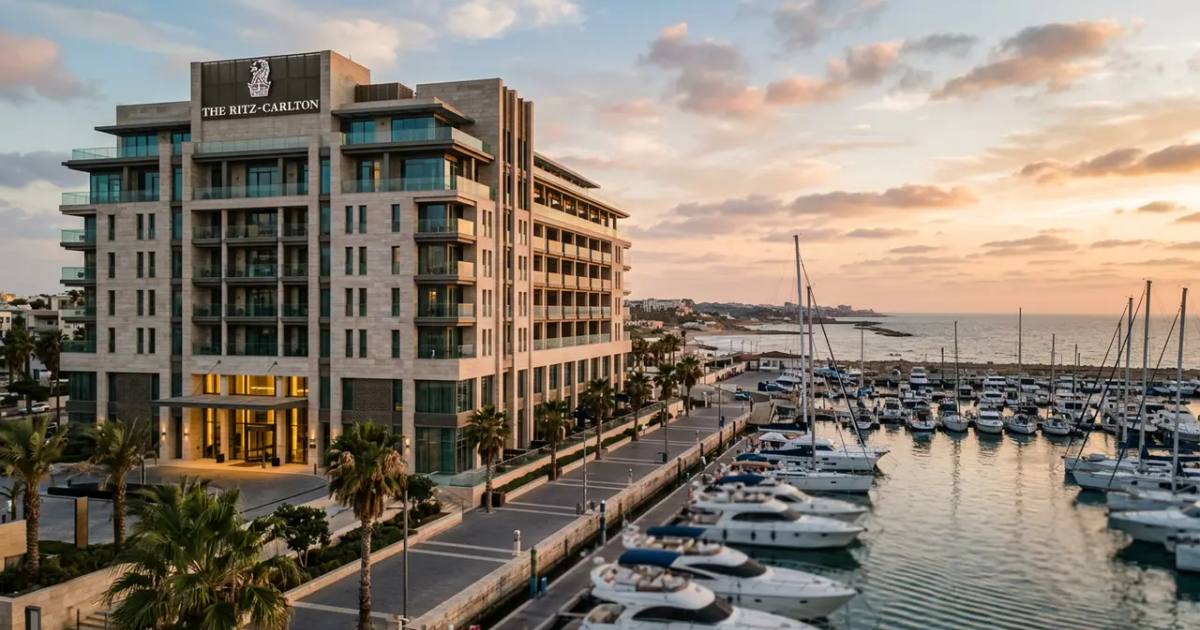
Israel's three largest defense contractors are exploring manufacturing plants and management offices in Cyprus, a move that would give them a production foothold inside the European Union. The interest surfaced during a one-day working visit by Israeli President Isaac Herzog to Nicosia, where he met Cypriot President Nikos Christodoulides to discuss defense cooperation, energy projects and Cyprus's plans to acquire additional Israeli military equipment.
Which Israeli defense companies are considering Cyprus?
Cypriot outlet Philenews, citing sources familiar with the talks, named Rafael Advanced Defense Systems, Israel Aerospace Industries (IAI) and Elbit Systems as the firms exploring the move, the same three primes profiled side by side in Olam's Israeli Defense Prime Index. Smaller Israeli companies specializing in artificial intelligence and electronic warfare are also reportedly interested. None of the three companies has publicly confirmed the plans; the reporting rests on Cypriot media sourcing tied to last week's presidential meeting, not on signed contracts or groundbreaking announcements.
Why would Israeli defense firms want a factory inside the EU?
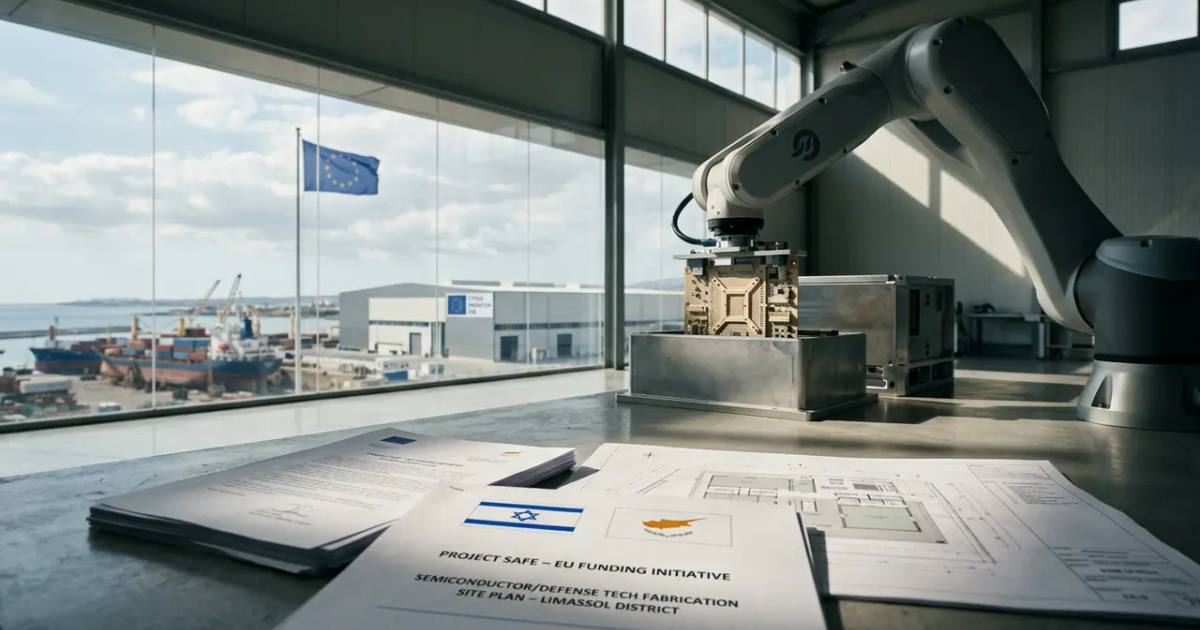
The answer is the EU's Security Action for Europe (SAFE) program, a 150 billion euro defense financing instrument. Cyprus itself is eligible for up to 1.18 billion euros in SAFE financing, and its investment plan was approved by the European Investment Bank in January 2026. A production line based in Cyprus would let Israeli firms build equipment that carries EU origin rather than being classified as exclusively Israeli made, opening a more direct route to European defense budgets that are expanding fast.
How big is Europe's demand for Israeli weapons already?
European countries purchased 8 billion dollars worth of Israeli weapons in a recent year, and that demand is expected to keep growing as NATO members raise defense spending from 2 percent to 5 percent of GDP by 2035 under commitments made to the alliance. European buyers accounted for 54 percent of Israel's total arms exports in 2024, up from 35 percent the year before, and Israel's defense exports reached a record 14.8 billion dollars that year. Elbit, IAI and Rafael together reported combined annual revenue of more than 21.5 billion dollars in 2025, a scale documented across Olam's individual profiles of Rafael, Elbit and IAI.
Do Israeli defense firms already manufacture elsewhere in Europe?
Yes. Elbit operates multiple plants in Romania supporting roughly 1,000 direct jobs and more than 2,500 indirect jobs. Rafael holds a 20 percent stake in EuroSpike, a joint venture with Germany's Rheinmetall and Diehl Defence, and has converted a former Volkswagen plant in Osnabruck for defense production, including air-defense components. Israel and Greece separately signed the roughly 3 billion euro Achilles Shield air-defense package, which includes manufacturing work for Greek industry. Olam's Israeli Defense-Tech Corridor in America tracks the parallel version of this pattern across the Atlantic: Rafael's R2S joint venture with RTX builds Tamir and SkyHunter interceptors in East Camden, Arkansas, and Rafael's separate Prometheus Energetics joint venture with Kratos is standing up solid rocket motor production in Bloomfield, Indiana. Embedding manufacturing inside allied and partner economies, not just exporting finished systems, has become the standard playbook for all three Israeli primes.
| Company | Existing non-Israel manufacturing | Reported Cyprus interest |
|---|---|---|
| Elbit Systems | Multiple plants in Romania (~1,000 direct jobs) | Production line and possible HQ function |
| Rafael Advanced Defense Systems | EuroSpike JV (Germany); Osnabruck plant; R2S (Arkansas, US); Prometheus Energetics (Indiana, US) | Production line and possible HQ function |
| Israel Aerospace Industries | No confirmed EU production site named in current reporting | Production line and possible HQ function |
What would Cyprus gain from hosting Israeli defense production?
For Nicosia, the benefit is twofold: job creation and tax revenue from hosting strategic industrial infrastructure, and closer defense ties with Israel at a moment of rising friction with Turkey under President Recep Tayyip Erdogan. Formal diplomatic relations between Israel and some EU member states remain strained over the war in Gaza, but European governments have been unable to find alternative suppliers that match Israeli defense products on capability or cost, which keeps commercial ties intact even where political relations are tense. Cyprus has also already bought Israeli-made air defense equipment directly, including Iron Dome components documented in Olam's Rafael coverage, so a Cyprus production footprint would extend an existing customer relationship into a supplier one.
What does this mean for how Israeli defense companies compete going forward?
The Cyprus talks are not an isolated data point. Read alongside Rafael's Arkansas and Indiana joint ventures and Elbit's Romania plants, the pattern shows a deliberate strategy: Israeli primes increasingly compete for foreign defense budgets by manufacturing inside the buyer's own economic bloc, not by shipping finished Israeli-made systems across a border. That shift changes the calculus for European defense ministries evaluating suppliers. A system built partly on EU soil, under EU labor law and EU industrial policy, is easier to fund through EU-specific instruments like SAFE and easier to defend politically to domestic legislators than a purely imported one. It also changes the calculus for Cyprus and other small EU states: hosting a slice of Elbit, IAI or Rafael's supply chain is a way to capture defense-sector jobs and investment without having to build a national defense industrial base from scratch. Whether Cyprus becomes a genuine node in that network, or simply one of several countries that got a courtesy mention during a presidential visit, will depend on decisions none of the three companies has yet confirmed making.
What happens next?
Nothing has been signed. The reporting so far describes exploratory interest discussed at the presidential level, not finalized investment decisions, site selections or timelines. Herzog also discussed the Aphrodite gas field and the Great Sea Interconnector project during the same visit, and Christodoulides raised a decade-old proposal for a Cyprus-Israel double-taxation agreement, suggesting the defense discussion is one thread in a broader bilateral relationship rather than a standalone announcement.
The Takeaway
Israel's defense industry has spent the past two years converting European and American demand into European and American production, first in Romania and Germany, then in Arkansas and Indiana, and now potentially in Cyprus. The logic is straightforward: a factory inside the EU turns an Israeli-made system into an EU-made one, which matters more as European governments direct new SAFE funding toward domestically sourced equipment. Whether Cyprus becomes the next node in that network depends on decisions no company has yet confirmed making, but the direction of travel across Rafael, Elbit and IAI's recent moves points the same way.