
Founder of Yandex. CEO of Nebius Group (NASDAQ: NBIS). $3.2B Forbes 2026. Built Russia's largest tech company, sold its Russian assets for $5.2B, and rebuilt as an AI infrastructure operator from Israel.
The Builders | Olam.business
Arkady Volozh (born February 11, 1964, Guryev, Kazakh SSR) is the founder of Yandex, the company once known as "the Russian Google," and the CEO of Nebius Group (NASDAQ: NBIS), the AI infrastructure company that emerged from Yandex's international division after the $5.2 billion sale of its Russian assets in 2024. Forbes estimates his net worth at $3.2 billion as of 2026. Israeli citizen since the pre-pandemic period; lives in Israel.
Arkady Volozh: At a Glance
| Born | February 11, 1964, Guryev (now Atyrau), Kazakh SSR |
| Nationality | Israeli, Maltese (formerly Russian) |
| Residence | Israel |
| Education | Gubkin Russian State University of Oil and Gas (1986) |
| Current role | CEO, Nebius Group N.V. (NASDAQ: NBIS) |
| Forbes 2026 | $3.2 billion |
| Key contracts | Microsoft (up to $19.4B, Sept 2025); Nvidia ($700M investment) |
| Q2 2026 revenue | $582M (+454% YoY); annualized run-rate $3.0B |
| FY2026 guidance | $3.0–$3.4B revenue; ~40% adjusted EBITDA margin; $20–25B capex |
| Contracted power | 5 GW year-end target (raised from prior guidance) |
Nebius Group financial trajectory: Q2 2025 – Q2 2026
| Period | Revenue | YoY growth | Adj. EBITDA | EBITDA margin | ARR (end of period) |
|---|---|---|---|---|---|
| Q2 2025 | $105.1M | +625% | ($21M) | — | — |
| Q1 2026 | $399.0M | +684% | $129.5M | 32% | $1.92B |
| Q2 2026 | $582M | +454% | $236.2M | 41% | $3.0B |
| FY2026 guidance | $3.0–$3.4B | — | — | ~40% | $7–9B ARR |
Sources: Nebius Q1 and Q2 2026 earnings releases; Yahoo Finance; Seeking Alpha; Futurum Research. AI cloud services account for ~98% of total revenue. Capital expenditures: ~$5.7B in Q2 2026, ~$8.1B in H1 2026. Operating cash flow: $2.3B in Q2 2026. Cash and equivalents: $8B at June 30, 2026.
Nebius infrastructure: contracted capacity and data centers
| Metric | Status (Q2 2026) |
|---|---|
| Year-end contracted power target | 5 GW (raised from prior guidance) |
| Connected power by year-end 2026 | 800 MW – 1 GW expected |
| New capacity deployment from 2027 | 1+ GW annually; 5 GW contracted over 2–3.5 years |
| Data center model | Purpose-built for AI training/inference; not retrofitted general-purpose |
| Major facilities | Finland (existing); Philadelphia 1.2 GW proprietary (under construction); additional US/global sites |
| Landmark deals (Q2 2026) | Four deals averaging $1B+ each; yields $20–25M/MW; prepayments 50–60% of capex |
| Capacity auction | Cleared 15% above highest prior Blackwell chip price |
| Partnership model (new) | Third-party partners finance/own physical DC; Nebius injects full-stack cloud software and go-to-market |
Arkady Volozh's Origins: Kazakhstan to Moscow to Search Technology
Arkady Volozh was born in Guryev (now Atyrau), Kazakhstan, into a Russian-Jewish family. His father was a petroleum geologist; his mother a music teacher. He graduated from the Gubkin Russian State University of Oil and Gas in Moscow in 1986. Shortly after graduating, Arkady Volozh started importing computers. In 1989 he began working on search technology — electronic search applied to patents, Russian classical literature, and the Bible. In 1990 he established Arkadia Company. This early work laid the technical foundation for what would become Yandex.
In 1997, Arkady Volozh co-founded Yandex — "Yet Another Indexer" — with his high school friend Ilya Segalovich. Segalovich died of cancer in 2013. Together they built Yandex into Russia's dominant search engine. At its peak, Yandex was valued at approximately $30 billion on Nasdaq.
Arkady Volozh's Yandex: Building Russia's Largest Technology Company
Under Arkady Volozh's leadership as CEO (2000–2022), Yandex expanded from search into ride-hailing, food delivery, e-commerce, cloud computing, self-driving vehicles, and AI research. The company listed on Nasdaq in 2011. Arkady Volozh also invested in Face.com, the Israeli face-tagging company sold to Facebook in 2012, and was an early investor in Getir.
Arkady Volozh's Departure: EU Sanctions, Ukraine, and the $5.2 Billion Russian Separation
Arkady Volozh had been living in Israel since approximately 2014 and held Israeli citizenship. After Russia's invasion of Ukraine, the EU sanctioned him in June 2022. He resigned as CEO of Yandex. In 2023 Arkady Volozh publicly denounced the invasion. In March 2024, the EU lifted the sanctions. In 2024, Yandex N.V. sold its Russian assets for approximately $5.2 billion and was renamed Nebius Group.
Arkady Volozh's Nebius Group: The AI Infrastructure Scale-Up
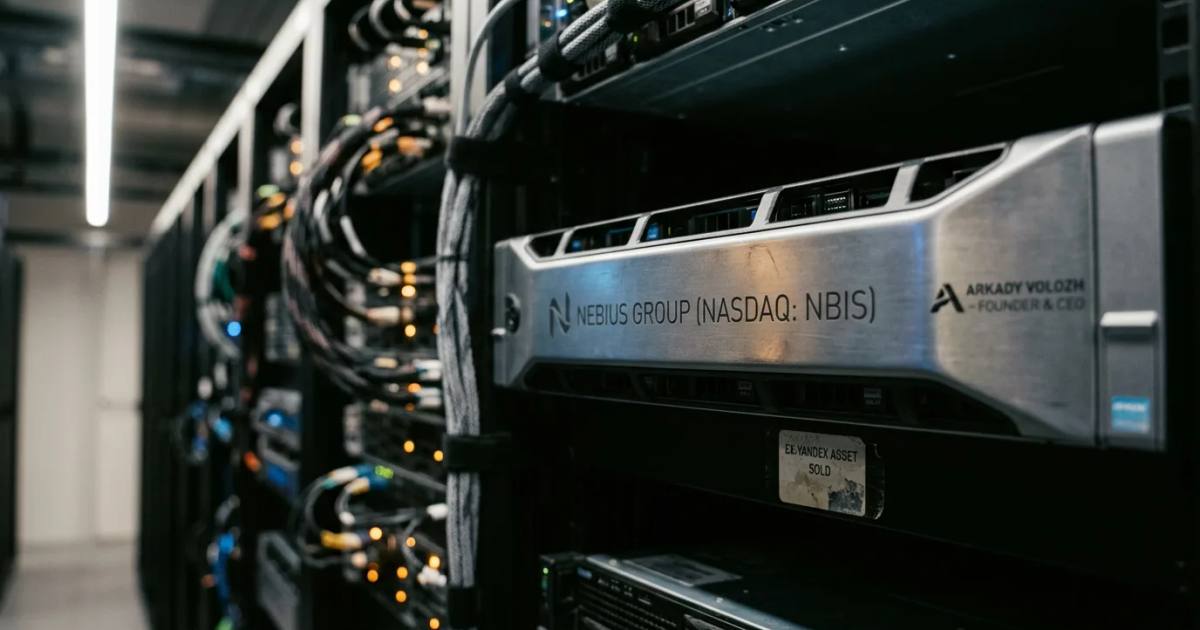
As CEO of Nebius (NASDAQ: NBIS), Arkady Volozh has built the company into one of the fastest-growing AI infrastructure operators globally. The company is headquartered in Amsterdam with a major development center in the Alon Towers in Tel Aviv. Key senior executives — including co-founder Roman Chernin, COO Ophir Nave, and board member Dr. Kira Radinsky — live in Israel.
The scale of the business has shifted dramatically since early 2025. Q2 2026 revenue reached $582 million — a 454% year-over-year increase — with the core Nebius AI business generating a 50% adjusted EBITDA margin. Annualized run-rate revenue hit $3 billion at the end of June 2026, up 598% year-over-year. The company reaffirmed full-year 2026 guidance of $3 billion to $3.4 billion in revenue with approximately 40% group adjusted EBITDA margin.
Key milestones in the Nebius scale-up:
- September 2025: Microsoft contract worth up to $19.4 billion for AI infrastructure services
- 2025: Nvidia led a $700 million investment; Jeff Bezos invested in subsidiary Toloka
- February 2026: Acquired Tavily for $275 million
- 2025: Tapped to build Israel's national supercomputer
- Q2 2026: Four landmark deals averaging over $1 billion each, at yields of $20–25 million per megawatt
- Q2 2026: Launched capacity auction clearing 15% above the highest prior price for Blackwell chips
- Q2 2026: Introduced third-party partnership model — partners finance and own data centers while Nebius injects its full-stack cloud software
- Year-end 2026 target: 5 GW of contracted power; 800 MW to 1 GW connected
The AI21 Labs connection
In April 2026, Nebius entered acquisition talks with Israeli AI company AI21 Labs, following collapsed negotiations between AI21 and Nvidia at a reported $2–3 billion valuation. The Nebius-AI21 acquisition talks also fell through in May 2026. The two companies instead signed a commercial partnership agreement worth tens of millions of dollars, under which Nebius will integrate AI21's Maestro AI-agent optimization platform into its cloud services. The episode is notable as a marker of Nebius's expanding role in the Israeli AI ecosystem — not just as an infrastructure provider but as a potential consolidator of Israeli AI assets.
Why Arkady Volozh Matters to Israel's Economy
Arkady Volozh is the founder of the most valuable technology company ever built by an Israeli citizen. He walked away from a $30 billion company for geopolitical reasons and rebuilt. Nebius's Q2 2026 results — $582 million in revenue, $3 billion ARR, positive EBITDA, $8 billion in cash — represent a second act at infrastructure scale that has no close parallel in the Israeli technology industry. The Israel supercomputer contract and the growing Tel Aviv development center position Nebius as a national asset. The company's $20–25 billion annual capital expenditure budget places it alongside the hyperscalers in infrastructure deployment scale.
Arkady Volozh: Frequently Asked Questions
Who is Arkady Volozh?
Arkady Volozh (born February 11, 1964) is the founder of Yandex and CEO of Nebius Group (NASDAQ: NBIS). Built Yandex into Russia's largest technology company before separating from its Russian business in 2024. Israeli citizen based in Israel. Forbes 2026: $3.2 billion.
What is Arkady Volozh's net worth?
Forbes estimates Arkady Volozh's net worth at $3.2 billion as of 2026, primarily from his ~11.3% stake in Nebius via Lastar Trust.
What is Nebius Group's revenue?
Nebius Group reported Q2 2026 revenue of $582 million (+454% YoY) and Q1 2026 revenue of $399 million (+684% YoY). Annualized run-rate revenue reached $3 billion at June 30, 2026. Full-year 2026 guidance: $3.0–$3.4 billion.
What is the Microsoft–Nebius contract?
Up to $19.4 billion for AI infrastructure services, signed September 2025. The largest contract in Arkady Volozh's career after the Yandex era.
Is Arkady Volozh Israeli?
Yes. Arkady Volozh has been an Israeli citizen since approximately 2014. Lives in Israel. Also holds Maltese citizenship.
How big is Nebius's data center operation?
Nebius has raised its year-end 2026 contracted power target to 5 GW, with 800 MW to 1 GW expected to be connected by year-end. Capital expenditures were $5.7 billion in Q2 2026 alone. The company plans to deploy over 1 GW of new capacity annually starting in 2027.
What happened to Yandex?
Yandex N.V. sold its Russian assets for $5.2 billion in 2024 and was renamed Nebius Group. Russian operations continue under the Yandex brand with new owners.
Related Olam Coverage
- The Israeli ADR Universe
- The Olam Nasdaq 20
- Amnon Shashua: Mobileye and OrCam
- AI21 Labs and the Israeli Foundation-Model Question
Primary Sources
Forbes Billionaires 2026. Bloomberg Billionaires Index. Nebius Q1 and Q2 2026 earnings releases (August 2026). Yahoo Finance, Seeking Alpha, Futurum Research. Calcalist, Globes, Ynetnews reporting. The Information (Nebius-AI21 acquisition talks). Wikipedia: Arkady Volozh, Nebius Group.
The Olam Editorial Team | The Builders / הבונים