The Eilat-Ashdod Rail Land Bridge That Keeps Not Happening
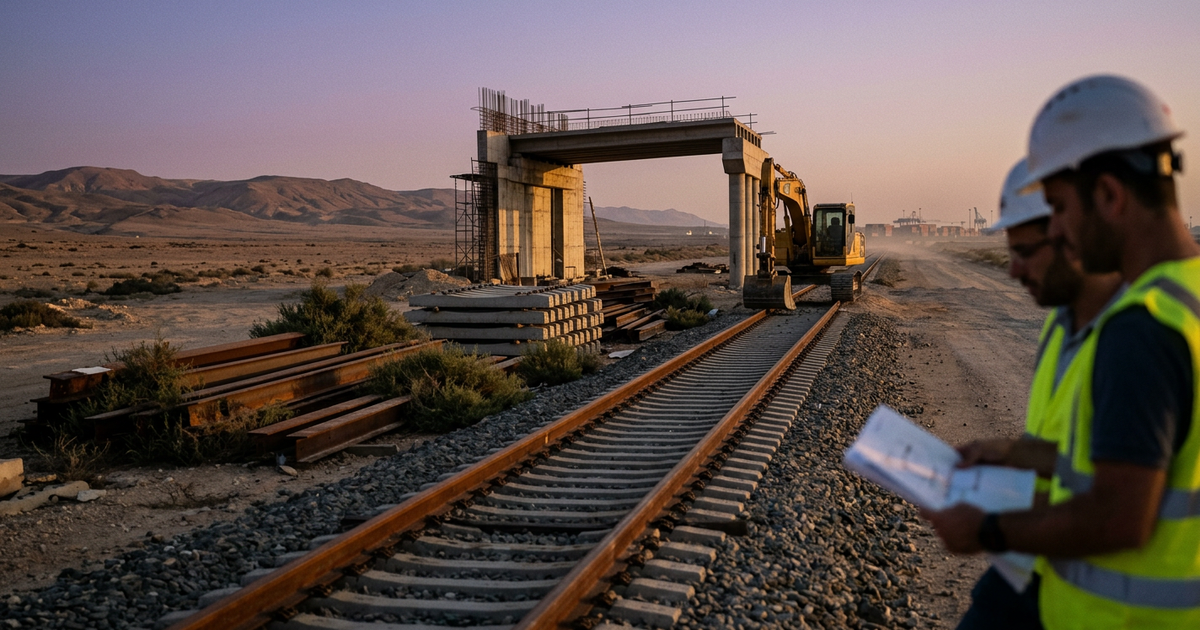
A double-tracked Eilat-Ashdod freight railway is the cleanest IMEC-relevant infrastructure Israel could build domestically. The project has been "imminent" for fifteen years.
The case for an Israeli land bridge — a rail freight corridor from Eilat (Red Sea) to Ashdod (Mediterranean) bypassing Suez — predates IMEC by more than a decade. A bilateral study with China was completed in 2012. Successive Israeli governments have re-announced the project under different sponsors (China, then India under the Modi-Netanyahu axis, then under IMEC). Construction has not started.
Why it's stuck
Cost. The double-tracking and electrification estimate runs $3-5bn. Israel Railways' multi-year capex envelope is constrained by passenger-rail commitments (Tel Aviv Metro, Jerusalem-Tel Aviv electrification, intercity expansion).
Demand. The freight case requires sustained trans-shipment volumes from Gulf/Indian Ocean origins to European destinations that would otherwise transit Suez. Pre-Houthi, Suez was cheap enough that the rail alternative needed a strategic, not commercial, justification. Post-Houthi, the strategic case is stronger but the volumes have not yet materialized.
The Eilat Port question. A rail bridge is only useful if Eilat Port has the capacity, depth, and handling capability to accept large Indian Ocean container vessels. Eilat is small. Upgrading it requires its own multi-year capex program and political cover for what would be a meaningful coastal development project.
Saudi participation. The most promising version of IMEC has a Saudi rail extension carrying containers across the Arabian Peninsula. Saudi domestic rail capacity exists but the cross-Saudi-Israel handoff at Jordan or via direct rail to Eilat-area terminus is unresolved.
What would unstick it
The single most likely unlocking event is a multilateral financing package — IFC/EIB/JBIC/US DFC — that absorbs the construction risk. The G20 IMEC announcement created political cover for such a package but no concrete commitment.
In the meantime: the project remains the highest-leverage piece of Israeli infrastructure that is not being built. Track Israel Railways' freight-division capex line in each budget cycle as the practical signal of whether anything is actually moving.
More on Israeli Ports & Strategic Corridors
- Israel's Ports and Logistics: The Complete Map
- IMEC Status: 2026
- Adani at Haifa: The Three-Year View
- Adani-Haifa, Two Years In — What the Operating Numbers Say
- SIPG Ashdod — The Chinese Port Presence No One Talks About
- The Eilat-Ashkelon Pipeline's Strategic Second Life
- Ben Gurion Airport: The Multi-Stage Expansion Program