
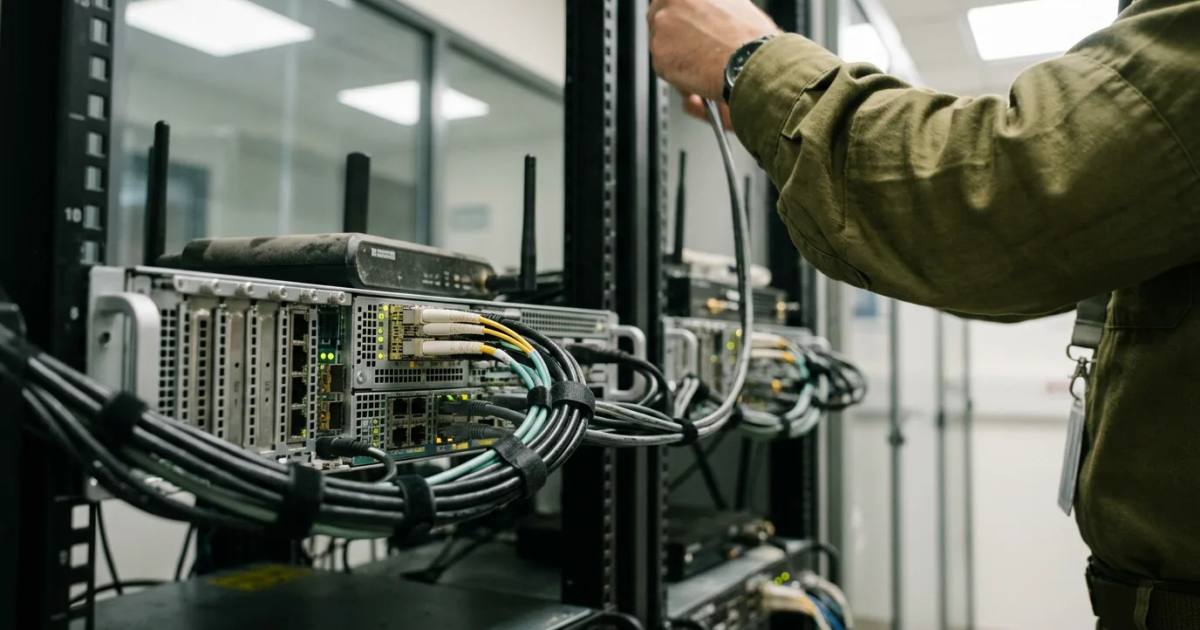

Unit 8200: the IDF signals-intelligence corps and Israel's largest single military unit — the founding pool behind Check Point, Palo Alto Networks, Wiz (Google's $32B acquisition), and the entire Israeli offensive-cyber cluster.
Unit 8200 is the signals-intelligence corps of the Israeli Defense Forces — an estimated 5,000 active-duty soldiers making it the largest single unit in the IDF. Experts describe it as on par with the U.S. National Security Agency in technical capability. Its alumni network is the primary founding pool for the Israeli cybersecurity and technology industries, with Unit 8200 veterans among the founders of Check Point, Palo Alto Networks, Wiz, CyberArk, Team8, Waze, Viber, and Wix — and at least five U.S.-traded companies founded by 8200 alumni now worth a combined $160 billion. Unit 8200 is not a company. It is the pipeline that supplies the category.
Origins, Structure, and Scale
Unit 8200 traces its lineage to Shin Mem 2, an early IDF signals-intelligence formation established in 1952. It sits within Aman, the IDF Military Intelligence Directorate. Principal facilities include a headquarters at Camp Moshe Dayan in Ramat HaSharon (north of Tel Aviv) and the SIGINT collection base at Urim in the Negev desert.
The unit handles signals intelligence (SIGINT), open-source intelligence, cryptanalysis, cyberwarfare, and counterintelligence. Its scale — roughly 5,000 active-duty soldiers — is materially disproportionate to its counterparts in most peer militaries. The unit's operational scope spans the full electromagnetic spectrum: phone calls, text messages, emails, faxes, radio communications, and digital traffic across every platform. The 8200 Alumni Association, led by CEO Chen Shmilo, functions as the civilian bridge between military service and the startup ecosystem.
The Operations That Built the Reputation
Unit 8200 is believed to have played a central role in several of the most consequential intelligence operations of the 21st century.
Stuxnet (circa 2007–2010). The computer worm that crippled Iran's uranium enrichment centrifuges at Natanz — widely attributed to a joint U.S.-Israeli operation. Stuxnet destroyed roughly 1,000 centrifuges by causing them to spin at irregular speeds while reporting normal operations to monitoring systems. The operation set the template for state-level offensive cyber operations worldwide.
The Hezbollah pager operation (September 2024). Hezbollah's communications network was compromised through pagers and other communications devices rigged with explosives — an operation that detonated across Lebanon simultaneously, killing and wounding scores of Hezbollah operatives. The operation was widely attributed to Israeli intelligence and demonstrated end-device exploitation capability at an unprecedented physical scale.
AI-assisted targeting systems. During the 2023–2024 Gaza operations, the IDF deployed AI-assisted target-identification systems — reported under the names Lavender and Gospel — that drew on signals-intelligence data to generate targeting recommendations. The systems drew significant scrutiny from human-rights organizations and international media for their role in accelerating the targeting cycle.
The Pre-Conscription Selection Pipeline
Unit 8200's selection begins before conscription, drawing from Israel's national high-school system through multiple feeder programs.
Talpiot is the elite academic-military track — a three-year program combining a full university degree in physics, mathematics, or computer science with intensive military training. Talpiot graduates serve nine years and are deployed across the IDF's most technically demanding units, including 8200.
Magshimim (Fulfillers) is a pre-military cyber-training program originally run by the Rashi Foundation and later expanded under Israeli Ministry of Defense sponsorship. It targets high-school students in Israel's geographic and socioeconomic periphery — deliberately widening the talent funnel beyond the traditional Tel Aviv–Herzliya corridor.
Havatzalot is a separate intelligence-training track that combines academic study with early intelligence work, feeding graduates into 8200 and other Aman units.
The resulting talent pool is one of the most technically dense concentrations of pre-employment cybersecurity training in the world. The competitive advantage is not that 8200 alumni are individually more capable than peer signals-intelligence alumni — it is that the volume of technically trained personnel exiting the unit each year, into a small domestic economy with a concentrated venture-capital ecosystem, produces a startup formation rate that no other military-intelligence unit matches.
The Alumni-to-Industry Pipeline
Named Unit 8200 alumni among founders of Israeli technology companies span both cybersecurity and consumer technology.
Cybersecurity founders:
- Gil Shwed — co-founded Check Point Software Technologies in 1993. Check Point pioneered the commercial firewall and trades on NASDAQ with a market capitalization in the tens of billions.
- Nir Zuk — co-founded Check Point, later founded Palo Alto Networks. PANW trades on NASDAQ with a market capitalization exceeding $100 billion.
- Marius Nacht and Shlomo Kramer — Check Point founding cohort. Kramer later co-founded Imperva and Cato Networks.
- Assaf Rappaport — co-founded Wiz with three Unit 8200 veterans. Wiz was acquired by Google for $32 billion in March 2026 — the largest Israeli technology exit ever.
- Udi Mokady — founded CyberArk, the identity-security company. CyberArk trades on NASDAQ. In 2024, CyberArk acquired Venafi for $1.54 billion.
- Nadav Zafrir — former 8200 commander, co-founded Team8, a cybersecurity venture-creation platform backed by Microsoft, Cisco, and others.
- Additional founding alumni across Argus Cyber Security (acquired by Continental), Verint, Imperva, Radware, and the broader Israeli cyber cohort.
Consumer and enterprise technology founders:
- Waze — the navigation app acquired by Google for $1.15 billion in 2013. Co-founded by 8200 alumni.
- Viber — the messaging platform acquired by Rakuten for $900 million in 2014. Co-founded by Talmon Marco, a Unit 8200 veteran.
- Wix — the website-building platform. Trades on NASDAQ. Co-founded by alumni from the unit.
- Additional alumni across Nice Systems, Comverse Technology, Gilat Satellite Networks, Metacafe, and dozens of additional named companies.
A Wall Street Journal report in August 2024 noted that at least five U.S.-traded companies founded by 8200 alumni are together worth roughly $160 billion, and described 8200 veterans as "hot commodities" in Silicon Valley — where alumni have shifted from discreetly mentioning their service to prominently featuring it in press releases and investor pitches.
Unit 8200 Alumni in U.S. Big Tech
The pipeline runs both directions. According to reporting by Drop Site News, as of mid-2025 over 1,400 veterans of Israeli intelligence work at major U.S. technology companies — with roughly 900 from Unit 8200 specifically. Microsoft alone employs approximately 250 veterans of the unit, alongside significant cohorts at Nvidia, Meta, Google, Intel, and Apple.
In 2021, then-Unit 8200 commander Yossi Sariel met Microsoft CEO Satya Nadella to discuss migrating Israeli intelligence architecture — including mass surveillance infrastructure — onto a customized, segregated Azure cloud environment. The arrangement drew scrutiny after reports surfaced about its role in occupation-related data processing; in September 2025, Microsoft reportedly restricted certain Israeli uses of its technology.
Major Silicon Valley venture firms — including Greylock Partners and Sequoia Capital — have hired partners and invested in companies built by 8200 alumni, further embedding the unit's network in the American technology-capital ecosystem.
The October 7 Intelligence Failure
Unit 8200's reputation absorbed its most significant blow on October 7, 2023. The unit — whose core mission is SIGINT collection on hostile actors in Israel's immediate operational environment — failed to provide an effective warning of Hamas's invasion, despite having collected detailed information in the weeks prior about Hamas training to invade and take up to 250 hostages.
The failure was systemic, not individual — but the accountability followed the chain of command. Major General Aharon Haliva, head of Aman (Military Intelligence Directorate), resigned in April 2024 after publicly accepting responsibility. Brigadier General Yossi Sariel, Unit 8200's commander since February 2021, resigned in September 2024. In an internal letter distributed within the unit, Sariel wrote: "On October 7, I did not fulfill the mission as I expected of myself, nor as my subordinates expected of me."
Sariel's identity — normally classified for the 8200 commander — had been inadvertently exposed earlier in 2024 when The Guardian reported that a book he authored on Amazon left digital traces linking to his personal Google account, full name, and calendar. The exposure of a sitting 8200 commander's identity was itself an intelligence failure without precedent.
The October 7 failure did not diminish Unit 8200's commercial-industrial output — the alumni pipeline continued to generate startups and exits through 2024, 2025, and 2026. But it permanently altered the unit's standing in Israeli public discourse. The institution that had been treated as infallible — Israel's single most celebrated intelligence asset — was shown to have failed at its primary mission at the worst possible moment.
The Wiz-Google $32B Exit as Proof Point
The single most consequential Unit 8200 alumni outcome is the March 2026 Google acquisition of Wiz for $32 billion — the largest Israeli technology exit ever recorded. Wiz was founded in 2020 by Assaf Rappaport and three co-founders, all Unit 8200 alumni, and built into the fastest-growing cybersecurity company in history before the Google acquisition closed at more than 20x the company's most recent private-market valuation.
Prior 8200 alumni outcomes — Check Point's NASDAQ listing, CyberArk's multi-billion-dollar trajectory, Palo Alto Networks via Nir Zuk — established the pattern at multi-billion-dollar scale over multi-decade timelines. Wiz demonstrated the pattern at $32 billion in a five-year cycle. That compression of the exit timeline is the single most important signal for how Unit 8200's civilian-industrial output translates into commercial value — and one of the operative reference points for Israeli policy discussions on retaining the unit's alumni output inside the domestic economy rather than losing it to acquiring U.S. companies.
The Offensive-Cyber-to-Commercial-Spyware Pipeline
The specific structural link between Unit 8200 and the Israeli commercial-spyware category — NSO Group, Paragon, Candiru, QuaDream — runs through the unit's development of end-device exploit capability, mobile-platform interception techniques, and zero-click infection chains in operational service. Alumni carrying that capability into private-sector product development is the founding thesis of the Israeli commercial-spyware category.
Israel's 2023 export-policy tightening reduced the number of countries eligible to receive Israeli offensive-cyber exports from 102 to 37 — structurally, an attempt to install a post-service filter on the commercial migration of Unit 8200 capability. Whether that filter is sustainable at the unit's current alumni-output rate is one of the operative Israeli national-security-industrial-policy questions of the current decade.
Aggregate Exit Value
Cumulative Unit 8200 alumni-founded exits in technology exceed $50 billion in aggregate transaction value across the past two decades, including Wiz ($32B to Google, 2026), Argus Cyber Security (to Continental), CyberArk (NASDAQ, multi-billion market cap), Check Point (NASDAQ, tens of billions market cap), Palo Alto Networks (NASDAQ, $100B+ market cap via Nir Zuk), Waze ($1.15B to Google, 2013), Viber ($900M to Rakuten, 2014), and Venafi ($1.54B to CyberArk, 2024). The $50 billion figure is a disclosed floor; private-market exits and undisclosed acquisitions push the actual total higher.
Primary Sources
IDF public disclosures on Unit 8200 structure and mission. Israeli Ministry of Defense export-license disclosures under DECA / SIBAT. Magshimim program publications (Rashi Foundation). Wall Street Journal, August 2024 ("Unit 8200 alumni as hot commodities in Silicon Valley"). Drop Site News, August 2025 (1,400+ Israeli intelligence veterans in U.S. Big Tech). Jerusalem Post, September 2024 (Sariel resignation). The Guardian, April 2024 (Sariel identity exposure). Lawfare, June 2024 (October 7 intelligence failure analysis). +972 Magazine and New York Times, 2023–2024 (Lavender and Gospel AI targeting systems). Named alumni founder disclosures across founding-team filings at Check Point, Palo Alto Networks, Wiz, CyberArk, Team8, Argus Cyber Security, Waze, Viber, and Wix. Google acquisition of Wiz disclosures (March 2026). Historical reporting in Haaretz, Calcalist, and The Marker on Unit 8200 alumni exits.
Related Olam Coverage
The Israeli Offensive-Cyber Cluster
NSO Group · Candiru · QuaDream · Paragon · Unit 8200 · Shalev Hulio
See also: The Builders · Olam AI Citation Share Index — 2026 Series · Founder profiles: Gil Shwed · Marius Nacht · Shlomo Kramer · Assaf Rappaport
Olam and 5W AI Communications share common ownership. Olam reports independently on the Israeli economy, including on research produced by 5W. Editorial decisions are made by Olam's editorial team.
Ronn Torossian is the founder and chairman of 5W AI Communications, the AI Communications Firm. He is the publisher of Everything-PR and the author of two best-selling editions of For Immediate Release.