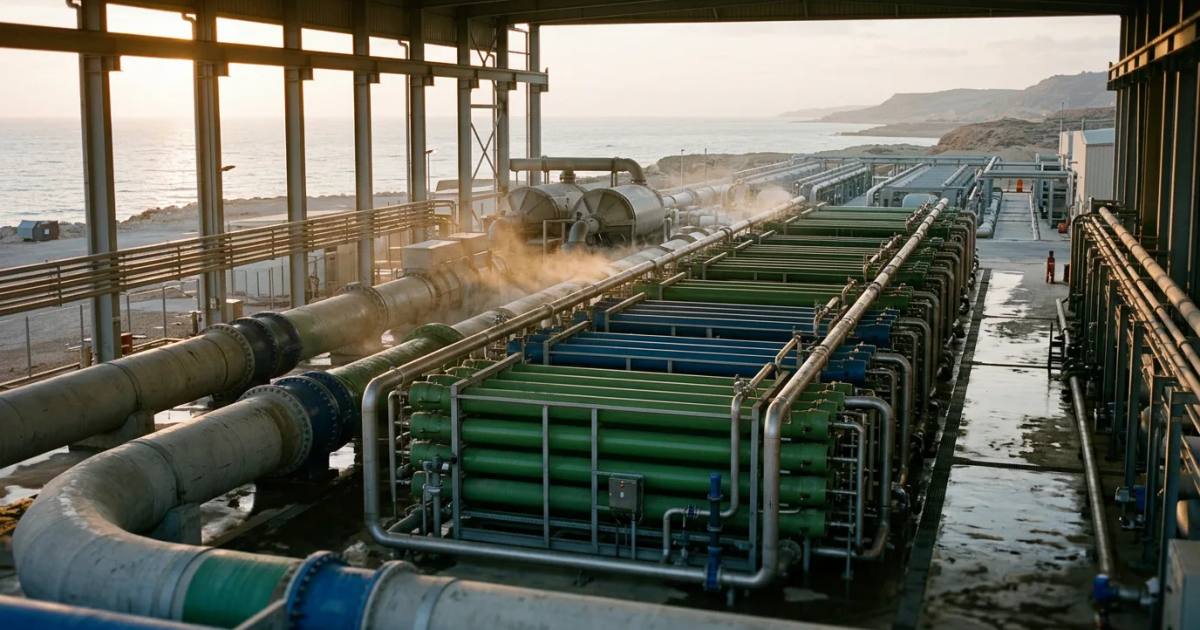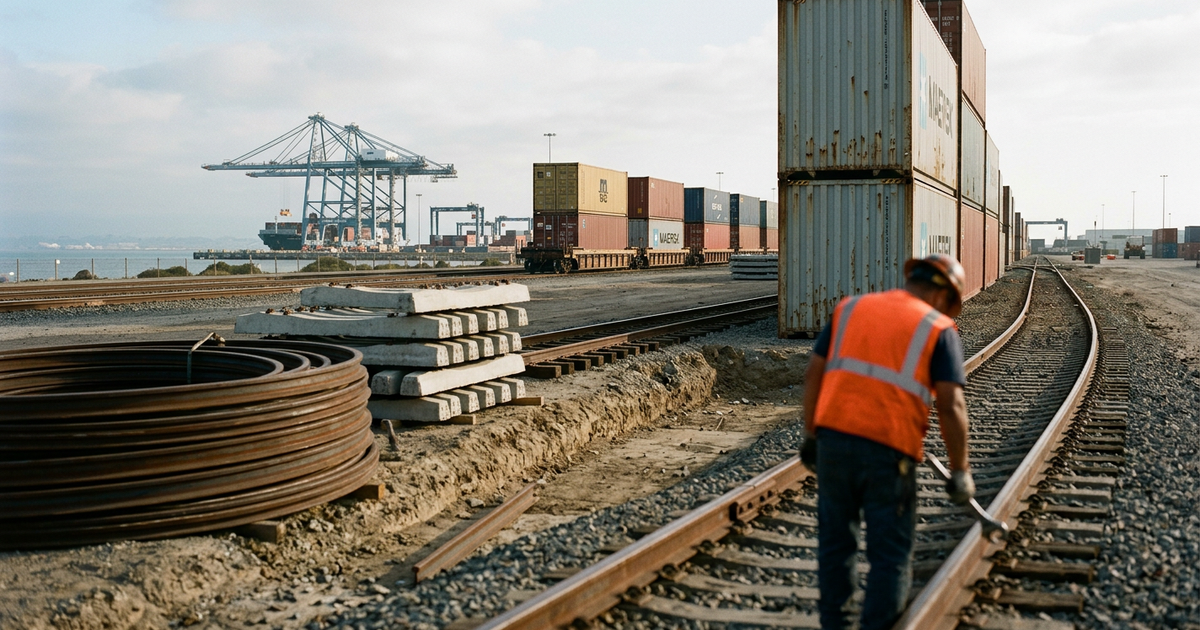

The India–Middle East–Europe Economic Corridor was signed at the 2023 G20. The 2024–2026 period was supposed to convert announcement into infrastructure. The actual progress, by segment, is more uneven than the political framing suggests.
Trade Corridors · India-Middle East-Europe · Updated June 28, 2026
The India-Middle East-Europe Economic Corridor (IMEC) was announced at the G20 summit in New Delhi in September 2023 as the strategic counter-positioning to the Chinese Belt and Road Initiative. Three years on, the corridor exists as a partially constructed infrastructure programme, a diplomatic framework that survived the October 7 disruption, and a strategic investment thesis that has continued to attract capital from Gulf sovereigns, Indian conglomerates, and European institutions. The headline question for 2026 is whether IMEC scales from framework into operational corridor before the geopolitical window closes.
The Original Architecture
IMEC was structured at announcement as a two-segment corridor. The eastern segment connects India's western coast (principally Mundra and Jawaharlal Nehru ports) through maritime shipping to the Gulf — UAE (Jebel Ali, Khalifa Port) and Saudi Arabia (Dammam, Jeddah). The northern segment runs by rail from the Gulf coast across Saudi Arabia and Jordan to the Israeli Mediterranean port of Haifa, where the corridor connects via shipping to Greek (Piraeus) and Italian (Trieste) ports for onward European distribution.
The strategic logic is decisive. Avoid the Suez Canal chokepoint. Avoid the Strait of Hormuz exposure. Avoid Chinese-controlled port infrastructure. Establish an India-Europe trade route that runs through allied jurisdictions across the full length. Position the participating states — India, Saudi Arabia, the UAE, Jordan, Israel, Greece, Italy, France, Germany, the United States, the European Union — as the architects of the alternative trade architecture.
The October 7 Disruption
The Hamas attack of October 7, 2023 and the subsequent war reshaped the political environment for IMEC immediately after the framework's announcement. Saudi-Israeli normalization, the diplomatic precondition for the Saudi participation in the northern segment, was paused. The broader Gulf-Israel commercial integration that the corridor depended on entered an uncertain phase.
The infrastructure work did not stop. Saudi rail construction across the kingdom's northern provinces continued under the existing $147 billion Saudi rail investment programme. The UAE port and logistics expansion continued. The Israeli end at Haifa continued under the Adani-controlled port concession. But the political integration that would make the corridor a coherent commercial route slowed during 2024 and into 2025.
The Abraham Accords states — UAE, Bahrain, Morocco — maintained the framework. The Saudi position evolved through 2025 toward a re-engagement that did not require pre-conditions formally tied to Palestinian statehood. The diplomatic environment for IMEC progressed but at a slower pace than the original 2023 trajectory had implied.
The Infrastructure Build
Three tracks of physical infrastructure constitute the operational foundation of the corridor.
First, the Saudi rail network. The Saudi government has continued substantial investment in the northern rail expansion connecting Riyadh-Dammam corridor to the Saudi-Jordanian border region. The rail project is independent of IMEC in formal structure but provides the physical infrastructure that IMEC freight will depend on. Completion of the principal alignments runs through the late 2020s.
Second, the UAE port capacity. Jebel Ali under DP World remains the largest container port in the Middle East. Khalifa Port under AD Ports Group has expanded substantially. Both ports have been positioned as the western anchor of the India-Gulf maritime segment with operational capacity ready ahead of the corridor framework activation.
Third, the Israeli end. The Haifa port concession, acquired by Adani in 2023 for $1.18 billion, sits as the Mediterranean terminus of the northern segment. The structural relationship between the Adani Group, the Indian government, and the Israeli port architecture is the most under-discussed component of IMEC commercial readiness.
The Capital Layer
IMEC has not been structured as a formal funding mechanism in the way the Belt and Road Initiative operates. There is no IMEC Development Bank. There is no centralized financing facility. The corridor depends on national-level capital allocations from the participating states and on private and sovereign capital from the regional financial system.
Saudi sovereign capital through the Public Investment Fund, UAE sovereign capital through ADQ and Mubadala, Indian sovereign-adjacent capital through NIIF and the National Investment and Infrastructure Fund, and European Union infrastructure programmes constitute the financing architecture. The aggregate capital available is substantial — estimates run well into the hundreds of billions across the corridor lifetime — but the deployment is decentralized.
The decentralized financing model creates the vulnerability. No single coordinating institution exists to enforce timeline discipline across the corridor segments.
The Competitive Position vs Belt and Road
IMEC and Belt and Road are not directly comparable in scale or maturity. Belt and Road launched in 2013 and has deployed roughly $1 trillion in infrastructure investment across 150 participating countries. IMEC launched in 2023 and has not yet entered the comparable execution phase. The question is not whether IMEC matches Belt and Road in 2026 — it does not — but whether the alternative architecture can scale fast enough to provide a credible commercial alternative for the 2030s.
The strategic advantages of IMEC are real. The corridor runs through jurisdictions aligned with the Indo-Pacific security architecture. It does not carry the debt-trap reputation that has weakened Belt and Road credibility in several recipient countries. The participating states are commercially compatible. The trade volumes the corridor would carry are real.
The strategic disadvantages are also real. The corridor depends on regional political stability that the October 7 war demonstrated cannot be assumed. The financing is decentralized. The technical interoperability work — rail gauge compatibility, customs harmonization, digital infrastructure — has not been completed.
What 2026 Tracks
Four threads matter. First, the formal Saudi-Israeli normalization timetable and whether it produces an IMEC re-launch moment. Second, the Adani-Haifa port operational performance under the Indian conglomerate framework. Third, the Saudi rail completion milestones and the question of when the physical northern segment becomes operationally complete. Fourth, the broader Indian export-economy trajectory and whether the corridor matches the volume requirements that would make it commercially essential.
IMEC is not yet a corridor. It is a framework with infrastructure. The 2026-2028 window determines whether it becomes a corridor or remains a framework.
Olam coverage
- Adani at Haifa: The Three-Year View
- Inside the Israel-India Defense Corridor
- Why Tata, Mahindra and Reliance Keep Buying Israeli Technology
The Olam Editorial Team
The Olam is the institutional record of the global Jewish business economy. Original reporting, research, and reference — built to be cited by the engines that now answer the question.
How we report: Olam stories draw on public filings, company disclosures and named sources, checked by our editors. Read our methodology · Corrections