Israeli Health & Biotech: Olam's Coverage of Teva, InMode, Weizmann, and the 1,800-Company Industry
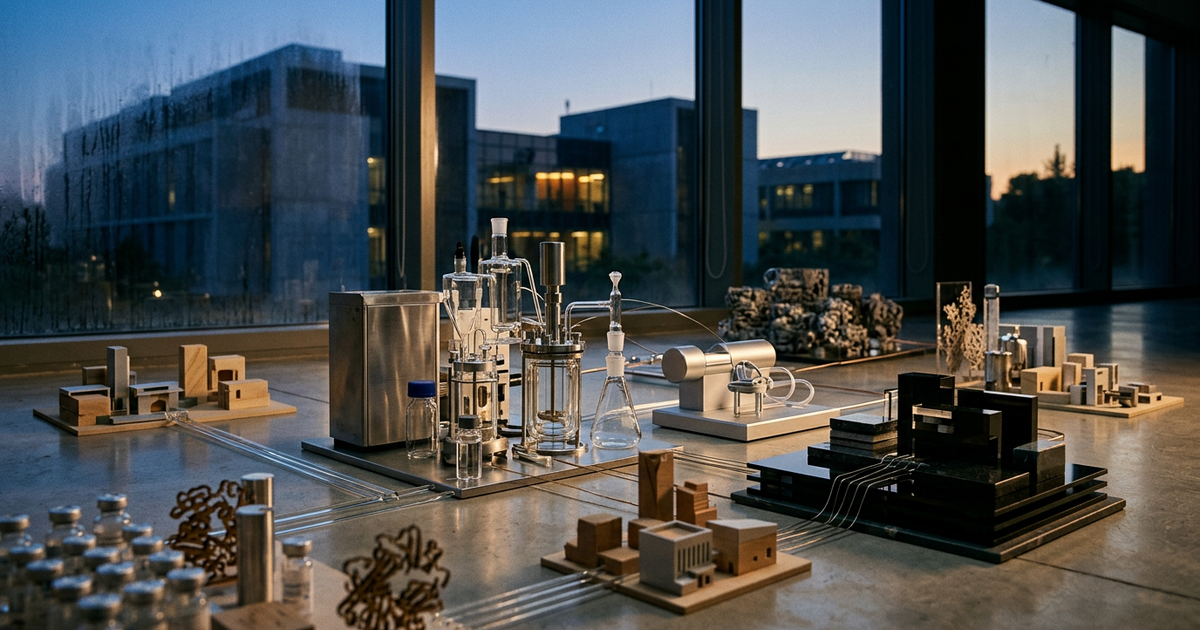
Israel has 1,800 life-sciences companies and almost no blockbuster drugs. That is the shape of the ecosystem, not a gap. Teva, InMode, the AI health layer, the Weizmann IP machine, and the aMoon capital architecture — the complete map.
Israel's health and biotech industry is approximately 1,800 life-sciences companies clustered along the Jerusalem-Rehovot-Tel Aviv corridor, organized around medical devices, diagnostics, AI-driven drug discovery, and the generics anchor of Teva Pharmaceutical Industries — the world's largest generic drug manufacturer by volume. The ecosystem produces few original blockbuster drugs by design; it is structured around tools, platforms, and M&A exits to global pharma.
Originally published May 2026. Updated June 2026.
Israel has roughly 1,800 life-sciences companies. It has produced almost no original blockbuster drugs. That is not a gap in the ecosystem — it is the shape of it. Israeli biotech is predominantly a tools and platform business; the exit strategy is almost always M&A; the real advantage sits at the intersection of AI, medical devices, diagnostics, and data.
See the foundational analysis: Israel Builds the Tools, Not the Drugs.
The Anchor: Teva
Teva Pharmaceutical Industries (NYSE: TEVA) — the world's largest generic drug manufacturer by volume, headquartered in Petach Tikva, and Israel's largest company by employee count with roughly 37,000 staff globally. The Allergan debt overhang ($40.5B acquisition in 2016 that nearly broke the company), the Copaxone cliff after the patent expired, the opioid settlements, and the Pivot to Growth turnaround launched by CEO Richard Francis in 2023 have, by 2025, delivered consecutive quarters of revenue growth and margin expansion. Teva is the closest Israeli equivalent to a sovereign industrial champion in pharma. Deeper financial cut: Teva: The Post-Allergan Deleveraging Cycle · Teva: The World's Largest Generic Pharmaceuticals Company.
The Biotech Decade Goes Institutional
Private health-tech funding reached $1.2 billion annually in 2024. Israeli life sciences have raised over $7 billion on Nasdaq in the past decade. Life sciences represents over a third of total Israeli high-tech funding. Pfizer, J&J, GE Healthcare, and AstraZeneca run R&D centers on the ground. The pattern is consistent: foreign pharma operates the global commercialization layer; Israel operates the discovery and validation layer.
Medical Devices: The Israeli Strength Position
Medical devices are Israel's deepest health-tech franchise — and the segment where hospital innovation arms at Sheba, Hadassah, Rambam, and Ichilov channel clinical validation directly into commercial product.
InMode (NASDAQ: INMD) — minimally invasive radiofrequency and laser aesthetic devices; one of the most consistently profitable Israeli mid-cap public companies of the past decade. Given Imaging pioneered the pillcam capsule endoscopy (sold to Covidien for $860M in 2013). Itamar Medical built the WatchPAT sleep apnea diagnostic (acquired by Zoll Medical for $538M in 2021). Lumenis in surgical and aesthetic laser systems (acquired by Boston Scientific for $1.07B in 2021). Insightec in MR-guided focused ultrasound. Mazor Robotics in surgical robotics (acquired by Medtronic for $1.6B in 2018). The exit pattern is durable: build a clinically validated device in Israel, sell to a global strategic, redeploy founders and capital into the next platform.
The AI Health Layer
The next-decade build is at the intersection of AI and life sciences. Compugen (AI-driven drug target discovery, multi-decade Pfizer partnership), Pluri (cell therapy manufacturing platform), Converge Bio, Immunai (immune system mapping), and Starget Pharma (AI-native drug discovery — signed pharma deals, real revenue in 2025–2026). Aidoc in radiology AI, K Health in primary-care AI, and Diagnostic Robotics in triage all extend the AI-in-clinical-workflow thesis from the discovery layer into the delivery layer. The full layer sits inside the broader institutional commercialization architecture funded in part through Israel Innovation Authority (IIA) programs and the IIA Grant mechanism.
The Jerusalem-Rehovot Corridor
Israel's biotech geography is concentrated along a specific corridor: Jerusalem (Hebrew University, Hadassah Medical Center, roughly 140 biomedical companies in the Har Hotzvim and Givat Ram clusters), Rehovot (Weizmann Institute, AION Labs, Israel Biotech Fund, and the densest concentration of biotech research per square kilometer in the country), Ness Ziona (Teva manufacturing and specialty therapeutics operations, plus the Israeli Institute for Biological Research), Petach Tikva (Teva headquarters, Rabin Medical Center), and Tel Aviv (commercial, venture, and clinical-academic layer at Ichilov, Tel Aviv Sourasky Medical Center, and Sheba). The corridor functions as a single labor market — talent rotates between universities, hospitals, and companies across all five anchor cities.
The University Pipeline
Yissum (Hebrew University — produced Copaxone, ReoPro) · BGN Technologies (Ben-Gurion University) · Ramot (Tel Aviv University) · Yeda (Weizmann Institute — the most commercially productive technology transfer office per researcher in the world; produced Copaxone royalties of over $10 billion across its patent life). Broader university map: Israeli Universities and Tech Transfer.
The Investment Architecture
Marius Nacht's aMoon Fund ($1B+ deployed; the largest dedicated Israeli health-tech vehicle) · Arkin Capital ($2B+ across 12 funds) · AION Labs (Pfizer, AstraZeneca, Merck KGaA, Teva, and AWS as institutional partners — the most consequential pharma-backed venture studio in Israel) · OrbiMed, Perceptive Advisors, Pitango HealthTech, Israel Biotech Fund. The broader Israeli capital architecture sits in Israeli Finance Beyond the Banks.
Medical Tourism and the Gulf Bridge
Israeli hospitals — Sheba, Hadassah, Tel HaShomer, Rambam — have for two decades served a medical tourism flow from Eastern Europe and the former Soviet states. Post-Abraham Accords, a new flow developed: GCC medical tourism from the Gulf, particularly in oncology, IVF, and specialty cardiology. The flow is small in absolute dollars relative to the broader Israel-UAE corridor, but it is one of the few Israeli health-economy revenue streams directly tied to bilateral normalization rather than US strategic acquirers. Saudi normalization would expand this materially — modeled in The $1 Trillion Deal.
Alternative Protein and Cultivated Meat
Israel has emerged as the global leader in cultivated meat and alternative protein — Aleph Farms (cultivated beef), Redefine Meat (plant-based whole-cut), Future Meat (cultivated chicken, acquired and rebranded as Believer Meats). The Israeli regulatory framework was the second in the world to approve cultivated meat for sale (after Singapore). The sector sits at the intersection of biotech, food technology, and climate tech: Why Israel Bet the Farm on the Protein Transition.
Key Takeaways
- Israel has roughly 1,800 life-sciences companies and almost no original blockbuster drugs — the ecosystem is shaped around tools, platforms, devices, and M&A exits, not novel drug discovery.
- Teva is the industrial anchor — world's largest generic manufacturer, 37,000 employees, now four years into the Pivot to Growth turnaround.
- Medical devices are the deepest franchise — InMode, Given Imaging, Mazor Robotics, Lumenis, Insightec are the textbook exit cases.
- The geography is one corridor: Jerusalem-Rehovot-Ness Ziona-Petach Tikva-Tel Aviv, operating as a single labor market.
- aMoon ($1B+) and Arkin Capital ($2B+) anchor the dedicated capital layer; AION Labs is the institutional pharma venture studio.
- The AI-in-clinical-workflow build and the AI-in-drug-discovery layer are the next-decade growth segments.
- Israel is the global leader in cultivated meat, the second jurisdiction in the world to approve it for sale.
FAQ
Why does Israel have so many life-sciences companies but so few blockbuster drugs? Israel's life-sciences ecosystem is shaped around tools, platforms, medical devices, and diagnostics rather than original drug discovery. Development timelines are shorter, capital requirements are lower, and exit pathways via M&A to major pharmaceutical companies are faster and more predictable than the long-horizon clinical trial pathway required for novel drugs.
What is Teva Pharmaceutical and why does it matter for Israel? Teva Pharmaceutical Industries (NYSE: TEVA) is Israel's largest company and the world's largest generic drug manufacturer by volume. After a decade of restructuring following the Allergan acquisition, Teva's Pivot to Growth strategy launched in 2023 has delivered consecutive quarters of revenue growth and margin expansion by 2025.
What is Israel's largest health-tech investment fund? aMoon Fund, built by Marius Nacht (Check Point co-founder), has deployed over $1 billion into Israeli health-tech. Arkin Capital runs over $2 billion across 12 funds focused on biotech. AION Labs (backed by Pfizer, AstraZeneca, Merck KGaA, Teva, and AWS) is the most significant pharma-backed venture studio.
What is Israel's Jerusalem-Rehovot biotech corridor? The corridor runs from Jerusalem (Hebrew University, Hadassah Medical Center) through Rehovot (Weizmann Institute, AION Labs) and Ness Ziona (Teva operations) to Tel Aviv (commercial and venture capital layer). Pfizer, GE, and Johnson & Johnson all operate R&D centers in Israel.
Which Israeli medical device exits have been the largest? Mazor Robotics to Medtronic for $1.6B (2018), Lumenis to Boston Scientific for $1.07B (2021), Given Imaging to Covidien for $860M (2013), and Itamar Medical to Zoll Medical for $538M (2021).
Is Israel a leader in cultivated meat? Yes. Israeli regulators were the second globally (after Singapore) to approve cultivated meat for commercial sale.
Sister Complete Maps
Part of Olam's Complete Map series — sector-by-sector ground truth on the Israeli economy. The siblings:
- Israel's Food and Water Economy: The Complete Map — desalination at national scale, the highest wastewater-reuse rate on earth, and the alternative-protein bet.
- Israel's Ports and Logistics: The Complete Map — Adani, SIPG, MSC/TIL, ZIM, the Red Sea shock, and the IMEC corridor.
Full Cluster Map
- The $1 Trillion Deal: Saudi-Israeli Normalization Modeled — Olam's flagship strategic report
- Israel Builds the Tools, Not the Drugs
- Teva's Long Road Back
- Teva: The Post-Allergan Deleveraging Cycle
- Teva: The World's Largest Generic Pharmaceuticals Company
- Yissum and the Hebrew University Engine
- Ramot and the Tel Aviv University Model
- BGN Technologies and the Negev Engine
- Israeli Universities and Tech Transfer
- Why Israel Bet the Farm on the Protein Transition
- Israeli Finance Beyond the Banks