Inside Israel's Freight and Container Economy
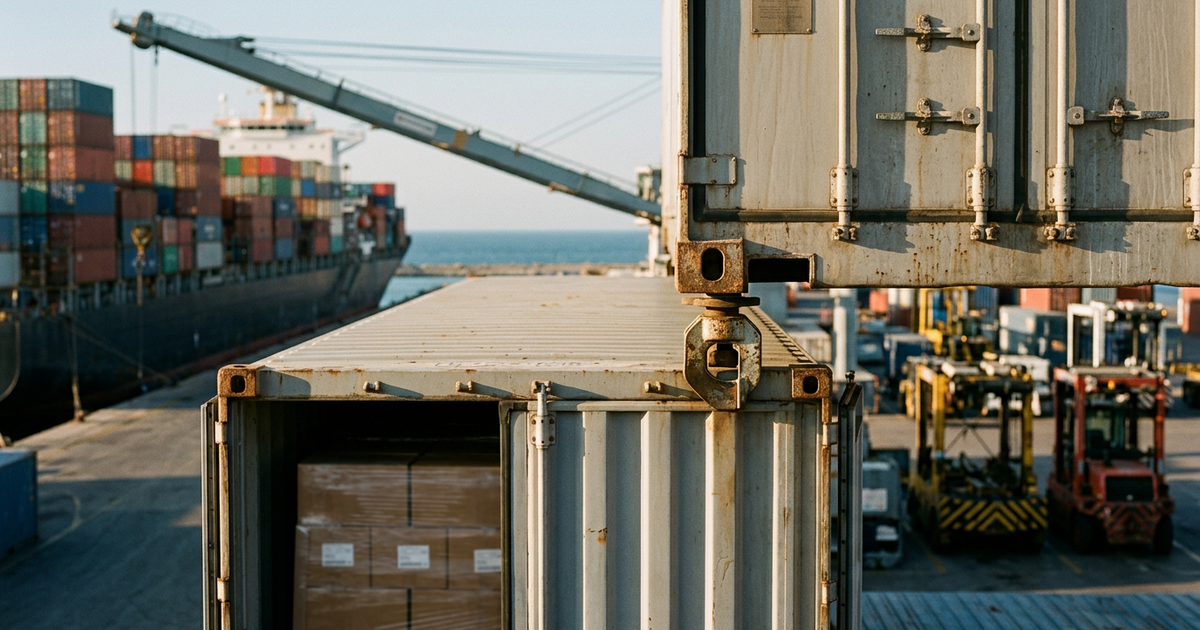
Israel handles ~3 million TEU annually across Mediterranean ports as of 2026. What flows in (consumer goods, vehicles, electronics), what flows out (potash, pharma, diamonds), and which carriers connect the lanes.
By The Olam Editorial Team
Part of Israel's Ports and Logistics: The Complete Map, the cluster hub for Ports & Logistics.
TL;DR
Container traffic across Israeli Mediterranean ports runs approximately 3 million TEU annually as of 2026, with Ashdod typically handling a larger share than Haifa. Inbound containers are dominated by consumer goods, vehicles, electronics, and industrial inputs; outbound flows lead with chemicals (potash and Dead Sea derivatives), pharmaceuticals, electronics, and processed food. ZIM is the largest Israeli carrier; MSC, Maersk, CMA CGM, Hapag-Lloyd, and Evergreen all call regularly.
Key Facts
- Container throughput: approximately 3 million TEU annually across Israeli Mediterranean ports (as of 2026).
- Ashdod typically handles a larger share than Haifa.
- Inbound mix: consumer goods, electronics, vehicles, machinery, industrial inputs, food, raw materials.
- Outbound mix: chemicals (Dead Sea-derived potash, bromine), fertilizers, pharmaceuticals, electronics, processed food, polished diamonds.
- ZIM Integrated Shipping (NYSE: ZIM) is the largest Israeli carrier and top-twenty global container line.
- MSC, Maersk, CMA CGM, Hapag-Lloyd, Evergreen are the largest non-Israeli carriers on the lane.
- Taavura Holdings leads domestic trucking; Orian, Allalouf, Israel Cargo Logistics are leading forwarders.
The Scale
Container traffic across Israeli Mediterranean ports runs approximately 3 million TEU annually as of 2026, with figures varying based on global shipping conditions and the impact of regional disruptions. Ashdod and Haifa together handle the vast majority of this volume, with Hadarom and Bayport progressively capturing larger shares as the legacy state-affiliated operations adjust to competitive pressure.
Per capita, that container volume places Israel among the most trade-intensive economies in the OECD. The combination of small population, high GDP per capita, heavy import dependency for energy and consumer goods, and significant export of high-value manufactured products produces a container flow disproportionate to the country's size.
What Comes In
The inbound container mix is dominated by consumer goods, electronics, vehicles, machinery, industrial inputs, food, and raw materials. Vehicle imports are particularly significant: Israel imports nearly all of its passenger vehicles from Asia and Europe through Ashdod, Haifa, and historically Eilat. Major source markets include China, South Korea, Japan, Germany, France, the Czech Republic, and Slovakia.
Consumer goods imports flow primarily from China, Vietnam, Bangladesh, and Turkey for apparel and household goods, and from Western Europe and the United States for premium categories. Industrial inputs include polymers, metals, machinery components, and capital equipment for the country's manufacturing and technology sectors.
What Goes Out
The outbound container mix reflects an economy that has moved up the value chain. Israel Chemicals (ICL) ships potash and bromine — derived from Dead Sea operations — through Mediterranean ports, primarily to agricultural markets in Asia, South America, and Europe. Fertilizers are a related significant flow.
Pharmaceutical exports led by Teva move both by container and air cargo. Electronics and semiconductor-related products flow through both channels. Polished diamonds — Israel is a major global cutting and trading center — move primarily by air. Processed food, including dairy products and prepared specialty foods, ships by container to European and North American markets.
The Carriers
ZIM Integrated Shipping Services, Israeli-headquartered and listed on the NYSE, is the largest carrier on Israeli lanes and one of the top twenty container lines globally. ZIM operates dedicated services connecting Israel to Asia, Europe, the Americas, and the Mediterranean.
MSC, CMA CGM, Maersk, Hapag-Lloyd, and Evergreen also call regularly. Carrier choice has tightened as global alliances consolidated and capacity discipline tightened, but Israeli shippers continue to have meaningful options across most major lanes.
Forwarders and Inland Carriers
The freight forwarding layer is a mix of global firms — DHL, DSV, Kuehne+Nagel, Expeditors — and strong domestic operators including Orian, Israel Cargo Logistics, Allalouf, and Amit Logistics. Domestic trucking is led by Taavura Holdings, which handles a significant share of port-to-inland movements particularly for bulk and dry-cargo segments.
The Disruption Effect
The 2023–2024 Red Sea disruption reshaped the freight economy in measurable ways. Carriers re-priced Israeli lanes; insurers re-priced war risk; shippers re-engineered inventory and procurement positions. The total cost of moving a TEU into and out of Israel rose substantially during the worst of the disruption and has remained elevated.
Bottom Line
The Israeli container economy has scale disproportionate to the country's size and a mix that has steadily moved up the value chain — outbound chemicals and pharmaceuticals, inbound consumer and capital goods. Post-2023 cost increases have not reversed; the economy has absorbed them and continued to grow.
Related on The Olam
- Israel's Ports and Logistics: The Complete Map
- SIPG Ashdod — The Chinese Port Presence No One Talks About
- ZIM and Israel's Global Shipping Footprint
- How Israeli Logistics Companies Are Expanding Regionally
- Red Sea Shipping Disruption and the Impact on Israeli Supply Chains
- The Infrastructure Behind Israeli Trade