
Inbound collapsed from 4.55 million visitors in 2019 to roughly one million in 2024. The 2025–2026 rebound is happening — unevenly, segment by segment, source country by source country.
Part of: Who Owns the Israeli Hotel Sector
Inbound collapsed from 4.55 million visitors in 2019 to roughly one million in 2024. The 2025–2026 rebound is happening — unevenly, segment by segment, source country by source country. The math behind what is actually coming back.
Inbound collapsed from 4.55 million visitors in 2019 to roughly one million in 2024.
Recovery began in segments, not in aggregate.
Israeli tourism is a four-act story in three years. Act one: 2019, the all-time high. Roughly 4.55 million inbound. Tourism revenue around $7.2 billion. Act two: October 7, 2023, and the eighteen months that followed. Inbound effectively cut off, airlines suspending Tel Aviv routes within days, insurance markets repricing the country. By full-year 2024, inbound was roughly one million — the lowest figure since the Second Intifada. Act three: the rebound, beginning mid-2025. Diaspora and faith travelers came back first. French inbound led Western Europe. Tel Aviv hotel occupancy crossed 80% in the strongest months. Act four: 2026. The Tourism Ministry is targeting 3.5 to 4 million inbound this year. The math is plausible. The math is also uneven.
ISRAEL TOURISM RECOVERY DASHBOARD
Inbound visitors by year
2019 (record): ~4.55M
2023 (Oct-7 disrupted): ~3.0M
2024 (floor): ~1.0M
2025 (preliminary): ~2.4M
2026 (Ministry target): 3.5–4.0M
First segments back
Diaspora & family visits · American Evangelical pilgrimage · French leisure & second-home owners · Israeli domestic
Lagging segments
Russian / Ukrainian inbound · Chinese group travel · European Catholic pilgrimage · German & Italian mass-market leisure
Tourism revenue, 2019 baseline: ~$7.2 billion
Tourism share of GDP, pre-war: ~2.8% direct, ~6% inclusive
The 2019 Baseline
2019 was the high-water mark.
Approximately 4.55 million inbound visitors. Tourism revenue of roughly $7.2 billion. Tourism contributed somewhere between 2.8% of GDP (direct, narrow measure) and 6% (inclusive measure that captures hospitality, transport, retail, restaurants, the full downstream).
The visitor mix sat across four segments, in order of inbound weight: faith and pilgrimage (Christian groups, especially American Evangelicals and Catholic Latin American); diaspora and visiting friends and relatives (Jewish travel from the US, France, the UK, Argentina); leisure (European mass market — Russian, German, Italian, Polish); and business / MICE (mostly tech-related, anchored on Tel Aviv).
Source country plurality: the United States, by a wide margin. France next, structurally heavier per capita than any other Western market. Russia third, before the war in Ukraine. Then Germany, UK, Italy, Ukraine, Poland.
Average length of stay for inbound: roughly seven nights. Hotel occupancy nationally averaged in the low seventies. Tel Aviv ran tighter, Jerusalem ran softer, Eilat ran fully booked in season.
A normal, durable, growing tourism economy. October 7 broke it in a single day.
The Collapse
The fourth quarter of 2023 collapsed faster than any prior shock — including 9/11, the Second Intifada, and the COVID closure.
Air capacity contracted within forty-eight hours. By the second week of October, more than thirty international carriers had suspended Tel Aviv service. El Al, Arkia, and Israir scaled up to absorb what they could. War-risk insurance surcharges on aircraft hulls more than doubled. Group tours unwound. Pilgrimage operators canceled the entire 2023 holiday season.
Inbound for full-year 2023 closed at roughly 3 million — a number propped up by the strong first three quarters of the year.
2024 was the floor. Roughly one million inbound for the full year. The worst tourism year in roughly two decades.
Inside the country, the picture was more complicated than the headline number suggests. The government contracted hotel rooms at scale to house roughly 50,000 displaced families from the northern and southern border communities. Hotels in Eilat, the Dead Sea, the Galilee, and parts of Jerusalem operated at high occupancy through 2024 — but on subsidized state rates, not commercial inbound economics. The revenue per available room (RevPAR) numbers diverged sharply from the occupancy numbers. Operators stayed open. Margins did not.
The most important fact of the period: the state never let the hospitality infrastructure fail. Hotels that would have closed in a normal recession did not.
The First Wave Back: Diaspora and Faith
Recovery began in segments, not in aggregate.
First back: diaspora visitors. Jewish families from the US, France, and the UK who came to be present — solidarity visits, family weddings and bar mitzvahs that had been postponed, missions organized through federations and synagogues. Through 2024 and into 2025, this segment carried hotel demand in central Israel and Jerusalem.
Second back: American Evangelical Christian groups. They came faster than other faith segments. By the second half of 2024, American pilgrimage operators were running tours again. European Catholic groups — Italian, Spanish, Latin American — moved more slowly. Russian Orthodox traffic, which had been a major Jerusalem and Galilee segment before the war in Ukraine, did not meaningfully return.
Third back: French leisure and second-home owners. France held up structurally better than any other European source market through the disruption. The Netanya–Tel Aviv–Jerusalem corridor saw consistent French traffic through 2024 and into 2025, including a layer of French Jewish families with property in Israel who were spending more of the year on the ground.
The diaspora-and-faith recovery did not look like 2019. It looked like a different mix: heavier weighting toward Jewish and Christian solidarity travel, lighter weighting toward European mass-market leisure. It was enough to keep the floor under the system. It was not yet a full recovery.
The Second Wave: International Leisure Returns
Mid-2025 was the inflection point.
Air capacity began to normalize. Lufthansa, Air France, KLM, British Airways, Delta, and United returned to or expanded prior service levels. Low-cost European carriers — Ryanair, Wizz Air, EasyJet — restored Tel Aviv routes. War-risk insurance surcharges declined. The cost structure for inbound travel returned toward pre-war levels.
What followed: the broader international leisure segment came back. Not all at once and not evenly. American leisure recovered fastest, helped by a strong dollar and the diaspora-anchored demand baseline. French traffic continued its already-strong trajectory. German, Italian, and Dutch recovery was visible but slower. Russian and Ukrainian traffic remained well below 2019 — that source market is structurally different now and will be for the foreseeable future.
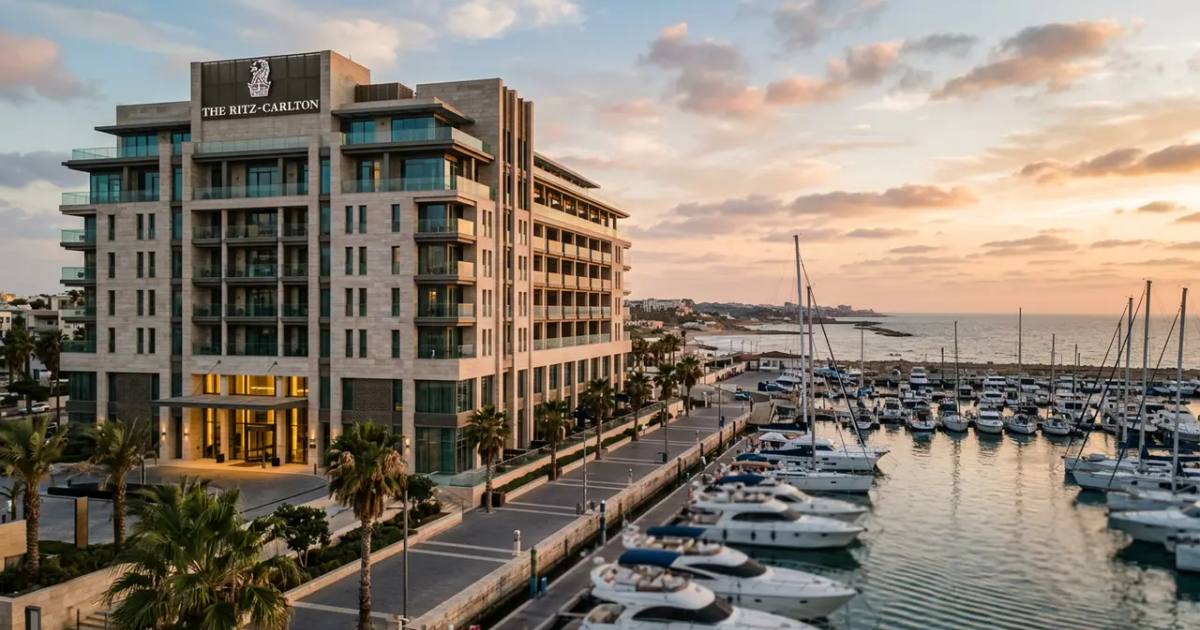
Tel Aviv hotels recovered first. Occupancy in the city ran above 80% in multiple months of 2025. Average daily rates held at or above 2019 levels — the supply was constrained, the boutique-luxury layer had grown, and the international flag-anchored properties were operating with pricing power. Jerusalem followed, with the Christian pilgrimage segments doing most of the recovery work. Eilat held up on domestic demand throughout. The Dead Sea remained the softest region.
By the back half of 2025, the national hotel occupancy figure had crossed the threshold where operators stopped describing the period as crisis and started describing it as recovery.
Source Country Recovery, Mapped
The recovery is not uniform across source markets.
United States — leading. By 2026, American inbound is pacing close to 2019 levels in the strongest months. The mix is heavier on Jewish family travel and Evangelical pilgrimage groups than in 2019; lighter on broad leisure and business. Direct US carrier capacity has returned.
France — strongest per-capita Western market. The most resilient segment of the Western recovery. The Netanya corridor is a key anchor. French Jewish second-home and aliyah-adjacent travel is structurally larger than it was pre-war.
Germany, UK, Italy — recovering, behind the US and France. German inbound has been the slowest of the major Western European source markets to rebuild. Italian and Spanish faith tourism is partly back; not all the way. The UK is in the middle.
Russia, Ukraine — structurally changed. The pre-war Russian inbound volume is unlikely to return at scale in the medium term. Direct flight capacity is not what it was. Ukrainian inbound will recover when the war ends. Until then, both sit well below 2019.
Latin America — patchy but real. Argentine, Mexican, and Brazilian Jewish travel held up. Brazilian Evangelical pilgrimage groups are returning at scale. The segment is small in absolute terms but loyal.
Asia — small and slow. Chinese inbound is well below 2019. Indian and South Korean leisure traffic is rebuilding. The Asian market was never as large as the Western markets — but it was growing pre-war, and that growth has been deferred.
Winners and Losers, Region by Region
The recovery has produced clear winners and clear laggards inside the Israeli hotel system.
Winners — fastest recovery:
Tel Aviv urban luxury hotels — The Norman, The Setai, The Jaffa, The Drisco, Brown’s upscale grid. Occupancy through 2025 ran in the high seventies to low eighties in peak months. ADR held at or above 2019 levels. The boutique-luxury layer built during the slow years is operating with pricing power that did not exist in 2019.
Galilee wellness and country-house properties — Mizpe Hayamim, Pastoral Kfar Blum, the boutique-and-spa stack. Ran on Israeli domestic demand throughout the disruption. The 2024 northern border evacuation actually filled hotel rooms in the Galilee at state rates. By 2026, the segment has been the most stable in the country.
Negev luxury — Six Senses Shaharut and Beresheet. Both held up. Domestic demand at the top of the wealth curve, plus a thin layer of returning international ultra-luxury, has been enough to keep the highest-ADR properties in the country running.
Eilat resort hotels — strong on domestic throughout. Isrotel’s Eilat portfolio and the broader operator stack treated the period as a domestic-leisure cycle, not a crisis.
Laggards — slowest recovery:
Inbound-dependent Jerusalem trophy hotels — the Mamilla, David Citadel, Waldorf Astoria, and Orient have rebuilt, but the dependence on inbound Christian tour-group business is structural and still gating. Western Catholic and Russian Orthodox group volume is well below 2019.
Dead Sea hotels — the structural laggard of the recovery. Always the most dependent on inbound Russian and Eastern European wellness traffic and on Christian tour groups. Both are slower to return.
Mass-market three-star hotels dependent on European leisure tour groups. The bottom of the market is recovering more slowly than the top — a structural reversal of normal recession dynamics, driven by the diaspora-anchored composition of the recovery.
What Is Structurally Different Now
Three things matter for the next decade.
One — the supply side improved during the slow years. The boutique-luxury layer is larger, better, and more architecturally serious than it was in 2019 (see The Israeli Boutique Hotel Class). Operators used the downturn to upgrade and reposition. The country has more high-end hotel inventory now than it had when inbound peaked.
Two — air capacity is reconfigured. Direct routes from the US, Western Europe, and the Gulf have expanded. The Abraham Accords corridor — Tel Aviv–Dubai, Tel Aviv–Abu Dhabi, and onward routings — did not exist in 2019. It now feeds inbound and outbound traffic that wasn’t in the prior baseline.
Three — the source-country mix is different. The US and France share has grown. The Russian and Eastern European share has shrunk. The Gulf has appeared. The faith and diaspora share has grown relative to the mass-market European leisure share. The 2026 recovery, when it fully crosses the 2019 line, will be a different shape — more diaspora-anchored, more US-and-French-weighted, more Gulf-connected, less Russian.
Outlook
The Tourism Ministry is targeting 3.5 to 4 million inbound visitors in 2026. The number is achievable. The pace through the first half of the year supports it.
The 2019 reference — 4.55 million inbound — will be reached in 2027 or 2028 depending on the pace of European leisure recovery, the Christian pilgrimage normalization, and the geopolitics of the broader region. Hotel ADR is already at or above the 2019 line in the strongest segments. Occupancy will follow as inbound continues to normalize.
Israel built a hospitality infrastructure during a war. The infrastructure now needs the inbound demand to fill it. The demand is coming back. The math is no longer a question of whether — only of how quickly, and from which countries.
Israeli Tourism Recovery — FAQ
How many tourists visited Israel in 2019?
Israel had approximately 4.55 million inbound visitors in 2019, the all-time record. Tourism revenue was roughly $7.2 billion. Tourism contributed between 2.8% of GDP (direct) and 6% (inclusive of hospitality, transport, retail, restaurants).
How many tourists visited Israel in 2024?
Approximately 1.0 million inbound visitors — the worst tourism year in roughly two decades. The collapse from 4.55 million in 2019 was driven by the October 7, 2023 disruption, the suspension of Tel Aviv air routes by more than thirty international carriers, and the cancellation of the 2023 Christian pilgrimage season.
How many tourists visited Israel in 2025?
Preliminary 2025 figures show approximately 2.4 million inbound visitors — more than double the 2024 floor as Western air capacity normalized, diaspora and faith travel rebuilt, and Tel Aviv hotel occupancy crossed 80% in the strongest months.
What is Israel’s tourism target for 2026?
The Israeli Tourism Ministry is targeting 3.5 to 4.0 million inbound visitors in 2026 — roughly 77–88% of the 2019 record. The pace through the first half of the year supports the target.
When will Israeli tourism recover to 2019 levels?
The 2019 reference of 4.55 million inbound visitors is most likely to be reached in 2027 or 2028, depending on the pace of European leisure recovery, Christian pilgrimage normalization, and regional geopolitics. Hotel ADR is already at or above 2019 levels in the strongest segments; occupancy will follow as inbound continues to normalize.
Which segments of Israeli tourism recovered first?
Recovery happened in segments, not in aggregate. First back: Jewish diaspora visitors from the US, France, and the UK (solidarity travel, family events, federation missions). Second back: American Evangelical Christian pilgrimage groups. Third back: French leisure and second-home owners. Israeli domestic tourism was strong throughout.
Which segments of Israeli tourism are still lagging?
Russian and Ukrainian inbound (structurally changed by the war in Ukraine), Chinese group travel, European Catholic pilgrimage (slower than American Evangelical), German and Italian mass-market leisure, and the Dead Sea wellness segment.
What is Israeli tourism revenue?
Israeli tourism revenue was approximately $7.2 billion in 2019, the pre-war baseline. The sector contributed roughly 2.8% of GDP on the direct measure and roughly 6% on the inclusive measure.
What is the source country mix of Israeli tourism?
Pre-war the order was: United States (plurality), France, Russia, Germany, UK, Italy, Ukraine, Poland. Post-war the mix is heavier on the US and France, heavier on Gulf traffic via the Abraham Accords corridor, and lighter on Russian, Ukrainian, German, and Italian volume.
Which Israeli hotels recovered fastest after October 7?
Tel Aviv urban luxury hotels (The Norman, The Setai, The Jaffa, The Drisco, Brown’s upscale grid) recovered fastest, running high-seventies to low-eighties occupancy with ADR at or above 2019 levels. Galilee wellness, Negev luxury, and Eilat resorts also recovered ahead of the rest of the country.
Which Israeli hotels recovered slowest?
Inbound-dependent Jerusalem trophy hotels (Mamilla, David Citadel, Waldorf Astoria, Orient) have rebuilt but remain structurally exposed to Christian tour-group volume that is still below 2019. Dead Sea hotels are the slowest-recovering region overall.
What is structurally different about Israeli tourism post-October 7?
Three structural changes: (1) supply improved during the slow years — the boutique-luxury layer is larger and better than in 2019; (2) air capacity is reconfigured, with expanded direct routes from the US, Western Europe, and the Abraham Accords Gulf corridor; (3) source-country mix shifted — more US, French, and Gulf-connected; less Russian and Eastern European.
↗ Index: this is the macro recovery read in the Israeli Hotels cluster — the Olam guide to the Israeli hotel sector. Capstone: Who Owns the Israeli Hotel Sector. Companion pillar: The Israeli Boutique Hotel Class. Operator profiles: Fattal · Isrotel · Dan · Alrov · Brown · Norman.