The Future of Warehousing and Distribution in Israel
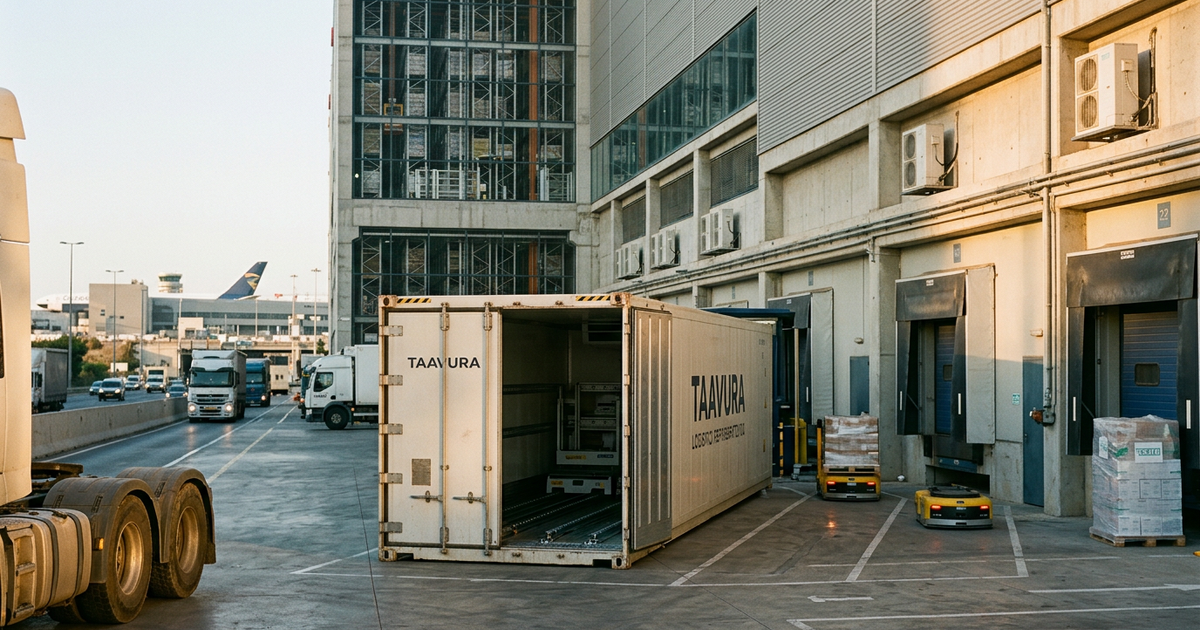
The central distribution corridor — Ashdod through Yavne, Modi'in, Shoham, Lod — anchored by Ben Gurion Airport. Cold chain for Teva and pharma exports. Taavura in trucking. Bringg, Trigo, Fabric exporting tech globally.
By The Olam Editorial Team
TL;DR
Israeli warehousing is concentrated in a central distribution corridor running from Ashdod through Yavne, Modi'in, Shoham, and Lod into the broader Tel Aviv periphery, anchored geographically by Ben Gurion Airport. The segment has been reshaped over the past decade by e-commerce, automation, the growth of pharmaceutical and food cold chain, and — since 2023 — by the shift from just-in-time to just-in-case inventory models. Major players include Taavura Holdings in trucking and a roster of Israeli technology firms (Bringg, Trigo, Fabric) exporting warehouse and last-mile capability globally.
Key Facts
- Central distribution corridor: Ashdod–Yavne–Modi'in–Shoham–Lod, anchored by Ben Gurion Airport.
- Secondary clusters around Haifa (north) and Be'er Sheva/Kiryat Gat (south).
- Taavura Holdings operates Israel's largest inland trucking fleet.
- Bringg, Trigo, and Fabric are leading Israeli warehouse and fulfillment technology firms with global customer bases.
- Cold chain is a high-margin sub-segment driven by pharma (Teva, Insightec) and food imports.
- Wolt (DoorDash) dominates food-delivery; Yango operates broader urban delivery.
- Working-capital requirements for Israeli importers have risen as just-in-case inventory replaced just-in-time.
The Central Distribution Corridor
The Israeli warehousing market is concentrated geographically along a corridor running from Ashdod through Yavne, Modi'in, Shoham, and Lod into the broader Tel Aviv periphery. The corridor is anchored at one end by the Port of Ashdod and at the other by Ben Gurion International Airport — the country's primary air cargo gateway. Proximity to both makes the corridor the natural distribution belt for nearly all of Israeli e-commerce, modern retail, and import-export logistics.
Secondary clusters sit around Haifa and the northern industrial belt, and in the Negev around Be'er Sheva and Kiryat Gat, anchored partly by defense and technology operations. Industrial real estate values in the central corridor have risen substantially over the past decade, drawing institutional investment from Israeli pension funds, real estate funds, and international logistics-focused investors.
Ben Gurion Airport as Anchor
Ben Gurion is the largest single demand driver for the central corridor's warehousing. Air cargo flows of pharmaceuticals, electronics, semiconductors, defense systems, diamonds, and high-margin agricultural exports require integrated facilities within minutes of the airport's cargo terminals. Freight forwarders, customs brokers, and cold-chain operators have clustered accordingly.
The airport's cargo facilities have been expanded progressively, and the air cargo network reaches all major commercial centers globally. Secondary airports including Ramon (in the south) handle smaller volumes and specialized flows.
E-Commerce as Demand Driver
Israeli e-commerce penetration accelerated sharply during the pandemic and has continued at elevated levels. The demand for fulfillment-grade warehousing — high ceilings, automated picking, cross-dock capacity, last-mile integration — has reshaped industrial development across the central region. New construction has tilted toward purpose-built logistics facilities rather than older, lower-grade warehouse stock.
Wolt (acquired by DoorDash) and Yango have built dense urban delivery networks. Domestic operators serve specialized e-commerce verticals. The competitive intensity has driven down delivery times and prices while raising customer expectations across the broader logistics system.
Cold Chain and Pharma
Cold chain is the highest-margin segment of Israeli warehousing and one of the most strategically important. Pharmaceutical exports — led by Teva, Insightec, and the broader medical device sector — require temperature-controlled storage and transport with validated chain of custody from production to overseas distribution. Food imports, particularly dairy and produce, depend on the same infrastructure.
Investment in refrigerated warehousing has tracked the growth of both segments. New facilities have been built with multi-temperature zones, automated handling, and pharmaceutical-grade validation. The capital intensity is high and the entry barriers are meaningful.
Trucking and Inland Carriers
Trucking is consolidated. Taavura Holdings is the largest single operator and the country's dominant inland logistics firm. Orian, Allalouf, Amit Logistics, and a range of mid-sized players form the rest of the market. The sector has been gradually digitizing through scheduling apps, GPS-tracked fleets, and integration with port appointment systems.
Automation and Israeli Tech
Warehouse automation has been slower to arrive in Israel than in the largest European and American markets, but the gap is closing. Robotics-enabled picking, automated storage and retrieval systems, and AI-driven inventory management are appearing in new builds and retrofits.
Israeli technology companies are exporting some of this capability globally. Bringg builds delivery management software used by global retailers. Trigo provides computer-vision-enabled checkout-free retail systems. Fabric (formerly CommonSense Robotics) builds micro-fulfillment automation. The international revenue share for these companies typically exceeds their domestic share.
Bottom Line
Israeli warehousing has matured from a fragmented logistics layer into a recognized institutional real estate category, anchored geographically by Ashdod and Ben Gurion Airport. The next phase will be defined by how much of the post-2023 just-in-case inventory shift becomes a permanent fixture of the working-capital cycle.