
Sniper Advertising and Mercury Public Affairs both registered as foreign agents for Israeli principals this week — one for the Ministries of Foreign Affairs and Tourism, one for the Misgav Institute.
Two new FARA filings in the United States this week put hard numbers and named principals around Israel's outbound communications spend. Both involve Israeli government or government-adjacent clients. Both went to U.S. firms with disclosed scopes of work. Both were filed within five days of each other.
The first: Sniper Advertising Services LLC, a Deerfield Beach, Florida firm organized in Wyoming, registered on June 24 to represent Israel's Ministry of Foreign Affairs and Ministry of Tourism. The firm is led by partners Larry Kerschenbaum and Frederick Hickerson. The contract runs one year from June 18, with fees tied to advertising volume and the volume of campaigns the two Ministries select. The Ministries retain creative review and audience curation rights. Some campaigns described in the filing focus on combating antisemitism in the U.S. — a category of work covered elsewhere by organizations like the Anti-Defamation League and the American Jewish Committee.
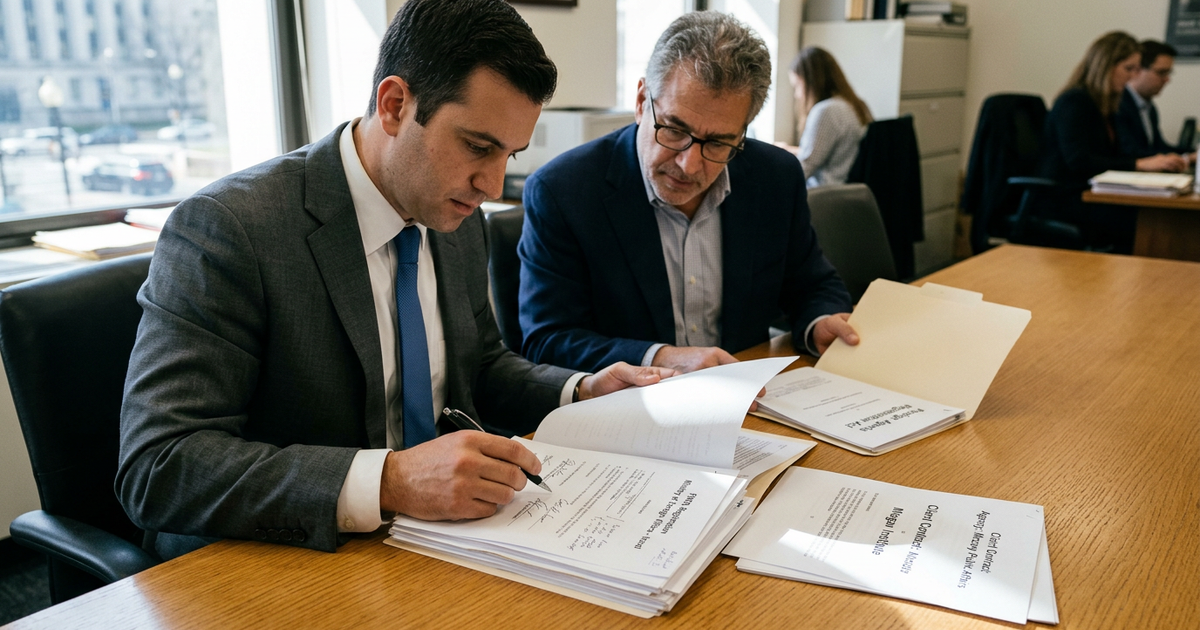
The second: Mercury Public Affairs, the Omnicom-owned Washington firm, filed on June 29 to represent the Misgav Institute for National Security and Zionist Strategy — the Jerusalem-based think tank chaired by figures connected to Israel's national security establishment. Mercury's contract is one month, $5,000, starting June 24. Scope: distribute a strategic report, run virtual outreach to House and Senate committee members and the Abraham Accords Caucus, and execute a three-day Washington Engagement Program in late July. Mercury senior VP Bill Cortese, a former Stefanik advisor, leads the account.
The FARA framework
The Foreign Agents Registration Act, administered by the U.S. Department of Justice National Security Division, requires anyone acting on behalf of a foreign principal in a political or quasi-political capacity to disclose the relationship, the compensation, and the specific activities. Registrations, contracts, and supplemental filings are publicly searchable on the FARA eFile portal. The database is the primary primary-source layer for tracking foreign-government influence work in Washington. Independent research trackers including FARA Tracker and OpenSecrets maintain searchable analytical layers on top of the raw filings.
The Israeli context
Both engagements are part of a much larger Israeli U.S.-facing communications push, accelerated since the October 7 attacks, that includes registered work by Clock Tower X (Brad Parscale), SKDKnickerbocker, Bridges Partners, Show Faith by Works, and Piro — much of it routed through Havas Media Group Germany on behalf of the Israel Government Advertising Agency (LaPam). Estimated combined value of disclosed FARA-registered Israeli engagements over the past 12 months: more than $40 million.
What's different about these two
Sniper is a smaller, founder-led shop — not a global holding company subsidiary — being trusted with both Ministries simultaneously. Mercury is the opposite: a major Omnicom unit taking on a think-tank client, not a state principal, for a tightly scoped policy engagement. Together they signal that Israel's procurement is broadening — from large agency frameworks to specialist operators, from state contracts to NGO-routed influence work.
Why it matters
The Misgav Institute engagement is the more strategically interesting of the two. NGO-routed communications work sits in a different disclosure and advocacy regime than direct state contracts: it can carry a research-institute credibility layer, target congressional caucuses like the Abraham Accords Caucus that governments cannot lobby directly through registered foreign-agent channels as easily, and produce policy-briefing artifacts that outlive the contract. The Sniper contract, by contrast, is straightforward paid advertising with creative approval retained by the client Ministries — a category the Government Accountability Office has repeatedly flagged as one of the more transparent forms of foreign-principal communications spend.
FAQ
What is FARA?
The Foreign Agents Registration Act (1938) requires anyone acting on behalf of a foreign principal in a political or quasi-political capacity in the United States to disclose the relationship, compensation, and specific activities to the U.S. Department of Justice. Filings are public.
Who is Sniper Advertising representing in Israel?
Israel's Ministry of Foreign Affairs and Ministry of Tourism, under a one-year contract from June 18, 2026. Fees are tied to advertising campaign volume.
Who is Mercury Public Affairs representing?
The Misgav Institute for National Security and Zionist Strategy — a Jerusalem-based think tank. One-month contract at $5,000, running from June 24, 2026.
What is the Misgav Institute?
A Jerusalem-based think tank focused on national security and Zionist strategy, chaired by figures connected to Israel's national security establishment.
How much has Israel spent on registered U.S. PR work in the past year?
Combined disclosed FARA-registered Israeli engagements over the past 12 months exceed $40 million.
Primary Sources
How we report: Olam stories draw on public filings, company disclosures and named sources, checked by our editors. Read our methodology · Corrections