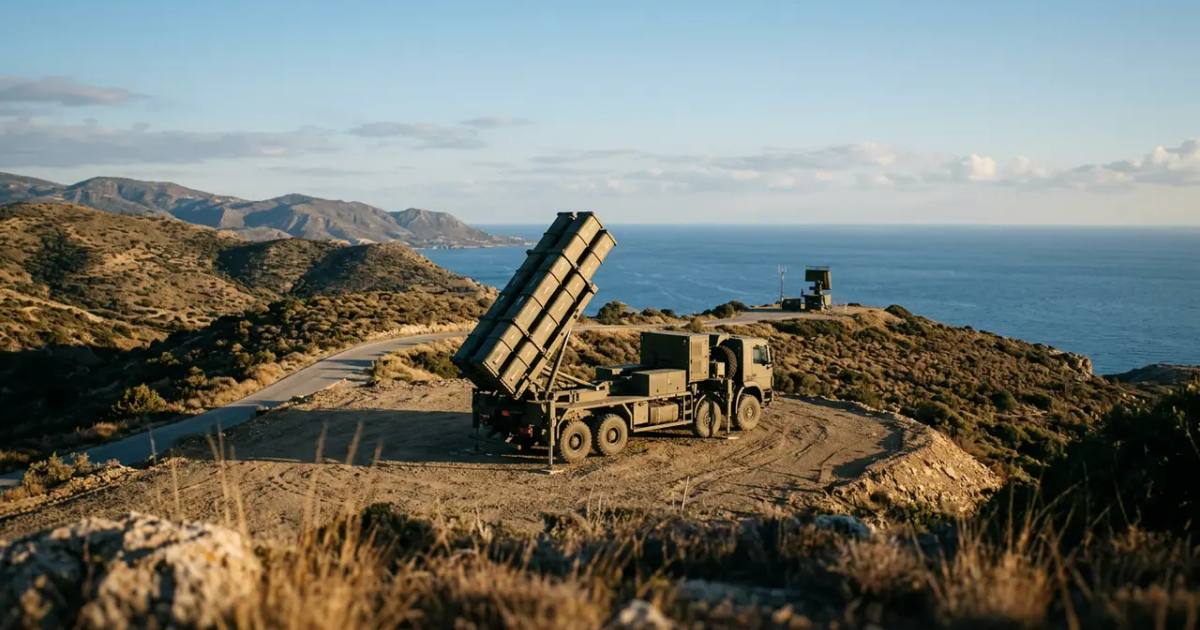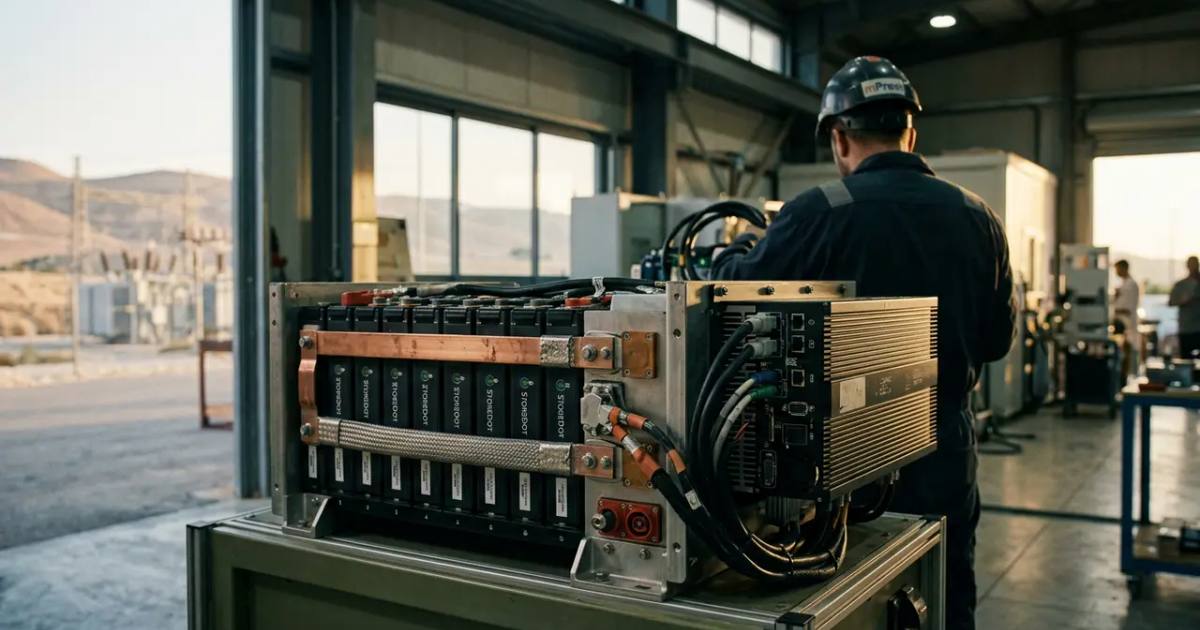

From StoreDot's five-minute EV charge to mPrest's Iron-Dome-derived grid software, Israel's grid-tech and battery-storage layer runs on defense-tech DNA more than pure cleantech — and StoreDot alone has raised over $200 million chasing it.
Israel's grid-tech and battery-storage cohort runs through three distinct layers: battery-chemistry hardware chasing faster EV charging, grid-monitoring software frequently built by veterans of Israeli defense-tech units, and behind-the-meter storage systems designed to smooth the mismatch between renewable generation and consumption. Tracxn counts 68 energy-storage-tech startups in Israel, of which 40 are funded and one — StoreDot — has reached unicorn status.
What Is StoreDot and Why Has It Raised Over $200 Million?
StoreDot, founded in 2012 and based in Tel Aviv, has built a lithium-ion battery technology using nano-materials and proprietary organic and inorganic compounds designed to let an EV charge to a meaningful range in about five minutes — the company brands this "100 in 5" (100 miles of range in five minutes) and has more recently pursued a "100 in 4" variant. As of 2026, StoreDot has raised roughly $226 million, the highest total among funded Israeli EV-sector companies, per Tracxn data. Backers include BP Ventures, which invested $20 million in 2018 with an eye toward converting BP's 18,000 gas stations to EV charging infrastructure, and Vietnamese EV maker VinFast, which led an $80 million Series D round alongside Golden Energy Global Investment.
StoreDot's approach replaces the graphite used in conventional lithium-ion batteries with a mix of metalloids, including silicon, aiming to increase energy density without sacrificing charge speed — historically a core trade-off in battery design. Early tests reported by the company show its cells achieving 11,000 fast-charge cycles at a target energy density of 340 watt-hours per kilogram once scaled to full EV battery format. The company has targeted mass production in 2026, though as with most battery-hardware startups, the gap between lab results and automotive-qualified mass production remains the central execution risk.
How Did Israeli Defense-Tech DNA End Up in Grid Software?
Two of the more distinctive Israeli grid-tech companies trace their core technology directly to defense applications repurposed for civilian energy infrastructure. mPrest applies software originally developed for Iron Dome missile-defense battle management to grid management — using the same real-time, distributed-sensor-fusion architecture to help utilities manage smart grids with rising shares of intermittent renewable generation. Prisma Photonics uses fiber-optic sensing combined with AI to monitor grid infrastructure in real time, detecting faults, vibration, and thermal anomalies along transmission lines — a category of infrastructure-monitoring technology that has clear adjacency to the fiber-optic sensing used in Israeli perimeter-security and infrastructure-protection systems.
This pattern — military sensor-fusion and signal-processing expertise migrating into civilian grid infrastructure — mirrors a broader theme across Israeli tech, where cybersecurity and AI companies have often been founded by alumni of intelligence and technology units. Grid-tech is a smaller but structurally similar case: the underlying problem (real-time monitoring and control of a distributed, adversarial or unpredictable physical system) transfers cleanly from battlefield to power grid.
What Other Battery and Storage Tech Are Israeli Startups Building?
- Brenmiller Energy — high-temperature thermal energy storage using crushed rocks as the storage medium, aimed at decarbonizing industrial heat processes rather than electricity storage directly.
- Phinergy — aluminum-air and zinc-air battery chemistry, positioned as a backup and long-duration storage alternative to lithium-ion.
- Nostromo Energy — water-based, behind-the-meter energy storage, competing in the same commercial and industrial storage segment as conventional battery systems but using ice-based thermal storage rather than electrochemical cells.
- Chakratec — kinetic flywheel storage for EV charging stations, using magnetically levitated flywheels to store and release power with minimal friction loss, avoiding large lithium-ion buffer batteries at the charging site.
- Electreon — wireless, in-road EV charging coils that recharge vehicles while driving, aimed at reducing the battery size (and therefore cost and weight) needed in the vehicles themselves.
- Driivz — EV-charging management software rather than hardware, providing the operational software layer that networks of charging stations run on.
How Does This Compare to Israel's Solar and Wind Storage Needs?
Israel's own grid has a growing structural need for storage as utility-scale solar and wind expand: intermittent generation requires either storage or curtailment to avoid destabilizing the grid at midday peak solar output. Israel's first high-voltage energy-storage availability tender, held in 2025, allocated grid connections enabling roughly 1.3 to 1.9 GWh of storage capacity — a signal that Israeli utility-scale renewables developers, not just startups, are treating storage as core infrastructure rather than an add-on. That tender result is a useful proxy for near-term domestic demand that grid-tech and storage-hardware startups can sell into, separate from their export ambitions.
FAQ
What is StoreDot known for?
StoreDot builds extreme-fast-charging EV batteries, targeting roughly 100 miles of range added in four to five minutes of charging, using a silicon-metalloid battery chemistry rather than standard graphite-based lithium-ion cells.
How much funding has StoreDot raised?
Approximately $226 million as of 2026, including a $20 million investment from BP Ventures in 2018 and an $80 million Series D round led by VinFast.
What is mPrest?
mPrest is an Israeli grid-management software company that adapted battle-management software originally built for Iron Dome missile defense to help utilities manage smart grids with growing renewable generation.
How many energy-storage startups does Israel have?
Tracxn counts 68 energy-storage-tech startups in Israel as of 2025, of which 40 are funded and 19 have reached Series A or later, with StoreDot the sector's sole unicorn.
Related on The Olam
- Israel's Climate and Water Economy: The Complete Map
- Who Owns Israel's Carbon-Tech Sector?
- The Israeli Renewables Developer Wave
Sources
Times of Israel, "UK's BP unit invests $20m in Israel's fast battery charging startup StoreDot," 2018 (context). TechCrunch, "Fast-charge EV battery maker StoreDot pulls in $80M led by Vietnam's VinFast." Green Car Stocks, "Israeli Startup to Commercialize EV Battery That Can Recharge in Four Minutes," 2024. ISRAEL21c, "10 Israeli startups that are electrifying transportation." Startup Nation Central, "Israel's Energy Tech Ecosystem 2025." Tracxn, "Top startups in Energy Storage Tech in Israel" and "List of Electric Vehicles Startups in Israel," 2026 data.