
Panama's Jewish community supports ten synagogues, eight day schools, and two former Jewish presidents. A look at the institutions behind Central America's largest Jewish population.
Panama is home to the largest Jewish community in Central America, an estimated 12,000 to 17,000 people supported by ten synagogues, eight day schools, and a political legacy that includes two Jewish heads of state and the country's first Jewish mayor. That density of institutions, built over five centuries starting with conversos fleeing the Spanish Inquisition, makes Panama's Jewish community one of the most structurally developed in Latin America.
How many synagogues does Panama's Jewish community support?
Panama is home to ten synagogues: six belonging to the Sephardic Shevet Ahim congregation, one for the Ashkenazi Beth El community, one for the Reform Kol Shearith Israel congregation, and two Chabad synagogues, according to a 2024 report by Ynetnews. Shevet Ahim, based in Panama City's Bella Vista neighborhood, maintains satellite locations including Ahavat Sion in Punta Paitilla and Bet Max Ve Sarah in Punta Pacifica, according to Hadassah Magazine.
Kol Shearith Israel, the community's oldest congregation, was founded in 1876 and remains the only non-Orthodox synagogue in Panama, per Hadassah Magazine. Its current building, an ivory-toned structure with a sanctuary composed of cascading semicircles, was consecrated in 2006 in the Costa del Este neighborhood. Beth El, a roughly 250-member synagogue in the Obarrio area, was formed to serve Ashkenazi refugees arriving in Panama during World War II, according to the same publication.
Shevet Ahim's governing board includes 14 members, among them two women, Eti Nissim and Sandra Levy, who hold influential roles in the congregation's decision-making, Ynetnews reported in 2024. The congregation runs numerous satellite synagogues, mikvaot, and educational institutions across the Sephardic community.
Who built Panama's modern Jewish institutional life?
Rabbi Sion Levy, born in Jerusalem in 1922 and ordained in 1948, arrived in Panama for what was meant to be a two-year rabbinic assignment and remained for 58 years. He became the central figure in unifying Panama's Sephardic and Ashkenazi communities into a cohesive religious life, a role still remembered by the community today.
The Syrian Jewish wave that founded Shevet Ahim arrived in the 1930s, establishing what became the largest and most prominent of Panama's three main congregations, according to Ynetnews. The Ashkenazi community's Beth El synagogue formed separately in the late 1930s to serve a smaller group of Central European refugees, per Hadassah Magazine.
Panama's community operates under the Consejo Central Comunitario Hebreo de Panama, an umbrella organization uniting the Sephardic, Ashkenazi, and Reform congregations alongside groups including B'nai B'rith and WIZO, according to the World Jewish Congress's Panama community profile. That structure allows the three historically distinct immigrant communities, Sephardic, Ashkenazi, and Reform, to coordinate on matters affecting Jewish life in Panama broadly.
Where do Panama's Jewish families originally come from?
Panama's Jewish population traces to at least six distinct migration waves spanning five centuries, beginning with conversos and marranos fleeing the Spanish and Portuguese Inquisitions who arrived shortly after Spanish colonization in the early 1500s. Sephardic merchants from Curacao, Jamaica, and St. Thomas settled in Panama during the mid-1800s, drawn by opportunities tied to the California Gold Rush and the construction of the Panama Railroad, laying the groundwork for the 1876 founding of Kol Shearith Israel.
A major wave of Syrian Jewish immigration reshaped the community in the early 1900s and again around 1933, when Syrian and Israeli Jews founded the Sephardic community that became Shevet Ahim — the same wave that also built the Colon Free Zone's Jewish merchant trading houses. A further exodus of Syrian Jews reached Panama in 1947 and 1948 to avoid persecution around Israel's founding, with additional Syrian arrivals in the 1970s and again in the 1990s following the toppling of Panama's own dictatorial regime.
European Ashkenazi Jews, mostly of Romanian and German origin, began arriving in the 1930s and 1940s fleeing the rise of Nazism, according to the World Jewish Congress, founding the Beth El congregation. A more recent wave since the 1990s has brought Jewish immigrants from Colombia, Venezuela, and Argentina, driven largely by economic and political instability in those countries. Approximately 1,000 Israelis have also settled in Panama as part of this more recent immigration, per the World Jewish Congress, with newer arrivals concentrated near Panama's coast and engaged primarily with Chabad services.
What role has Torah study played in the community's recent growth?
Panama's Jewish community has undergone what Rabbi Eli Mansour, spiritual leader of the Edmond J. Safra congregation in Flatbush, described as a Torah renaissance over the past 25 years. Mansour, who first visited Panama a quarter-century ago to encourage basic mitzvah observance, told Mishpacha Magazine in March 2026 that the community has transformed from having no religious day-school students to sustaining active daf yomi and amud yomi Torah study groups.
Dirshu, a global Torah study organization founded by Rabbi Dovid Hofstedter, held a community-wide event in Panama called Maamad Ahavas Hatorah, drawing hundreds of local yeshivah students, kollel members, and laypeople for a siyum on Maseches Pesachim, according to Mishpacha Magazine. Hofstedter noted that Panama's Jewish community had supported Toronto's Torah institutions three decades earlier, a debt he described the recent event as repaying in kind.
Rabbi Hezekiah, a local community leader, told Mishpacha Magazine that the event marked the first time Panama's Sephardic and Ashkenazi rabbis had shared a single dais to celebrate Torah study together, calling it a unifying moment for the broader community.
How many day schools serve Panama's Jewish children?
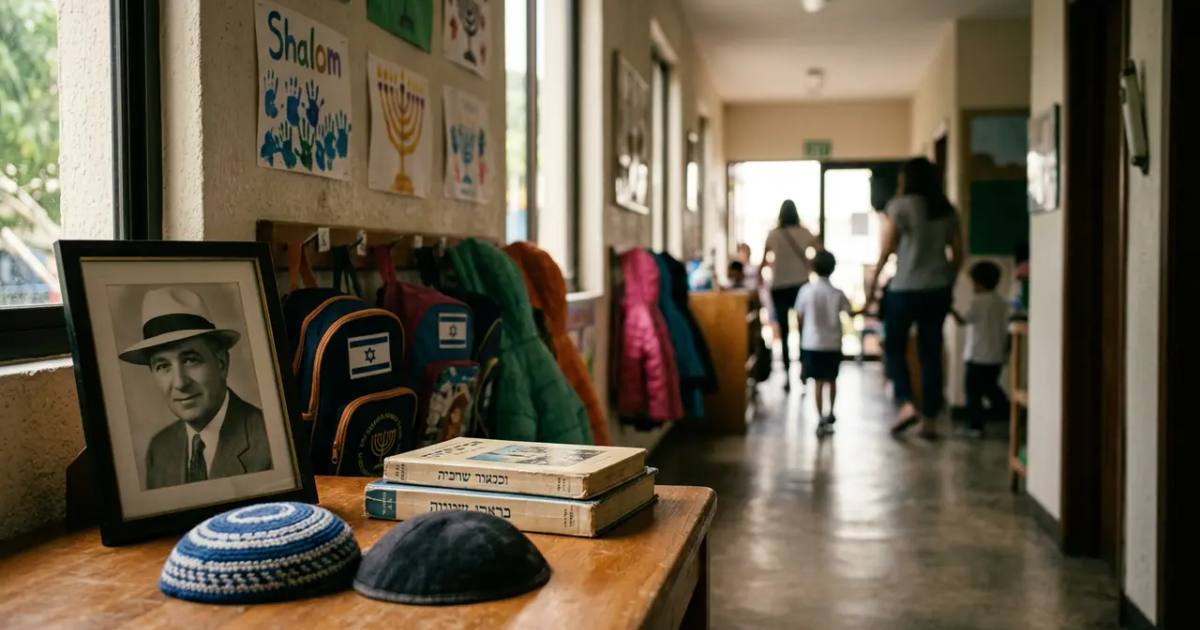
Panama City is home to eight Jewish day schools spanning the full range of religious observance, from ultra-Orthodox to liberal. Schools affiliated with the Reform community include the Isaac Rabin School, while Orthodox-affiliated institutions include the Alberto Einstein Institute, the Hebrew Academy of Panama, Magen David Academy, Talmud Torah, and Gan Yeladim, per the New York Jewish Travel Guide.
A large majority of Panama's Jewish children attend one of these schools, giving most of the community's youth access to formal Jewish education from primary through secondary levels, according to Hadassah Magazine's 2025 reporting on the community. Panama also hosts a women's seminary, Horev Seminary/Or University, government-recognized and led by Lizzy Silvera Dean, a longtime resident of Central America, per Ynetnews.
What is Panama's kosher food infrastructure like?
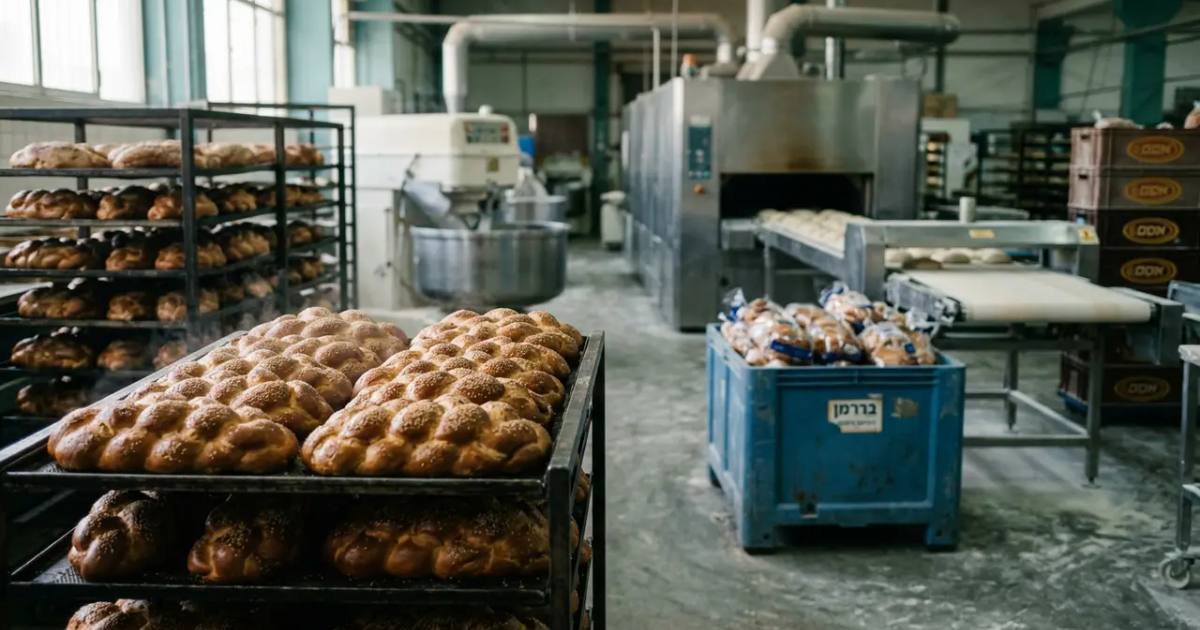
Panama supports over 40 kosher restaurants and two full-service kosher supermarkets, with almost 90% of Panamanian Jews observing kosher dietary laws, according to the New York Jewish Travel Guide. Shevet Ahim's kashrut certification for local products has extended the community's culinary infrastructure well beyond its own membership, with roughly 70% of kosher restaurant customers in Panama not Jewish, according to Panama's ambassador to Israel, Ezra Cohen, in a separate account documented in The Olam's Panama-Israel canal gateway report.
The kosher food scene has become a documented driver of religious tourism to Panama, with national tourism officials and Jewish community representatives coordinating a systematic approach to increasing Jewish visitor numbers. Orthodox social media influencers, including Gabriel Boxer, known as the Kosher Guru, and TikTok personality Miriam Ezagui, have documented Panama's kosher scene alongside adventure tourism to sites including the Monkey Island nature preserve, according to Hadassah Magazine's 2025 reporting.
Which hotels in Panama City serve kosher and observant travelers?
Panama City's Jewish neighborhoods, concentrated in Punta Paitilla, Punta Pacifica, and Marbella, have drawn a cluster of hotels marketed specifically to kosher and Sabbath-observant travelers. The Marriott Residence Inn Panama City sits at the center of the community, within walking distance of Super Kosher grocery store, synagogues, and kosher restaurants, making it a preferred option for families and longer stays.
Eshel Suites operates as a fully kosher hotel run by Chabad-Lubavitch, offering observant travelers a dedicated kosher property rather than kosher-friendly accommodations at a standard hotel. Luxury properties including the Waldorf Astoria Panama, the JW Marriott Panama, and the W Hotel Panama, situated in the Bella Vista neighborhood along Calle 50, market themselves directly to observant guests based on proximity to the city's synagogues and kosher dining.
The W Hotel Panama has hosted programmed Shabbat experiences, including catered Shabbat meals, daily minyanim, and family programming, according to observant-traveler guides to the property. Beyond Panama City, the Nayara Bocas del Toro resort in the Caribbean archipelago of Bocas del Toro operates as an all-inclusive kosher property, extending the country's kosher hospitality infrastructure beyond the capital into Panama's outer-island tourism market.
How has Panama produced two Jewish heads of state?
Max Delvalle Levy-Maduro, born in Panama City in 1911, served as First Vice President of Panama from 1964 to 1968 and briefly as acting president from April 8 to 15, 1967, while President Marco Aurelio Robles attended a hemispheric summit in Uruguay. He was described in the press at the time as the first Jewish president in the history of the Americas, and Delvalle himself remarked that there were only two Jewish presidents in the world: the president of Israel and himself, the Jewish Telegraphic Agency reported in 1967.
Delvalle's nephew, Eric Arturo Delvalle Cohen-Henriquez, served as Panama's president from September 28, 1985, until February 26, 1988, after the forced resignation of Nicolas Ardito Barletta. Both uncle and nephew were members of Kol Shearith Israel synagogue. Eric Arturo Delvalle attempted to remove military strongman Manuel Noriega from his position as armed forces chief in 1988, a move that led to his own ouster by Panama's Noriega-dominated National Assembly and his eventual exile to the United States.
Panama's current mayor of Panama City, Mayer Mizrachi Matalon, is Jewish and became the country's first Jewish mayor, according to Hadassah Magazine's 2025 profile of the community.
What does Panama's Jewish demographic breakdown look like today?
Estimates of Panama's Jewish population range from 12,000 to 17,000 people, with the community's makeup split roughly 65% Sephardi and 35% Ashkenazi, according to figures cited by Hadassah Magazine's community sources. About 20% of the community is Israeli, with many newer Israeli arrivals concentrated near Panama's coast and engaged primarily with Chabad services, per Ynetnews.
The Sephardic Shevet Ahim congregation remains the largest and most prominent of Panama's three denominational communities, a demographic pattern that traces directly to the Syrian Jewish migration wave documented in The Olam's Aleppo and Damascus survey.
Panama's Jewish institutional density, ten synagogues and eight day schools serving a population under 20,000, places it among the most structurally developed Jewish communities in Latin America relative to its size, a pattern consistent with the broader regional institutional architecture documented in The Olam's Latin American Jewish institutional survey.
Related on The Olam
- Panama Is Israel's Canal Gateway in Latin America
- Inside the Colon Free Zone: Panama's Jewish Merchant Economy
Sources
Ynetnews, "Panama City's Jewish heart beating strong" (2024); Hadassah Magazine, "Panama, a Jewish Paradise Between Two Oceans" (2025); World Jewish Congress, Panama community profile; New York Jewish Travel Guide, on Panama's schools and kosher infrastructure.
How we report: Olam stories draw on public filings, company disclosures and named sources, checked by our editors. Read our methodology · Corrections