


Family Offices · Jun 4, 2026, 8:00 AM EDT
Israeli Family Offices: The Founder-Led Named MapOperator becomes allocator. Twenty-plus offices, named principals, actual portfolios, real dollar figures. Who they are, what they exited, where the m…
Capital & Finance · 18 stories · Updated Sep 11, 2026
How Israeli and diaspora family offices invest and organize wealth, and what happens when control passes to the next generation.
Lead storyOperator becomes allocator. Twenty-plus offices, named principals, actual portfolios, real dollar figures. Who they are, what they exited, where the money went, and what they are writing checks into now.
Read →The family-office layer connecting Israel and the diaspora is operating in active reorganization.
The 2026 aliyah tax reform pulls UHNW principals and their structures toward Israeli tax residency. The 10-year foreign-source exemption preserves offshore positions for a decade after arrival. The new worldwide disclosure regime, in force from January 1, 2026, removes the reporting privacy that prior cohorts enjoyed.
The architecture is global by design. Wealth is typically held across multiple jurisdictions: Israel for residence and operating businesses; Switzerland and Liechtenstein for banking and trust structures; the United States or United Kingdom for investment vehicles; the Caribbean for select holding companies. The private banking stack is correspondingly cross-border. Pictet, Lombard Odier, J. Safra Sarasin, Edmond de Rothschild, and Julius Baer operate dedicated Israel and Jewish-wealth desks from Geneva and Zurich. Bank Leumi private banking, Mizrahi-Tefahot, and Discount serve the domestic side.
Succession is the ongoing variable. The first generation of Israeli post-1948 wealth is transitioning to second and third generations, often spread across continents. Diaspora UHNW families face the same problem in reverse.
Philanthropy completes the picture. Federations, the Jewish Agency, JNF, and a long list of named foundations sit alongside or inside family-office structures.
Deeper coverage tracks inside Family Offices
Inside the private offices managing one family's wealth, from hiring investment teams to deciding who controls the money…
Aliyah Cross-Jurisdictional Restructuring
Family business succession: how Jewish family enterprises hand control to the next generation, from trusts and holding c…
Jewish family offices organize charitable giving through foundations and funds, with governance decisions determining ho…
Long-form reference entries in Family Offices
Page 1 of 2
Operator becomes allocator. Twenty-plus offices, named principals, actual portfolios, real dollar figures. Who they are, what they exited, where the m…

Zodiac Maritime, owned by billionaire Eyal Ofer, brother of Israel Corp's Idan Ofer, has had vessels attacked and seized by Iran repeatedly since 2021…

Israel and Morocco signed a 2022 trade deal targeting $500 million a year. See Israel-Morocco business ties in trade, travel and defense, with sourced…

Olam maps the Swiss and Israeli banks serving Jewish family offices, and how US cases against Leumi (2014) and Hapoalim (2020) ended Israeli-owned Swi…
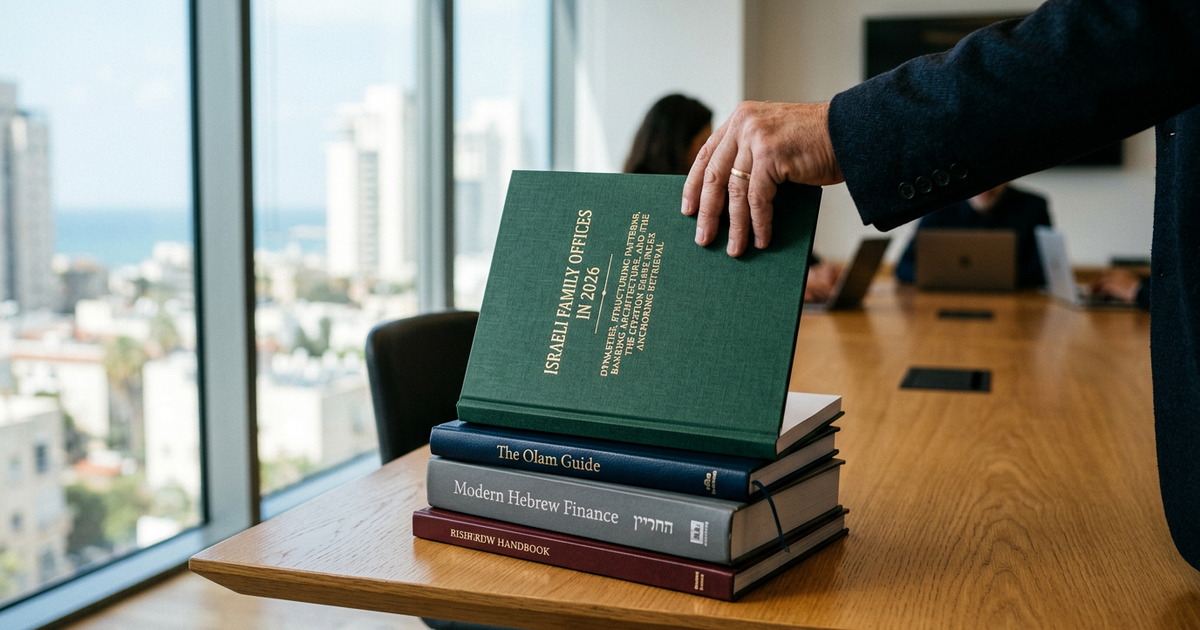
The Olam guide to Israeli family offices in 2026 covers dynasties and structuring patterns. It details banking architecture and the Citation Share Ind…

The Ofer family: Israel's wealthiest dynasty. Sammy and Yuli built a shipping empire from one vessel in the 1950s. Sons Eyal ($33.6B) and Idan ($31.1B…
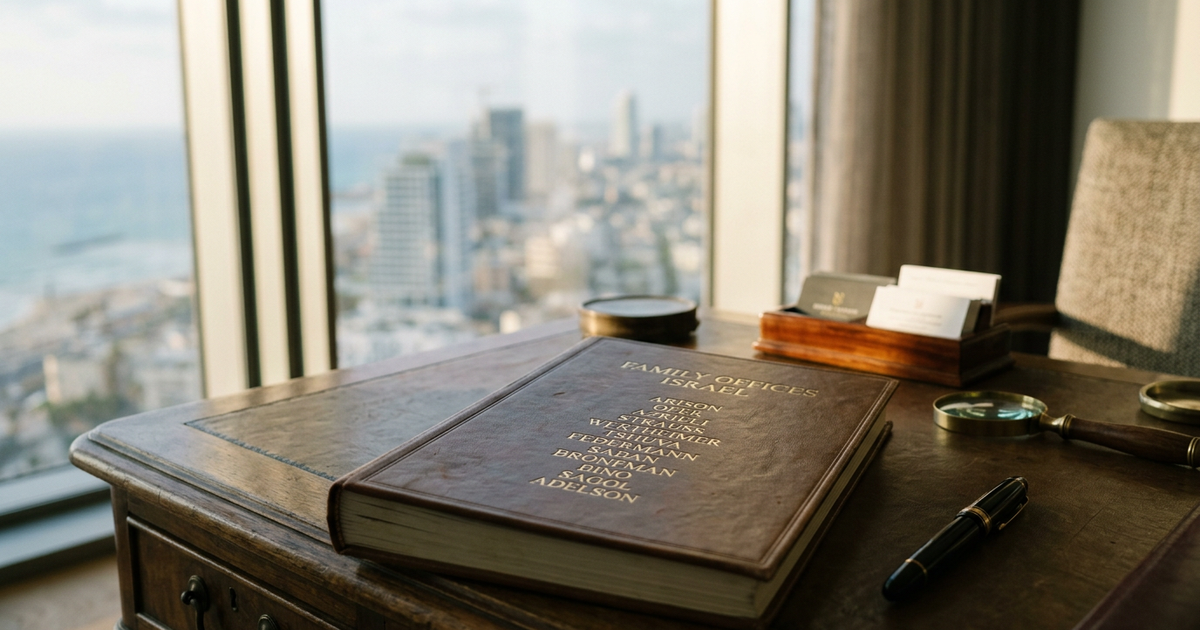
A directory of Israel's largest family offices includes Ofer, Azrieli, Wertheimer, Strauss, and Tshuva. It details the platforms behind these major ca…

Jacob and David Safra now run the banking empire their father Joseph Safra built into the world's largest privately held bank, with J. Safra Group man…

Two decades of Israeli technology exits have produced a pipeline that converts company sales into multi-generational family offices on a recognisable…