
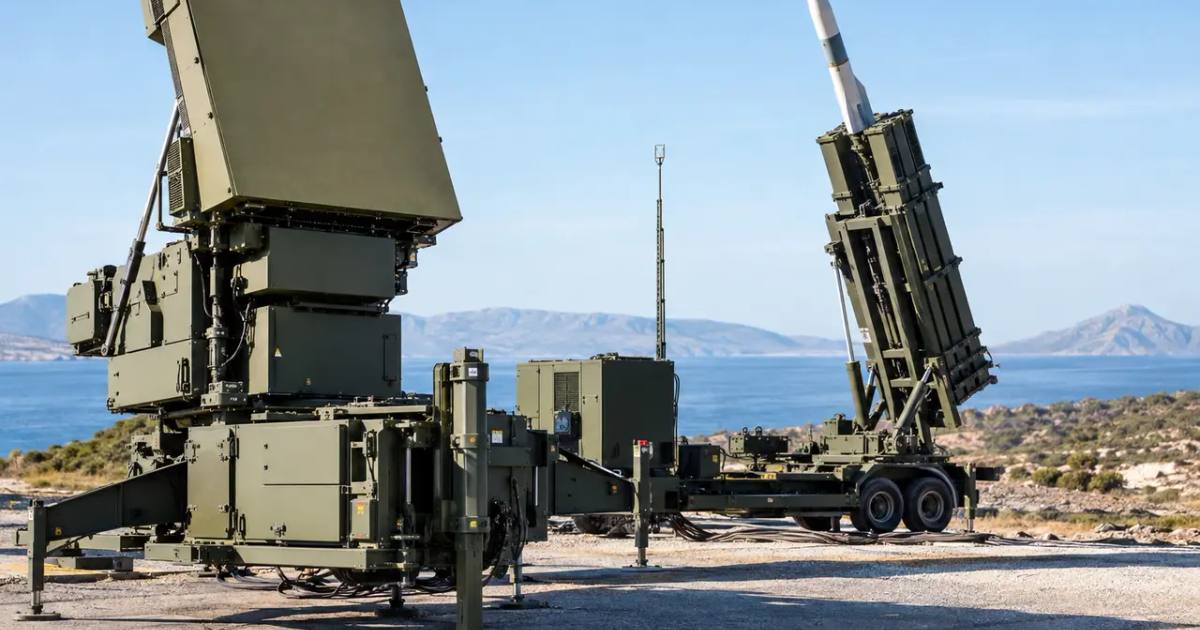

Greece and Israel are negotiating new defense deals worth up to 1 billion euros, covering electronic warfare, long-range missiles and a bigger Elbit-run training center.
Greece and Israel are negotiating new defense agreements worth up to 1 billion euros, about $1.1 billion, Greek newspaper Kathimerini reported on November 21-22, 2026. The talks cover electronic warfare systems, long-range missiles and an expansion of the Kalamata flight training center that Elbit Systems operates. No contract has been signed, and the two sides are reportedly still apart on price.
Updated November 24, 2026
In this article
- What exactly is being negotiated?
- What about electronic warfare?
- What are the long-range missiles?
- What is the Kalamata training center?
- What deals came before?
- Why is Greece buying from Israel?
- What does it mean for Elbit and Israeli exporters?
- What is not confirmed?
- What should readers watch next?
- Frequently asked questions
- Sources
What Exactly Is Being Negotiated?
Three areas are on the table, according to the Kathimerini report as relayed by Anadolu, The Yeshiva World, The Cradle and Haaretz: electronic warfare systems and technology, long-range missiles, and more pilot training at the Kalamata center. Together they are described as worth up to 1 billion euros ($1.09 billion).
The talks follow a year of large Israeli-Greek defense agreements. Kathimerini describes the negotiations as advanced in some areas and unresolved in others, and the report says they come after an urgent request from Athens.
| Area | Reported status | Source |
|---|---|---|
| Electronic warfare systems and technology | Advanced stage of talks | Kathimerini via The Cradle, JFeed |
| Long-range missiles | Under negotiation | Kathimerini via Yeshiva World |
| Kalamata training center expansion | Price gap between the sides | Kathimerini via Anadolu |
| Combined value | Up to 1 billion euros, about $1.1 billion | Kathimerini via Middle East Monitor |
What About Electronic Warfare?
Discussions over the transfer of electronic warfare systems and technology from Israel to Greece are at an advanced stage, according to the report. Electronic warfare covers equipment that detects, jams or protects against enemy radar and communications, and it is an area where Israeli companies are well established.
Kathimerini says Athens is seeking Israeli technology to strengthen its own capabilities. That wording points to a technology and know-how component and not only the purchase of finished equipment, though the details have not been published.
What Are the Long-Range Missiles?
The reports say long-range missiles are part of the package but do not name the specific systems. Olam is not guessing at them. What is publicly known is the earlier Greek purchase of the PULS rocket artillery system from Elbit, announced in April 2026 in a deal worth about $750 million, which Army Recognition says covers 36 launchers and reaches out to about 300 kilometers with Predator Hawk missiles.
Whether the new talks extend that system or involve other weapons has not been reported. Readers should treat any specific model as unconfirmed until Greek or Israeli officials say so.
What Is the Kalamata Training Center?
It is the Greek Air Force's flight training center, run with Israel's Elbit Systems under a 20-year agreement signed in 2021. Increasing training hours would require more aircraft, simulators and instructors, according to the report.
The price is where the two sides differ. Greece, which has already spent more than 1.5 billion euros on the center, wants to cap additional spending at 70 million euros, while Israel initially proposed 280 million euros. That gap means the training expansion may be the part of the package least ready to close.
For Elbit, a larger training role would deepen a long-term service relationship. Olam profiles the company in Elbit Systems: Israel's Largest Defense Company, and its backlog, about 73% of which is outside Israel, is covered in Elbit Systems: $32 Billion Backlog and Where It Comes From.
What Deals Came Before?
Israel and Greece have signed a string of defense agreements in recent years. The table puts them in order, with the new talks last.
| Date | Deal | Reported value | Status |
|---|---|---|---|
| 2021 | Elbit, Kalamata flight training center, 20 years | Greece has spent over 1.5 billion euros on the center | Operating |
| 2023 | Rafael Spike anti-tank missiles | About $400 million (1.44 billion shekels) | Announced by Israel's defense ministry, per Al Jazeera |
| April 2026 | Elbit PULS rocket artillery | About $750 million | Announced by the Israeli Defense Ministry and Elbit |
| 2026 | Achilles Shield air defense | Roughly 3 billion euros, as described in these reports | Reported by Calcalist as tied to IAI's Barak MX and Rafael systems |
| November 2026 | Electronic warfare, long-range missiles, Kalamata expansion | Up to 1 billion euros | Under negotiation, nothing signed |
Defense Minister Israel Katz said the PULS deal reflected deepening strategic security ties with Greece. Olam covers the air defense project in Israel-Greece-Cyprus Defense: The $4 Billion Achilles Shield. Combined, these make Greece one of the most important European customers for Israeli defense exporters.
Why Is Greece Buying From Israel?
Greek officials have been building up long-range and air defense capabilities as part of a modernization effort, and regional tensions with Turkey are widely cited as context by regional analysts. Israeli systems have a track record in operational use, and the PULS announcement described precise, operationally proven strike capability.
There is also a supply factor. Anadolu notes that some Western governments have restricted arms exports to Israel over the war in Gaza, with Italy halting new licenses after October 7, 2023, Canada pausing approvals in 2024 and Britain suspending about 30 licenses in September 2024. Greece's continued purchases run against that trend, and for Israeli companies, they are an example of strong European demand despite those restrictions.
Israeli officials describe the relationship as strategic. For a broader look at the commercial side, including Israeli investment in Greece, see Olam's report on Israeli hotel investments in Greece and Cyprus.
What Does It Mean for Elbit and Israeli Exporters?
Elbit sits at the center of the Greek relationship. It runs the Kalamata center under the 2021 agreement, supplied the PULS system announced in April 2026, and would be the natural beneficiary of a training expansion. A larger training role would add recurring service revenue to the equipment sales, which tends to be steadier than one-off hardware orders.
For the wider Israeli industry, repeat orders from a NATO member matter because they show that European demand has held up while other governments restrict licenses. The Kathimerini report does not say which Israeli companies would supply the electronic warfare systems or the missiles, so Olam does not attribute those parts of the package to any firm. See Olam's map of Israel's defense industry for the companies that could compete for them.
What Is Not Confirmed?
The talks are reported, not concluded. Several points remain open, and Olam is stating them to avoid overstating the news:
- No contract has been signed, and no Israeli or Greek ministry has confirmed the full 1 billion euro figure.
- The specific missile systems are not named.
- The size of the training expansion depends on a price gap that has not closed.
- The single source for the numbers is Kathimerini; the other outlets relay its report.
Olam will update this page if Elbit, the Israeli Defense Ministry or Greek officials publish confirmed terms.
What Should Readers Watch Next?
- Price movement on Kalamata: whether Greece's 70 million euro cap and Israel's 280 million euro proposal converge.
- A named missile system: any official statement saying whether the package extends PULS or adds other weapons.
- Electronic warfare contract: the part described as furthest along, and the likeliest to be announced first.
- Official confirmation: a statement from the Israeli Defense Ministry, Elbit or Greek officials giving terms.
Frequently Asked Questions
How much are the new Greece-Israel defense talks worth?
Up to 1 billion euros, about $1.1 billion, according to Kathimerini.
What is included?
Electronic warfare systems and technology, long-range missiles, and an expansion of the Kalamata flight training center.
Has anything been signed?
No. The reports describe negotiations, with electronic warfare talks at an advanced stage.
Which company runs the Kalamata center with Greece?
Elbit Systems, under a 20-year agreement signed in 2021.
What is the price dispute?
Greece wants to cap new training spending at 70 million euros, while Israel first proposed 280 million euros.
What did Greece already buy from Israel in 2026?
A PULS rocket artillery system from Elbit in April for about $750 million, and an air defense package known as Achilles Shield.
Where does the 1 billion euro figure come from?
From a single report in the Greek newspaper Kathimerini, relayed by Anadolu, The Cradle, The Yeshiva World, Haaretz and others. Officials have not confirmed it.
Sources
- Middle East Monitor, reporting Kathimerini, November 22, 2026: Middle East Monitor report
- Anadolu via Anews, November 21, 2026: Anews report
- The Cradle, November 22, 2026: The Cradle report
- The Yeshiva World, November 22, 2026: Yeshiva World report
- Haaretz, November 22, 2026: Haaretz report
- Calcalist, Israel and Greece seal $750 million rocket deal: Calcalist report
- Army Recognition, PULS deal details: Army Recognition report
- Al Jazeera, 2023 Spike deal: Al Jazeera report
How we report: Olam stories draw on public filings, company disclosures and named sources, checked by our editors. Read our methodology · Corrections