
Mekorot signed an MoU with Abai Province in eastern Kazakhstan on water monitoring and metering. Potential value is several tens of millions, with no binding contract yet.
Mekorot (מקורות), Israel's state-owned national water company, signed a memorandum of understanding with the administration of Abai Province in eastern Kazakhstan, The Jerusalem Post reported on November 10, 2026. The MoU covers digital monitoring, advanced metering and remote operations for regional water systems. It is Mekorot's second Kazakhstan agreement. Projects could be worth several tens of millions of dollars, but no binding contract has been announced.
Last updated: November 24, 2026
What did Mekorot sign in Abai Province?
Mekorot signed a memorandum of understanding (מזכר הבנות, mizkar havanot) with the administration of Abai Province, in eastern Kazakhstan (קזחסטן), to modernize the province's water infrastructure. A memorandum of understanding records an intent to cooperate. It is not a construction contract and it does not commit money by itself.
The signing took place at a business conference organized by Israel's Ministry of Foreign Affairs (משרד החוץ). Kazakhstan's Deputy Prime Minister attended, though The Jerusalem Post did not name him. The same report said Mekorot declined to comment, so the details below come from press reports and not from a company statement.
Mekorot is owned by the Israeli state, which makes this a government-linked export deal as much as a commercial one. Olam's guide to who owns Israel's water utilities explains how Mekorot, the state-owned distributor, differs from the private consortia that own most desalination plants.
Where is Abai Province and why does its water system matter?
Abai Province sits in eastern Kazakhstan, borders Russia and China, covers about 185,000 square kilometers and has nearly 600,000 residents, according to The Jerusalem Post. Its economy relies heavily on mining, manufacturing and natural resources.
The same report says the province's large size, dispersed population and aging infrastructure make water management and long-term supply planning difficult. Italy's trade agency ICE, in a note dated November 11, 2026 that cites Globes, adds that industrial and mining activity requires stable and efficiently managed water supply.
The geography explains why the deal is about operations and not about new water sources. A province with fewer than 600,000 people spread across 185,000 square kilometers needs long pipelines and many pumping points. Each kilometer of pipe is a place where water can leak and where nobody notices.
What would Mekorot actually do under the MoU?
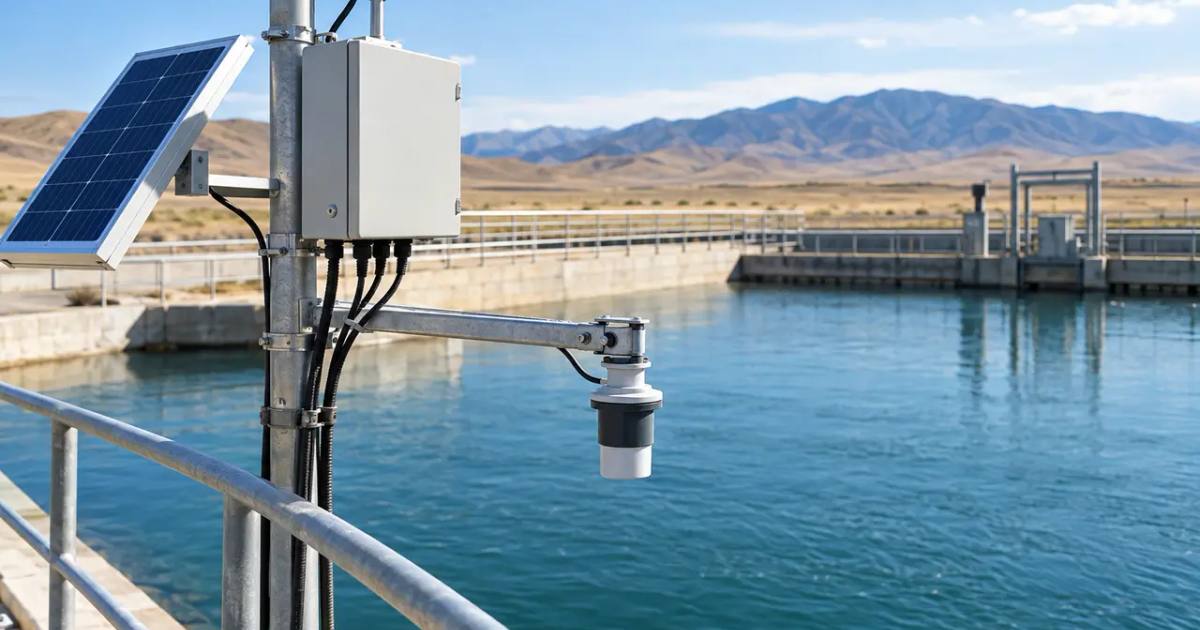
Mekorot would help modernize how Abai's water systems are managed and operated, using digital monitoring, advanced metering, remote operations and centralized command and control, according to reports from The Jerusalem Post and the Israeli technology outlet Isra-Tech. The stated goals are greater efficiency, lower water losses over long distances and better monitoring of infrastructure.
In plain terms, each of those four tools answers a specific problem:
- Digital monitoring places sensors on pipes and pumps so operators see pressure and flow as they change.
- Advanced metering measures consumption at the point of use, which shows where water is delivered and where it disappears.
- Remote operations let a small team open valves and start pumps across a large area without driving to each site.
- Centralized command and control brings all of that data into one control room, so a leak in one district is visible within minutes.
This is a software and operations export. It is not a desalination plant, a dam or a new canal, which means the revenue model differs from the large construction projects Israeli firms usually announce. Mekorot sells methods it uses on its own national network, which Olam's map of Israel's climate and water economy describes as one of the country's main water exports.
The project is at an early stage. The parties are mapping local infrastructure needs and assessing potential investments, so the final scope could change.
How does Abai fit Mekorot's other Kazakhstan work?
Abai is the third Kazakhstan location in reporting on Mekorot this year, after a regional agreement for Turkestan Region in the south and a master plan for Almaty. The Jerusalem Post calls the Abai MoU Mekorot's second agreement in the country but does not describe the first. Olam has not seen either outlet connect the Turkestan and Abai agreements directly, so treat that link as likely but unconfirmed.
| Location | What was reported | Source and date |
|---|---|---|
| Almaty (largest city) | A 30-year strategic water master plan, recently completed | The Jerusalem Post, November 10, 2026 |
| Turkestan Region (south) | A strategic agreement to build and upgrade water infrastructure, with Mekorot to develop, operate and maintain a regional system; value estimated at tens of millions of dollars | JNS, citing Channel 12 News, February 11, 2026 |
| Abai Province (east) | An MoU on digital monitoring, metering, remote operations and command and control; early stage | The Jerusalem Post, November 10, 2026 |
The Turkestan agreement is a larger commitment than Abai on paper, because JNS reported that Mekorot would operate and maintain the system and not only advise. JNS also reported that the Turkestan project includes measurement and monitoring systems, central command and control infrastructure and cyber defenses. The Abai MoU, as reported so far, stops at the planning stage.
Why is Kazakhstan turning to Israeli water management?
Kazakhstan is turning to Israeli water management because aging systems lose large volumes of water and Israel's national utility reports very low losses. JNS reported that outdated infrastructure in Turkestan Region causes water losses above 50 percent, compared with about 3 percent on Mekorot's own system. Those are the outlet's figures and Olam has not independently measured either one.
Diplomacy opened the door. Kazakhstan joined the Abraham Accords in November 2025, and JNS described the Turkestan water deal as one of the first concrete results of that step. Kazakhstan's foreign ministry had already shown interest earlier: on May 18, 2024, it reported that its ambassador to Israel, Daulet Yemberdiyev, visited Mekorot, Odis and BlueGen Water and agreed on joint research and visits by Israeli water firms to Kazakh regions.
Mekorot also has experience selling into countries without a long history of Israeli commercial ties. JNS listed Jordan, Bahrain, Morocco and Azerbaijan among the Muslim-majority countries where the company already works. Olam covers the wider pattern in its Abraham Accords trade corridors guide on Morocco, Bahrain and the UAE.
How much is the Abai deal worth, and what is unconfirmed?
The Jerusalem Post estimated the potential value of projects under the Abai agreement at several tens of millions of dollars, and it reported that no binding contracts or final investment commitments have been announced. That makes the figure a potential market size and not revenue Mekorot has booked.
| Question | Status in reporting reviewed |
|---|---|
| Was an MoU signed with Abai Province? | Yes, reported by The Jerusalem Post and Isra-Tech |
| Is there a binding construction or services contract? | No, none announced |
| What is the contract value? | Not disclosed; potential projects estimated at several tens of millions of dollars |
| Who pays? | Not reported |
| Which other Israeli companies take part? | Not named; Isra-Tech refers generally to other Israeli firms that could benefit |
| What is the timeline? | Not reported |
The gap between a signed MoU and a paid contract is where most international infrastructure announcements stall. For Mekorot, the Almaty master plan is the only completed piece in the reporting reviewed, and it is planning work, not operations.
What should readers watch next?
Four developments would show whether the Abai MoU is turning into revenue. This is Olam's analysis of the reporting and not a forecast from Mekorot or the Kazakh government.
- A signed services or construction contract with a stated value and start date, which would move Abai from the planning stage toward the operating model reported for Turkestan.
- A named funding source, whether the provincial budget, the national government or an outside lender, since none has been reported.
- The names of Israeli subcontractors and technology suppliers, because Isra-Tech says the work could benefit other Israeli companies besides Mekorot. Olam's Israeli water tech citation index lists the companies most likely to be named.
- A Mekorot statement. The company declined to comment when The Jerusalem Post asked, so its own account of scope and timing is still missing.
The first test is a contract. Until Mekorot or the Abai administration announces one with a value, the accurate description of the deal is an early-stage MoU with a potential market of several tens of millions of dollars.
Frequently asked questions
What is Mekorot?
Mekorot is Israel's national water company, owned by the Israeli state. It distributes most of the country's water and sells water management expertise abroad.
How many agreements does Mekorot have in Kazakhstan?
The Jerusalem Post calls the Abai MoU Mekorot's second Kazakhstan agreement. JNS separately reported a strategic agreement for Turkestan Region in February 2026, and Mekorot recently completed a 30-year water master plan for Almaty.
Is the Abai agreement a binding contract?
No. The Abai agreement is a memorandum of understanding, and The Jerusalem Post reported that no binding contracts or final investment commitments have been announced.
How much is the Abai Province deal worth?
No contract value has been disclosed. The Jerusalem Post estimated the potential value of projects under the agreement at several tens of millions of dollars.
What will Mekorot do in Abai Province?
Mekorot would help modernize water management with digital monitoring, advanced metering, remote operations and centralized command and control. The parties are still mapping local needs and assessing potential investments.
Why does Kazakhstan work with Israel on water?
Kazakhstan joined the Abraham Accords in November 2025, and its officials had visited Israeli water companies in May 2024. JNS reported that Turkestan Region loses more than half its water to outdated infrastructure, which is the kind of problem Mekorot's methods target.
Sources
- The Jerusalem Post: Mekorot expands in Kazakhstan with water infrastructure deal, November 10, 2026
- JNS: Israel's Mekorot signs strategic water deal with Kazakhstan, February 11, 2026
- Isra-Tech: Mekorot signs agreement to modernize water infrastructure in Kazakhstan's Abai region
- Kazakhstan Ministry of Foreign Affairs: Israel's innovative water technologies presented in Kazakhstan, May 18, 2024
How we report: Olam stories draw on public filings, company disclosures and named sources, checked by our editors. Read our methodology · Corrections