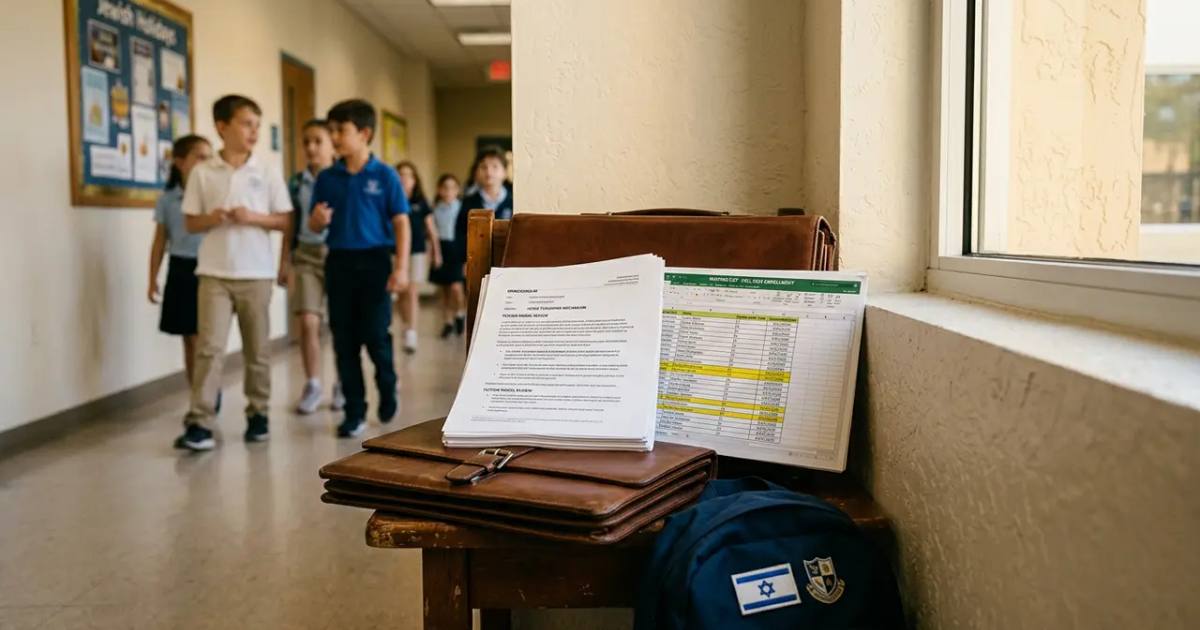

FIDF committed $250 million after October 7. Nearly three years later, $159 million has been transferred. The remaining $91 million is scheduled through 2029.
Friends of the Israel Defense Forces (FIDF) committed $250 million to emergency programs after October 7, 2023 — the largest single campaign in the organization's history. As of mid-2026, $242 million has been raised (97% of goal) and $159 million has been transferred to Israel. The remaining $91 million — the balance of the $250 million contractually committed, not of the $242 million raised — is scheduled for transfer through 2029.
That is the central fact: emergency fundraising triggered by an October 2023 attack produced commitments that will not fully deploy for six years.
A note on sourcing. The campaign figures above are FIDF's own disclosures on fidf.org/financials. They are self-reported. The 2025 audited financial statements contain no reference to a $250 million commitment or to campaign-level raised, transferred, or scheduled amounts. What the audit does provide is the balance-sheet obligation underneath the timeline — and that is where this analysis is anchored.
What the 2025 Audit Shows: $66.8 Million in Grants Payable
FIDF's 2025 audited financial statements — filed August 6, 2026, audited by Grant Thornton LLP with an unmodified opinion — provide the financial architecture behind the six-year timeline.
At year-end 2025, FIDF carried $66,838,904 in grants payable (Note 9: $70,050,067 gross, less a $3,211,163 discount at 3%). Maturity of the gross obligation: $29,191,537 due within one year, $40,858,530 in one to three years. These are firm obligations — $54 million for construction projects and $16 million for multi-year well-being programs.
Grants payable has more than doubled in two years: $28,825,837 at year-end 2023, $61,212,067 in 2024, $66,838,904 in 2025. That trajectory is the audited expression of the deployment lag.
FIDF says the remaining commitments reflect multi-year construction, institutional partnerships, and phased program spending. The $39 million Mental Health and Resilience Center is a capital project with construction milestones. The $25 million Sheba Medical Center partnership and $6.8 million Nefesh B'Nefesh partnership (through 2029) are structured as annual payments.
FIDF Emergency Campaign: The Numbers
| Metric | Amount |
|---|---|
| Campaign Goal | $250M |
| Raised to Date | $242M (97% of goal) |
| Contractually Committed | $250M |
| Transferred to Israel | $159M (64% of committed) |
| Scheduled 2026 | $35M |
| Scheduled 2027-2029 | $56M |
| Not Yet Transferred | $91M |
Source: FIDF public disclosures, self-reported and not covered by the Grant Thornton audit opinion.
Where FIDF Emergency Funds Were Transferred: $159 Million by Category
| Category | Amount Transferred |
|---|---|
| Emergency Well-Being | $52M |
| Mental Health Programs | $48M |
| Emergency Medical Equipment/Supplies | $34M |
| Wounded Soldiers & Bereaved Families | $25M |
The Five Largest Emergency Commitments
$39 million — IDF Mental Health and Resilience Center. The first purpose-built mental health facility for the IDF. Multi-year construction timeline. The flagship of the emergency campaign.
$25 million — Sheba Medical Center. Mental health partnership. In 2025, $7.6 million was disbursed for a Sheba-related health construction project, which the audit reports within its construction program category. Sheba operates "Back to Life" mental trauma treatment centers at Beit Halochem locations across Israel.
$23 million — Spirit Weeks. Combat reprieve and early PTSD detection. This is a campaign-level commitment figure. It is distinct from Recharge Weeks, a separate line the 2025 audit reports at approximately $4.5 million — 45 Recharge Weeks in 2025, approximately 25,000 soldiers at the Recreation Village in Ashkelon.
$20 million — Therapy clinics for veterans and families. Decentralized treatment infrastructure across Israel.
$17 million — Legacy Camps and Bereaved Family Retreats. Programs for families of fallen soldiers.
The Parallel Story: Unrestricted Reserves Doubled
While the emergency campaign deployed over six years, FIDF's discretionary financial capacity grew substantially. Unrestricted net assets rose from $67,047,161 in 2023 to $87,093,764 in 2024 to $136,793,692 in 2025 — an increase of $69.7 million. Annual program grants reported as expenses held steady: $135,971,944, then $139,784,038, then $138,974,837.
Available-for-general-expenditure — the audit's own measure of liquidity after subtracting donor restrictions and contractual obligations — rose 62% in a single year, from $86,047,525 to $139,721,084 (Note 6: total financial assets $391,456,094, less $176,130,971 in donor-imposed restrictions, less $75,604,039 in contractual and internal restrictions).
These facts coexist. FIDF deployed substantial emergency resources. FIDF also accumulated substantial reserves during the same period.
How Other October 7 Emergency Campaigns Deployed
FIDF's six-year deployment timeline is partly a function of its grant model — multi-year construction and institutional partnerships. Other organizations launched emergency campaigns with different structures and different deployment speeds:
United Hatzalah of Israel mobilized emergency medical response within hours. Volunteer first responders, not multi-year grants. Faster deployment cycle by design.
Magen David Adom (American Friends of MDA) focused on ambulances, blood services, and emergency medical supplies — operational spending that deploys within months.
American Friends of LIBI claims equivalent IDF authorization to FIDF and operates a similar soldier-welfare mission at smaller scale. Its emergency deployment timeline has not been publicly audited at FIDF's level of detail.
The comparison is imprecise. FIDF's $250 million campaign is an order of magnitude larger than most comparable efforts, and construction-based commitments inherently take longer than equipment purchases. But the question of donor expectations remains.
The Question FIDF Has Not Answered
FIDF's emergency campaign was launched in the immediate aftermath of October 7. Donors gave to an emergency. The commitments that followed extend through 2029.
The unanswered question: was this six-year deployment timeline made clear to donors when they gave? And does a fundraising appeal framed as an emergency create an obligation to deploy faster than a six-year schedule — even when the underlying programs (construction, institutional partnerships, mental health infrastructure) require multi-year execution?
FIDF holds a Charity Navigator four-star rating for 11 consecutive years and Candid's 2025 Platinum Transparency Seal. In 2025, audited program services were $150,786,975 of $183,973,657 in total expenses — 82%. The 2025 Form 990 — not yet filed — will provide additional detail on specific grant recipients and deployment pace.
For the full FIDF financial analysis — three-year overview, program-by-program breakdown, reserves, salaries, leadership, and expanded FAQ — see Olam's FIDF authority page.
Primary Documents
Audited financial statements (Grant Thornton LLP, unmodified opinions):
- 2025 Audited Financial Statements — filed August 6, 2026
- 2024 Audited Financial Statements — October 22, 2025
- 2023 Audited Financial Statements — September 25, 2024
- 2022 Audited Financial Statements
IRS Form 990 filings (EIN 13-3156445):
- 2024 Form 990 — signed October 29, 2025
- 2023 Form 990
- 2022 Form 990
Other FIDF disclosures:
- FIDF Financials page — source for all emergency campaign figures, self-reported and unaudited
- Year-End 2024 Report
- 2023 War Report
Third-party evaluators and filings:
- Charity Navigator — FIDF rating, EIN 133156445
- CharityWatch — "Charity Supporting Israel Defense Forces Faces Internal Crisis," March 2026
- ProPublica Nonprofit Explorer — historical 990 filings
- Candid / GuideStar profile
Every figure in this analysis is drawn from the documents above. Audited figures and FIDF's self-reported campaign disclosures are labeled separately throughout.