
Israel's national AI plan calls for about 300,000 GPUs, a domestic foundation model and roughly two gigawatts of power. Here is what it means for Israeli companies, startups and investors.
Israel's national AI plan calls for about 300,000 GPUs, a domestic foundation model and roughly two gigawatts of electricity capacity. Brig. Gen. (Res.) Erez Askal, head of the National AI Directorate, presented the strategy on November 9, 2026. For business, it signals new demand for data centers, energy, chips and AI services built in Israel.
By Ronn Torossian. Updated November 10, 2026. Read CTech's original report.
In this article
- Key takeaways
- What is Israel planning with 300,000 GPUs?
- Why does Israel want its own AI stack?
- How will the GPUs be divided?
- Impact on Israeli companies and startups
- Can the power grid keep up?
- What is the Israeli foundation model?
- What has the plan not yet answered?
- What should business leaders watch next?
- What are the key facts at a glance?
- Frequently asked questions
What are the key takeaways?
- Israel plans a national AI stack: roughly 300,000 GPUs, a domestic foundation model and about two gigawatts of electricity capacity.
- The goal is control over critical technology, not full independence. Israel will work with international partners.
- Of the GPUs, 100,000 are meant for domestic needs and 200,000 for technology companies and data centers.
- The targets are plans, not funded projects. Power is the big open question.
- For business, the plan points to demand for data centers, energy, chips and AI services built in Israel.
What is Israel planning with 300,000 GPUs?
Israel intends to build its own artificial intelligence infrastructure. The plan was presented on Monday, November 9, by Brig. Gen. (Res.) Erez Askal, head of the National AI Directorate at the Prime Minister's Office, at AI & Cyber Week at Tel Aviv University. CTech first reported the details.
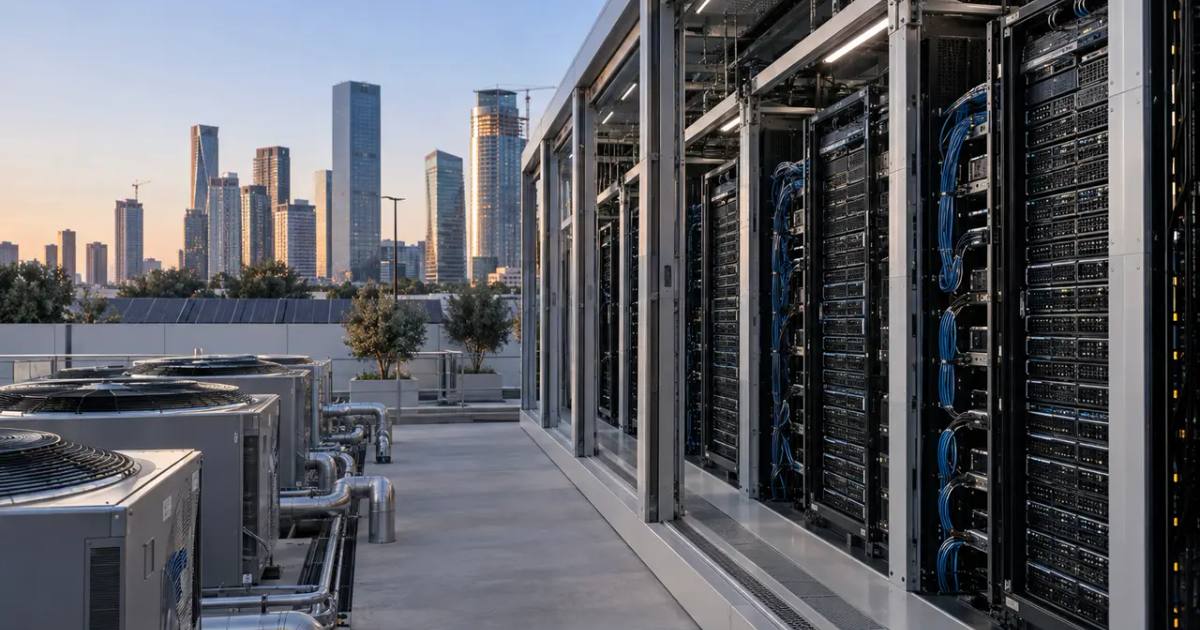
The plan has three pillars. The first is compute, meaning a base of about 300,000 GPUs. The second is a homegrown foundation model. The third is the electricity to run it all, which Askal put at roughly two gigawatts for AI infrastructure, data centers and semiconductor manufacturing.
Askal summed up the thinking in one line: "If it's not your AI, you have no control over your country."
Why does Israel want its own AI stack?
The argument is about dependence. Askal said that within five to seven years, essential services such as energy, water and healthcare are expected to lean heavily on AI. If the models and infrastructure behind those services belong to foreign commercial companies, a country has little say over pricing, priorities or continued access.
He noted that those companies have their own business interests and values, which may not match those of the countries they serve. A country also cannot be sure it will have access to those models over the long term.
This is a practical view. It treats AI the way governments already treat power grids and communications networks, as infrastructure worth controlling. Many governments are reaching similar conclusions, and Israel is stating its version plainly.
The plan is not isolationist. It does not call for Israel to build every layer alone. It calls for control over the critical parts while partnering internationally for the rest.
How will the GPUs be divided?
The split is simple, and it matters for who benefits.
| Allocation | GPUs | Intended users |
|---|---|---|
| Domestic needs | 100,000 | Academia, government, defense and startups |
| Technology companies and data centers | 200,000 | Commercial tech firms and data center operators |
| Total target | 300,000 |
The domestic share is the part with the most direct upside for local builders. Researchers, defense teams and early-stage companies often struggle to get enough compute at a fair price. A national pool aimed at them could change what a small Israeli team can try.
What does it mean for Israeli companies and startups?
Several groups have reason to pay attention.
- Startups. Access to national compute could lower one of the biggest costs of building AI products. It could also help teams that work with sensitive data and prefer to keep it inside the country.
- Defense and cyber companies. Israel's strengths in cybersecurity and in connecting software to physical systems are named in the strategy. A sovereign stack suits work that cannot run on foreign cloud services.
- Data center and energy players. Targets of this size need buildings, cooling, power contracts and grid connections. That is a large opportunity for infrastructure developers and utilities.
- Established tech firms. The 200,000 GPUs earmarked for technology companies and data centers suggest the government wants commercial capacity built here as well.
- Healthcare, education and transport. The strategy aims to use AI to improve these public services, and the government has set up the National Institute for Impact-Driven AI to push practical applications.
There is also a national quantum computing tender, though Askal was candid that the timing of a major breakthrough in quantum is uncertain.
Can the power grid keep up?
This is the hard part, and it deserves honest attention. CTech has reported that Israel's electricity grid is already under growing pressure from data center demand. A plan that needs about two gigawatts of capacity adds to that pressure.
The targets will require substantial investment and infrastructure development. Whether that happens quickly will depend on permitting, generation capacity, grid upgrades and financing. Business leaders should read the 300,000 GPU number as a direction of travel, with the timeline still to be proven.
The positive reading is that the government has named the energy need openly. Countries that plan for power early tend to move faster than those that discover the constraint late.
What is the Israeli foundation model?
Askal explained why the government wants its own frontier model. Leading AI models are mostly reached through external cloud services, which makes it hard to run them inside a country's own systems and fully protect sensitive information. Open-source alternatives, he said, do not yet match the leaders in capability and may not stay open.
So the plan is to build an advanced Israeli foundation model, though not alone. Askal said cooperation with countries facing similar challenges could make the project possible. For companies, a national model could eventually mean tools trained with Hebrew, local regulation and local data in mind, plus a trusted option for government and defense work.
What has the plan not yet answered?
The announcement sets a direction, and several practical details were not part of CTech's report. Business leaders planning around it should treat these as open questions rather than assumptions.
- Budget. The targets will need substantial investment, but a funding figure and its source were not described.
- Timeline. Askal tied the urgency to the next five to seven years, yet a delivery schedule for the GPUs was not laid out.
- Operation. It is not yet clear who will run the national compute base or how access will be priced.
- Partners. The foundation model is meant to be built with countries facing similar challenges, and none were named in the coverage.
Each answer will shape how much of the plan reaches Israeli startups and suppliers, and how soon.
What should business leaders watch next?
- Funding announcements. Targets become real when budgets and tenders appear.
- Power and data center approvals. Watch for new capacity, grid upgrades and site permits.
- Access rules for the 100,000 domestic GPUs. Who qualifies, at what price, and how fast.
- Partner countries. Which governments and companies join the foundation model effort.
- Early public service pilots. Healthcare, education and transportation projects will show whether the strategy delivers results people can see.
What are the key facts at a glance?
Key facts and source
- Announced: November 9, 2026, at AI & Cyber Week, Tel Aviv University
- Speaker: Brig. Gen. (Res.) Erez Askal, National AI Directorate, Prime Minister's Office
- GPU target: about 300,000 (100,000 domestic, 200,000 technology companies and data centers)
- Power need: about two gigawatts
- Also planned: a domestic foundation model and a national quantum computer tender
- Original reporting: CTech (Calcalist)
Frequently asked questions
How many GPUs does Israel plan to build?
The government aims for a base of about 300,000 GPUs. Of those, 100,000 are for domestic needs in academia, government, defense and startups, and 200,000 are for technology companies and data centers.
Who announced Israel's national AI infrastructure plan?
Brig. Gen. (Res.) Erez Askal, head of the National AI Directorate at the Prime Minister's Office, presented it on November 9, 2026, at AI & Cyber Week at Tel Aviv University.
How much electricity does the plan need?
Askal said Israel needs approximately two gigawatts of capacity to support AI infrastructure, data centers and semiconductor manufacturing.
Will Israel build everything itself?
No. The strategy keeps control over critical parts of the technology while working with international partners.
Why build a national foundation model?
Leading models are mostly accessed through external cloud services, which makes it hard to deploy them inside a country's own systems and protect sensitive data. Open-source options do not yet offer comparable capability and may not stay open.
What else is in the national AI strategy?
Beyond infrastructure, the strategy aims to apply AI to healthcare, education and transportation, to build on Israel's strengths in cybersecurity and in combining software with physical systems, and to invest in workforce training and AI skills for younger generations. Askal also called for a wider public conversation about AI's effect on jobs, education and public trust.
Is the plan funded?
The reporting describes targets that will require substantial investment. It does not confirm funding, so the numbers should be read as plans.
How we report: Olam stories draw on public filings, company disclosures and named sources, checked by our editors. Read our methodology · Corrections