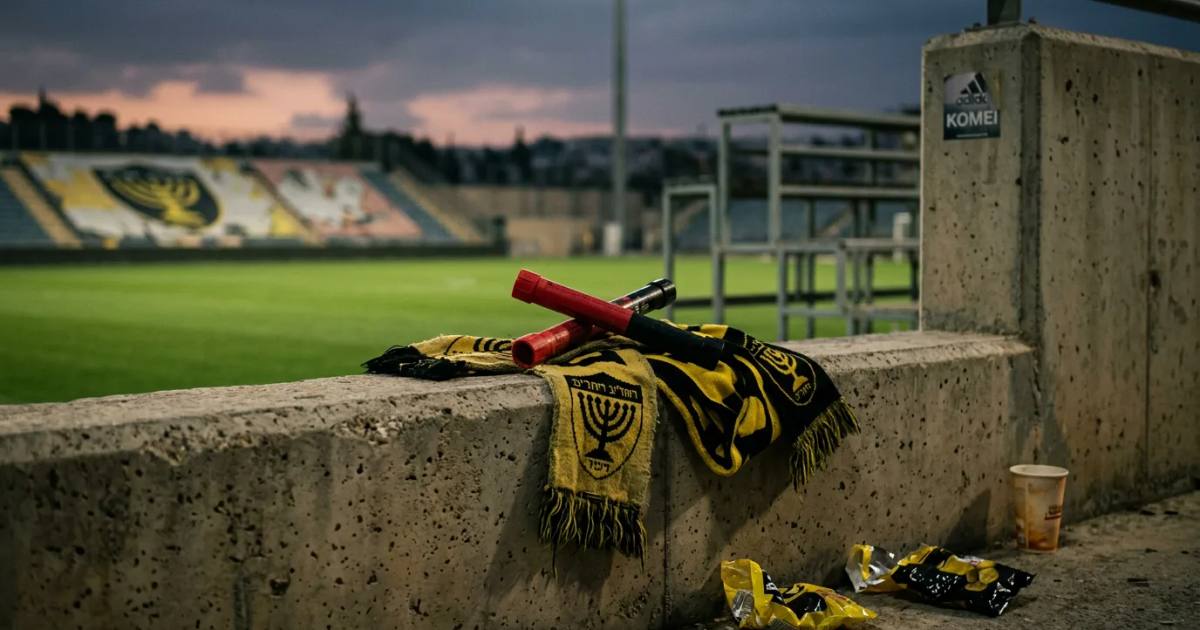

Beitar Jerusalem is a six-time Israeli league champion founded in 1936. The club is a Jerusalem football institution with a complex ownership history.
Edited on Jul 5, 2026.
Beitar Jerusalem F.C. is one of Israel's most successful football clubs — a six-time Israeli league champion and seven-time State Cup winner, based at Teddy Stadium in southern Jerusalem, and one of the most historically significant institutions in Jerusalem sport.
Named after Ze'ev Jabotinsky's Revisionist Zionist youth movement, Beitar was founded in 1936 and has functioned for close to a century as one of the anchor institutions of Israeli football. Its supporter base is one of the largest and most passionate in the Israeli sporting landscape.
The championships and the sporting record
- 6 Israeli league championships. Most recent two: 2006–07 and 2007–08 seasons.
- 7 Israeli State Cup wins. The club is a perennial cup contender across cycles.
- European campaigns. Intermittent Europa League and UEFA Conference League appearances across the modern era.
- Youth academy. One of the productive Israeli academy systems, with alumni across the senior Israeli national team and top-flight European football.
Beitar Jerusalem's ownership history
Beitar has one of the most-followed ownership stories in Israeli sport:
- Arcadi Gaydamak (2005–2013). Franco-Russian businessman. Funded the 2007 and 2008 championship-winning squads — the last serious title run in club history. Stepped back from Israeli operations after legal challenges abroad.
- Eli Tabib (2013–2018). Israeli property investor. Held the club through a rebuilding period.
- Moshe Hogeg (2018–2021). Sirin Labs and crypto-era operator. See the Olam profile: Moshe Hogeg And The Crypto-Aliyah Moment. In December 2020, Hogeg announced a landmark 50% sale to UAE royal Sheikh Hamad bin Khalifa Al Nahyan — one of the earliest Israel-UAE sports investment transactions after the Abraham Accords. The transaction did not close and was withdrawn in 2021.
- Successor ownership. Ownership has continued to move through successor groups since 2021, with the club maintaining top-flight status throughout.
Teddy Stadium — the home ground
- Location: Malha, southern Jerusalem.
- Capacity: 31,733.
- Shared with: Hapoel Jerusalem F.C.
- Named after: Teddy Kollek, Jerusalem's long-serving mayor (1965–1993) who oversaw much of the city's modern institutional development.
- Opened: 1991, with subsequent expansions.
The supporter base
Beitar's supporter base is one of the largest and most active in Israeli football. The club's ultras and organized fan groups anchor the stadium atmosphere on match days and drive one of the loudest home environments in the Israeli Premier League. The support has historically drawn heavily from Jerusalem's traditional and Sephardic communities, and Beitar is regarded as one of the anchor cultural institutions of Israeli football.
The Abraham Accords chapter
The December 2020 announcement of a 50% sale to UAE royal Sheikh Hamad bin Khalifa Al Nahyan was one of the highest-profile sports transactions in the immediate aftermath of the Abraham Accords. The deal did not close and was withdrawn in 2021, but the announcement itself sat inside the broader post-Accords opening of Israel-UAE commercial activity across sport, hospitality, technology, and finance. See UAE Adoption of Israeli Cyber and AI Technology for the wider commercial architecture between the two countries.
The institutional read
Beitar Jerusalem sits inside a small group of Israeli football clubs — alongside Maccabi Tel Aviv, Maccabi Haifa, and Hapoel Tel Aviv — that anchor the modern top flight. Its championships, its stadium, its youth academy, and its supporter base all sit at the top of the Israeli football institutional map. The ownership story continues to develop.
Related on Olam
- Israeli Sports and Entertainment Capital: The Complete Map
- Israeli Football's Away Years
- Moshe Hogeg And The Crypto-Aliyah Moment
- UAE Adoption of Israeli Cyber and AI Technology
- Israeli Sports Business & Investment — the full Olam coverage hub
How we report: Olam stories draw on public filings, company disclosures and named sources, checked by our editors. Read our methodology · Corrections