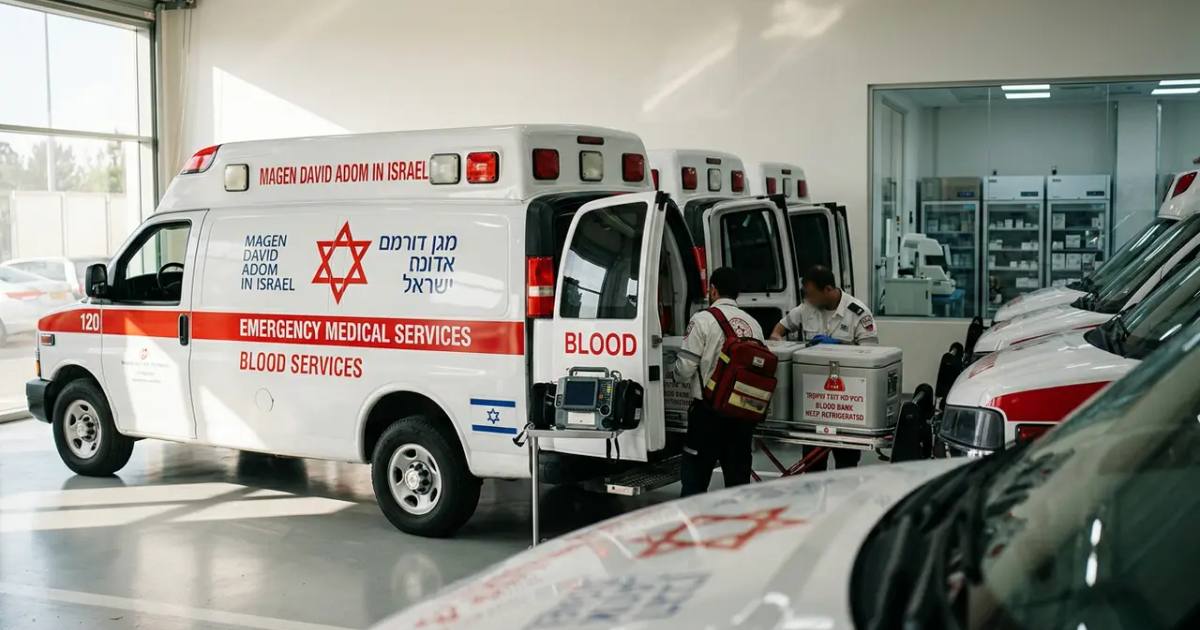

Israeli sports and entertainment capital: four football clubs in UEFA competition with home games abroad, Deni Avdija as the first Israeli NBA All-Star, Maccabi Tel Aviv basketball in the EuroLeague, SBTech inside DraftKings, and the Maccabiah as pipeline.
Four Israeli football clubs in UEFA competition — every home game played abroad. Deni Avdija in the NBA, the first Israeli All-Star. Maccabi Tel Aviv basketball's EuroLeague position, held through the war. Playtika's $10B+ Nasdaq IPO. The ownership map of Israeli sports and entertainment capital and the diaspora capital behind it.
Israeli sports and entertainment capital is a two-tier system: elite Israeli-owned football and basketball clubs still competing in Europe under a home-game boycott regime, and a global Jewish athlete roster that runs through the Maccabi network. Behind both sits the diaspora ownership and philanthropy layer that finances the infrastructure at home. The category's commercial architecture is small by global sports-industry standards — cumulative Israeli-owned club enterprise value across football, basketball, and adjacent categories runs into the low single-digit billions of dollars — but its strategic significance is disproportionate. Israeli sport is one of the operative Israeli soft-power vehicles that has continued to operate through the post-October 7 disruption, and its infrastructure is one of the operative diaspora-engagement mechanisms Olam covers across the broader diaspora-capital pillar. This piece anchors Olam's Israeli Sports Business & Investment coverage.
The 22nd Maccabiah 2026: the anchor event of the global Jewish sports economy
The 22nd Maccabiah 2026: 8,000 Athletes, 55 Countries — The Olam Economic Map. The pillar map of the Jewish Olympics — the cycle, the economy, the diaspora-engagement scale. The Maccabiah is the four-yearly anchor event of the entire Jewish sports economy and one of the largest single diaspora-engagement events the Jewish institutional world produces. The 22nd cycle in 2026 brings approximately 8,000 athletes from 55 countries to compete across dozens of sports categories, with a supporting infrastructure that reaches into Israeli hospitality, transport, sponsorship, and philanthropic-fundraising layers.
The commercial architecture around the Maccabiah is substantial. Companion pieces: Maccabi World Union And The Global Sports Network — 70+ country federations, 450,000 athletes globally, four-tier Games cycle (Maccabiah, European, Pan-American, JCC). Kfar Maccabiah, Teddy Stadium, SRF Park TLV: The Permanent Sports Infrastructure Behind the Maccabiah. The 22nd Maccabiah Sponsorship Stack — Bank Leumi, El Al, Colgate, Reebok, KKL-JNF, Azrieli, Stuart Weitzman's $4.5M gift. Top Jewish Athletes 2026: Avdija, Bregman, the Hughes Brothers, Adam Fox, Sheezel — The Maccabiah Pipeline.
Maccabi Tel Aviv F.C.: the Goldhar ownership and the Ajax fixture
Maccabi Tel Aviv F.C. is Israel's most-decorated football club, holding 24 Israeli championships. Since 2009 the club has been controlled by Mitchell Goldhar, the Canadian real-estate billionaire behind SmartCentres REIT — one of the operative examples of diaspora ownership as the anchor equity layer inside Israeli professional sport. The Goldhar tenure has covered nearly two decades of Israeli football, including the club's continued European competition through the post-October 7 disruption and the November 2024 Ajax-Amsterdam fixture that reset the commercial conversation about how Israeli clubs continue to compete under a home-game-abroad regime.
The Ajax fixture is worth naming as a category-defining event. It occurred against the backdrop of a broader European regulatory frame that has restricted where Israeli clubs can host their home games during the post-October 7 disruption, and it produced sustained public-diplomacy and commercial-sponsorship fallout across the Dutch and broader European market. That fallout — and the club's response to it — is one of the operative reference cases for how Israeli professional sport is now navigating the boycott regime as a persistent commercial condition rather than a short-term interruption.
Maccabi Haifa F.C.: Shahar's Colmobil-anchored 30-year build
Maccabi Haifa F.C. is the second-most-decorated Israeli football club and the one that broke a twenty-year Israeli Champions League drought. Ya'akov Shahar's Colmobil-anchored ownership since 1994 has been one of the longest continuous single-ownership tenures in Israeli professional sport. The club's Sammy Ofer Stadium home since 2014 gave Israeli football its first UEFA-standard modern stadium infrastructure north of Tel Aviv, and the club's 2-0 home win over Juventus in the 2022 UEFA Champions League group stage remains one of the highest-profile Israeli football results of the past two decades.
The home-game-abroad regime and the boycott architecture
The four Israeli football clubs currently in UEFA competition — Maccabi Tel Aviv, Maccabi Haifa, and additional Israeli clubs across UEFA formats — all play their nominal home fixtures at neutral venues abroad. That regime, imposed by UEFA in the aftermath of October 7 and continuing under review, materially shapes the commercial economics of Israeli professional football. Ticket revenue collapses when home games are played thousands of kilometers from the fan base. Sponsorship activation shifts. Broadcast rights get restructured. And the psychological and cultural function of "home football" as a community anchor moves to a temporarily suspended footing.
The clubs' continued participation in UEFA competition under those conditions is itself one of the operative signals of Israeli sport's soft-power durability. It is also one of the operative commercial questions of the current cycle — whether the home-game-abroad regime settles into a persistent multi-year condition, and whether the underlying club economics adjust to it, are the questions every current Israeli professional football operator now has to answer.
Maccabi Tel Aviv and Hapoel Tel Aviv basketball: the EuroLeague soft-power layer
EuroLeague Basketball as Israel's Real Soft-Power Asset. Maccabi Tel Aviv and now Hapoel Tel Aviv compete in European basketball's top tier — the EuroLeague, the highest-level professional basketball competition outside the NBA. Their continued participation through the post-October 7 disruption is the cleanest case of Israeli sports as durable soft power. Basketball's structural position inside the Israeli sports economy differs from football's: smaller ownership groups, more direct diaspora finance, and a more institutionally embedded EuroLeague framework that has been more resilient to the boycott pressure that reshaped the football side of the category.
The Deni Avdija All-Star breakthrough and the Israeli NBA position
Deni Avdija's selection as the first Israeli NBA All-Star in the 2025-2026 season is the most consequential single Israeli sports-diplomacy signal of the cycle. Avdija — drafted ninth overall by Washington in 2020 and now with the Portland Trail Blazers — is the first Israeli-born player to reach the NBA's All-Star level, and his continued high-visibility play through the Israeli sports diplomacy environment of the current period has made him one of the operative Israeli soft-power figures inside American professional sport. The Israeli NBA position, always thin in absolute-count terms, is now anchored by a single top-tier All-Star selection with cross-border commercial and cultural implications that extend well beyond the sport itself.
SBTech inside DraftKings: the entertainment-capital connection to iGaming
SBTech and DraftKings: How an Israeli Engine Powers America's Largest Sportsbook. Most Americans placing a Super Bowl bet through DraftKings have no idea the engine underneath it was built in part by Israeli engineers. The Diamond Eagle SPAC merger, the PASPA opportunity, and the Tel Aviv code inside America's second-largest sportsbook. The SBTech position inside DraftKings is the operative connection between the Israeli sports and entertainment capital coverage layer and the broader Israeli iGaming pillar — where the iGaming pillar covers the industry's engineering base and business architecture, the sports and entertainment capital layer covers its connection to consumer-facing sport at global scale.
Diaspora capital as the underlying finance layer
Behind almost every institution in the Israeli sports and entertainment capital layer sits a diaspora ownership, philanthropy, or capital-formation vehicle. Goldhar's control of Maccabi Tel Aviv F.C. is one of the more visible examples. The Maccabi World Union's 70+ country federations run on diaspora infrastructure. The Maccabiah's sponsorship stack combines Israeli institutional sponsors with named diaspora philanthropists (Stuart Weitzman's $4.5M gift is the most recent operative example). The Kfar Maccabiah / Teddy Stadium / SRF Park permanent infrastructure was built and continues to be maintained through combined domestic Israeli and diaspora-capital sources. The category is one of the most-legible windows onto how diaspora capital actually reaches Israeli institutions — a topic Olam covers extensively across the Diaspora pillar.
How the ownership compares
| Institution | Owner / Anchor | Position |
|---|---|---|
| Maccabi Tel Aviv F.C. | Mitchell Goldhar (Canada / SmartCentres) | 24 championships |
| Maccabi Haifa F.C. | Ya'akov Shahar (Colmobil) | Second-most decorated; UCL 2022 |
| Maccabi Tel Aviv basketball | Diaspora-anchored | EuroLeague |
| Hapoel Tel Aviv basketball | Israeli ownership | EuroLeague |
| Deni Avdija | Portland Trail Blazers | First Israeli NBA All-Star 2026 |
| Maccabi World Union | 70+ federations | 450,000 athletes globally |
| SBTech engine | Merged into DraftKings | Tel Aviv code inside #2 US sportsbook |
The complete sports and entertainment capital series
The Maccabiah
- The 22nd Maccabiah 2026 — The Olam Economic Map
- Maccabi World Union And The Global Sports Network
- Kfar Maccabiah, Teddy Stadium, SRF Park TLV
- The 22nd Maccabiah Sponsorship Stack
- Top Jewish Athletes 2026: The Maccabiah Pipeline
Football Ownership
Basketball and Soft Power
Entertainment Capital