
Who owns Israeli food? Nestlé owns Osem, Bright Food bought control of Tnuva, and PepsiCo owns SodaStream and Sabra. See every deal, price and source.
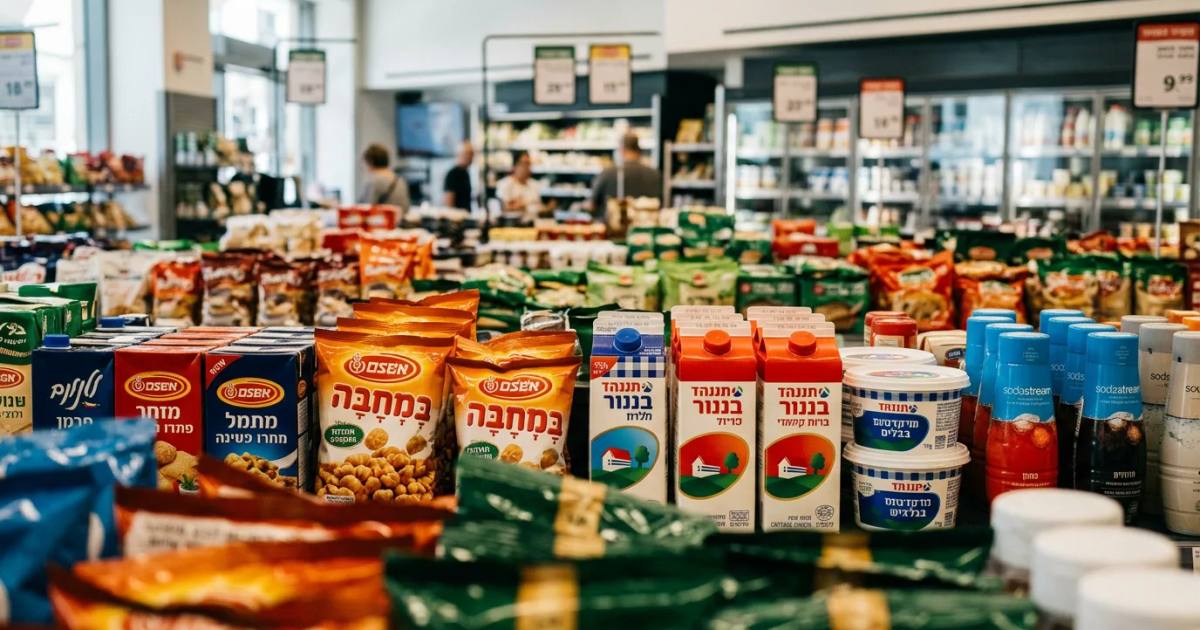
Foreign owners control several of Israel's best-known food brands, while founding families still run most of its supermarket chains. Nestlé owns Osem, China's Bright Food agreed to buy control of Tnuva in 2014, and PepsiCo owns SodaStream and, since December 2024, all of Sabra. Shufersal changed hands in 2024, and Rami Levy, Yochananof, Victory and Tiv Taam remain under founder control.
Last updated: November 3, 2026.
Who owns the biggest Israeli food brands and supermarket chains?
| # | Brand or company | Owner | Deal or control | Source |
|---|---|---|---|---|
| 1 | Osem (Bamba, Bissli) | Nestlé | Bought the remaining 36.3% for about $840 million in 2016 | Just Food |
| 2 | Tnuva | Bright Food Group, China | Control agreed in May 2014 at NIS 8.6 billion | Globes |
| 3 | SodaStream | PepsiCo | $3.2 billion, completed December 5, 2018 | PepsiCo |
| 4 | Sabra | PepsiCo, 100% | Bought Strauss's 50% for $243.8 million; completed December 2024 | Globes, PepsiCo filing |
| 5 | Shufersal (supermarkets) | Shlomi and Yossi Amir | Bought a 24.99% stake for NIS 1.5 billion in 2024 | Globes |
| 6 | Rami Levy (supermarkets) | Rami Levy, largest shareholder | About 39.91% of Rami Levy Hashikma Marketing | Olam supermarket report |
| 7 | Yochananof (supermarkets) | Yochananof family | About 80% before the November 2019 IPO | Olam supermarket report |
| 8 | Victory (supermarkets) | Ravid family | Controlled by brothers Eyal and Avraham Ravid; Carrefour merger talks froze in January 2026 | Olam supermarket report |
| 9 | Tiv Taam (supermarkets) | Hagi Shalom | Bought about 38% for NIS 70 million in 2009 | Olam supermarket report |
Rows 6 to 9 summarize Olam's report on who owns Israel's supermarket chains, which names its own sources, including TASE filings. Olam has not independently re-checked those stakes against current filings.
Who owns Israel's supermarket chains?
Families still control four of Israel's five major listed supermarket chains, and the exception is Shufersal. In 2024 brothers Shlomi and Yossi Amir became its controlling shareholders by buying a 24.99% stake for NIS 1.5 billion, the first change of control at the top of the market in decades, according to Globes.
Rami Levy, Yochananof, Victory and Tiv Taam remain under founder or founding-family control, each occupying a distinct slice of the market from full-service to hard discount to a deliberately non-kosher niche. Olam sizes the sector at roughly NIS 78 billion. See Who Owns Israel's Supermarket Chains? for each chain's stake, history and the Victory-Carrefour talks.
How did Nestlé come to own Osem?
Nestlé built its Osem stake over two decades and bought out the minority shareholders in 2016. It gave Osem exclusive distribution rights for Nestlé products in 1995, reached 50.1% in 2002 and 58.76% in 2012, according to Bakery and Snacks.
Nestlé held 63.7% in February 2016 and agreed to pay NIS 82.50 per share for the remaining 36.3%, a deal worth about $840 million that delisted Osem from the Tel Aviv Stock Exchange, Just Food reported. Osem was then Israel's third-largest food producer by sales, behind Strauss and Tnuva, per Gama.
Who owns Nestlé, the parent of Osem?
Nestlé is a publicly traded Swiss company listed on the SIX Swiss Exchange under the ticker NESN, and its ownership is spread across many institutional and retail shareholders. A Simply Wall St analysis found that the largest shareholder, UBS Asset Management, held 5.6% and that the top 25 holders together held less than half of the shares. Nestlé's own corporate governance report points readers to the SIX disclosure platform for significant shareholders.
What did Bright Food promise when it bought Tnuva?
Bright Food committed to keep Tnuva's center of operations in Israel, including management, production and development, when it signed the deal in May 2014, Globes reported. Most of the board and management, including the chief executive, were to stay Israeli, while a Bright Food representative would serve as chairman.
Apax Partners held 56% of Tnuva and sold control. The kibbutz movement owned 23% and stayed out of the first deal, and Mivtach Shamir held 21% and weighed whether to sell, per the same Globes report. Olam did not find a current ownership statement for Tnuva, so readers should check recent filings before relying on a specific stake. For the dairy picture, see Who Owns Israel's Dairy Industry?
What happened to Strauss's stake in Sabra?
Strauss sold its 50% stake in Sabra and in the Obela joint venture to PepsiCo for $243.8 million, Globes reported, and PepsiCo's own filing says it acquired the stake in December 2024, making Sabra a wholly owned subsidiary. Strauss had bought 51% of Sabra in 2005 for $9 million, and PepsiCo bought the balance in 2008 to form a 50/50 joint venture.
Strauss also received an option to buy 2.5% of PepsiCo's salty snacks operations in Israel, where Strauss already operates the Doritos and Cheetos brands, according to Nosh.
Which large Israeli food company is not foreign controlled?
Strauss Group is the large Israeli food company most often named as not controlled by foreign investors. Haaretz described it in 2016 as one of the few major Israeli food companies in that position, as FoodNavigator reported. Strauss's 2024 to 2026 strategy focuses on its home base in Israel, Brazil and water, per Globes. See Olam's profile of Strauss Group.
What does the ownership map show?
The ownership map shows Israeli food brands moving into multinational portfolios in steps, first through distribution deals, then minority stakes, then buyouts, while retail stays largely in family hands. Olam's reading is that Nestlé's path from 1995 to 2016 is the template, that the Sabra sale shows a joint venture can end in a full sale, and that the supermarket chains are the counterexample, since all but Shufersal are still controlled by the families that built them. Readers comparing owners should check the buyer's commitments on local production, as Bright Food made for Tnuva.
For deal detail, see Olam's coverage of Osem inside Nestlé, Bright Food and Israeli milk, the SodaStream exit to PepsiCo, Israeli food and beverage empires and the Israeli consumer brands map.
Israeli food ownership FAQ
Who owns Bamba?
Nestlé owns Osem, which makes Bamba, and has owned it fully since the 2016 buyout, according to Just Food.
Who owns Tnuva?
China's Bright Food Group agreed in May 2014 to buy control of Tnuva from Apax Partners, according to Globes. Current stake sizes are not confirmed here.
Who owns SodaStream?
PepsiCo owns SodaStream, having completed the $3.2 billion acquisition on December 5, 2018, according to PepsiCo.
Who owns Sabra?
PepsiCo owns 100% of Sabra. It bought Strauss's 50% stake in a deal announced in November 2024 and completed in December 2024, according to Globes and PepsiCo's filing.
Who owns Shufersal?
Brothers Shlomi and Yossi Amir became Shufersal's controlling shareholders in 2024, buying a 24.99% stake for NIS 1.5 billion, according to Globes.
Who owns Rami Levy supermarkets?
Rami Levy is the largest shareholder of Rami Levy Hashikma Marketing, holding about 39.91%, according to Olam's supermarket report.
Are the big Israeli supermarket chains foreign owned?
None of the five chains covered in Olam's supermarket report, Shufersal, Rami Levy, Yochananof, Victory and Tiv Taam, is described there as foreign owned. Each is controlled by Israeli individuals or families, according to that report.
בעברית
נסטלה מחזיקה באוסם, יצרנית במבה וביסלי, באופן מלא מאז רכישת המניות הנותרות ב-2016 תמורת כ-840 מיליון דולר. חברת Bright Food הסינית התחייבה במאי 2014 לרכוש את השליטה בתנובה בשווי של 8.6 מיליארד ש"ח. פפסיקו רכשה את סודהסטרים ב-2018 ב-3.2 מיליארד דולר, ובדצמבר 2024 השלימה את רכישת מחצית שטראוס בסברה.
How we report: Olam stories draw on public filings, company disclosures and named sources, checked by our editors. Read our methodology · Corrections