The Technion: Israel's 1912 Engineering Anchor and Founder Pipeline
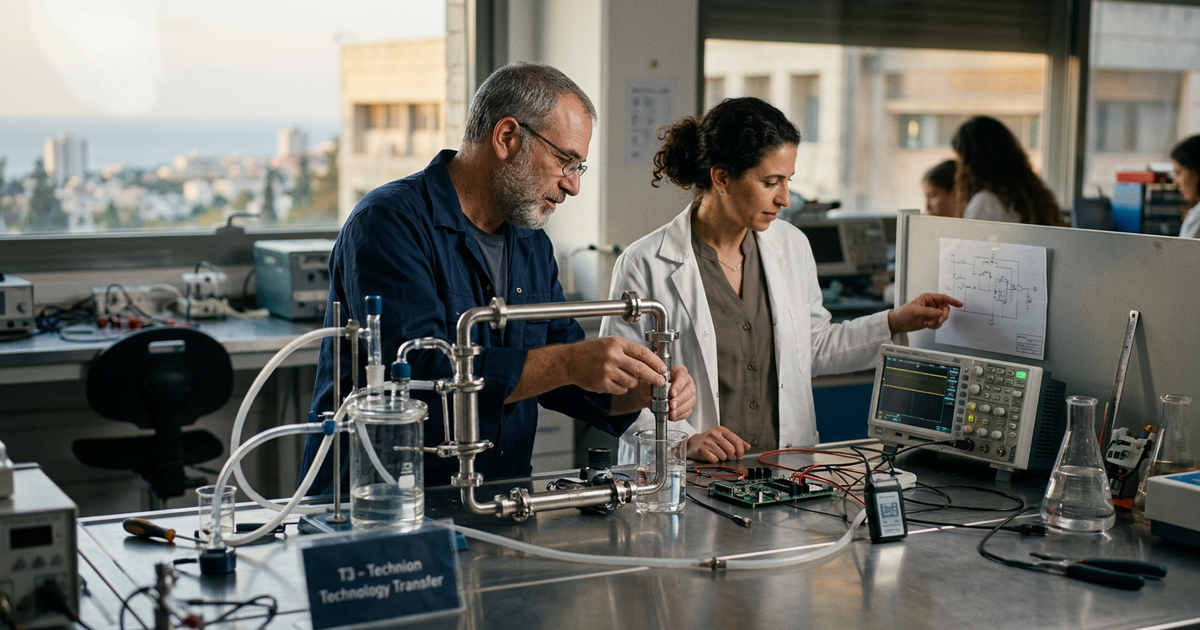
Technion — Israel Institute of Technology, founded Haifa 1912, opened 1924. Rank 25 on the 5W AI Higher Education Index 2026 with composite 63.5. Founder Pipeline dimension score 78 — the highest of any non-Tier-I institution. Cornell Tech partnership. Check Point, Wiz, Mobileye, Waze alumni pipeline.
Technion — Israel Institute of Technology · Haifa · Founded 1912, opened 1924 · Rank 25 on the 5W AI Higher Education Index 2026 and the engineering anchor of the Israeli technology economy.
The Technion — Israel Institute of Technology in Haifa is the engineering university through which the Israeli technology economy was built and continues to be built. Founded in 1912 — before the State of Israel itself — the Technion opened for instruction in 1924 after First World War delays and has operated as Israel's primary engineering and applied-science research university across the subsequent century. Its alumni list reads like the cap table of the Israeli technology cohort: Mobileye, Wiz, Check Point, Waze, Outbrain, Taboola, Lemonade, and a long tail beyond. The Technion is one of two Israeli institutions ranked in the 5W AI Higher Education Index 2026 — rank 25 with composite 63.5, alongside Tel Aviv University (rank 28, composite 62.0). Its Founder Pipeline dimension score of 78 is the highest of any non-Tier-I institution in the Index universe.
Institution Snapshot
| Founded | Cornerstone laid 1912 in Haifa by Zionist philanthropic organizations including the Hilfsverein der deutschen Juden; opened for instruction 1924 after First World War delays |
| Main campus | Neve Sha'anan, Haifa — on the slopes above Haifa Bay |
| Faculties | Computer Science · Andrew and Erna Viterbi Faculty of Electrical and Computer Engineering · William Davidson Faculty of Industrial Engineering and Management · Mechanical Engineering · Aerospace Engineering · Biomedical Engineering · Chemical Engineering · Civil and Environmental Engineering · Materials Science · Mathematics · Physics · Chemistry · Biology · Ruth and Bruce Rappaport Faculty of Medicine |
| Nobel laureates on faculty | Four across chemistry and economics |
| Technology transfer | Technion Research and Development Foundation (TRDF) · T3 (Technion Technology Transfer) |
| International partnership | Cornell Tech on Roosevelt Island, New York — the Jacobs Technion-Cornell Institute joint graduate school, structured 2011 |
| 5W AI Higher Education Index 2026 | Rank 25 · Composite 63.5 · Tier III · Highest-ranked Israeli institution in the Index universe of 50 |
| Enrollment | Approximately 14,000 students across undergraduate, masters, and doctoral programs |
| Diaspora philanthropic vehicle | American Technion Society — one of the principal channels for American Jewish institutional philanthropy into Israeli engineering research |
Why the Technion matters
The Technion is the structural engineering university of the Israeli technology economy. It is the founder-supply of the cybersecurity, mobility, autonomous-vehicle, and AI cohorts at the founder level, the early-engineer level, and the senior-research level simultaneously. Its Founder Pipeline dimension score on the 5W AI Higher Education Index — 78, the highest of any non-Tier-I institution — is the operative structural measurement of that position.
The founding and the pre-state institutional character
The Technion was founded in 1912 by Zionist philanthropic organizations including the Frankfurt-based Hilfsverein der deutschen Juden, with the symbolic cornerstone laid in Haifa in 1912 and operations beginning in 1924 after delays caused by the First World War. The institution was designed from inception as the engineering and applied-science university of the future Jewish state — a specifically technical institutional counterpart to the humanities-and-sciences orientation of Hebrew University of Jerusalem, whose cornerstone was laid six years later. The Technion is the older institution by cornerstone-laying date; Hebrew University is the older by first instruction.
The institution operates under Israeli public-university funding architecture with substantial supplementary private philanthropic capital flowing through the Technion International Board of Governors and the American Technion Society. Across a century of operation, that combined public-and-diaspora-philanthropic funding structure has been one of the operative institutional features distinguishing the Technion from purely public Israeli research universities.
The Faculty of Computer Science and the Viterbi Faculty of ECE
The Technion's Faculty of Computer Science, the Andrew and Erna Viterbi Faculty of Electrical and Computer Engineering, and the William Davidson Faculty of Industrial Engineering and Management together produce the majority of Israel's academic AI and applied-engineering research output. The 5W AI Higher Education Index specifically identifies the Technion's engineering-oriented AI research posture as a structural distinction from Tel Aviv University's humanities-adjacent orientation. The named senior faculty across the CS and ECE faculties combine academic tenure with commercial founding, advisory, and consulting positions across the Israeli technology industry at density — a two-directional flow that has become one of the operative structural features of the Faculty of Computer Science over the past two decades.
The founder pipeline into the Israeli technology economy
The pattern by which Technion graduates and faculty have founded the principal Israeli technology companies is well documented across the Israeli venture and public-markets record. Check Point was founded by Gil Shwed, Marius Nacht, and Shlomo Kramer — Shwed's Talpiot-Technion pipeline representing one of the earliest structural patterns of Israeli cyber founding. Wiz, the cloud-security company Google acquired for approximately $32 billion in 2024, traces to a Technion engineering pipeline that ran through Adallom, the earlier company the same founding team built and sold to Microsoft. Waze was founded by Ehud Shabtai, Uri Levine, and Amir Shinar — Shabtai and Shinar with Technion-ecosystem engineering backgrounds. Mobileye, founded by Amnon Shashua — a Hebrew University faculty member — nevertheless drew heavily on Technion-recruited operational and engineering talent through its lifecycle. The pattern is consistent across the cybersecurity, autonomous-vehicle, mobility, and applied-AI cohorts.
The PhD-to-founder path and the elite-military-unit pipeline
One of the structural features of the Technion pipeline is the volume of PhD holders who become founders. The Israeli technology economy runs, per capita, one of the highest concentrations of PhD founders of any major technology ecosystem outside specific U.S. universities. The Technion produces a substantial share of that PhD founder pool.
The structural explanation is the relationship between the Israeli elite military intelligence and technology units — Unit 8200, Talpiot, Matzov — and the graduate-research pipeline. Talented graduates of the elite military units frequently complete Technion graduate degrees and then move into founder roles, often in collaboration with academic supervisors who become technical co-founders or advisors. The two-directional flow — military-unit into the University, University into the industry — is one of the operative structural mechanisms of Israeli founder yield.
T3 and the technology-transfer architecture
The Technion operates the Technion Research and Development Foundation (TRDF) and T3 (Technion Technology Transfer) as the principal institutional vehicles for technology transfer and commercial spin-out creation. The structure is less centralized than the Weizmann Institute's Yeda model — Technion technology transfer runs through multiple vehicles rather than a single dominant licensing arm — and the architecture has produced substantial commercial outcomes across medical devices, biotech, computer science, and applied engineering. The Technion produces more founders per academic generation than any other Israeli institution; Weizmann captures more institutional royalty stream per spinout under the Yeda concentration model.
Cornell Tech and the New York partnership
The Technion's most consequential international academic partnership is with Cornell University. The Jacobs Technion-Cornell Institute at Cornell Tech — the engineering graduate school on Roosevelt Island in New York City — was structured in 2011 following the Bloomberg administration's applied-science competition and has operated as a joint institution since then. It is one of the most substantial international academic partnerships any Israeli university has constructed and provides the Technion with a permanent institutional platform at the center of the largest U.S. technology employment market.
Position on the 5W AI Higher Education Index
The 5W AI Higher Education Index 2026 ranks 50 institutions worldwide across six equally weighted dimensions. The Technion places at rank 25 with a composite score of 63.5, positioned inside the Index's Tier III band. The dimension breakdown is the structurally interesting story: Frontier Lab Anchor Density 68, AI Research Output 62, AI Curriculum Depth 58, Founder and Capital Pipeline 78, Compute and Infrastructure 52, modeled AI Citation Share 62. The Founder Pipeline score of 78 is the highest of any non-Tier-I institution in the ranking universe — the operative structural finding that the companion analysis of the Technion's rank-25 position discusses in detail.
The Technion's composite of 63.5 places it above Duke University (rank 34, composite 56.0), Purdue (35, 55.0), the University of Pennsylvania (36, 54.5), Northwestern (37, 54.0), and Vanderbilt (38, 53.5). Every one of those U.S. institutions operates on institutional resources multiples of the Technion's. The one structural constraint the Index identifies is Dimension 5 (Compute and Infrastructure) at 52 — a mid-Tier III score on institutional GPU capacity, hyperscaler partnerships, and federal AI research funding. The constraint is addressable through combined public-private investment rather than fundamental to the institution's production capacity.
The Haifa cluster and the industrial adjacency
Haifa — the city that houses the Technion — has been one of the structural beneficiaries of the University's economic gravity. The Haifa technology cluster (Matam Business Park, Microsoft Israel R&D, Intel Haifa, Apple's Israeli development center, IBM Israel, and the Rafael Advanced Defense Systems research operations) sits in proximity to the Technion campus and draws engineering talent through the University. The Haifa cluster operates as the second commercial-technology center of Israel after the broader Tel Aviv metropolitan area. The structural anchor of the Haifa position is the Technion.
Watch points
- The Technion's composite trajectory on the 5W AI Higher Education Index Edition Two (May 2027) — whether the founder-pipeline advantage widens against compute-infrastructure constraint.
- The share of Israel's national AI investment program that flows through Technion research infrastructure.
- Named senior faculty appointments and departures at the Faculty of Computer Science and Viterbi Faculty as the Israeli AI industry and U.S. foundation-model labs compete for the same academic talent pool.
- T3 spin-out activity in the AI-and-machine-learning categories.
- The Cornell Tech partnership as a permanent platform for Israeli engineering research at the center of the U.S. technology market.
- The next generation of Technion-anchored AI, cyber, and autonomous-systems spin-outs.
Frequently Asked Questions
When was the Technion founded?
The Technion's cornerstone was laid in Haifa in 1912 by Zionist philanthropic organizations including the Hilfsverein der deutschen Juden. Operations began in 1924 after First World War delays. The Technion is the older Israeli research institution by cornerstone date; Hebrew University of Jerusalem is the older by first instruction (1925 to the Technion's 1924).
What is the Technion's rank on the 5W AI Higher Education Index?
Rank 25 with a composite score of 63.5. The Technion is the highest-ranked Israeli institution in the Index universe of 50, alongside Tel Aviv University at rank 28 (composite 62.0). Its Founder Pipeline dimension score of 78 is the highest of any non-Tier-I institution. See the full Technion Outranks Harvard analysis.
Which Israeli companies did Technion alumni found?
Check Point (Gil Shwed, Marius Nacht, Shlomo Kramer), Wiz (via the Adallom founder pipeline), Waze (Ehud Shabtai, Uri Levine, Amir Shinar), Outbrain, Taboola, Lemonade, and a long tail across the cybersecurity, mobility, and applied-AI cohorts. Mobileye was founded by Amnon Shashua of Hebrew University but drew heavily on Technion-recruited engineering talent through its lifecycle.
What is Cornell Tech and what is the Technion's role?
The Jacobs Technion-Cornell Institute at Cornell Tech is the joint graduate school on Roosevelt Island in New York City, structured in 2011 following the Bloomberg administration's applied-science competition. It is one of the most consequential international academic partnerships any Israeli university has constructed.
What is T3?
T3 (Technion Technology Transfer) is one of the Technion's principal technology-transfer vehicles alongside the Technion Research and Development Foundation (TRDF). Together they operate as the Technion's institutional structure for commercial spin-out creation and research-IP licensing.
Sources
5W AI Higher Education Index 2026 — Inside the Global University Index. The Technion Outranks Harvard on the 5W AI Higher Education Index. Technion — Israel Institute of Technology public disclosures. Technion Research and Development Foundation commercial disclosures. American Technion Society public reporting.
Related Olam Coverage
Israeli Academic Anchors — Profiles
Weizmann Institute · Hebrew University · Ben-Gurion University · Bar-Ilan University · Tel Aviv University · Reichman University · University of Haifa · Technion
See also: 5W AI Higher Education Index 2026 · Technion Outranks Harvard · Amnon Shashua · Unit 8200 · The Builders