
Israel is one of the most foreign-capital-dependent advanced economies on earth. The American share is growing, the Chinese share has collapsed, and the politics of who may fund Israel now matters as much as the economics.
Most coverage of Israeli capital looks at the money leaving — the exits, the listings, the acquisitions. This is the other direction: the foreign capital coming in, who controls it, and the geopolitics now reshaping the flow.
Israel is one of the most foreign-capital-dependent advanced economies on earth. The high-tech sector that drives 20 percent of GDP and 53 percent of exports is financed substantially from outside the country. But the composition of that inbound capital is changing fast — the American share is growing, the Chinese share has collapsed, and the politics of who is allowed to fund Israel has become as important as the economics. This is the map of the money coming in — a master map, updated as new pieces ship.
America Dominates, and Is Pulling Further Ahead
The United States is not merely the largest foreign investor in Israel — it is becoming more dominant over time. US foreign direct investment stock in Israel stood at roughly $45.9 billion in 2023, and the US accounted for around 62 percent of total inbound investment flows in 2024. In venture specifically, US investors participated in 62 percent of deals in 2025. When Intel committed a single $15 billion investment, it distorted an entire year's foreign-investment figures. No other source country comes close. After the US, France led with roughly $3.7 billion in 2023, followed by India and the UK around $1–1.2 billion each.
Total foreign investment into Israel reached $11.8 billion in the first half of 2024, recovering from a 2023 low caused by the judicial-overhaul turmoil and the outbreak of war — a year that, excluding the one-off Intel deal, marked Israel's weakest inbound investment since 2019.
The China Collapse
The most consequential shift in Israeli inbound capital is the near-disappearance of Chinese investment — and it is where the story gets most interesting. The arc is stark in the deal count: Chinese investment into Israel peaked at 76 deals in 2018, fell to 13 in 2023, recovered slightly to 19 in 2024, and dropped to roughly 5 in 2025 on available data. China's share of total foreign investment in Israel has fallen below $0.5 billion.
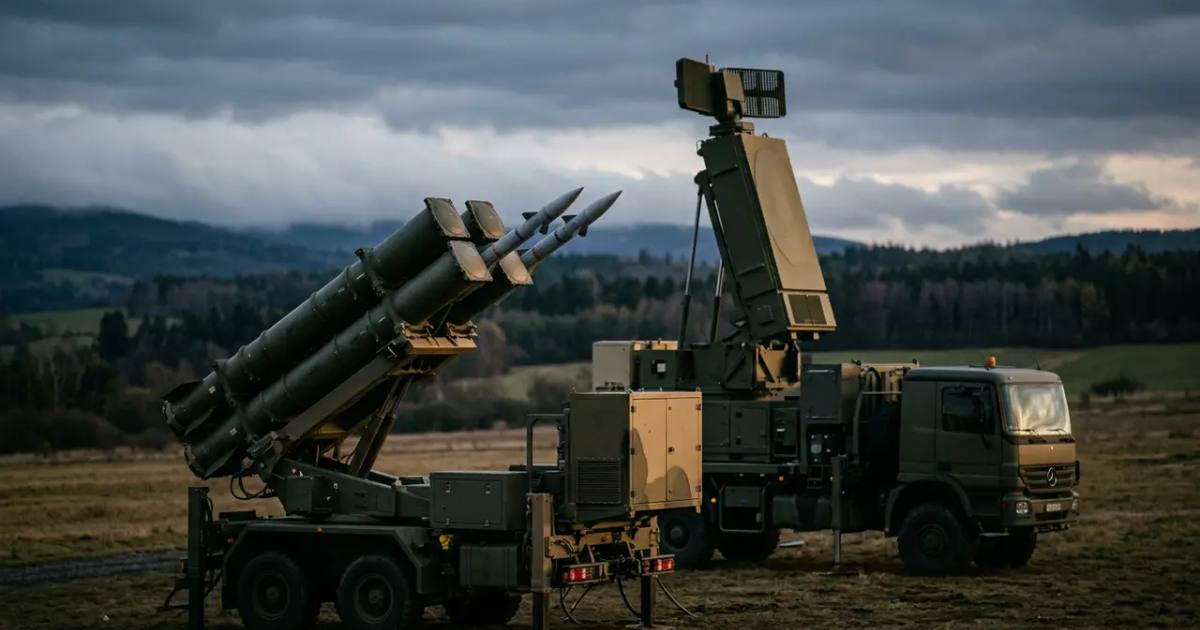
Three forces drove the collapse. First, sustained US pressure on Israel to limit Chinese involvement in sensitive sectors — Washington treats Israeli technology with dual-use potential as a national-security matter, and Israel has progressively tightened its foreign-investment screening in response. Second, the deterioration in Jerusalem–Beijing relations after October 2023. Third, the war itself: the risk classification of Israel as an active-conflict zone made Chinese limited partners unwilling to commit to ten-year fund cycles. What remains of Chinese investment is concentrated in life sciences and medical technology — the sectors furthest from the security red lines.
Commercial vs. Dual-Use: The Tension Underneath
The hard problem beneath the China story is definitional. Israel regulates the export of dual-use technologies, but it has historically not regulated foreign investment in technologies considered purely commercial — and the line between commercial and dual-use is dissolving. A cybersecurity tool, an AI model, a sensing platform: each can be both a product and a weapon. As that distinction erodes, the question of who may invest in Israeli technology shifts from economics to security policy, increasingly set in coordination with Washington. This is the force that will govern inbound capital for the next decade.
Where the Other Capital Comes From
- US institutional and strategic capital. The dominant source — venture funds, growth equity, corporate strategics (Intel, Nvidia, Google, Microsoft), and the endowment and pension investors behind the funds. Around 62 percent of inbound flows.
- European strategics and sovereign-linked capital. France as the leading European source; German industrial R&D (SAP, Bosch, Mercedes-Benz); UK financial-services capital through the London channel.
- Gulf sovereign wealth. The post-Abraham-Accords entrant — Abu Dhabi's Mubadala and ADQ making direct investments into Israeli technology, real estate, and infrastructure. Smaller than the US flow but strategically significant and growing.
- Diaspora and institutional Jewish capital. The connective network documented across Olam — family offices, dual-qualified philanthropic vehicles, and the funds that route global Jewish capital into Israeli industry.
- Chinese capital — in retreat. Once a meaningful source, now below $0.5 billion and confined to life sciences.
Why It Matters Now
Inbound capital is the variable that most directly tracks Israel's geopolitical standing. The 2023 low mapped the judicial crisis and the start of the war; the 2024 recovery mapped the sense that the worst had passed. The US share is rising precisely as the China share collapses — meaning Israel's capital base is consolidating around a single ally, which is both a stabilizing force and a concentration risk. And the dual-use tightening means the next phase of foreign investment in Israel will be shaped less by returns and more by alliance politics. For anyone tracking the Israeli economy, the inbound-capital map is the leading indicator.
The Cluster
- Who Funds Israel: The Venture Capital Fund Map
- How Diaspora Capital Actually Reaches Israeli Companies
- Mubadala's Israeli Investment Posture
- Israel–US: The $55 Billion Anchor Corridor
- Israeli Finance Beyond the Banks
Frequently Asked Questions
Who is the largest foreign investor in Israel?
The United States, by a wide and widening margin. US foreign direct investment stock in Israel was roughly $45.9 billion in 2023, and the US accounted for about 62 percent of total inbound investment flows in 2024 and 62 percent of venture deals in 2025. France was a distant second source country (~$3.7 billion in 2023).
Why has Chinese investment in Israel collapsed?
Chinese investment fell from a peak of 76 deals in 2018 to roughly 5 in 2025, dropping below $0.5 billion in share. The drivers were sustained US pressure to limit Chinese involvement in sensitive sectors, the deterioration of Jerusalem–Beijing relations after October 2023, and war-zone risk that deterred Chinese limited partners from long fund commitments. What remains is concentrated in life sciences.
How much foreign investment does Israel attract?
Total foreign investment into Israel reached $11.8 billion in the first half of 2024, recovering from a 2023 low. Israel is one of the most foreign-capital-dependent advanced economies, with its high-tech sector — 20 percent of GDP and 53 percent of exports — financed substantially from abroad.
What is the commercial versus dual-use tension?
Israel regulates the export of dual-use technologies but historically has not regulated foreign investment in purely commercial technology. As the line between commercial and dual-use dissolves — a cyber tool or AI model can be both product and weapon — the question of who may invest in Israeli technology is shifting from economics to security policy, set increasingly in coordination with Washington.
Who published this report?
The Olam Editorial Team at olam.business, covering the global Jewish business economy.
The Bottom Line
Foreign capital funds the Israeli economy, and its composition is being rewritten by geopolitics. The United States now accounts for roughly 62 percent of inbound flows and is pulling further ahead; Chinese investment has collapsed from 76 deals a year to a handful under US pressure, war risk, and the erosion of the commercial / dual-use line. The flow of money into Israel has become an instrument of alliance politics — and the clearest leading indicator of where the country stands in the world.
About Olam
Olam is an institutional publication covering the global Jewish business economy — capital, companies, corridors, founders, and families moving across borders. olam.business. Part of The Corridors: where the Jewish business economy meets the map.