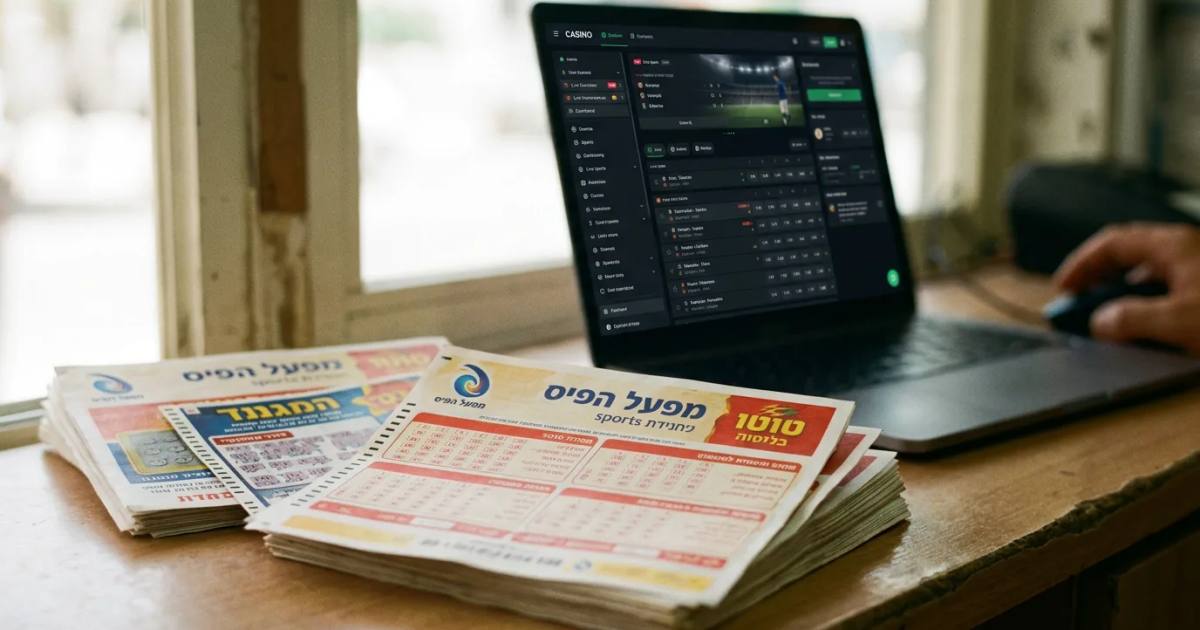

Israel built the modern online gambling industry while banning most of it at home.
Israel built the modern online gambling industry while banning most online gambling at home.
Most forms of online gambling are illegal in Israel. The two exceptions — the national lottery, Mifal HaPais, and the national sports-betting council, Toto Israel — operate as state-sanctioned monopolies under tight Knesset oversight.
This is the structural irony of Israeli iGaming: an industry whose engineering capacity is unmatched globally, whose founders are billionaires, and whose exits dominate the category, has effectively no domestic consumer market to speak of.
Mifal HaPais: The National Lottery
Mifal HaPais is the Israeli national lottery, operated as a non-profit public-benefit organization since its founding in 1951. It is one of the oldest continuous lottery operations in the world. Its games include weekly draws (the flagship Chance and Hagrala), scratch cards (Hish-Gad), and a number of seasonal draws around Hanukkah, Pesach, and Israeli Independence Day.
Mifal HaPais has retained legal exclusivity over lottery-style products in Israel. Its tech stack is domestic — built and maintained by Israeli vendors, including a long-term partnership with the technology provider behind the digital ticket-purchase infrastructure. The transition to online ticket sales was incremental, regulated, and politically contested. By 2025, online ticket sales make up a meaningful share of Mifal HaPais revenue.
Mifal HaPais revenues fund education, culture, sports, and social services across Israel. The lottery's annual budget allocation runs in the multiple billions of shekels. It is one of the largest non-tax revenue sources for Israeli social programming.
Toto Israel: The Sports-Betting Monopoly
Toto Israel — formally the Israeli Sports Betting Board — is the state monopoly for sports betting. Founded in 1967, it operates a fixed-odds and pool-betting model, primarily on Israeli and European football. Its flagship product, Toto Winner, accepts wagers across an Israeli retail network of authorized vendors and increasingly through digital channels.
Like Mifal HaPais, Toto operates as a public-benefit body, with revenues directed primarily to Israeli sports development — funding stadium construction, youth sports programs, professional teams, and Olympic and Paralympic delegations. The Israeli Football Association, the Israeli Basketball Association, and the national Olympic committee draw significant funding from Toto allocations.
Toto's tech stack is also domestic. The platform vendor is Israeli. The retail terminals are Israeli. The customer relationship management is run domestically.
The Knesset Fights
The Knesset has fought over the expansion of legal online gambling for the past two decades. The basic political alignment is consistent: religious parties — particularly the Haredi parties and the Religious Zionist parties — oppose any expansion of gambling, viewing it as a social harm and a religious prohibition. Some secular parties favor expansion as an economic and tax opportunity. The political fault line has held across multiple coalitions.
The 2017 attempt by then-Justice Minister Ayelet Shaked to expand Mifal HaPais online operations triggered a major coalition dispute. Religious parties threatened to leave the coalition. The expansion went forward in limited form. The broader question — full online casino legalization, regulated sportsbook operations, online poker — has not advanced.
The 2022 government coalition included religious parties with strong anti-gambling positions, which effectively closed the legalization window. Subsequent governments have not reopened it.
The Illegal Market
Online gambling that is not Mifal HaPais or Toto is illegal in Israel. The enforcement is sporadic. The Israeli national police periodically conduct operations against illegal gambling parlors and online gambling middlemen. Israeli criminal organizations have historically had significant involvement in illegal gambling, particularly in the 1990s and 2000s.
The illegal online market is served primarily by offshore operators — including, often, platforms built by Israeli iGaming companies for foreign markets that happen to be accessible to Israeli players through VPN. The cross-current is uncomfortable for the industry: Playtika-class engineering builds platforms that Israeli players access illegally through workarounds. The legal exposure for Israeli founders is generally low. The social exposure is more significant.
The Advertising Ban
Israeli law prohibits advertising of online gambling within Israel — including for offshore operators. The prohibition is enforced unevenly but does apply. This has produced a peculiar dynamic in which the Israeli iGaming sector is one of the largest exports in the country but is functionally invisible in domestic Israeli media. Operators do not buy billboards. The companies are not household names. Few Israelis outside the industry recognize even the largest names — Playtech, 888, Playtika — as Israeli-founded.
The Strategic Significance
The domestic ban has been a competitive advantage for the export industry. Without a domestic consumer market, Israeli iGaming never developed retail brand-building habits. It built infrastructure. It sold B2B. It optimized for export.
That structural orientation is why the largest exits are platform companies — Playtech, SBTech, NeoGames — and social-casino operators with no real-money cash-out — Playtika, Moon Active — rather than consumer-facing online gambling brands. The domestic prohibition shaped the export model. The export model shaped the exits.
The Future Question
Periodic Israeli legalization discussions reopen every two or three years. The political alignment that has prevented full online legalization has not fundamentally changed. The Mifal HaPais and Toto monopolies are durable. The illegal market is durable. The industry export model is durable.
What is not certain is whether the domestic political appetite for a regulated iGaming framework will emerge in the next decade. If it does, the Israeli iGaming industry — with two decades of platform-building experience and engineering depth — would dominate any regulated domestic launch. If it does not, the industry will continue to live the contradiction: world-class infrastructure, no domestic market, billionaire founders, and an advertising ban that ensures most of their countrymen never hear their names.
The exporters never needed to advertise at home. They still do not.
For the full institutional roster, see The Complete Map of Israeli iGaming.
How we report: Olam stories draw on public filings, company disclosures and named sources, checked by our editors. Read our methodology · Corrections